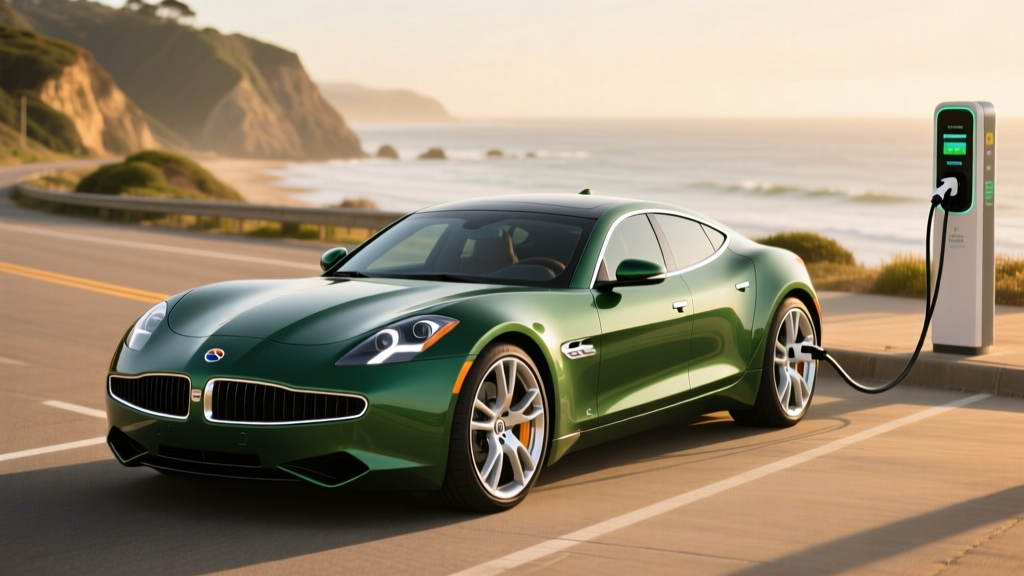
The 2012 Fisker Karma Eco Sport occupies a strange corner of automotive history. Designed by Henrik Fisker, the BMW Z8 and Aston Martin DB9 stylist, this extended-range electric vehicle (EREV) paired a 20 kWh lithium-ion battery with a 2.0-liter turbocharged GM Ecotec range-extender generator. Fisker Automotive filed for bankruptcy in 2013, and the company's assets were later acquired by Wanxiang Group and subsequently by the entity now known as Karma Automotive. If you are considering a used 2012 Karma Eco Sport in 2026, this review covers the real numbers, the ownership risks, and what you need to know before signing any paperwork.
2012 Fisker Karma Eco Sport Specifications at a Glance
| Specification | Value |
|---|---|
| Vehicle Type | Extended-Range Electric Vehicle (EREV / Series PHEV) |
| EPA Electric Range | 32 miles |
| EPA Total Range (EV + Gas) | ~230 miles |
| Battery Usable Capacity | ~17.7 kWh usable (20 kWh gross) |
| Battery Chemistry | NMC (Lithium Manganese Cobalt Oxide) — A123 Systems |
| EPA MPGe (Electric Mode) | 54 MPGe |
| EPA MPG (Gas Generator Mode) | 20 MPG combined |
| Electric Motors | Twin rear-mounted, 161 hp each (300 kW combined peak) |
| Total System Output | 403 hp / 960 lb-ft torque (in Sport mode) |
| 0-60 mph | 5.8 seconds (Sport mode, generator assisted) |
| Top Speed | 125 mph (Sport) / 95 mph (Stealth/EV mode) |
| Drivetrain | Rear-wheel drive (dual rear motors, single-speed) |
| Level 2 AC Charging | 3.3 kW (J1772 connector) |
| DC Fast Charging | Not supported |
| Cargo Volume | 6.9 cu ft (trunk, limited by battery tunnel) |
| Seating | 4 passengers |
| Curb Weight | 5,300 lbs |
| Original MSRP (Eco Sport) | $102,000 (base Eco Standard: ~$96,850) |
| Current Used Market (2026 est.) | $20,000 – $40,000 depending on condition and battery health |
Sources: EPA Fuel Economy Guide — 2012 Fisker Karma, manufacturer historical specifications.
Electric Range, Efficiency, and Real-World Expectations
In real-world driving, expect 22–28 miles of usable electric range before the 2.0L turbo generator kicks in. Highway driving at 70+ mph, aggressive acceleration, and cold weather (below 40°F) can reduce electric range to 15–20 miles. The Karma's heavy 5,300-lb curb weight and wide 255/40R22 front tires work against efficiency. In gas-generator (Charge-Sustaining) mode, owners typically report 18–22 MPG combined, slightly below the EPA's 20 MPG sticker.
The Karma operates as a series hybrid: the gasoline engine never drives the wheels directly. It functions solely as a generator to produce electricity for the twin rear motors once the battery depletes to its minimum state of charge. This means you always drive on electric motors, but the engine noise — a coarse, buzzy drone from the Ecotec four-cylinder — is a constant companion on longer trips once the battery is exhausted.
Efficiency in electric mode is modest. The EPA rates the Karma at 54 MPGe, which translates to roughly 62 kWh per 100 miles — high by modern EV standards. For comparison, a 2026 Tesla Model 3 achieves around 25 kWh/100mi. The Karma's weight, aerodynamic drag, and older power electronics explain the gap.
Charging: Level 2 Only, No DC Fast Charging
| Charging Level | Power (kW) | Time (0–Full) | Range Added per Hour |
|---|---|---|---|
| Level 1 (120V household) | ~1.4 kW | ~14 hours | ~5 miles/hr |
| Level 2 (240V, J1772) | 3.3 kW | ~6 hours | ~11 miles/hr |
| DC Fast Charge | Not available — no DC fast-charge port | ||
The Karma's onboard charger is limited to 3.3 kW, which was unremarkable for 2012 but feels restrictive today. A full charge from empty on a Level 2 home charger takes roughly six hours. There is no DC fast-charging capability whatsoever — no CCS, no CHAdeMO, no NACS connector. This means the Karma is entirely dependent on overnight home charging or destination Level 2 stations. Road-trip recharging requires planning hotel stops with J1772 outlets and accepting a full-night charge cycle.
For daily commuting within the 22–28 real-world electric miles, a home Level 2 charger is adequate. Plug in overnight and wake up with a full battery. But if your round-trip commute exceeds 30 miles, the gasoline generator will activate regularly, and you will burn fuel for a significant portion of your driving.
Performance and Driving Dynamics
The Karma's twin rear electric motors produce a combined peak output of 403 horsepower and a claimed 960 lb-ft of torque in Sport mode (with the generator supplementing battery power). The 0-60 mph sprint takes 5.8 seconds, which was respectable in 2012 but trails many modern EVs — a Tesla Model 3 Performance hits 60 in roughly 3.1 seconds.
In Stealth mode (electric-only), output drops to 201 hp, and top speed is limited to 95 mph. The transition from Stealth to Sport mode engages the generator, which adds noise and vibration but unlocks full power. The single-speed direct-drive transmission means there are no gear shifts — just a continuous surge of torque.
Driving dynamics are defined by the car's 5,300-lb weight. The Karma feels heavy through corners, with noticeable body roll and a steering system that communicates little feedback. The low center of gravity (battery pack runs along the car's central tunnel) helps with stability, but this is a grand tourer, not a sports sedan. Ride quality is firm, particularly with the standard 22-inch wheels, and road imperfections transmit sharply into the cabin.
Interior, Technology, and Cargo
The Karma's interior was a statement in 2012, and it still turns heads. The Eco Sport trim features diamond-pattern leather upholstery, a glass solar panel roof (which powers cabin ventilation, not the drivetrain), and a minimalist center stack dominated by a touchscreen. However, the technology is dated: no Apple CarPlay, no Android Auto, no over-the-air updates, and the infotainment system can be sluggish by 2026 standards.
Practicality is the Karma's biggest compromise. The massive battery tunnel running through the center of the car eliminates any possibility of a fifth seat and severely limits cargo space. The trunk offers just 6.9 cubic feet — smaller than a Mazda MX-5 Miata's. Rear seats are best suited for children or very short trips; legroom is tight for adults. The cabin is wide up front, and the diamond-stitched leather and sustainable wood trim (in the Eco Sport) create a genuinely premium atmosphere.
Notable technology for 2012 included regenerative braking (though not true one-pedal driving), a touchscreen HVAC control system, and a digital instrument cluster. Driver-assistance features were minimal — no adaptive cruise control, no lane-keeping assist, no automatic emergency braking. This is a pre-ADAS era vehicle.
Pricing, Tax Credits, and Ownership Economics
| Item | Amount |
|---|---|
| Original MSRP (Eco Sport) | $102,000 |
| Original MSRP (Eco Standard) | $96,850 |
| Estimated Used Price (2026) | $20,000 – $40,000 |
| Federal §30D Tax Credit (New, 2012) | $7,500 (no longer available) |
| Federal Used EV Credit (§25E, 2026) | Potentially up to $4,000 (30% of sale price, capped at $4,000) |
Federal tax credit status: The $7,500 new-vehicle credit under IRS §30D was available when the Karma was sold new in 2012, but it is no longer applicable to any used purchase. However, the IRS §25E Used Clean Vehicle Credit may apply if you purchase a qualifying used Karma from a licensed dealer for $25,000 or less. The credit equals 30% of the sale price, capped at $4,000. Income limits apply: modified adjusted gross income must not exceed $75,000 (single), $112,500 (head of household), or $150,000 (joint filers). The vehicle must also meet battery component requirements. Verify current-year eligibility at irs.gov or consult a tax professional before relying on this credit.
Ownership economics for the Karma are challenging. Insurance premiums are elevated due to the car's rarity, repair complexity, and original six-figure price. Parts availability is a genuine concern: Fisker Automotive's 2013 bankruptcy disrupted the supply chain, and while Karma Automotive (the successor entity) and third-party suppliers offer some components, body panels, proprietary electronics, and the A123 battery pack can be difficult and expensive to source. Expect annual insurance costs of $2,500–$4,500 depending on your profile and location.
Battery Health, Warranty, and Replacement Risk
The Karma's 20 kWh (17.7 kWh usable) NMC battery pack was manufactured by A123 Systems, which itself filed for bankruptcy in 2012. This is perhaps the single largest ownership risk for a 2026 buyer. A123's collapse means original replacement packs are scarce. The original battery warranty was 5 years / 60,000 miles — long expired on every 2012 Karma.
NMC chemistry from this era is subject to capacity degradation over time and charge cycles. Expect a 2012 Karma's battery to have lost 20–40% of its original capacity by 2026, depending on usage history, charging habits, and climate exposure. A car that originally delivered 32 EPA electric miles may now manage only 18–25 miles on a full charge. Before purchasing, demand a battery health report showing current usable kWh capacity and cell balance data.
Aftermarket battery refurbishment and cell replacement services exist through specialized EV shops, but costs range from $8,000 to $18,000+ depending on the scope of work. Some owners have pursued full pack swaps using refurbished A123 modules, while others have explored custom solutions. There is no simple, affordable battery replacement path for the Karma — this is a car for buyers who accept the risk and have access to a knowledgeable independent EV technician.
Who Should (and Shouldn't) Buy a 2012 Fisker Karma Eco Sport
- You want a head-turning design statement and accept the practical compromises
- Your daily commute is under 25 miles and you have reliable home Level 2 charging
- You view the car as a collector-grade vehicle with limited annual mileage
- You have access to a specialist mechanic familiar with Fisker/Karma systems
- You have budgeted $5,000–$10,000 beyond the purchase price for potential battery or electrical repairs
- You need practical cargo space, rear-seat room, or family utility
- You want modern driver-assistance features (AEB, lane-keeping, adaptive cruise)
- You rely on DC fast charging for road trips or apartment living
- You want low-stress, predictable ownership costs
- You need reliable daily transportation with dealer-backed service
The Karma is best understood as a design collectible that happens to have a plug. Buyers seeking a practical electrified daily driver should look at a used Chevrolet Volt (for a similar EREV concept with far better parts support), a used Tesla Model S, or a new compact EV like the Hyundai Ioniq 6.
- Stunning, concept-car design that still draws attention in 2026
- Series-hybrid concept: always drives on electric motors
- Premium interior materials (diamond leather, solar roof, sustainable wood)
- Instant electric torque and smooth acceleration
- Collector/novelty value — unlikely to depreciate further from current used prices
- Defunct manufacturer — parts scarcity and no dealer network
- A123 battery pack is degraded and expensive to replace ($8k–$18k+)
- No DC fast charging; 3.3 kW Level 2 is slow by 2026 standards
- Only 6.9 cu ft of cargo space; rear seats barely usable for adults
- No modern driver-assistance or infotainment (no CarPlay/Android Auto)
- Generator noise is intrusive; 20 MPG in gas mode is poor for a 2012 vehicle
- Elevated insurance costs and uncertain resale liquidity
Frequently Asked Questions
What is the real-world electric range of the 2012 Fisker Karma Eco Sport?
The EPA rated the Karma at 32 miles of electric range when new. In real-world 2026 driving with a degraded battery, expect 18–28 miles depending on battery health, temperature, and driving style. Highway speeds and cold weather reduce this further to 15–20 miles.
How fast does the Karma charge at home?
The onboard charger is limited to 3.3 kW on a Level 2 (240V) J1772 connection. A full charge takes approximately 6 hours. There is no DC fast-charging capability. Level 1 (120V) charging adds about 5 miles per hour.
Does the 2012 Fisker Karma qualify for any federal EV tax credit in 2026?
It does not qualify for the new-vehicle §30D credit (the car has not been manufactured since 2012). It may qualify for the §25E Used Clean Vehicle Credit — up to $4,000 (30% of sale price) — if purchased from a dealer for $25,000 or less and you meet income limits ($75k single / $150k joint). Confirm eligibility with a tax professional.
Is the Fisker Karma a reliable used car?
Honestly, no — at least not by conventional standards. Fisker Automotive went bankrupt in 2013, parts are scarce, and the A123 battery pack is a known financial risk. Electrical gremlins, 12V battery issues, and generator maintenance add to ownership complexity. It is best suited as a low-mileage collector vehicle, not a daily driver.
How does the Karma compare to a used Chevrolet Volt?
The Volt is far more practical: better cargo space, a robust dealer/parts network (GM), newer examples offer 53 miles of electric range, and battery replacements are more accessible and affordable. The Karma wins on design exclusivity and head-turning factor, but the Volt wins on nearly every ownership metric.
What should I check before buying a used 2012 Fisker Karma?
Priority items: (1) battery health report showing usable kWh and cell balance, (2) generator engine service history (oil changes, coolant, spark plugs), (3) 12V auxiliary battery condition, (4) power electronics cooling system integrity, (5) any outstanding recall or service bulletin work. A pre-purchase inspection by an EV-savvy technician is essential.
Disclaimer: The 2012 Fisker Karma is a discontinued vehicle from a defunct manufacturer. Specifications reflect original factory data and may vary by individual vehicle condition. Tax credit rules are subject to change — verify current IRS requirements at irs.gov. Used pricing reflects estimated 2026 market conditions and varies by region, mileage, and condition.