If you've been searching for the 2012 Acura ZDX hoping to find an electric vehicle, you're going to be disappointed. The 2012 Acura ZDX was never produced as an electric or hybrid vehicle — it was a conventional gasoline-powered crossover that Acura discontinued after the 2013 model year. However, the ZDX nameplate has returned in 2024 as Acura's first all-electric vehicle, and that's where the real EV story begins.
This article clarifies what the 2012 ZDX actually was, why it matters to EV shoppers today, and provides a comprehensive review of the current-generation Acura ZDX electric SUV that carries the nameplate forward.
What Was the 2012 Acura ZDX?
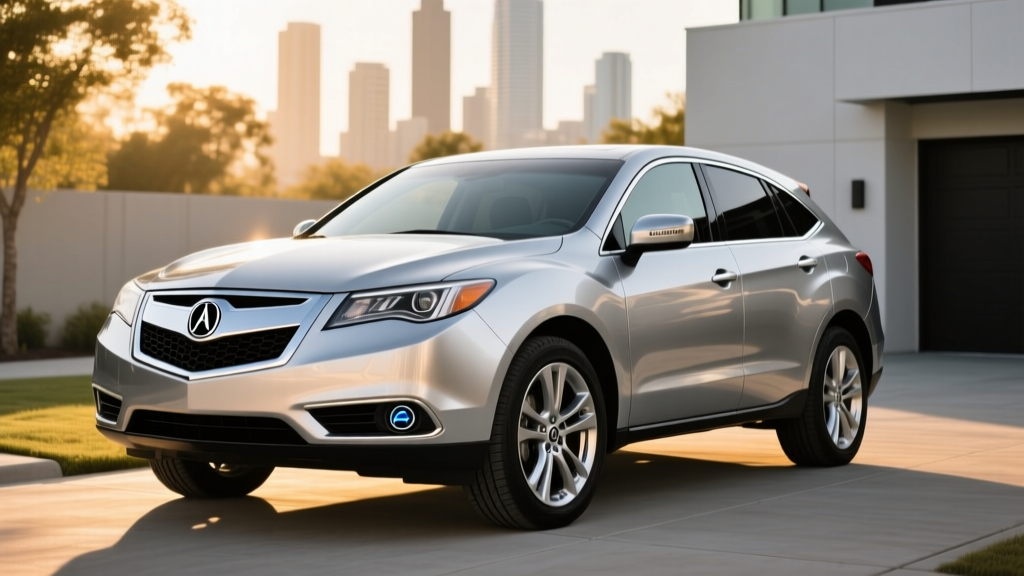
The 2012 Acura ZDX was a luxury crossover powered by a 3.7-liter V6 engine producing 300 horsepower, paired with a 6-speed automatic transmission and available all-wheel drive. It achieved an EPA-estimated 16 mpg city / 23 mpg highway — respectable for its era but entirely gasoline-dependent.
Acura produced the ZDX from 2010 through 2013, selling fewer than 8,000 units total. The model was discontinued due to poor sales and its niche positioning between the MDX and RDX in Acura's lineup.
Key point for EV shoppers: There is no 2012 Acura ZDX electric, hybrid, or plug-in variant. If you're looking for an electrified Acura with the ZDX badge, you need to look at the 2024-present generation.
The Electric ZDX: What You Can Actually Buy Today
Acura revived the ZDX nameplate in 2024 as the brand's first battery-electric vehicle, built on General Motors' Ultium platform. The current ZDX is a midsize luxury electric SUV competing directly with the BMW iX, Audi Q8 e-tron, and Tesla Model X.
| Specification | ZDX A-Spec (RWD) | ZDX A-Spec (AWD) | ZDX Type S |
|---|---|---|---|
| EPA Range | 325 miles | 313 miles | 278 miles |
| Battery Capacity | 102 kWh (usable) | 102 kWh (usable) | 102 kWh (usable) |
| Battery Chemistry | NMC (nickel-manganese-cobalt) | NMC | NMC |
| Horsepower | 340 hp | 490 hp | 500 hp |
| 0-60 mph | 6.2 seconds | 4.7 seconds | 4.5 seconds |
| Drivetrain | Rear-wheel drive (single motor) | All-wheel drive (dual motor) | All-wheel drive (dual motor, performance-tuned) |
| Max DC Fast Charge | 190 kW | 190 kW | 190 kW |
| 10-80% DC Charge Time | ~42 minutes | ~42 minutes | ~42 minutes |
| Level 2 Home Charging | 11.5 kW (~32 miles/hour) | 11.5 kW (~32 miles/hour) | 11.5 kW (~32 miles/hour) |
| EPA Efficiency | 88 MPGe | 85 MPGe | 77 MPGe |
| Cargo Volume (behind rear seats) | 26.1 cu ft | 26.1 cu ft | 26.1 cu ft |
| Cargo Volume (rear seats folded) | 56.4 cu ft | 56.4 cu ft | 56.4 cu ft |
| Base MSRP | $64,500 | $69,500 | $73,500 |
Real-World Range vs. EPA Estimates
The ZDX's 102 kWh usable battery is among the largest in its class, but the vehicle's 5,500+ pound curb weight and boxy aerodynamic profile work against efficiency. During EPA testing, the RWD A-Spec achieved 88 MPGe combined — competitive with the BMW iX xDrive50 but trailing the more aerodynamic Tesla Model X.
Cold-weather note: The ZDX uses a heat pump for cabin heating, which helps preserve range in winter conditions compared to resistive heating systems. However, battery preconditioning for DC fast charging is less aggressive than Tesla's system, meaning cold-weather fast-charging sessions may start slower than expected.
Charging Performance: Home and DC Fast Charging
The ZDX supports DC fast charging at up to 190 kW, which is competitive but not class-leading. The BMW iX peaks at 200 kW, while the Tesla Model X can reach 250 kW on V3 Superchargers.
| Charging Method | Power | Time to Add Range | Notes |
|---|---|---|---|
| Level 1 (120V household) | 1.4 kW | ~3 miles per hour | Emergency use only |
| Level 2 (240V home/public) | 11.5 kW max | ~32 miles per hour | Full charge in ~9 hours |
| DC Fast Charge (10-80%) | 190 kW peak | ~42 minutes | Peak rate sustained to ~55% SoC, then tapers |
| DC Fast Charge (10-50%) | 190 kW peak | ~20 minutes | Best use case for road-trip stops |
Charging curve reality: The ZDX maintains its 190 kW peak rate from roughly 10% to 55% state of charge, then progressively tapers. Charging from 10% to 80% takes approximately 42 minutes, but 50% to 80% alone consumes about 22 of those minutes. For road trips, plan 20-minute stops to add 150-180 miles of range rather than waiting for a full 80% charge.
Home charging setup: The ZDX's 11.5 kW onboard charger requires a 60-amp circuit to deliver full speed. Most homes will need a professional electrician to install a hardwired Level 2 charger or a NEMA 14-50 outlet on a 50-amp circuit (which limits charging to ~9.6 kW or 27 miles per hour). Budget $800-$2,500 for professional installation depending on your electrical panel's capacity and proximity to your parking spot.
Federal Tax Credit Eligibility
Under current IRS §30D rules for 2025, the Acura ZDX does qualify for the full $7,500 federal EV tax credit, subject to buyer income limits and point-of-sale transfer availability.
- MSRP Cap: SUVs must have a base MSRP under $80,000 — all ZDX trims qualify
- Income Limits: Modified AGI must not exceed $150,000 (single), $225,000 (head of household), or $300,000 (joint filers)
- Battery Sourcing: Critical minerals and battery components must meet North American sourcing thresholds — the ZDX's Ultium battery meets current requirements
- Point-of-Sale Transfer: You can transfer the credit to the dealer for an immediate $7,500 price reduction at purchase
Source: IRS Clean Vehicle Credits
| Trim Level | Base MSRP | After $7,500 Credit | Destination & Fees | Estimated Out-the-Door |
|---|---|---|---|---|
| ZDX A-Spec (RWD) | $64,500 | $57,000 | +$1,995 | ~$59,000 |
| ZDX A-Spec (AWD) | $69,500 | $62,000 | +$1,995 | ~$64,000 |
| ZDX Type S | $73,500 | $66,000 | +$1,995 | ~$68,000 |
State incentives: Some states offer additional rebates or tax credits. California's Clean Fuel Reward was discontinued in 2023, but Colorado, Oregon, and Massachusetts still offer $2,000-$5,000 in additional incentives. Check your state's current programs — these stack with the federal credit.
Performance and Driving Dynamics
The ZDX lineup offers three distinct performance profiles:
ZDX A-Spec RWD (340 hp): The entry model prioritizes range over acceleration. The 6.2-second 0-60 time is adequate for highway merging but feels leisurely compared to the dual-motor variants. Single-motor RWD also means less traction in snow and rain — a consideration for northern-climate buyers.
ZDX A-Spec AWD (490 hp): The sweet spot of the lineup. Dual motors provide confident all-weather traction and a 4.7-second 0-60 that matches many sports sedans. The 12-mile range penalty versus RWD is a worthwhile trade-off for most buyers.
ZDX Type S (500 hp): Performance-tuned suspension, larger brakes, and 22-inch wheels deliver sharper handling at the cost of ride comfort and range. The 278-mile EPA estimate makes it the least practical for road trips, and the stiff suspension transmits more road imperfections than competitors like the BMW iX.
Notable drawback: The ZDX lacks a front trunk (frunk), which is unusual for a purpose-built EV. All cargo space is in the rear, limiting total storage versus the Tesla Model X or Rivian R1S.
Technology and Driver Assistance
The ZDX features Acura's latest infotainment system with a 11.3-inch touchscreen, wireless Apple CarPlay and Android Auto, and Google built-in for navigation and voice assistant functions. The system is responsive but lacks the polish of BMW's iDrive or Tesla's interface.
AcuraWatch driver assistance includes adaptive cruise control, lane-keeping assist, blind-spot monitoring, and automatic emergency braking. However, this is a Level 2 driver-assist system — the driver must remain fully engaged with hands on the wheel and eyes on the road. The ZDX does not offer hands-free driving like GM's Super Cruise (available on the Cadillac Lyriq) or Tesla's Autopilot.
Standout feature: The ZDX supports over-the-air updates, which Acura has used to improve charging algorithms and add features post-purchase. However, the update cadence is slower than Tesla's monthly improvements.
Warranty and Ownership Costs
Acura provides competitive warranty coverage for the ZDX:
- Basic Warranty: 4 years / 50,000 miles
- Powertrain Warranty: 6 years / 70,000 miles
- Battery Warranty: 8 years / 100,000 miles (guarantees 70% capacity retention)
- Corrosion Warranty: 5 years / unlimited miles
The battery warranty's 70% capacity retention threshold is industry-standard but less generous than Hyundai/Kia's 8-year/100,000-mile warranty with no specified retention floor. If your ZDX battery drops below 70% capacity within the warranty period, Acura will repair or replace it.
Insurance costs: EVs typically carry 15-25% higher insurance premiums than equivalent gas vehicles due to repair complexity and battery replacement costs. Expect annual premiums of $2,200-$3,200 depending on your location, driving record, and coverage level.
Maintenance savings: EVs eliminate oil changes, transmission service, and exhaust repairs. Budget $300-$500 annually for cabin air filters, wiper blades, brake fluid checks, and tire rotations. Regenerative braking extends brake pad life to 80,000+ miles in typical driving.
Pros and Cons
- Competitive 325-mile range (RWD)
- Spacious interior with 56.4 cu ft cargo volume
- Qualifies for full $7,500 federal tax credit
- Heat pump for efficient cold-weather operation
- Strong dual-motor performance (AWD/Type S)
- Google built-in infotainment
- 190 kW peak charging slower than Tesla/BMW rivals
- No front trunk (frunk)
- Type S range drops to 278 miles
- AcuraWatch lacks hands-free driving capability
- Heavy 5,500+ lb curb weight hurts efficiency
- Limited Acura dealer EV service expertise
Who Should Buy the Acura ZDX?
The ZDX is best for: Luxury SUV buyers who want a spacious, comfortable electric vehicle with competitive range and don't prioritize cutting-edge charging speed or autonomous driving features. The AWD A-Spec at $62,000 after the tax credit offers strong value versus the BMW iX ($85,000+) and Audi Q8 e-tron ($75,000+).
Consider alternatives if:
- You road-trip frequently: Tesla Model X (250 kW Supercharging, extensive network) or Rivian R1S (better charging speed, frunk)
- You want hands-free highway driving: Cadillac Lyriq with Super Cruise or BMW iX with Highway Assistant
- You need three-row seating: Tesla Model X, Rivian R1S, or Kia EV9
- You prioritize performance: Tesla Model X Plaid or BMW iX M60
Frequently Asked Questions
Was the 2012 Acura ZDX ever an electric vehicle?
No. The 2012 Acura ZDX was a gasoline-powered crossover with a 3.7L V6 engine. Acura discontinued the ZDX after 2013 and revived the nameplate in 2024 as an all-electric SUV.
What is the real-world highway range of the 2025 Acura ZDX?
Expect 260-285 miles on the highway for the RWD A-Spec (EPA 325 miles), and 220-240 miles for the Type S (EPA 278 miles). Cold weather reduces these figures by 20-30%.
How long does it take to charge the ZDX at home?
With an 11.5 kW Level 2 charger on a 60-amp circuit, a full charge takes approximately 9 hours. Most owners charge overnight and wake up to a full battery daily.
Does the Acura ZDX qualify for the $7,500 federal tax credit?
Yes, all ZDX trims qualify under current IRS §30D rules, provided your income is below the $150,000-$300,000 thresholds (depending on filing status). The credit can be transferred to the dealer for an immediate price reduction at purchase.
Is the ZDX worth buying versus the Tesla Model X?
The ZDX offers better build quality, a quieter cabin, and lower pricing after incentives. The Model X wins on charging speed (250 kW), Supercharger network access, hands-free Autopilot capability, and available third-row seating. Choose the ZDX for traditional luxury; choose the Model X for tech and charging infrastructure.
Does the ZDX have a frunk (front trunk)?
No. Unlike most purpose-built EVs, the ZDX has no front trunk. All 56.4 cubic feet of cargo space is in the rear cargo area.
What is the battery warranty on the Acura ZDX?
Acura guarantees the battery for 8 years or 100,000 miles with a minimum 70% capacity retention. If the battery degrades below 70% within that period, Acura will repair or replace it at no cost.