The Original EV That Started It All: 2011 Tesla Roadster at a Glance
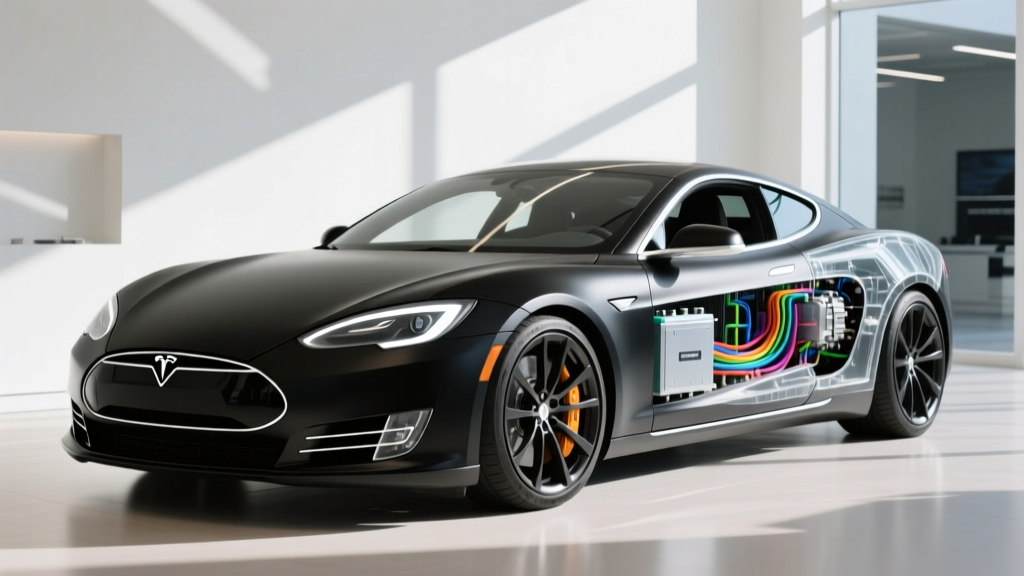
Before the Model S redefined luxury sedans and the Model 3 democratized electric driving, there was the Tesla Roadster — the car that proved battery-electric vehicles could deliver supercar performance alongside genuine range. The 2011 Tesla Roadster (officially the Roadster 2.5) was the final and most refined iteration of Tesla's first production vehicle, built on the Lotus Elise chassis and packed with technology that was revolutionary for its era.
If you're researching 2011 Tesla Roadster specs — whether as a prospective used-EV buyer, an EV historian, or a collector evaluating this increasingly rare machine — you need precise data separated from myth. This review delivers exactly that: verified specifications, real-world ownership realities, and an honest assessment of what it's like to live with a 15-year-old electric sports car in 2026.
| Specification | Value |
|---|---|
| EPA Range | 244 miles |
| Battery Capacity (usable) | 53 kWh (ESS) |
| Battery Chemistry | Lithium-ion (NMC-type, 6,831 cells) |
| Motor Type | 3-phase, 4-pole AC induction |
| Horsepower | 288 hp (215 kW) |
| Torque | 295 lb-ft (400 Nm) |
| 0–60 mph | 3.7 seconds |
| Top Speed | 125 mph (electronically limited) |
| Drivetrain | Rear-wheel drive, single-speed gearbox |
| Curb Weight | 2,690 lbs (1,220 kg) |
| EPA Efficiency | 119 MPGe combined (28 kWh/100 mi) |
| Original Base MSRP | $109,000 (before incentives) |
Range & Efficiency: 244 Miles EPA, But What Happens in the Real World?
The 2011 Tesla Roadster's EPA-estimated range of 244 miles was extraordinary when new — no other production EV came close. For context, the 2011 Nissan Leaf managed just 73 miles EPA. Tesla achieved this figure through a combination of the Roadster's lightweight Lotus-derived chassis, exceptional aerodynamics for a roadster, and a large-for-its-time 53 kWh battery pack.
EPA Estimate: 244 miles
Expected Highway (70 mph, moderate weather): ~190–210 miles
Expected City/Mixed Driving: ~200–230 miles
Cold Weather (below 40°F): ~150–180 miles
The Roadster lacks a modern heat pump and relies on resistive cabin heating, which draws significantly from the traction battery in winter. Highway speeds above 70 mph also reduce range sharply due to the roadster's aerodynamic profile and lack of active aero. Battery age is a critical variable — a 2011 Roadster in 2026 may show 15–35% degradation depending on battery replacement history and storage habits.
Efficiency is rated at approximately 28 kWh per 100 miles (or 119 MPGe combined) according to fueleconomy.gov. That's less efficient than modern EVs like the Tesla Model 3 (26 kWh/100 mi) despite the Roadster's lighter weight, largely because early powertrain electronics and the AC induction motor are less efficient than today's permanent-magnet and silicon-carbide inverter systems.
Battery Chemistry, Degradation & the Replacement Question
The Roadster's Energy Storage System (ESS) contains 6,831 individual 18650-format lithium-ion cells arranged in 11 modules. These cells use an NMC-type (nickel-manganese-cobalt) chemistry — not the LFP (lithium iron phosphate) chemistry found in some modern Tesla Standard Range models. NMC offered superior energy density, which was essential for packaging 53 kWh into a sports car chassis, but it comes with trade-offs in long-term calendar degradation.
Here's what prospective buyers must understand: the original battery warranty was 3 years / 36,000 miles, which expired over a decade ago for every 2011 Roadster on the road. Battery degradation on original packs typically ranges from 15% to 35% loss of capacity by 2026, depending heavily on:
- Storage habits: Roadsters stored at high state of charge (above 90%) for extended periods degrade faster
- Climate: Hot-climate cars (Arizona, Texas, Southern California) show accelerated calendar aging
- Charge cycles: Higher-mileage examples with frequent deep cycling show more wear
- Replacement history: Some owners received Tesla's official replacement ESS (approximately $29,000–$40,000 depending on the era), which resets the degradation clock
Tesla offered an upgraded 80 kWh replacement battery at one point (extending range to approximately 350+ miles), but availability has been discontinued. Third-party specialists like Gruber Motors and Electrified Garage can service Roadster battery packs, but costs are significant. A full ESS replacement in 2026 typically runs $30,000–$45,000 depending on cell sourcing and labor.
| Attribute | 2011 Roadster (NMC) | 2026 LFP (e.g., Model 3 RWD) | 2026 NMC (e.g., Model Y LR) |
|---|---|---|---|
| Energy Density | ~120 Wh/kg (pack-level) | ~160 Wh/kg | ~200 Wh/kg |
| Calendar Life | 10–15 years typical | 15–20+ years | 12–18 years |
| 100% SoC Storage | Accelerated degradation | Tolerates well | Moderate degradation |
| Cold Performance | Moderate | Reduced | Good |
| Warranty (new) | 3 yr / 36,000 mi | 8 yr / 100,000 mi | 8 yr / 120,000 mi |
Charging: The Roadster's Biggest 2026 Limitation
Charging is where the 2011 Roadster's age shows most clearly. This vehicle predates the CCS, NACS, and even CHAdeMO standards. Tesla's proprietary connector was used, and the Roadster cannot natively use the modern Tesla Supercharger network without an adapter — and even with one, compatibility is inconsistent and not officially supported by Tesla.
| Charging Method | Power | Time / Rate |
|---|---|---|
| Level 1 (120V household) | ~1.4 kW | ~3–4 miles per hour; full charge ~35–40 hours |
| Level 2 (240V, Roadster HPC) | Up to 16.8 kW (70A) | ~45 miles per hour; full charge ~3.5 hours |
| Level 2 (240V, standard J1772 w/ adapter) | Up to 6.6 kW (28A) | ~18 miles per hour; full charge ~8–9 hours |
| DC Fast Charging | Not natively supported | N/A — Roadster lacks DC fast-charge capability |
Key charging reality: The 2011 Roadster has no DC fast charging. This is an AC-only vehicle. The fastest charging available is via Tesla's High Power Wall Connector (HPWC), which delivers up to 16.8 kW on a 70-amp, 240V circuit. This requires specialized equipment that is increasingly difficult to source. Most public Level 2 stations deliver 6.6–7.2 kW via the J1772 adapter Tesla included, adding roughly 18 miles of range per hour.
For road trips, this means meticulous planning. You cannot pull into a Supercharger station and add 150 miles in 15 minutes. Every stop is a multi-hour affair, making the Roadster best suited as a weekend car or local driver rather than a touring vehicle. The Tesla Roadster Owner's Manual details the original charging ecosystem, though much of the public infrastructure has evolved since.
Performance: 3.7 Seconds to 60 Still Commands Respect
The 2011 Roadster 2.5 produces 288 horsepower and 295 lb-ft of torque from its rear-mounted AC induction motor. In a car weighing just 2,690 pounds, that translates to a 0–60 mph time of 3.7 seconds — a figure that still holds its own against many modern sports cars and remains thrilling by any measure.
The driving experience is raw and analog by modern EV standards. There is no regenerative braking strong enough for one-pedal driving (regen is present but mild). The single-speed gearbox means power delivery is linear and uninterrupted. The steering is unassisted and heavy at low speeds — a deliberate Lotus-engineered choice that rewards at speed but demands effort in parking lots.
Notable performance characteristics:
- Instant torque: Full 295 lb-ft available from 0 rpm, as with all EVs
- Top speed: Electronically limited to 125 mph
- Quarter mile: Approximately 12.6 seconds at 105 mph
- Handling: Lotus-tuned suspension with double wishbones front and rear; 50/50 weight distribution
- Braking: Conventional disc brakes with minimal regen contribution
Compared to modern EVs, the Roadster's 288 hp seems modest — a 2026 Tesla Model 3 Performance produces 510 hp. But the Roadster's 2,690-pound curb weight means its power-to-weight ratio remains competitive. It's a driver's car in the purest sense: lightweight, communicative, and free of the 4,500-pound heft that characterizes modern long-range EVs.
Interior, Tech & the Analog Sports Car Experience
The 2011 Roadster's interior is essentially a Lotus Elise cabin with Tesla-specific modifications. It's tight, minimal, and focused entirely on driving. There is no central touchscreen by modern standards — instead, a small 7-inch display handles basic vehicle information, and a separate aftermarket Alpine head unit manages audio and navigation.
Interior dimensions and cargo:
- Seating: 2 passengers only (no rear seats)
- Headroom: ~37.4 inches (with hardtop); tight for drivers over 6'2"
- Legroom: ~42.0 inches
- Cargo space: Essentially zero behind the seats; a small front trunk ("frunk") offers approximately 3–4 cubic feet — enough for a soft duffel bag
- Roof: Removable soft top (standard) or optional removable hardtop
Technology features (by 2011 standards):
- Bluetooth phone connectivity
- Alpine audio system with iPod integration
- Basic navigation via aftermarket unit
- No over-the-air (OTA) updates — the Roadster predates Tesla's OTA architecture
- No Autopilot or any ADAS features — this is a fully manual driving experience
- No backup camera (not federally required until 2018)
- No keyless entry — traditional key fob
Notable drawbacks for 2026 buyers: The Roadster's cabin is loud (no sound insulation and minimal weather sealing), the seats are thinly padded Lotus units, HVAC performance is weak by modern standards (especially heating), and the infotainment is thoroughly outdated. This is a car you buy for the driving experience and historical significance, not for daily comfort or technology.
Pricing, Tax Credits & Used Market Value in 2026
The 2011 Tesla Roadster originally carried a base MSRP of approximately $109,000 (the Sport variant ran ~$129,000). It was never a mass-market vehicle — total production across all model years (2008–2012) was approximately 2,450 units worldwide.
| Item | Amount |
|---|---|
| Original Base MSRP (2011) | ~$109,000 |
| Original Sport Trim MSRP | ~$129,000 |
| 2026 Used Market Value (good condition) | $80,000–$140,000+ |
| Federal §30D New EV Tax Credit | Not applicable (discontinued model) |
| Federal Used EV Tax Credit (§25E) | Up to $4,000 (income caps apply; vehicle must be under $25,000 — Roadster does not qualify) |
Federal tax credit reality: The 2011 Tesla Roadster does not qualify for any current federal EV tax credit in 2026. The §30D new-vehicle credit applies only to new purchases of currently manufactured models. The §25E used-EV credit caps eligible vehicles at a sale price of $25,000 — well below the Roadster's collector-car market value. Per IRS guidelines, this vehicle is purchased entirely out-of-pocket.
Used Roadster values have stabilized and in some cases appreciated, particularly for low-mileage examples with documented battery replacements or original-preservation status. Hagerty and Bring a Trailer data show 2011 Roadster 2.5 values ranging from $80,000 for higher-mileage, original-battery examples to $140,000+ for low-mileage Sport models with fresh battery packs. The Roadster is increasingly treated as a collectible rather than a used car.
Warranty, Service & Long-Term Ownership Realities
All original factory warranties on the 2011 Roadster expired years ago:
- Battery warranty: 3 years / 36,000 miles (expired)
- Powertrain warranty: 3 years / 36,000 miles (expired)
- Bumper-to-bumper: 3 years / 36,000 miles (expired)
This means every repair, including potential battery replacement ($30,000–$45,000), motor service, or power electronics module (PEM) replacement, is the owner's responsibility. Tesla's official service support for the Roadster has diminished over the years, though the company still provides limited parts support.
The Roadster owner community has developed a robust third-party service ecosystem. Specialists like Gruber Motors (Arizona), Electrified Garage, and independent Lotus service shops familiar with the Roadster's chassis handle most maintenance. Common service items include:
- PEM (Power Electronics Module): Known failure point; replacement or rebuild costs $5,000–$10,000
- Air conditioning compressor: Electric compressor prone to failure; ~$2,000–$3,500 repair
- Coolant system: Battery thermal management requires periodic coolant flushes; leaks can be catastrophic
- 12V auxiliary battery: Standard replacement item; if it dies, the car cannot be started or charged
- Suspension/brakes: Lotus Elise components; well-supported by aftermarket
Who Should (and Shouldn't) Buy the 2011 Tesla Roadster in 2026
- You want a historically significant EV — the car that launched Tesla and the modern EV movement
- You're a collector seeking a future classic with appreciating potential
- You want a lightweight, analog electric sports car experience that no modern EV replicates
- You have access to Level 2 home charging and don't need road-trip capability
- You're comfortable with out-of-warranty ownership and $30K+ battery replacement risk
- You need a daily driver with modern infotainment, ADAS, or practical cargo space
- You want DC fast charging for road trips
- You need rear seats or passenger comfort
- You're uncomfortable with significant repair-cost exposure on a 15-year-old vehicle
- You're seeking federal tax credit assistance with your EV purchase
The 2011 Roadster competes in a unique space. Against modern EVs like the Porsche Taycan or Tesla Model S Plaid, it's thoroughly outperformed on paper. But as a lightweight, analog, historically significant electric sports car, it has no direct rival. It's closer in spirit to a classic Lotus Elise or air-cooled Porsche 911 than to any current-production EV.
- 244-mile EPA range remains respectable even by 2026 standards
- 3.7-second 0–60 in a 2,690-lb chassis is visceral and engaging
- Historical significance as the car that launched Tesla
- Limited production (~2,450 total) supports collector value
- Lightweight, communicative driving dynamics no modern EV matches
- Strong third-party service community
- No DC fast charging — road trips require extreme planning
- Outdated infotainment with no OTA update capability
- All factory warranties expired; battery replacement costs $30K–$45K
- Cramped cabin, minimal cargo, poor weather sealing
- No driver-assistance features whatsoever
- Battery degradation on original packs is significant (15–35%)
- PEM and HVAC failures are known and expensive
Frequently Asked Questions
What is the real-world range of the 2011 Tesla Roadster?
The EPA-estimated range is 244 miles, but real-world expectations for a 2026-owned Roadster depend heavily on battery condition. Expect 190–210 miles on the highway in moderate weather with a healthy battery, dropping to 150–180 miles in cold conditions. Original batteries with 20–30% degradation will reduce these figures proportionally.
How fast does the 2011 Roadster charge?
The Roadster does not support DC fast charging. Its fastest charging method is the Tesla High Power Wall Connector at up to 16.8 kW (70A, 240V), adding approximately 45 miles of range per hour for a full charge in about 3.5 hours. Standard Level 2 public stations deliver 6.6 kW via J1772 adapter, adding roughly 18 miles per hour. Level 1 (120V) adds just 3–4 miles per hour.
Does the 2011 Tesla Roadster qualify for any federal tax credit?
No. The §30D new-vehicle credit applies only to new EVs currently in production. The §25E used-EV credit requires a sale price under $25,000, which the Roadster's collector-car value far exceeds. Consult a tax professional or the IRS used-vehicle credit page for current rules.
Is the 2011 Roadster worth buying versus a modern EV?
Not as a primary vehicle or practical transportation. A 2026 Tesla Model 3, Hyundai Ioniq 6, or BMW i4 offers more range, faster charging, modern safety tech, full warranty coverage, and lower ownership risk for less money. The Roadster makes sense only as a collector piece, weekend car, or historically significant addition to an EV enthusiast's garage.
Can I use Tesla Superchargers with the 2011 Roadster?
Not reliably. The Roadster uses Tesla's original proprietary connector, which predates the modern Tesla connector (now NACS). While some adapters exist, Tesla does not officially support Roadster charging on Supercharger stalls, and compatibility is inconsistent. Plan to rely on Level 2 home and public charging.
What should I check before buying a used 2011 Roadster?
Prioritize: (1) battery health report showing current capacity vs. original 53 kWh, (2) PEM service history, (3) coolant system condition and flush records, (4) whether the ESS has been replaced, (5) mileage and storage history, and (6) 12V battery age. A pre-purchase inspection by a Roadster-experienced specialist is strongly recommended.