The Original EV Icon: 2011 Tesla Roadster at a Glance
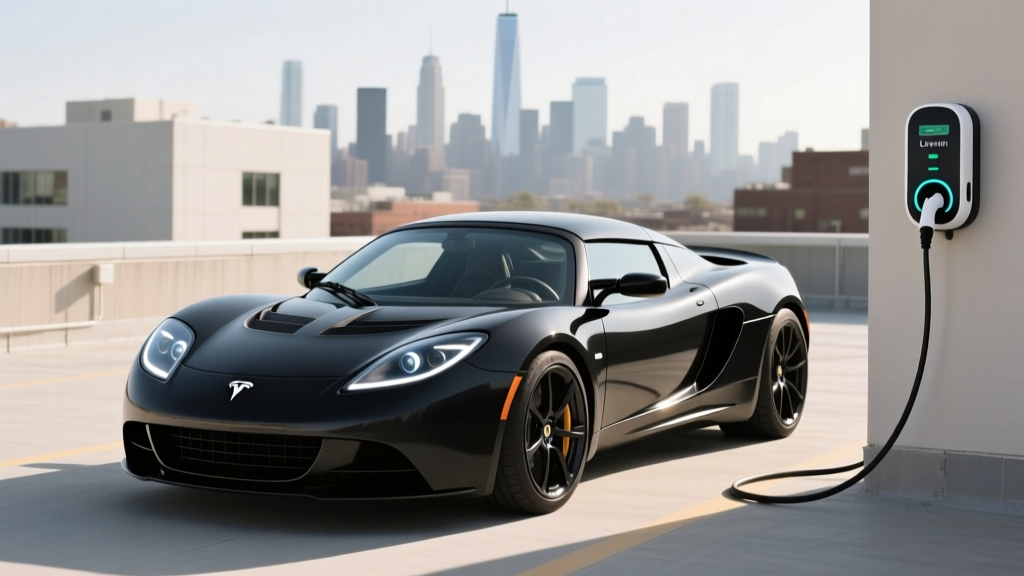
The 2011 Tesla Roadster is the car that proved electric vehicles could be fast, desirable, and capable of real-world road trips — not just neighborhood runabouts. Built on a Lotus Elise chassis and powered by a then-revolutionary lithium-ion battery pack, the Roadster launched Tesla from startup to global automaker. In 2026, it exists exclusively on the used market, where well-maintained examples trade between $100,000 and $200,000+ depending on mileage, condition, and whether the battery has been replaced under Tesla's Battery Replacement Program.
This is not a car you buy for practicality. It is a two-seat sports car with a manual-like driving experience, zero emissions, and a 244-mile EPA range that still impresses over a decade later. But prospective buyers in 2026 face unique considerations — from aging battery chemistry to the absence of DC fast charging — that modern EV shoppers never encounter.
| Specification | 2011 Tesla Roadster (Sport) |
|---|---|
| EPA Range | 244 miles (245 mi for Sport variant) |
| Battery Capacity | ~53 kWh usable (lithium-ion, NMC chemistry) |
| Motor / Drivetrain | Single AC induction motor, RWD |
| Horsepower | 288 hp (292 hp Sport) |
| Torque | 270 lb-ft (295 lb-ft Sport) |
| 0–60 mph | 3.9 seconds (3.7 sec Sport) |
| Top Speed | 125 mph (electronically limited) |
| EPA Efficiency | 119 MPGe combined / 28 kWh per 100 mi |
| Curb Weight | ~2,690 lbs |
| Cargo Space | ~2.5 cu ft (rear trunk area behind seats) |
| Seats | 2 |
| Original MSRP (2011) | $109,000 base / $128,500 Sport |
| 2026 Used Market Range | ~$100,000 – $200,000+ |
Range and Efficiency: 244 Miles EPA, But What's Real?
The EPA rated the 2011 Tesla Roadster at 244 miles of range (245 for the Sport variant with its slightly revised powertrain calibration). For a car introduced in 2008 and sold through 2012, that figure was extraordinary — and it remains respectable even by 2026 standards for a sports car.
EPA Range: 244 miles
Real-World Expectation: 180–220 miles in mixed driving. Highway cruising at 70+ mph drops range to roughly 160–180 miles due to the Roadster's aerodynamic drag profile (it was designed for Lotus handling, not aero efficiency). In cold weather (below 40°F), expect a 20–35% reduction, putting usable range in the 140–175 mile window.
Battery Age Factor: Most 2011 Roadsters in 2026 have experienced some degree of lithium-ion degradation. Packs that have not been replaced under Tesla's program may retain 70–85% of original capacity, effectively reducing range to 170–210 miles even in ideal conditions. Always request a battery State of Health (SoH) readout before purchase.
The Roadster achieves its efficiency through lightweight construction (under 2,700 lbs) and a single-speed gearbox with a 2.93:1 final-drive ratio. The EPA combined rating of 119 MPGe translates to roughly 28 kWh per 100 miles — a figure that modern EVs like the Lucid Air and Tesla Model 3 Highland can beat, but only with far more sophisticated thermal management and powertrain technology.
Battery Chemistry, Degradation, and the Replacement Program
The 2011 Roadster uses a ~53 kWh usable battery pack composed of 6,831 individual 18650-format lithium-ion cells in a nickel-manganese-cobalt (NMC) chemistry. This is the same cell format Tesla later scaled for the Model S and Model 3, though the Roadster's pack architecture is fundamentally different — it lacks the active liquid thermal management system found in all subsequent Tesla vehicles.
Instead, the Roadster relies on a combination of passive cooling and an electrically powered HVAC-based cooling loop. This approach works adequately in moderate climates but means the battery is more susceptible to heat-related degradation in hot environments (Arizona, Texas, Southern California). Owners in these regions have historically seen faster capacity loss.
Tesla's Battery Replacement Program: Tesla offered Roadster owners a battery upgrade path — the ESS (Energy Storage System) replacement — which provided a refreshed pack with improved cells. As of 2026, this program has largely wound down, and replacement options are limited. A third-party battery replacement or refurbishment can cost $30,000–$50,000+, making the battery's condition the single most important variable in any used Roadster purchase.
Warranty (Original): Tesla provided a 3-year/36,000-mile bumper-to-bumper warranty and a 5-year/60,000-mile battery and powertrain warranty. These have long expired for all 2011 examples. Some owners purchased extended battery warranties at the time of the ESS upgrade; verify transferability if applicable.
Charging: The Roadster's Biggest 2026 Limitation
If there is one area where the 2011 Roadster shows its age most acutely, it is charging. This car predates the CCS, CHAdeMO, and NACS standards entirely. It predates Tesla's own Supercharger network.
| Charging Method | Power | Rate / Time |
|---|---|---|
| Level 1 (120V standard outlet) | ~1.4 kW | ~5 miles per hour of charging |
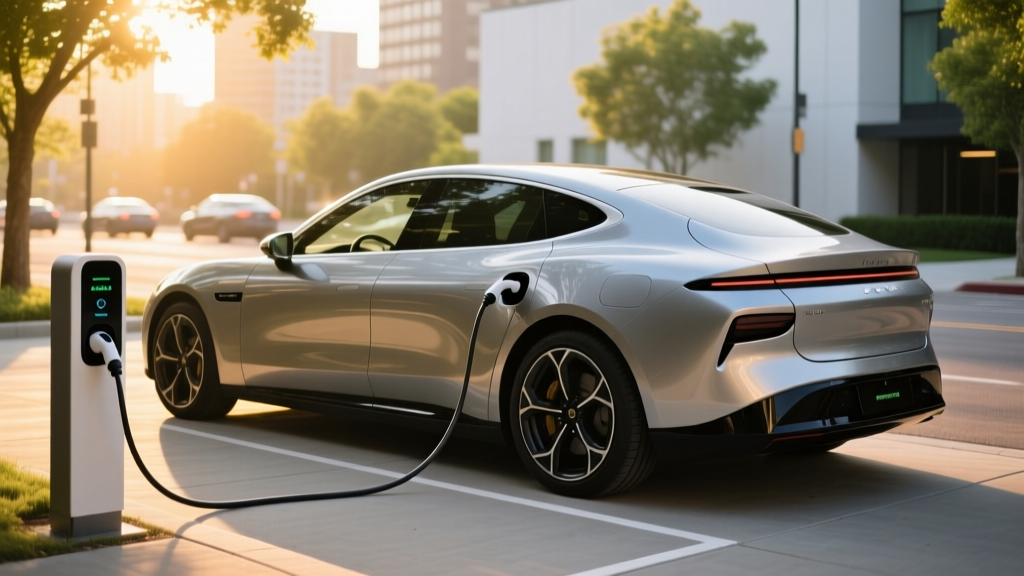
| Level 2 (240V, Tesla HPWC or Roadster-specific connector) | Up to 16.8 kW (70A) | ~45–50 miles per hour; full charge in ~5.5 hours |
| DC Fast Charging | Not supported. The Roadster has no DC fast-charge capability. It is AC-only. | |
Connector Note: The Roadster uses a proprietary AC connector — not the J1772 standard used by virtually all other EVs, and not the Tesla NACS (North American Charging Standard) used by modern Teslas. Tesla sold a Roadster-to-J1772 adapter, and aftermarket adapters exist for connecting to standard Level 2 public chargers. However, you cannot use any Tesla Supercharger or any DC fast charger with this vehicle.
This means road trips require careful planning around Level 2 destinations — hotels, restaurants, and shopping centers with 240V chargers — and accepting that a "quick top-up" takes 30–60 minutes minimum. For a sports car that many owners drive primarily on weekends and to local events, this limitation is manageable. For anyone planning extended touring, it is a dealbreaker.
Home Charging Setup: Most Roadster owners install a dedicated 240V / 70A circuit with the Tesla High Power Wall Connector (HPWC) configured for Roadster use. Expect a full charge from near-empty in approximately 5.5 hours. Installation costs for a 70A circuit typically range from $800–$2,500 depending on panel proximity and local electrician rates. Ensure your home electrical panel has sufficient capacity — a 70A EV circuit requires a panel rated for at least 150A, ideally 200A.
Performance and Driving Dynamics
The 2011 Roadster's performance remains genuinely thrilling in 2026. The single rear-mounted AC induction motor delivers 288 horsepower (292 hp in Sport trim) and instantaneous torque with zero lag. The Sport variant's 0–60 mph time of 3.7 seconds still outpaces many modern sports cars, and the linear power delivery — without gear shifts — creates a uniquely addictive acceleration experience.
Handling is pure Lotus Elise: sharp, communicative, and demanding of attention. The unassisted steering (the Roadster uses electric power assist, but it is tuned for feedback, not ease) and firm suspension mean this car rewards skilled drivers and punishes inattention. There are no driver-assistance features — no Autopilot, no lane-keeping, no adaptive cruise. This is SAE Level 0 automation: you are driving, fully and completely.
Regenerative Braking: The Roadster offers adjustable regenerative braking, but it does not support true one-pedal driving in the way modern EVs do. The regen is aggressive at higher speeds but tapers significantly at low speeds, requiring use of the friction brakes for final stops.
Notable Drawbacks:
- No power steering assist at low speeds — parking requires effort
- Limited visibility (low-slung Lotus convertible body)
- No infotainment screen, navigation, or Bluetooth audio (a basic touchscreen controls vehicle settings only)
- No rearview camera
- No frunk — the front trunk space is occupied by the charge port and electronics
- Convertible soft top is manually operated and not fully weather-sealed at highway speeds
Pricing, Tax Credits, and Ownership Economics
The 2011 Tesla Roadster originally carried an MSRP of $109,000 (base) or $128,500 (Sport). In 2026, used examples trade in a wide band depending on condition, mileage, battery health, and provenance:
| Condition | Approximate 2026 Price | Federal Tax Credit Eligibility |
|---|---|---|
| High mileage / unknown battery SoH | $90,000 – $120,000 | Not eligible (§30D applies to new vehicles only) |
| Good condition / verified battery health | $120,000 – $160,000 | Not eligible |
| Low mileage / battery replaced / collector-grade | $160,000 – $220,000+ | Not eligible |
Federal Tax Credit: The 2011 Tesla Roadster does not qualify for the IRS §30D Clean Vehicle Credit. That credit applies exclusively to new vehicle purchases and has MSRP caps ($55,000 for sedans, $80,000 for SUVs/trucks), buyer income limits, and battery-sourcing requirements. As a used collector vehicle, the Roadster falls entirely outside this program.
The federal used EV tax credit (IRC §25E) offers up to $4,000 or 30% of the sale price (whichever is less) for qualifying used EVs — but only for vehicles with a sale price under $25,000. At $100,000+, the Roadster does not qualify.
Total Cost of Ownership Considerations:
- Insurance: Specialty collector-car insurance is recommended. Hagerty or similar providers typically quote $1,500–$3,500/year depending on agreed value and mileage limits.
- Maintenance: Minimal drivetrain maintenance (no oil changes, no transmission fluid). Budget for suspension components (Lotus-sourced), brake service, and HVAC system upkeep. Annual maintenance: $1,000–$3,000.
- Tires: The Roadster uses staggered fitment (wider rear tires). Replacement sets cost $800–$1,500.
- Electricity cost: At $0.15/kWh (national average), a full 53 kWh charge costs approximately $7.95 — yielding a fuel cost of roughly 3.3 cents per mile.
Who Should Buy the 2011 Tesla Roadster in 2026?
Pros
- Historic significance — the car that launched the EV revolution
- 244-mile EPA range still impressive for a lightweight sports car
- Sub-4-second 0–60 with instant electric torque
- Lotus Elise chassis delivers world-class handling
- Collector-grade appreciation potential
- Minimal running costs compared to equivalent ICE sports cars
Cons
- No DC fast charging — road trips require Level 2 planning
- Proprietary AC connector requires adapters for public chargers
- Aging NMC battery with replacement costs of $30,000–$50,000+
- No modern infotainment, navigation, or driver-assist features
- No federal tax credit eligibility (new or used)
- Limited service network — few shops qualified to work on Roadster-specific systems
- Practical cargo/passenger space: 2 seats, ~2.5 cu ft storage
This car is for you if: You are a collector or EV enthusiast who wants the origin story of the electric car movement, you have access to reliable Level 2 home charging, and you plan to drive the car primarily on weekends, to car shows, or on shorter scenic routes. The Roadster rewards owners who appreciate automotive history and raw, analog driving dynamics.
This car is not for you if: You need a daily driver, you want modern technology (navigation, streaming, driver assists), you plan to take road trips beyond the Level 2 charging network, or you are not prepared for the financial risk of an aging high-voltage battery with limited replacement options.
Key Competitors (Used Market, Similar Price Range):
- Porsche 911 (997 generation, 2009–2012): Comparable performance, vastly better service network, stronger collector liquidity, but ICE fuel and maintenance costs.
- Tesla Model S P85 (2013–2014): More practical, Supercharger access, similar performance, but less exclusive and less collectible.
- BMW i8 (2014–2016): Plug-in hybrid sports car with similar exotic appeal, more modern tech, but far less electric range (~15 mi EV-only).
Frequently Asked Questions
What is the real-world range of the 2011 Tesla Roadster?
The EPA rated it at 244 miles, but real-world range depends heavily on driving style, temperature, and battery age. Expect 180–220 miles in moderate mixed driving, 160–180 miles at sustained highway speeds, and as little as 140–175 miles in cold weather (below 40°F). Battery degradation on original packs further reduces this to 170–210 miles for well-preserved examples.
How fast does the 2011 Roadster charge?
The Roadster supports Level 2 AC charging at up to 16.8 kW (70A), which adds roughly 45–50 miles of range per hour and charges a depleted pack in about 5.5 hours. It does not support DC fast charging at all — there is no Supercharger compatibility and no CCS/CHAdeMO capability. Level 1 (120V) charging adds about 5 miles per hour.
Does the 2011 Tesla Roadster qualify for any federal tax credit?
No. The §30D new clean vehicle credit applies only to new purchases, and the §25E used EV credit caps at a $25,000 sale price. At $100,000–$200,000+ on the used market, the Roadster qualifies for neither. Check with a tax professional for any applicable state or local collector-vehicle incentives, as these vary by jurisdiction.
Is the 2011 Roadster worth buying vs. a modern Tesla or Porsche?
It depends on your goal. As a collector piece and a milestone in automotive history, the Roadster holds unique value that no modern EV can replicate. As a daily driver or road-trip vehicle, a modern Tesla Model 3, Model S, or Porsche Taycan is objectively superior in charging speed, technology, comfort, safety, and practicality. Buy the Roadster for what it represents, not for what it can do in 2026 compared to a current-production EV.
What should I check before buying a used 2011 Roadster?
Prioritize three items: (1) Battery State of Health (SoH) — request a diagnostic readout showing remaining capacity percentage; (2) Service history — verify whether the ESS battery was replaced under Tesla's program and whether annual service was performed; (3) Charging equipment — confirm the car includes the original Roadster-specific charging cable and any J1772 adapters. Also inspect the Lotus-sourced suspension components for wear, as replacement parts can be expensive and slow to source.
Can I use Tesla Superchargers with the 2011 Roadster?
No. The Supercharger network uses DC fast charging via NACS (or legacy Tesla) connectors, and the Roadster's onboard charger is AC-only. There is no adapter that enables Supercharger access. You are limited to Level 2 AC charging at home and at public Level 2 stations (with the appropriate adapter).