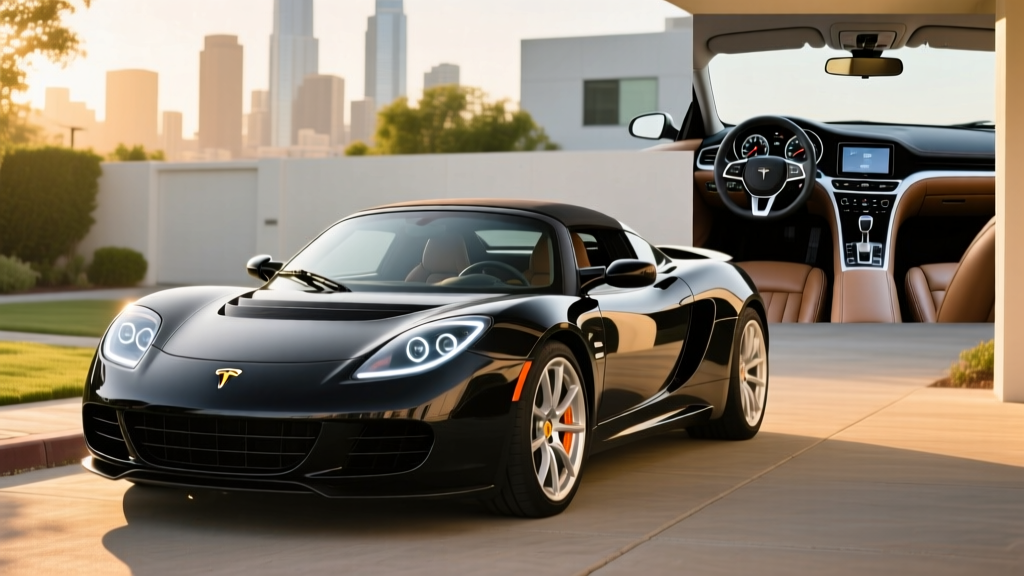
The 2011 Tesla Roadster 2.5 Sport is not a modern EV. It has no DC fast charging, no Autopilot, no over-the-air updates, and no back seat. What it does have is a place in history as the car that proved electric vehicles could be fast, desirable, and capable of real-world range — all before the Model S existed. For collectors and EV enthusiasts in 2026, the Roadster 2.5 Sport remains a fascinating artifact: a Lotus Elise-based electric sports car with a 53 kWh battery, 288 horsepower, and a driving experience that still feels raw and engaging.
This review covers the 2011 Tesla Roadster 2.5 Sport as a used EV purchase in 2026 — what the specs actually mean today, what ownership looks like, and whether this pioneer still holds up.
2011 Tesla Roadster 2.5 Sport: Core Specifications
| Spec | Value |
|---|---|
| EPA Range | 244 miles (original rating) |
| Battery Capacity | 53 kWh usable (lithium-ion, NMC chemistry) |
| Motor / Drivetrain | Single rear motor, RWD |
| Horsepower | 288 hp (Sport mode) |
| Torque | 295 lb-ft |
| 0–60 mph | 3.7 seconds |
| Top Speed | 125 mph (electronically limited) |
| Max AC Charge Rate | 3.3 kW (Level 2, single-phase) |
| DC Fast Charging | Not supported |
| Charge Time (0–100%, 240V) | ~16 hours |
| Efficiency | 135 MPGe combined (EPA) |
| Curb Weight | 2,812 lbs |
| Cargo Space | ~4.5 cu ft (rear trunk) |
| Seating | 2 passengers |
| Original MSRP | $128,500 (2011) |
| Original Battery Warranty | 5 years / 100,000 miles |
Range: EPA Sticker vs. Real-World Expectations
EPA Rating: 244 miles
Real-World Expectation (2026): 160–200 miles depending on battery degradation, driving style, and ambient temperature. Highway driving at 70+ mph may yield as little as 140–160 miles on a degraded pack. Cold weather (below 40°F) can reduce range by 20–30%.
The original 244-mile EPA figure was remarkable in 2011 — it beat the Nissan Leaf by nearly 170 miles. But context matters. That number assumed a brand-new battery, moderate temperatures, and mixed driving. In 2026, a 15-year-old lithium-ion pack with NMC chemistry will have experienced meaningful degradation.
Most surviving Roadster batteries have lost 15–30% of original capacity depending on charge history, storage conditions, and cycle count. A Roadster that was routinely charged to 100% and stored in hot climates (Arizona, Southern California) will sit at the lower end of that range. Tesla's original battery management system was relatively primitive by today's standards — the Roadster lacked the sophisticated thermal management of later Tesla vehicles, which accelerates degradation.
For comparison, a 2026 Tesla Model 3 Long Range delivers 363 miles EPA from a ~75 kWh pack with vastly superior thermal management. The Roadster's efficiency of 135 MPGe (roughly 25 kWh/100mi) is respectable but reflects the car's light weight (2,812 lbs) more than any advanced powertrain efficiency.
Charging: The Roadster's Biggest 2026 Limitation
Charging is where the 2011 Roadster 2.5 Sport shows its age most starkly. This car was designed before the DC fast-charging ecosystem existed.
| Charging Level | Power | Miles Added Per Hour | Notes |
|---|---|---|---|
| Level 1 (120V) | ~1.4 kW | ~5–6 miles/hr | Emergency trickle only |
| Level 2 (240V, standard) | 3.3 kW | ~14–15 miles/hr | Requires Tesla Roadster-specific connector or J1772 adapter |
| DC Fast Charge | Not available | N/A | No CCS, no CHAdeMO, no Supercharger support |
A full charge from empty on a 240V Level 2 connection takes approximately 16 hours. That means overnight charging will not always deliver a full battery — you'll typically replenish 120–160 miles of range in an 8–10 hour overnight session.
The Roadster uses Tesla's proprietary early connector (a round, multi-pin design), not the modern NACS (North American Charging Standard) used by current Teslas. Adapters exist to charge from J1772 Level 2 stations, but the 3.3 kW onboard charger is the bottleneck regardless of what you plug into. Even if a public Level 2 station offers 7.2 kW or 11.5 kW, the Roadster can only accept 3.3 kW.
There is no DC fast charging of any kind. No Supercharger access. No CCS. This car is strictly a home-charge-and-drive-locally proposition in 2026. Road trips require meticulous planning around multi-hour Level 2 stops, which is why most surviving Roadsters are garage-kept weekend cars.
Performance and Driving Experience
The Roadster 2.5 Sport's 3.7-second 0–60 mph time was supercar territory in 2011 and remains quick by any standard. The single-speed transmission delivers instant torque from zero RPM, and the Sport model's upgraded inverter unlocks the full 288 hp and 295 lb-ft of torque.
The driving experience is distinctly analog compared to modern Teslas. There's no large touchscreen, no regenerative braking strong enough for one-pedal driving, no driver assistance. Steering is unassisted (the Roadster is based on the Lotus Elise platform), which makes it heavy at low speeds but beautifully communicative on a canyon road. The car weighs 2,812 lbs — nearly 1,200 lbs lighter than a 2026 Model 3 — and that lightness translates to cornering agility that no current Tesla can match.
The two-speed automatic transmission that plagued early Roadster production (2008–2009) was replaced by a single-speed unit for the 2.0 and 2.5 models, resolving the reliability issues that defined the car's first generation. The 2.5 Sport specifically added a more powerful inverter, improved cooling, and Sport driving mode.
Tech, Interior, and Daily Usability
By 2026 standards, the Roadster's technology suite is minimal:
- Infotainment: A small monochrome display showing speed, range, energy consumption, and basic vehicle settings. No navigation, no Bluetooth audio streaming, no smartphone integration.
- Driver Assistance: None. No ABS (some early models), no traction control on base models, no airbags in the earliest units (later models added them), no backup camera, no lane-keeping, no adaptive cruise.
- Climate: Basic HVAC with electric heating. No heat pump — cabin heat draws directly from the traction battery, which significantly reduces range in cold weather.
- Storage: Approximately 4.5 cubic feet in a rear trunk. The "frunk" area houses power electronics. Total cargo is enough for a weekend bag for one person.
- Roof: Removable soft top (fabric). Not a convertible in the modern power-retractable sense — you manually remove and store the top.
The cabin is essentially a Lotus Elise interior with a Tesla powertrain shoe-horned in. It's tight, low-slung, and loud by modern EV standards (wind and road noise are significant at highway speeds). The seats are fixed-back buckets with minimal adjustment. Entry and exit require genuine athleticism due to the high door sills and low roofline — a known Elise design trait.
Used Market Pricing and Tax Credit Eligibility
The 2011 Tesla Roadster 2.5 Sport is no longer sold new. Original MSRP was $128,500, making it one of the most expensive vehicles Tesla ever produced. In the 2026 used market, pricing varies dramatically based on mileage, battery State of Health (SoH), and provenance:
| Condition | Approximate Price | Notes |
|---|---|---|
| Low miles (<20k), excellent SoH | $130,000–$180,000+ | Collector-grade; appreciating asset |
| Average miles (20k–50k), good SoH | $90,000–$130,000 | Typical enthusiast purchase |
| Higher miles or degraded battery | $60,000–$90,000 | Battery replacement may be needed |
The 2011 Tesla Roadster 2.5 Sport does not qualify for the IRS §30D federal EV tax credit as a new vehicle (it is no longer produced). Under the current used-EV credit provision (§25E), the maximum credit is $4,000 or 30% of the sale price (whichever is lower), but the vehicle must be sold for $25,000 or less — a threshold no Roadster 2.5 Sport meets in today's collector market. Additionally, the used-EV credit has buyer income caps ($75,000 single / $150,000 joint). Consult a tax professional for your specific situation.
Battery Longevity and Replacement Considerations
The Roadster's 53 kWh battery pack uses NMC (nickel-manganese-cobalt) lithium-ion cells — the same chemistry family used in most modern long-range EVs, though the specific cell format and management are generations behind current technology.
The original battery warranty was 5 years / 100,000 miles, which expired no later than 2016 for a 2011 model. Tesla offered an extended battery replacement program (the "ESS 3.0" upgrade) for approximately $29,000, which replaced the original pack with an improved version. Some owners took this option; many did not.
As of 2026, key battery considerations include:
- Degradation: Expect 15–30% capacity loss on original packs. A Roadster that started at 244 miles may now deliver 170–210 miles when new and less under load.
- Replacement cost: There is no official Tesla replacement program for Roadster batteries in 2026. Third-party specialists and independent EV shops handle replacements, with costs ranging from $20,000 to $40,000+ depending on sourcing.
- Cell availability: The Roadster uses a custom pack configuration. Replacement cells are not off-the-shelf, and the specialist network is small.
- Thermal management: The Roadster's battery cooling is active but less robust than modern liquid-cooled systems. Prolonged fast driving or hot-climate storage accelerates degradation.
Before purchasing any used Roadster, request a battery State of Health (SoH) report. The car's onboard diagnostics can display remaining capacity percentage. A SoH below 75% significantly impacts both usability and resale value.
Pros, Cons, and Who Should Buy
Pros
- Historical significance — the car that launched Tesla
- 3.7s 0–60 mph remains genuinely quick
- Lightweight (2,812 lbs) Lotus-based chassis handles brilliantly
- Appreciating collector value in good condition
- 244-mile EPA range was class-leading in its era
- Removable roof for open-air driving
Cons
- No DC fast charging — 16-hour full charge on Level 2
- Severe battery degradation risk on 15-year-old packs
- No driver assistance, minimal safety equipment
- Extremely limited cargo and cabin space
- $20,000–$40,000+ battery replacement with no OEM support
- Proprietary charging connector requires adapters
- No OTA updates, no modern infotainment
Who this EV suits: The 2011 Roadster 2.5 Sport is a collector's car and weekend toy — not a daily driver or commuter. It suits EV historians, Lotus enthusiasts, and collectors who want a piece of electric vehicle history. If you need daily usability, road-trip capability, or modern safety and tech, any 2024–2026 EV (Model 3, Ioniq 5, BMW i4) will serve you far better at a fraction of the price.
Frequently Asked Questions
What is the real-world range of the 2011 Tesla Roadster 2.5 Sport?
Originally rated at 244 miles EPA, real-world range in 2026 depends heavily on battery State of Health. Expect 160–200 miles on a well-maintained pack, dropping to 140–160 miles at highway speeds or in cold weather. A degraded battery (below 75% SoH) may deliver under 150 miles.
How fast does the 2011 Roadster charge?
The maximum charge rate is 3.3 kW on Level 2 (240V), adding roughly 14–15 miles of range per hour. A full charge takes approximately 16 hours. There is no DC fast charging capability. The car cannot use Tesla Superchargers or any modern DC fast-charging network.
Does the 2011 Tesla Roadster qualify for any federal EV tax credit?
No. The §30D new-vehicle credit does not apply (the car is no longer produced). The §25E used-EV credit requires a sale price of $25,000 or less — well below current Roadster market values of $60,000–$180,000+. See IRS guidelines for full eligibility rules.
Is the 2011 Roadster 2.5 Sport worth buying vs. modern EVs?
Not as transportation. As a collectible, it depends on your goals. A 2026 Tesla Model 3 Long Range ($42,000) offers 363 miles of range, 250 kW DC fast charging, Autopilot, full safety suites, and a warranty. The Roadster costs 3–4x more, charges 75x slower, and has no modern amenities. Buy it for history and driving feel, not practicality.
Can I get the battery replaced on a 2011 Roadster?
Yes, but not through Tesla's official service network. Independent EV specialists handle Roadster battery replacements at costs of $20,000–$40,000+. Cell sourcing is limited due to the custom pack configuration. Factor this into any purchase decision for a high-mileage or degraded example.
Is the 2011 Roadster safe by modern standards?
No. The Roadster was never crash-tested by NHTSA or the IIHS. It lacks modern crumple-zone engineering, side-curtain airbags (in most examples), electronic stability control, and any driver-assistance features. It is a low-volume sports car built on a 2005-era Lotus platform.