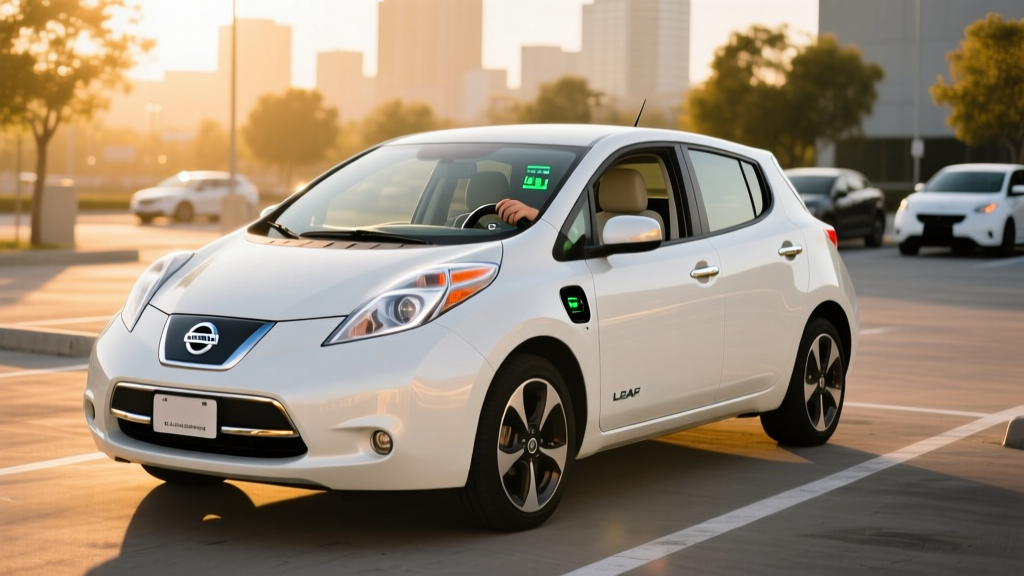
The 2011 Nissan Leaf hatchback holds a singular place in automotive history: it was the first mass-market, purpose-built battery electric vehicle sold in the United States. More than a decade later, it remains one of the most affordable entry points into EV ownership on the used market — often changing hands for under $6,000. But buying a 14-year-old electric car requires a different calculus than shopping for a new one. Battery health is everything, charging is slow by modern standards, and the real-world range is a fraction of what today's EVs deliver. This profile breaks down exactly what you need to know before putting money down on the original Leaf.
2011 Nissan Leaf Hatchback: Core Specifications
| Specification | 2011 Nissan Leaf (SL/SV) |
|---|---|
| EPA Range | 73 miles |
| Battery Capacity | 24 kWh (usable ~21.5 kWh) |
| Battery Chemistry | Lithium-ion (NMC — nickel manganese cobalt) |
| Motor Output | 80 kW (107 hp), 207 lb-ft torque |
| Drivetrain | FWD (front-wheel drive, single motor) |
| 0–60 mph | ~9.9 seconds |
| EPA Efficiency | 99 MPGe combined (34 kWh/100 mi) |
| Max DC Fast Charge | ~44 kW peak (CHAdeMO) |
| Level 2 Charge Rate | 3.3 kW (J1772) |
| Cargo Volume | 14.5 cu ft (rear seats up), 24.0 cu ft (folded) |
| Original MSRP | $32,780 (SV) – $34,780 (SL) before incentives |
| Typical Used Price (2025–2026) | $3,500 – $7,000 |
| Battery Warranty (Original) | 8 years / 100,000 miles (capacity guarantee ≥ 70%) |
Real-World Range: What 73 EPA Miles Actually Means
Real-World Expectation: 55–65 miles (highway/cold weather), 70–80 miles (city, mild weather, healthy battery)
Critical Caveat: Most 2011 Leafs now have significant battery degradation — expect 50–60 miles of usable range on a typical used example.
The 2011 Leaf's 73-mile EPA estimate was modest even at launch, and it becomes the central ownership reality you must plan around. The 24 kWh battery pack (approximately 21.5 kWh usable due to top/bottom buffer) powers a car with no active thermal management system — Nissan relied on passive air cooling for the battery. This design decision has lasting consequences.
In mild city driving at moderate speeds (30–45 mph) with a healthy battery, some owners report achieving 75–80 miles. The Leaf's regenerative braking recaptures energy efficiently in stop-and-go traffic. However, highway driving at 70+ mph cuts range dramatically due to aerodynamic drag and the absence of a multi-speed transmission. Expect 55–65 miles at sustained interstate speeds.
Cold weather is the 2011 Leaf's kryptonite. Without a battery heating system or heat pump, lithium-ion chemistry slows in freezing temperatures, and cabin heating draws directly from the traction battery. At 20°F, range losses of 30–40% are well-documented by owners. A 73-mile EPA car becomes a 40–50 mile car in a Minnesota January.
The passive thermal management also means summer heat degrades the battery faster. Leafs in Phoenix, Las Vegas, and central Texas show measurably higher capacity loss than those in the Pacific Northwest. This is the single most important factor when evaluating a used 2011 Leaf — where it lived matters as much as how many miles it has.
Charging: CHAdeMO, 3.3 kW Level 2, and the Speed Reality
| Charging Level | Connector | Max Power | Charge Time (Empty → Full or 80%) | Miles Added per Hour |
|---|---|---|---|---|
| Level 1 (120V) | J1772 | 1.2 kW | ~21 hours (full) | ~4 mi/hr |
| Level 2 (240V) | J1772 | 3.3 kW (16A onboard charger) | ~7 hours (full) | ~12 mi/hr |
| DC Fast Charge | CHAdeMO | ~44 kW peak | ~30 min (10–80%) | ~80–90 mi/hr (at peak) |
The 2011 Leaf's onboard charger is limited to 3.3 kW — half of the 6.6 kW charger that Nissan introduced on the 2013 model. This means a Level 2 home charger (even a 40A unit capable of 9.6 kW) will only deliver 3.3 kW to the car. A full charge from empty takes roughly 7 hours on Level 2, which is adequate for overnight charging but limits opportunity charging during the day.
DC fast charging uses the CHAdeMO connector, which was the dominant standard in 2011 but has since been eclipsed by CCS and NACS (Tesla's connector). As of 2025–2026, CHAdeMO infrastructure is shrinking — Electrify America never adopted it, and many older CHAdeMO stations at Nissan dealerships and Walmart locations have been decommissioned or left unmaintained. According to PlugShare, CHAdeMO availability varies heavily by region, and you should verify local coverage before committing to a 2011 Leaf as a daily driver.
Peak DC fast-charge rate is approximately 44 kW, though sustained rates taper significantly above 80% state of charge. A 10–80% charge takes roughly 30 minutes under ideal conditions. In practice, battery temperature plays a major role: a hot battery (common after highway driving in summer) will cause the BMS to throttle charge rates to protect the cells — a phenomenon Leaf owners call "Rapidgate." On a hot day after sustained driving, you may see DC charge rates drop to 20 kW or lower.
Performance and Driving Impressions
The 2011 Leaf's 80 kW AC synchronous motor produces 107 horsepower and 207 lb-ft of torque. That torque figure is available from zero RPM, which makes the Leaf surprisingly responsive off the line. The 0–60 mph time of approximately 9.9 seconds is unremarkable, but 0–30 mph acceleration feels brisk and well-suited to urban merging.
Top speed is electronically limited to roughly 90 mph. The car is stable and comfortable at 65–75 mph, but wind and road noise become prominent above 70 mph — the Leaf prioritized efficiency over sound insulation. The front-wheel-drive layout and relatively narrow low-rolling-resistance tires (205/55R16) provide adequate grip in dry conditions but require caution in wet or snowy weather.
Regenerative braking in the 2011 Leaf is moderate — it does not offer true one-pedal driving in the way modern EVs do. The "B" mode on the shift lever increases regen, but you will still use the friction brakes regularly. The brake feel is somewhat artificial due to the blended regen/friction system, a common trait of early EVs.
Ride quality is a genuine strength. The Leaf's 3,300-pound curb weight (low for an EV, high for a compact hatchback) and soft suspension tuning make it comfortable over rough pavement. The turning radius is tight, and visibility is excellent thanks to the upright hatchback greenhouse.
Interior, Tech, and Cargo Space
The 2011 Leaf's interior was designed to communicate "futuristic" with its mouse-shaped shifter, digital instrument cluster, and a center stack dominated by a small navigation screen. The SV trim included basic cloth seats and a 4-speaker audio system, while the SL trim added a solar panel on the rear spoiler (which trickle-charges the 12V auxiliary battery, not the traction pack), LED headlights, and a cargo cover.
Infotainment is dated by any modern standard: a small resistive-touchscreen display with basic navigation, Bluetooth phone connectivity, and a USB port. There is no Apple CarPlay, Android Auto, or app-based remote preconditioning (the later CARWINGS telematics system was rudimentary and has since been discontinued for this model year).
Passenger space is generous for a compact car. Front legroom measures 41.3 inches, and rear legroom is 33.3 inches — enough for average-sized adults on shorter trips. The flat floor (no transmission tunnel) helps the rear middle seat feel more usable than in comparable gas hatchbacks.
Cargo volume is 14.5 cubic feet behind the rear seats and 24.0 cubic feet with the 60/40 split rear seats folded. The hatchback opening is wide and practical. However, the battery pack sits beneath the rear seat and cargo floor, which means there is no under-floor storage and no spare tire — Nissan provided a tire inflator kit.
Driver-assistance technology is minimal: standard ABS, stability control, and six airbags. There is no adaptive cruise control, lane-keeping assist, or automatic emergency braking. The Leaf earned a Top Safety Pick rating from the IIHS for its crashworthiness, which was notable for an early EV.
Battery Health: The Make-or-Break Factor
Buying a 2011 Leaf is, fundamentally, buying a used battery with a car attached. The 24 kWh NMC (nickel manganese cobalt) lithium-ion pack was manufactured by AESC (Automotive Energy Supply Corporation), a joint venture between Nissan and NEC. These cells were well-engineered for their time, but the passive air-cooling system accelerates degradation — especially in hot climates.
Nissan's original battery warranty guaranteed the pack would retain at least 70% of its original capacity for 8 years or 100,000 miles. As of 2026, every 2011 Leaf is past the 8-year mark, meaning factory battery warranty coverage has expired on all examples. If the battery fails or drops below a usable capacity, replacement is entirely out of pocket.
According to data aggregated by the U.S. Department of Energy, typical 2011 Leaf battery degradation at 100,000+ miles ranges from 20% to 40% capacity loss depending on climate. A Leaf in Seattle might retain 75–80% of its original capacity (yielding ~55–58 real-world miles), while one in Phoenix may be down to 60–65% (~40–48 miles).
The dashboard "capacity bars" (12 bars displayed on the instrument cluster) provide a rough health indicator. A 2011 Leaf showing 12/12 bars is exceptionally rare and likely has low mileage or lived in a cool climate. Most examples on the used market in 2025–2026 show 8–10 bars. Anything below 8 bars signals severe degradation that may warrant a battery replacement or swap.
Battery replacement options include:
- Nissan OEM replacement: Historically priced around $6,500–$8,500 installed, though availability has become inconsistent as Nissan prioritizes newer models.
- Used/refurbished pack swap: $2,500–$4,500 from salvage yards or EV specialist shops, though you inherit the donor pack's degradation history.
- Aftermarket 40 kWh upgrade: A small number of specialist shops have performed 40 kWh (2018+ Leaf) battery swaps into 2011–2017 chassis, yielding 120+ miles of range. Cost: $7,000–$10,000.
Pricing, Used Market Value, and Tax Credit Eligibility
| Cost Factor | Amount |
|---|---|
| Original MSRP (2011, SV trim) | $32,780 |
| Original MSRP (2011, SL trim) | $34,780 |
| Typical Used Price (2025–2026, private party) | $3,500 – $5,500 |
| Typical Used Price (dealer, certified) | $5,000 – $7,000 |
| Federal Used EV Tax Credit (§25E) | Up to $4,000 (30% of sale price, max $4,000) |
| Federal New EV Credit (§30D) | Not applicable — vehicle discontinued |
The 2011 Nissan Leaf is no longer eligible for the §30D new clean vehicle credit — it has been out of production since 2023 (the final-generation Leaf ended after the 2023 model year). However, buyers purchasing from a licensed dealer may qualify for the §25E previously owned clean vehicle credit, which provides 30% of the sale price up to a maximum of $4,000.
Per IRS guidelines, the §25E credit has several requirements:
- Sale price cap: The vehicle must sell for $25,000 or less (all 2011 Leafs qualify).
- Buyer income limits: Modified adjusted gross income cannot exceed $75,000 (single), $112,500 (head of household), or $150,000 (joint filers).
- Dealer requirement: The sale must be through a licensed dealer who reports the transaction to the IRS.
- First transfer rule: The credit applies only to the first qualified sale of the vehicle after August 16, 2022. Many 2011 Leafs have already triggered their one-time eligibility.
- Model year requirement: The vehicle must be at least two model years old (all 2011 Leafs qualify).
At a typical used price of $4,500, the 30% credit would yield $1,350 — not the full $4,000 cap. This still meaningfully reduces the effective purchase price to roughly $3,150, making the 2011 Leaf one of the cheapest ways to get into an EV. Always consult a tax professional to confirm your specific eligibility, as rules may shift and individual circumstances vary.
Who the 2011 Nissan Leaf Hatchback Is For
The 2011 Leaf is not a general-purpose vehicle in 2026. It fills specific niches where its limitations are manageable and its low cost shines:
- You need a dirt-cheap second car for a commute under 40 miles round-trip
- You have reliable home Level 2 charging and never need public DC fast charging
- You live in a mild climate (Pacific Northwest, coastal California) where battery degradation is slower
- You want to try EV ownership with minimal financial risk
- Your daily driving is almost entirely city/suburban at speeds under 60 mph
- You need more than 60 miles of reliable daily range
- You live in a hot climate (Arizona, Texas, inland SoCal) where degradation accelerates
- You need DC fast charging for road trips or apartment living without home charging
- You want modern safety tech (AEB, lane-keep, blind-spot monitoring)
- You need a car that can handle freezing winters without severe range loss
Key competitors on the used market include the 2012–2014 Ford Focus Electric (23 kWh, 76-mile EPA, similarly limited), the 2012–2015 Mitsubishi i-MiEV (even shorter range, ~62 miles EPA, but extremely cheap), and the 2013–2016 Fiat 500e (83-mile EPA, more fun to drive, but rarer and pricier). The 2016+ Chevrolet Bolt EV (238-mile EPA) is a generational leap in range but costs significantly more on the used market ($9,000–$14,000).
Frequently Asked Questions
What is the real-world range of a 2011 Nissan Leaf in 2026?
With battery degradation factored in, most 2011 Leafs deliver 45–65 real-world miles depending on battery health, driving style, and climate. A well-preserved example in a mild climate might achieve 65–70 miles in city driving. Highway and cold-weather range drops to 40–55 miles. Always check the dashboard capacity bars and, ideally, request a LeafSpy diagnostic reading before purchasing.
How fast does the 2011 Leaf charge at home and on DC fast chargers?
On a Level 2 (240V) home charger, the 3.3 kW onboard charger adds roughly 12 miles of range per hour, with a full charge taking about 7 hours. DC fast charging via CHAdeMO peaks at ~44 kW, delivering a 10–80% charge in approximately 30 minutes under ideal conditions — but charge speed throttles significantly if the battery is hot or cold. CHAdeMO public infrastructure is declining, so verify local availability.
Does the 2011 Nissan Leaf qualify for any federal tax credit?
Not the §30D new vehicle credit (the car is discontinued). It may qualify for the §25E used EV credit — up to $4,000 or 30% of the sale price, whichever is less — if purchased from a licensed dealer, if the buyer meets income caps ($75K single / $150K joint), and if this is the first qualifying transfer since August 2022. Consult a tax professional for your situation.
Is the 2011 Leaf worth buying compared to a newer used EV?
If your budget is under $5,000 and your commute is short, the 2011 Leaf offers the lowest-cost entry into EV ownership. The per-mile electricity cost is still a fraction of gasoline — roughly $0.04–$0.06 per mile vs. $0.12–$0.16 for a gas compact. However, if you can stretch to $9,000–$12,000, a used 2017+ Chevrolet Bolt or 2018+ Nissan Leaf (40 kWh, 151-mile EPA) provides dramatically more range, faster charging, and modern safety tech.
What are the biggest risks of buying a 2011 Leaf?
Battery degradation is the primary risk. A heavily degraded pack may deliver only 40 miles of range and cost $6,500+ to replace — more than the car is worth. CHAdeMO charging infrastructure is shrinking, limiting road-trip utility. The car lacks modern driver-assistance features. And the 3.3 kW onboard charger makes public Level 2 charging painfully slow. Always get a battery health report (via LeafSpy or a Nissan dealer diagnostic) before purchasing.
Can I upgrade the battery in a 2011 Leaf?
Yes, but it's expensive. Nissan's OEM replacement pack costs $6,500–$8,500. Used 24 kWh packs from salvage yards run $2,500–$4,500. A few specialist shops offer 40 kWh retrofit swaps for $7,000–$10,000, which can push range to 120+ miles — but at that cost, you're often better off buying a newer used Leaf or Bolt outright.