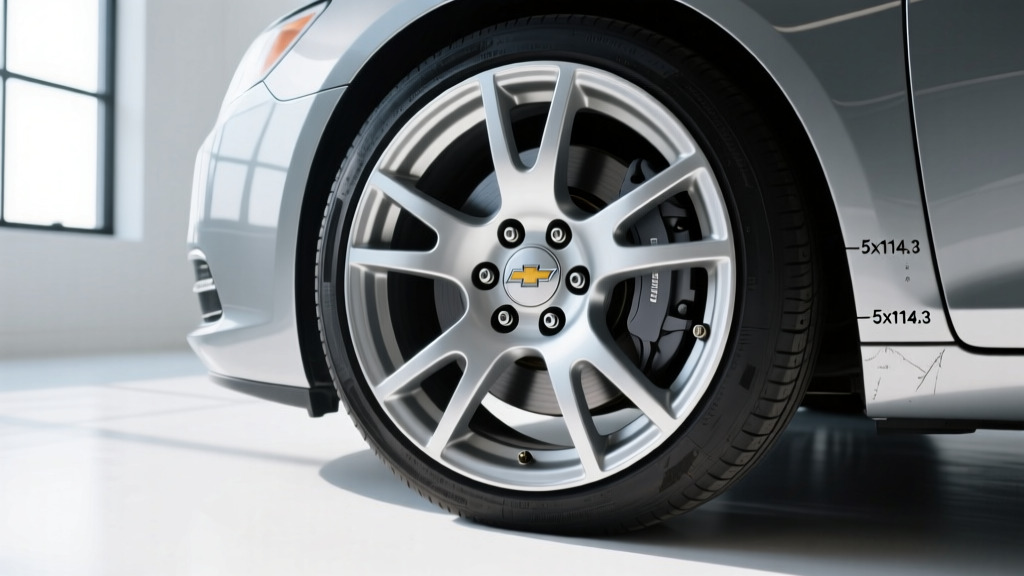
If you own a 2011 Chevrolet Impala and are exploring wheel upgrades, brake conversions, or even an EV conversion project, understanding the exact bolt pattern is essential. The 2011 Chevy Impala uses a 5x115mm bolt pattern (also written as 5x4.53 inches), meaning five lug bolts arranged on a circle with a 115mm diameter. This spec dictates which aftermarket wheels will physically mount to the hub — and it's a detail that becomes especially important if you're adapting the Impala's platform for an electric-vehicle swap or fitting lightweight wheels to improve efficiency on a modified build.
This guide covers the complete wheel specification for the 2011 Impala, how it compares to other GM platforms, and what you need to know about bolt pattern compatibility in EV conversion and aftermarket wheel selection. While the Impala itself was a front-engine, V6-powered sedan discontinued in 2020, its platform remains popular among DIY EV builders and wheel customization enthusiasts.
2011 Chevy Impala Bolt Pattern: Exact Specifications
| Specification | Value |
|---|---|
| Bolt Pattern (PCD) | 5x115mm (5x4.53") |
| Center Bore (Hub Bore) | 70.3mm |
| Lug Nut Thread Size | M12 x 1.5 |
| Stock Wheel Size | 16" to 18" (varies by trim) |
| Stock Tire Size (LS/LT) | 225/60R16 |
| Stock Tire Size (LTZ) | 225/55R17 |
| Offset Range (Stock) | +38mm to +42mm |
| Lug Nut Torque Spec | 100 lb-ft (140 Nm) |
The 5x115 pattern is shared across a wide range of General Motors vehicles, which makes sourcing compatible wheels relatively straightforward. However, bolt pattern alone does not guarantee fitment. You must also match the center bore, offset, and wheel width to avoid vibration, brake clearance issues, or suspension geometry problems.
Why Bolt Pattern Matters for EV Conversions
The 2011 Impala's body-on-subframe architecture and spacious engine bay have made it a candidate for DIY electric-vehicle conversions. Enthusiasts have used platforms like this to mount electric motors and battery packs, repurposing the chassis for zero-emission commuting. When performing an EV conversion, wheel selection directly impacts:
- Efficiency: Lighter wheels reduce unsprung mass, improving energy consumption measured in kWh per mile. A 2-3 lb reduction per wheel can yield measurable range gains on a battery-limited conversion.
- Regenerative braking compatibility: EV conversions often use larger brake rotors or regenerative hub motors. The 70.3mm center bore and 5x115 PCD must accommodate any new hub assembly.
- Weight distribution: Battery packs add 500-1,000+ lbs to a converted vehicle. Proper wheel offset and load-rated tires become critical for handling safety.
If you're sourcing a donor Impala for a conversion, verifying the 5x115 bolt pattern on the actual hub (rather than relying on year/make/model databases) is a best practice. Some fleet-spec Impalas had variations in hub assemblies across model years.
Vehicles Sharing the 5x115 Bolt Pattern
One advantage of the 5x115 pattern is the large pool of compatible wheels from other GM vehicles. This cross-compatibility is useful whether you're looking for lightweight alloy options, winter wheel sets, or wheels with specific offsets for a lowered or converted vehicle.
| Vehicle | Model Years | Center Bore |
|---|---|---|
| Chevrolet Impala | 2000–2020 | 70.3mm |
| Chevrolet Malibu | 2004–2024 | 70.3mm |
| Cadillac CTS | 2003–2019 | 70.3mm |
| Cadillac ATS | 2013–2019 | 70.3mm |
| Buick LaCrosse | 2005–2019 | 70.3mm |
| Buick Regal | 2011–2020 | 70.3mm |
| Pontiac Grand Prix | 2004–2008 | 70.3mm |
| Chevrolet Lumina (AU/NZ) | 2000–2006 | 70.3mm |
How to Measure and Verify the 5x115 Bolt Pattern
Don't take the bolt pattern on faith — verify it physically, especially if the vehicle has had prior wheel or hub work. Here's how:
- Count the lugs: The 2011 Impala has 5 lug nuts per wheel.
- Measure the pitch circle diameter (PCD): For a 5-lug pattern, measure from the center of one lug hole to the far edge of the lug hole directly across from it (skipping one hole). This should read 115mm (4.53 inches).
- Use a bolt pattern gauge: A dedicated PCD gauge (available for under $15) gives the most accurate reading and eliminates the parallax error of a tape measure.
- Check the center bore: Use calipers to measure the hub pilot diameter. It should read 70.3mm.
For EV conversions where you may be swapping hub assemblies or using adapter plates, this physical verification prevents costly ordering mistakes. A 5x114.3mm pattern (common on Japanese vehicles) is only 0.7mm different — close enough to cause cross-threading or vibration if forced onto a 5x115 hub.
Wheel Options for Efficiency-Focused Builds
If your goal is reducing energy consumption — whether on an EV conversion or simply maximizing fuel economy on the stock 3.5L or 3.9L V6 — wheel mass and aerodynamics matter more than most owners realize.
- Forged aluminum wheels: Typically 20-30% lighter than cast equivalents in the same size. Forged 17" wheels in 5x115 are available from manufacturers like Enkei (PF01 in 5x114.3, close but not exact — verify fitment) or custom-order from Wheel Pros.
- Aero disc wheels: Flat-faced wheels with minimal spoke openings reduce aerodynamic drag at highway speeds. EV conversions benefit disproportionately from aero wheels, as drag accounts for a larger share of total energy consumption when rolling resistance is already minimized.
- Low rolling resistance tires: Pair lightweight wheels with LRR tires (e.g., Michelin Energy Saver, Continental EcoContact) for a combined efficiency improvement of 3-5% in real-world driving.
Keep in mind that the 2011 Impala's stock suspension was tuned for comfort, not performance. Significantly reducing unsprung weight may make the ride feel harsher unless you also adjust spring rates or damping.
EV Conversion Considerations: Brakes, Hubs, and Adapters
When converting a 2011 Impala to electric drive, the bolt pattern intersects with several other systems:
Brake upgrades for added weight
Battery packs in a trunk-mounted or under-floor configuration can add 600-1,200 lbs to the vehicle. The stock front brake rotors (296mm on most trims) may be undersized for the increased mass. Aftermarket big-brake kits in 5x115 are available but limited — you may need to source from the Cadillac CTS-V or use adapter brackets from companies like Flynn's Fab to mount larger rotors while retaining the bolt pattern.
Hub motor compatibility
Some EV conversion builders explore in-wheel hub motors. These are extremely rare in 5x115 configuration and typically require custom fabrication. Most conversions retain the stock hubs and use a central motor coupled to the existing transmission or a direct-drive setup through the differential.
Lug nut torque and safety
Electric motors deliver instant torque, which increases stress on wheel studs during hard acceleration. Always torque lug nuts to the factory spec of 100 lb-ft and re-check after the first 50 miles of driving post-installation. Consider upgrading to ARP wheel studs if your conversion produces more than 250 lb-ft of motor torque at the wheels.
Common Questions About the 2011 Impala Bolt Pattern
Can I use 5x114.3 wheels on a 2011 Impala?
Technically, the 0.7mm difference per lug means a 5x114.3 wheel may physically slide onto a 5x115 hub, but this creates an off-center mounting condition that causes vibration at speed and uneven stud loading. This is not recommended for daily driving or any vehicle carrying significant battery weight. Wobble adapters exist but introduce their own failure points.
What is the largest tire I can fit on stock 17" Impala wheels?
The stock 17x7" wheels on the LTZ trim safely accommodate up to a 235/50R17 tire without rubbing. Going wider than 235mm or using a lower aspect ratio risks inner-fender contact during full steering lock or over bumps.
Do all 2011 Impala trims share the same bolt pattern?
Yes. The LS, LT, LTZ, and fleet/police-spec 2011 Impalas all use the 5x115 bolt pattern and 70.3mm center bore. The only variation across trims is wheel diameter (16" on LS/LT, 17" on LTZ) and tire size.
Is the 2011 Impala a good candidate for an EV conversion?
It's a reasonable candidate for a budget-minded conversion. The W-body platform is well-documented, parts are abundant and inexpensive, and the engine bay accommodates a motor and controller. However, the unibody construction and front-heavy weight distribution (already 60/40 with the V6) require careful battery placement to avoid worsening handling. Most successful Impala EV conversions target 80-120 miles of range using 30-45 kWh of LFP battery cells mounted low in the chassis.
Where can I find 5x115 wheels with low weight?
Options are narrower than for the more common 5x114.3 or 5x120 patterns. Your best bets are OE take-off wheels from Cadillac ATS/CTS models (often 18-22 lbs each), custom-order forged wheels from manufacturers like Rotiform or Vossen (which offer 5x115 drilling), or aftermarket cast wheels from TSW or Konig in select designs.