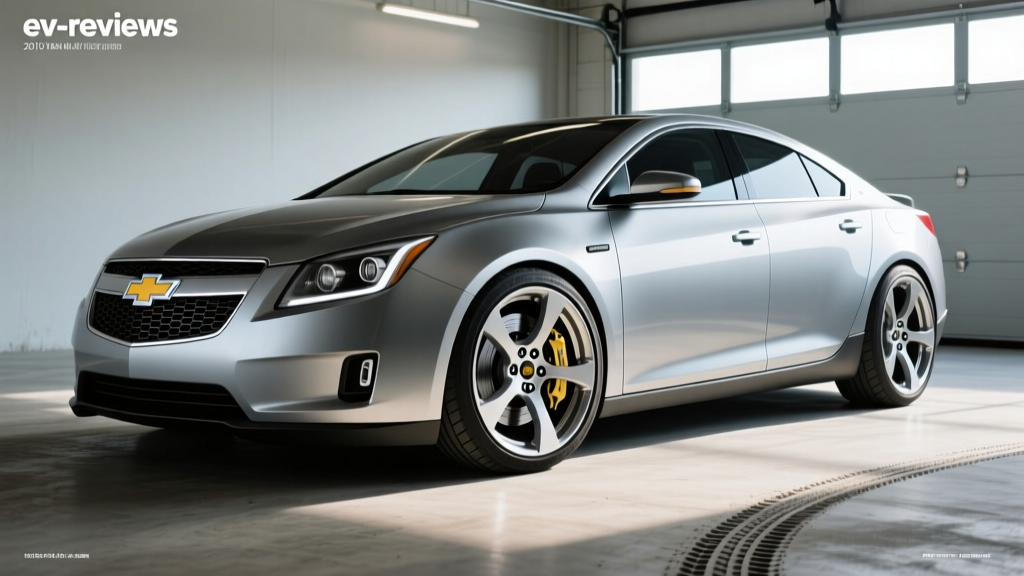
If you're researching the 2010 Chevy Malibu bolt pattern, you've likely landed here for one of two reasons: you're maintaining a ninth-generation Malibu and need precise wheel-fitment data, or you're an EV enthusiast cross-referencing legacy GM platforms against modern electric vehicles like the Chevy Bolt EV, Bolt EUV, or the upcoming Equinox EV. Either way, bolt-pattern accuracy matters — a wrong hub match means vibration, premature bearing wear, or outright mounting failure.
This guide gives you the exact 2010 Malibu wheel specs, explains how they compare to today's EV platforms, and covers the practical realities of wheel swaps, hub-centric rings, and load ratings. If you're also weighing whether to keep a legacy Malibu running or upgrade to a modern EV, we include a total-cost-of-ownership comparison to frame that decision with real numbers.
2010 Chevy Malibu Bolt Pattern: The Exact Specifications
The 2010 Chevrolet Malibu uses a 5×115mm bolt pattern (also written as 5×4.53 inches). This means five lug nuts arranged on a circle with a 115-millimeter diameter. This pattern was standard across nearly all 2008–2012 Malibu trims (LS, LT, LTZ) regardless of whether the car had the 2.4L inline-4 or the 3.6L V6.
| Bolt Pattern | 5×115mm (5×4.53") |
| Center Bore | 70.3mm |
| Lug Nut Thread | M12 × 1.5 |
| Lug Torque Spec | 100 lb-ft (135 Nm) |
| OEM Wheel Size Range | 16"–18" (17" most common) |
| OEM Offset (ET) | +40mm to +44mm |
The 70.3mm center bore is critical. Wheels with a larger bore will fit but require hub-centric rings (70.3mm outer to the wheel's inner bore) to prevent vibration at highway speeds. Wheels with a smaller bore simply won't mount. Always verify center bore before purchasing aftermarket wheels — bolt pattern alone isn't sufficient.
How the 2010 Malibu Bolt Pattern Compares to Modern EV Platforms
One reason EV owners search for the 2010 Malibu bolt pattern is to determine wheel cross-compatibility with GM's electric platforms. Here's the reality: GM has not standardized bolt patterns across its EV lineup, and the differences matter for anyone considering wheel swaps or spare-wheel strategies.
| Vehicle | Bolt Pattern | Center Bore | Cross-Compatible? |
|---|---|---|---|
| 2010 Chevy Malibu | 5×115mm | 70.3mm | — |
| Chevy Bolt EV/EUV (2017–2023) | 5×105mm | 56.6mm | No |
| Chevy Equinox EV (2024+) | 5×115mm | 70.3mm | Partial* |
| Cadillac Lyriq (2023+) | 6×120mm | 77.8mm | No |
| GMC Hummer EV (2022+) | 6×139.7mm | 77.8mm | No |
| Tesla Model 3/Y (2018+) | 5×114.3mm | 64.1mm | No |
*Partial: The Equinox EV shares the 5×115mm pattern and 70.3mm bore, but offset, wheel width, and load rating requirements differ significantly. Always verify full fitment before swapping.
The Chevy Bolt EV and EUV use a completely different 5×105mm pattern with a smaller 56.6mm center bore — a legacy of the Gamma II platform shared with the Sonic. Malibu wheels will not fit a Bolt EV under any circumstances, even with adapters, and attempting to do so is unsafe.
Why Bolt Pattern Matters More for EVs Than Gas Cars
Electric vehicles place unique demands on wheels that go beyond simple bolt-pattern fitment. If you're cross-shopping wheels or planning a spare-tire strategy for an EV, three factors are non-negotiable:
1. Load Rating
EVs are heavy. A 2010 Malibu LTZ V6 has a curb weight around 3,550 lbs. A Chevy Equinox EV 3LT tips the scales at roughly 4,700 lbs — over 1,100 lbs more. Every wheel has a maximum load rating stamped on the back. Using a wheel rated for a lighter vehicle on an EV risks structural failure, especially under hard cornering or pothole impacts. Always match or exceed the OEM load rating.
2. Offset and Brake Clearance
EVs often use larger brake calipers to handle regenerative-braking integration and higher vehicle mass. A wheel that physically bolts on may still contact the caliper. The 2010 Malibu's +40mm to +44mm offset was designed around smaller brake assemblies. Modern EV platforms may require different offsets even when the bolt pattern matches.
3. Aero Efficiency and Range Impact
Wheel design directly affects an EV's range. Wider wheels and aggressive spoke patterns increase aerodynamic drag and rolling resistance. On a EPA test cycle, switching from an OEM aero-optimized wheel to a wider aftermarket design can reduce range by 3–7%. For a vehicle rated at 315 miles EPA, that's a real-world loss of 9–22 miles per charge. On a gas Malibu, the same swap might cost 1–2 MPG — noticeable but less consequential than losing range in a charging-desert stretch.
Wheel Swap Practicalities: Adapters, Hub-Centric Rings, and Safety
If you're determined to mount wheels across platforms, here's what the physics and engineering actually allow:
- Hub-centric rings ($15–$30 per set) solve center-bore mismatches when the wheel bore is larger than the hub. They do NOT change bolt pattern.
- Bolt-pattern adapters (e.g., 5×115 to 5×114.3) exist but add 20–25mm of thickness, altering offset and scrub radius. This changes steering feel, increases bearing wear, and may void warranties. On an EV with torque-vectoring or precise regen calibration, the handling change can be pronounced.
- Never use lug-centric-only mounting on an EV. The instantaneous torque of electric motors amplifies any imbalance. A wheel that isn't perfectly centered will vibrate under acceleration, accelerating wear on bearings and suspension components.
Our recommendation: if the bolt pattern doesn't match natively, don't force it. The cost of proper wheels is always less than the cost of a bearing replacement or a crash caused by wheel separation.
2010 Malibu Ownership Costs vs. Modern EV Alternatives
If you're maintaining a 2010 Malibu and researching bolt patterns because you're replacing damaged or corroded wheels, it's worth running the numbers on whether an EV upgrade makes financial sense in 2026. Here's a five-year cost comparison:
| Cost Factor | 2010 Malibu LT | 2026 Equinox EV LT |
|---|---|---|
| Purchase Price (used/new) | ~$4,500 | ~$33,600 |
| Federal Tax Credit (§30D) | $0 | Up to $7,500* |
| Fuel/Energy (15k mi/yr) | $9,750 (gas) | $3,900 (electric) |
| Maintenance (5 yr) | $3,800 | $900 |
| Insurance (5 yr avg) | $5,500 | $7,800 |
| Estimated Repairs | $2,200 | $400 |
| 5-Year Total (approx.) | $25,750 | $49,100 |
*§30D credit subject to MSRP caps, buyer income limits, and battery-sourcing requirements per current IRS rules. Point-of-sale transfer available for qualifying purchases. Verify eligibility with a tax professional.
The Malibu wins on upfront cost, but the gap narrows every year as fuel and maintenance expenses accumulate. If your Malibu needs a transmission, head gasket, or major suspension work, the calculus shifts quickly toward replacement.
Frequently Asked Questions
What is the bolt pattern on a 2010 Chevy Malibu?
The 2010 Chevy Malibu uses a 5×115mm (5-lug, 115mm bolt circle diameter) bolt pattern with a 70.3mm center bore and M12×1.5 lug nuts torqued to 100 lb-ft.
Will 2010 Malibu wheels fit a Chevy Bolt EV?
No. The Chevy Bolt EV and EUV use a 5×105mm bolt pattern with a 56.6mm center bore. The patterns are fundamentally incompatible, and no safe adapter solution exists for daily driving.
Can I put 5×114.3 wheels on my 2010 Malibu?
While 5×114.3 (the common Honda/Toyota/Ford pattern) is close to 5×115mm, the 0.7mm difference per stud creates misalignment that causes vibration and stud stress. Some shops claim it works with lug-centric mounting, but we strongly advise against it — especially on a vehicle used for highway commuting.
What size wheels came on the 2010 Malibu?
The 2010 Malibu shipped with 16-inch steel wheels (LS trim), 17-inch alloy wheels (LT trim), or 18-inch alloy wheels (LTZ trim). OEM tire sizes ranged from 215/60R16 to 225/50R18.
Does the 2010 Malibu qualify for any EV tax credits?
No. The 2010 Malibu is a conventional gasoline vehicle and does not qualify for the IRS §30D federal EV tax credit. If you're considering upgrading to a new EV, the credit offers up to $7,500 for qualifying vehicles and buyers, subject to MSRP caps ($55,000 for sedans, $80,000 for SUVs/trucks), income limits ($150,000 single / $300,000 joint AGI), and battery critical-mineral sourcing requirements.
Where can I find OEM replacement wheels for a 2010 Malibu?
GM parts dealers, salvage yards, and online retailers like RockAuto carry OEM-spec 5×115mm wheels. Verify the 70.3mm center bore and correct offset (+40 to +44mm) before purchasing. Aftermarket options from brands like Enkei or Konig are also available in 5×115 — just confirm load rating meets or exceeds the OEM 1,433-lb per-wheel specification.
Bottom Line: Know Your Specs Before You Swap
The 2010 Chevy Malibu's 5×115mm bolt pattern is shared with several GM vehicles of that era (Impala, LaCrosse, some Cadillac models) and even resurfaces on the modern Equinox EV platform — but shared bolt pattern does not mean shared compatibility. Center bore, offset, load rating, and brake clearance all must align. For EV applications especially, the consequences of a mismatched wheel extend beyond vibration to real safety risks under the high-torque, high-weight conditions that define electric drivetrains.
If you're maintaining a 2010 Malibu, stick to verified 5×115 / 70.3mm bore wheels with appropriate load ratings. If you're exploring EV ownership, use the bolt-pattern comparison above to understand why your existing wheel collection won't transfer — and why that's actually a good thing, given the engineering demands of electric platforms.