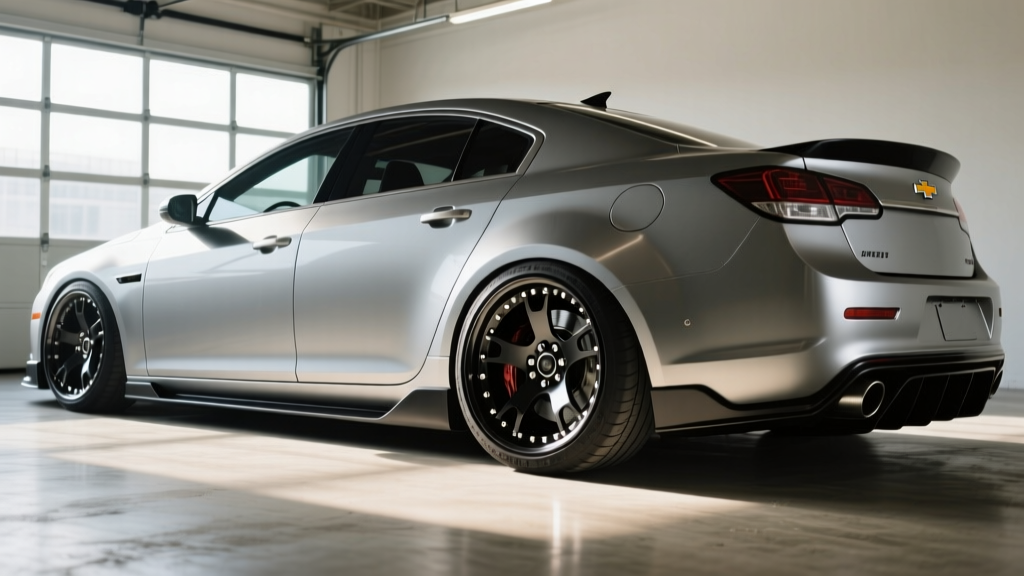
If you've landed here searching for the 2009 Chevy Malibu bolt pattern, you're likely sizing up wheels, planning a brake upgrade, or — in the most ambitious case — scoping out an EV conversion project on this popular midsize sedan. The 2009 Malibu (seventh generation, 2008–2012) was one of Chevrolet's highest-volume nameplates, and its wheel specifications remain a frequent question for enthusiasts and project builders alike.
This guide gives you the exact bolt pattern, hub bore, and fitment data you need, then pivots to what matters for electrification-minded readers: Is an EV swap realistic on this platform? And if you're simply cross-shopping a used Malibu against a modern EV, how do the economics stack up in 2026?
2009 Chevy Malibu Bolt Pattern: Exact Specifications
The 2009 Chevrolet Malibu uses a 5×115 mm bolt pattern (also expressed as 5×4.53 inches). This is a common GM metric pattern shared with several Buick, Pontiac, and Saturn models from the same era. Here are the full wheel-mount specifications:
| Specification | Value |
|---|---|
| Bolt Pattern (PCD) | 5×115 mm (5×4.53 in) |
| Center Bore | 70.3 mm |
| Thread Size (Lug Nut) | M12 × 1.5 |
| Wheel Fastener Type | Lug nut (conical/60° seat) |
| Stock Wheel Sizes | 16×6.5 (LS/LT), 17×7.5 (LTZ), 18×8 (LTZ optional) |
| OEM Tire Sizes | 215/60R16, 225/55R17, 225/50R18 |
| Recommended Offset Range | ET 38–45 mm |
Compatible Wheels and Aftermarket Options
The 5×115 bolt pattern with a 70.3 mm center bore opens up a moderate but useful selection of aftermarket wheels. Key points for sourcing:
- Direct GM fits: Many 2008–2016 GM Epsilon-platform vehicles share the 5×115 pattern and 70.3 mm bore, including the Buick LaCrosse, Chevrolet Impala (2014+), and Cadillac XTS. OEM takeoff wheels from these models bolt on directly.
- Aftermarket manufacturers: Companies like Enkei, Konig, and MSW produce 5×115 wheels in 17"–19" sizes with the correct 70.3 mm bore or hub-centric rings for a precise fit.
- Lug nut specification: Use M12×1.5 conical-seat lug nuts torqued to 100 lb-ft (135 Nm) per the factory service manual. Re-torque after 50 miles on any new wheel installation.
If you're fitting wider wheels for an EV conversion (which adds significant weight), prioritize load-rated wheels. The stock Malibu's gross axle weight rating (GAWR) is roughly 2,400 lbs front / 2,200 lbs rear; an EV drivetrain swap can push front-axle loads higher depending on motor and battery placement.
EV Conversion Feasibility on the 2009 Malibu Platform
For the mechanically ambitious, converting a 2009 Malibu to electric power is technically possible but economically challenging. Here's a realistic breakdown of what such a project entails:
Platform Considerations
The 2009 Malibu rides on GM's Epsilon II platform — a unibody structure with a front-engine, front-wheel-drive layout. This creates specific challenges for EV conversion:
- Weight distribution: The stock Malibu weighs approximately 3,400–3,600 lbs. A battery pack large enough for 150+ miles of range (roughly 40–60 kWh) adds 600–900 lbs. Without careful placement, this shifts weight forward and overloads the front suspension.
- Transmission tunnel: Unlike RWD platforms, the Epsilon II has a relatively flat floor but no deep tunnel for battery modules. Most builders fabricate a custom belly pan or use the rear trunk space for a secondary battery box.
- Suspension upgrades: Heavier springs and upgraded dampers are almost mandatory. The stock struts aren't rated for the additional mass of a 50+ kWh pack.
Typical Conversion Specs and Costs
| Component | Typical Spec | Estimated Cost |
|---|---|---|
| Motor (front-mounted) | 100–150 kW AC induction or PMSM | $3,000–$6,000 |
| Battery Pack | 40–60 kWh (salvaged Tesla/LG modules) | $6,000–$12,000 |
| Controller/Inverter | Matched to motor kW | $2,000–$4,000 |
| Charger (Level 2 onboard) | 3.3–6.6 kW | $800–$1,500 |
| DC-DC Converter | 1.5–3 kW (12V system) | $300–$600 |
| Fabrication & Wiring | Custom mounts, HV cabling | $3,000–$8,000 |
| Total Estimated | ~150 mi range, ~120 kW peak | $15,000–$32,000 |
2026 EV Alternatives: Production EVs at or Below Conversion Cost
If your goal is an affordable, practical electric vehicle rather than a weekend project, several 2026 production EVs deliver dramatically better value than a Malibu conversion. Here's how the top contenders compare:
| Spec | Malibu EV Conversion | 2026 Chevy Equinox EV | 2026 Hyundai Kona Electric | 2026 Nissan Leaf |
|---|---|---|---|---|
| EPA Range | ~120–180 mi (est.) | 319 mi | 261 mi | 212 mi (SV Plus) |
| Battery Capacity | 40–60 kWh (mixed) | 85 kWh (usable, NMC) | 65 kWh (NMC) | 60 kWh (NMC) |
| DC Fast Charge (peak) | Rarely available | 150 kW (10–80% ~25 min) | 100 kW (10–80% ~43 min) | 100 kW (10–80% ~40 min) |
| Level 2 Home Charge | 3.3–6.6 kW | 11.5 kW (~35 mi/hr) | 7.2 kW (~25 mi/hr) | 7.2 kW (~25 mi/hr) |
| 0–60 mph | 7–10 sec (est.) | 7.9 sec | 7.5 sec | 6.9 sec |
| Horsepower | ~135–200 HP | 213 HP (FWD) | 201 HP | 214 HP |
| Battery Warranty | None | 8 yr / 100,000 mi | 10 yr / 100,000 mi | 8 yr / 100,000 mi |
| Base MSRP | $15K–$32K (conversion) | $33,400 | $32,975 | $28,140 |
| Federal Tax Credit (§30D) | Not eligible | Up to $7,500* | Up to $7,500* | Up to $7,500* |
*Federal tax credit eligibility under IRS §30D depends on buyer income caps ($150K single / $300K joint AGI), vehicle MSRP caps ($55K for sedans / $80K for SUVs/trucks), and battery critical-mineral sourcing requirements. Credit can be applied at point of sale as of 2024+. Verify current-year eligibility at irs.gov.
Tax Credit Economics: Why a Production EV Often Wins
The math heavily favors a factory-built EV for most buyers. Consider the 2026 Chevrolet Equinox EV LT, which starts at $33,400:
- Base MSRP: $33,400
- Federal §30D Credit (if eligible): –$7,500
- Effective Price: ~$25,900
- Includes: 8-year/100,000-mile battery warranty, 150 kW DC fast charging, 319 mi EPA range, full ADAS suite
That effective price of roughly $25,900 undercuts most Malibu EV conversions while delivering double the range, factory warranty, crash-tested safety, DC fast charging, and modern infotainment. The conversion path only makes sense if you value the project experience itself or need a specific vehicle form factor that production EVs don't offer.
Key §30D Eligibility Requirements (2026)
- Buyer income cap: Modified AGI ≤ $150,000 (single) or ≤ $300,000 (married filing jointly)
- Vehicle MSRP cap: ≤ $55,000 for sedans; ≤ $80,000 for SUVs, vans, and trucks
- Battery sourcing: Increasing percentages of critical minerals and battery components must be sourced from the US or free-trade-agreement partners (thresholds rise annually through 2029)
- Final assembly: Vehicle must be assembled in North America
- Point-of-sale transfer: Buyers can transfer the credit to the dealer at purchase, reducing the out-of-pocket price immediately
DIY EV conversions on a 2009 Malibu do not qualify for the §30D new-vehicle credit or the §25E used-EV credit, as the vehicle was not manufactured as a qualified clean vehicle. This alone represents a $4,000–$7,500 cost disadvantage versus a qualifying production EV.
Charging at Home: What Malibu Conversion Owners Need to Know
If you do proceed with a Malibu EV conversion, home charging setup is your primary refueling method. Most conversions use a J1772-compatible Level 2 onboard charger rated at 3.3 kW or 6.6 kW:
| Charging Level | Malibu Conversion (typical) | 2026 Equinox EV | Miles Added per Hour |
|---|---|---|---|
| Level 1 (120V / 12A) | 1.4 kW | 1.4 kW | ~3–5 mi/hr |
| Level 2 (240V / 32A) | 6.6 kW | 7.7 kW | ~20–28 mi/hr |
| Level 2 (240V / 48A) | Not typically supported | 11.5 kW | ~35 mi/hr |
| DC Fast Charge | Rarely available | 150 kW peak | ~180 mi in 25 min (10–80%) |
A dedicated 240V / 40-amp circuit (NEMA 14-50 or hardwired) typically costs $500–$1,500 to install via a licensed electrician, depending on panel proximity and whether a service upgrade is needed. For a conversion limited to 6.6 kW onboard charging, a full overnight charge (0–100%) takes approximately 7–10 hours for a 50 kWh pack — adequate for daily commuting but limiting for road trips.
Who Should Consider a Conversion vs. a Production EV?
- You're an experienced fabricator/electrician seeking a project
- You need a specific sedan body style with a large trunk
- You enjoy the learning process and community (e.g., EV-CCL, DIY Electric Car forums)
- You're building a dedicated short-range commuter and accept 100–150 mi range
- You understand the vehicle won't qualify for tax credits or carry a factory warranty
- You want reliable daily transportation with 250+ miles of range
- You need DC fast charging for road trips
- You want federal/state tax credits ($4,000–$7,500)
- You value crash-test ratings, ADAS, and factory warranty
- You want predictable maintenance and dealer service support
- Your budget is under $35,000 after credits
Frequently Asked Questions
What is the bolt pattern on a 2009 Chevy Malibu?
The 2009 Chevrolet Malibu uses a 5×115 mm (5×4.53 inch) bolt pattern with a 70.3 mm center bore and M12×1.5 lug nuts. This is the standard GM metric 5-lug pattern used across many Epsilon-platform vehicles.
Can I put 5×114.3 wheels on a 2009 Malibu?
Technically they may physically mount, but this is not recommended. The 0.7 mm difference in bolt-circle diameter (0.35 mm per stud) causes uneven clamping force, potential vibration, and accelerated stud wear. Always use exact 5×115 wheels or verified hub-centric adapters.
How much does it cost to convert a 2009 Malibu to electric?
A realistic DIY EV conversion costs $15,000–$32,000 in parts alone, depending on battery capacity (40–60 kWh typical), motor selection, and fabrication complexity. Professional conversions can exceed $50,000. The result is typically 100–180 miles of range with no DC fast charging and no factory warranty.
Does a DIY EV conversion qualify for the federal tax credit?
No. The IRS §30D Clean Vehicle Credit applies only to new qualified plug-in electric vehicles manufactured by an OEM that meet battery-sourcing, MSRP, and assembly requirements. Converted vehicles are not eligible for §30D or the §25E used-EV credit.
What production EV is closest in price to a Malibu EV conversion?
The 2026 Nissan Leaf S starts at $28,140 (eligible for up to $7,500 in federal credits, bringing the effective price to ~$20,640), offering 149 miles of EPA range, DC fast charging, full safety equipment, and an 8-year battery warranty. The 2026 Chevy Equinox EV LT at $33,400 (as low as ~$25,900 after credits) delivers 319 miles of range.
What size wheels fit a 2009 Chevy Malibu?
Factory wheel sizes range from 16×6.5" (LS base trim) to 18×8" (LTZ optional). Aftermarket wheels in 17"–19" diameter with 5×115 PCD, 70.3 mm center bore, and ET 38–45 mm offset will fit properly. Always verify load rating for your application.