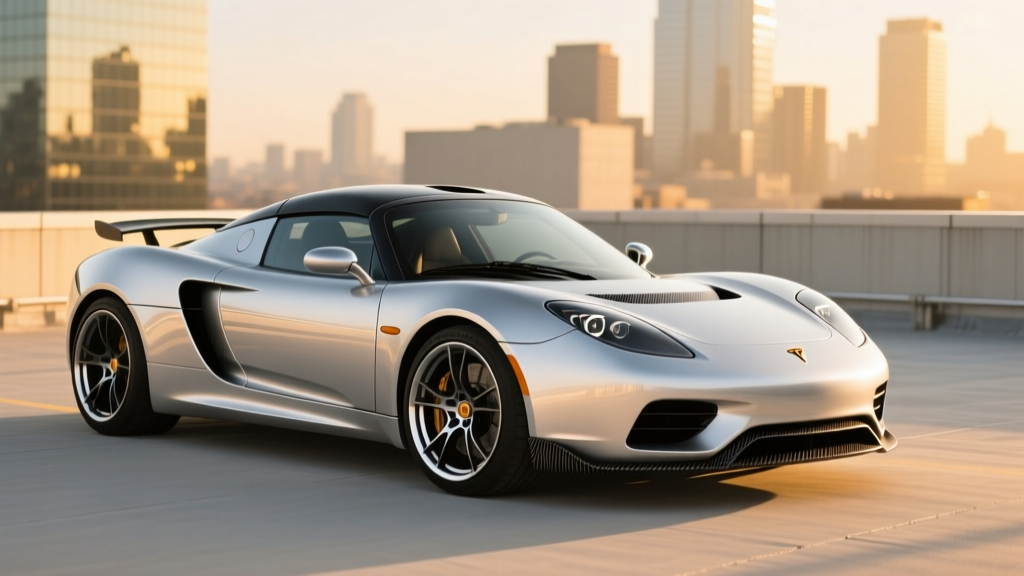
The 2008 Tesla Roadster is not just a vintage electric car — it is the vehicle that proved battery-electric performance could rival, and in some metrics exceed, internal-combustion sports cars. Built on a modified Lotus Elise chassis and produced from 2008 through 2012, roughly 2,450 units were sold worldwide. In 2026, the original Roadster exists almost entirely as a collector's piece and a milestone artifact. This review examines its specs through a modern lens so prospective collectors, EV historians, and curious enthusiasts understand exactly what this car delivers — and where its 18-year-old technology shows its age.
Quick Verdict: A Pioneer, Not a Daily Driver
The 2008 Tesla Roadster was engineered to shatter the "golf cart" stereotype that plagued early EVs. With a 244-mile EPA range, a 3.7-second 0-60 mph time, and a two-speed automatic transmission (later revised to a single-speed unit), it was genuinely exotic for its era. Today, it remains a compelling collector car, but its aging lithium-cobalt battery pack, obsolete charging architecture, and Lotus-derived cabin ergonomics make it impractical as a primary vehicle. Buyers in 2026 should approach it as an appreciating asset with real driving enjoyment — not as a commuter.
2008 Tesla Roadster Specifications at a Glance
| Spec | Value |
|---|---|
| EPA Range | 244 miles (original rating) |
| Battery Capacity | 53 kWh (usable ~48 kWh), ESS lithium-cobalt (NMC/LCO) |
| Drivetrain | Rear-wheel drive, single AC induction motor |
| Horsepower | 248 hp (Roadster), 288 hp (Roadster Sport) |
| Torque | 273 lb-ft (Roadster), 295 lb-ft (Roadster Sport) |
| 0-60 mph | 3.7 seconds (Sport: 3.5 s) |
| Top Speed | 125 mph (electronically limited) |
| Efficiency | ~280 Wh/mi (~120 MPGe combined, original EPA) |
| Curb Weight | 2,690 lbs |
| Cargo Volume | ~3.5 cu ft (rear trunk) |
| Seating | 2 passengers |
| Original MSRP (2008) | $109,000 (base), $128,000 (Sport, 2010+) |
| 2026 Collector Value | $150,000–$250,000+ (auction/auction-adjacent) |
Range and Real-World Efficiency
Real-World Expectation in 2026: 150–200 miles depending on battery health, ambient temperature, and driving style. Highway driving at 70+ mph reduces range by 20-30% versus the EPA figure. Cold-weather operation (below 40°F) can cut range by an additional 25-35% due to the Roadster's resistive cabin heating and lack of a modern heat pump.
The original Roadster's Energy Storage System (ESS) used 6,831 individual lithium-cobalt 18650 cells — the same form factor Tesla later deployed in the Model S, but with an older, less energy-dense chemistry. When new, the pack delivered roughly 48 kWh of usable energy from a 53 kWh gross capacity, buffered to protect cell longevity.
For a 2026 collector evaluating a used Roadster, the critical metric is not the original 244-mile sticker but the battery's State of Health (SoH). Most original ESS packs have degraded 20-40% over 15-18 years, depending on charge habits, storage conditions, and climate. A Roadster showing 75% SoH on its diagnostic screen will realistically deliver 160-180 miles in mild conditions. Tesla offered an ESS replacement program for approximately $29,000-$35,000 in later years, though parts availability for this program has become limited as the company focuses on current production.
Charging: Speeds, Connectors, and 2026 Realities
The 2008 Roadster predates modern DC fast-charging standards. It was designed primarily for home and destination charging, which shapes its usability today.
| Charging Level | Power / Rate | Time / Notes |
|---|---|---|
| Level 1 (120V) | ~1.4 kW | ~4 miles of range per hour; full charge in 30+ hours |
| Level 2 (240V) — Universal Mobile Connector | Up to 16.8 kW (70A) | ~58 miles/hr; 0-100% in ~3.5 hours (new battery) |
| DC Fast Charging | Not natively supported | No CCS, CHAdeMO, or NACS DC inlet; no Supercharger access |
The Roadster's proprietary charge port — a precursor to Tesla's later connectors — accepts the Universal Mobile Connector (UMC) that shipped with the car, which includes adapters for NEMA 14-50 (240V, 50A) and standard 120V outlets. Some owners have installed third-party J1772 adapters, but the ecosystem is limited.
The absence of DC fast charging is the Roadster's most significant functional limitation by 2026 standards. You cannot pull up to a Tesla Supercharger, Electrify America, or any modern DC network and charge. Road trips require meticulous planning around Level 2 destinations — hotels, restaurants, or public J1772 stations — and patience for multi-hour top-ups. For collectors who trailer the car to events or drive it locally, this is a manageable trade-off. For anyone considering it as a weekend tourer, it is a dealbreaker.
Performance and Driving Dynamics
The Roadster's rear-mounted AC induction motor produces 248 hp (288 hp in the Sport variant introduced in 2010). Torque delivery is instantaneous, as with all EVs, and the car's 2,690-pound curb weight — remarkably light by modern EV standards — gives it a power-to-weight ratio that still impresses.
The original two-speed automatic transmission (developed with Magna) was problematic in early production, with some units experiencing premature wear. Tesla later replaced it with a single-speed reduction gear in most cars, which improved reliability at a slight cost to top-end acceleration. The 3.7-second 0-60 mph time (3.5 s for the Sport) remains brisk, though it is eclipsed by a modern Model 3 Performance (2.9 s) or even a base Model Y Long Range (4.8 s, but with far more utility).
Handling benefits from the Lotus Elise-derived bonded aluminum chassis, double-wishbone suspension, and near 50/50 weight distribution. The steering is unassisted and communicative — a rarity in 2026 — but heavy at low speeds. There is no regenerative braking mode selection; regen is fixed and moderate, and the friction brakes (Brembo-sourced) do most of the stopping work. One-pedal driving, a hallmark of modern EVs, is not a feature here.
Interior, Tech, and Daily Usability
The cabin is essentially a Lotus Elise interior with Tesla-specific instrumentation. You get a small touchscreen display (diagnostics, charge settings, basic trip data), heated seats, and air conditioning. There is no navigation, no Bluetooth audio streaming, no driver-assistance features, no rearview camera, and no over-the-air updates. The removable soft-top roof panel stores in the trunk, consuming a significant portion of the 3.5 cu ft cargo space.
Legroom is adequate for drivers under 6'2", but ingress and egress require the flexibility of a sports-car owner — the sills are wide and the seating position is low. The "frunk" (front trunk) is small, roughly 1.5 cu ft, suitable for a charge cable and a small bag.
By 2026 standards, the Roadster's technology suite is archaic. There is no Autopilot, no adaptive cruise control, no lane-keeping assist, and no blind-spot monitoring. This is a pure, analog-feeling driving experience wrapped in an electric powertrain — which is either a virtue or a limitation depending on your expectations.
Pricing, Collector Value, and Tax Credit Eligibility
The 2008 Tesla Roadster is no longer available new. Original MSRP was $109,000 for the base model and approximately $128,000 for the Sport (introduced for the 2010 model year). In 2026, collector-market values have appreciated significantly:
| Condition / Variant | Approximate Value |
|---|---|
| Driver-quality, original battery (degraded) | $150,000–$180,000 |
| Excellent, documented service history | $180,000–$220,000 |
| Low-mileage, replacement ESS or Sport | $220,000–$300,000+ |
| Celebrity-provenance or #0001 chassis | $400,000+ (auction record: ~$1.09M in 2022) |
Federal Tax Credit: The IRS §30D clean vehicle credit does not apply to the purchase of a used 2008 Tesla Roadster under the new-vehicle provisions. The separate used-EV credit (§25E, up to $4,000) has strict eligibility requirements including a sale price cap of $25,000, which no Roadster meets in 2026. There is no federal tax credit available for this vehicle at current market prices. State or local incentives for collector or classic vehicle electrification do not meaningfully apply. Consult a tax professional for your specific situation.
Warranty and Long-Term Ownership Considerations
The original warranty — 3 years/36,000 miles bumper-to-bumper and 5 years/60,000 miles on the powertrain and battery — expired over a decade ago for every Roadster on the road. Tesla's ESS replacement program offered a path to a refreshed battery, but availability and pricing in 2026 are uncertain and best confirmed directly with Tesla Service or authorized third-party specialists like Gruber Motor Company, which has historically serviced Roadster battery packs.
The Power Electronics Module (PEM), which manages motor control and charging, is another known failure point. Replacement or refurbishment costs range from $5,000 to $12,000 depending on the issue. The air conditioning compressor, which also cools the battery during charging, is critical — a failed A/C compressor can prevent the car from charging safely.
Prospective buyers should budget $5,000-$15,000 annually for maintenance and potential repairs, and prioritize examples with documented PEM service, ESS health reports, and recent cooling-system work.
Pros and Cons
- Historic significance — the car that launched Tesla and the modern EV era
- Lightweight (2,690 lbs) with Lotus-derived handling
- 3.7s 0-60 mph remains genuinely quick
- Appreciating collector asset with strong auction demand
- Removable roof panel, open-air driving
- Active owner community and specialist support network
- No DC fast charging — road trips require extensive planning
- Battery degradation (20-40% typical) limits real-world range to 150-200 mi
- No modern driver assists, infotainment, or OTA updates
- Lotus-sourced parts (suspension, body panels) can be difficult to source
- PEM and A/C compressor are expensive known failure points
- No federal tax credit at current market prices
- Cabin is cramped, noisy, and spartan by modern standards
Who Should Buy the 2008 Tesla Roadster?
This car is for you if: You are an EV collector or automotive historian who wants the foundational vehicle of the electric-car revolution. You plan to drive it locally, show it at events, and store it in a climate-controlled garage. You accept the maintenance costs and charging limitations as part of owning a pioneering artifact.
Look elsewhere if: You want a daily-driver EV, a road-trip-capable electric sports car, or modern technology. Consider a used Tesla Model 3 Performance, a Porsche Taycan, or the upcoming second-generation Tesla Roadster (announced, not yet in production as of 2026) for contemporary performance with modern charging infrastructure.
Frequently Asked Questions
What is the real-world range of the 2008 Tesla Roadster in 2026?
Expect 150-200 miles depending on battery State of Health, temperature, and driving style. The original 244-mile EPA rating assumed a new battery under ideal conditions. Highway driving at 75 mph and cold weather (below 40°F) will reduce range significantly — plan for 120-150 miles in winter highway use.
How fast does the 2008 Roadster charge at home?
At its maximum Level 2 rate of 16.8 kW (240V, 70A via the Universal Mobile Connector), the Roadster adds approximately 58 miles of range per hour, achieving a full charge in roughly 3.5 hours with a healthy battery. On a standard NEMA 14-50 outlet (240V, 50A), expect about 40 miles per hour. Level 1 (120V) adds roughly 4 miles per hour. There is no DC fast-charging capability.
Can the 2008 Tesla Roadster use Tesla Superchargers?
No. The Roadster uses a proprietary charge port that predates the Tesla Supercharger network. It cannot connect to any modern DC fast-charging network (Supercharger, Electrify America, EVgo, etc.) without significant custom modification, which is not recommended.
Does the 2008 Tesla Roadster qualify for any federal EV tax credit?
No. The IRS §30D new clean vehicle credit applies only to new vehicles meeting MSRP, income, and battery-sourcing requirements. The used-EV credit (§25E) caps eligible sale prices at $25,000, far below the Roadster's 2026 collector value. No federal tax credit is available for this purchase.
What is the biggest risk of buying a 2008 Roadster today?
Battery and PEM (Power Electronics Module) health. A degraded ESS limits range and usability; a failed PEM can immobilize the car. Always request a Tesla Service diagnostic report or an independent assessment from a Roadster specialist before purchase. Budget $10,000-$30,000 for potential battery or electronics work within the first few years of ownership.
Is the 2008 Tesla Roadster a good investment?
Historically, yes — values have appreciated from the $109,000 original MSRP to $150,000-$300,000+ depending on condition and provenance. As one of fewer than 2,500 units produced, with direct ties to Tesla's origin story, it has collector appeal. However, like any exotic car, maintenance costs are substantial and market values can fluctuate. Consult classic-car market data from sources like Hagerty for current valuation trends.
How does the 2008 Roadster compare to the announced next-generation Tesla Roadster?
They share only a name. The next-generation Roadster (announced in 2017, not yet in production as of 2026) is projected to feature a 620+ mile range, sub-2.0-second 0-60 mph time, all-wheel drive with tri-motor powertrain, and full Supercharger compatibility. The 2008 car is a rear-drive, single-motor, 244-mile pioneer. They occupy entirely different eras of EV technology.