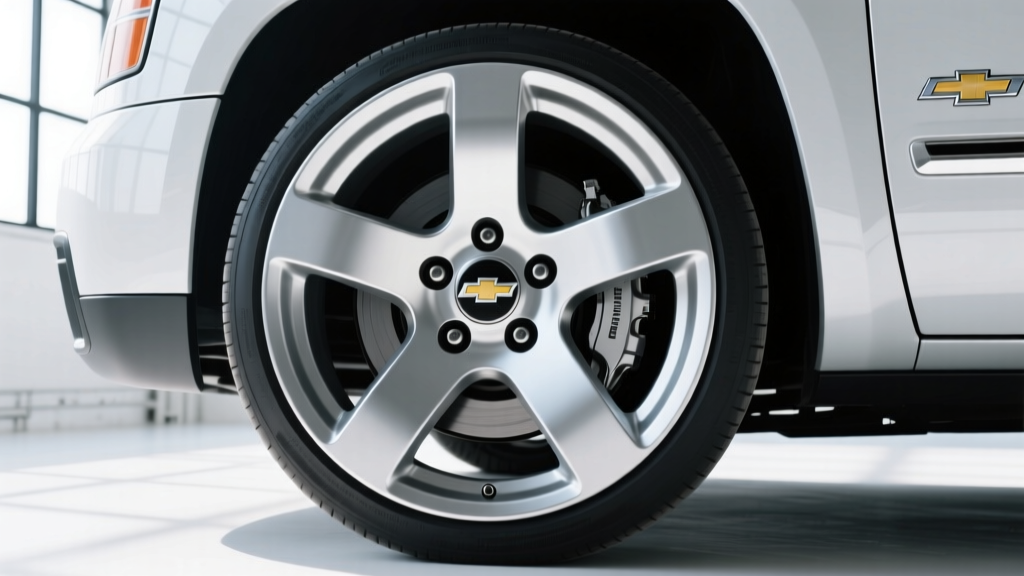
Why the 2007 Silverado Bolt Pattern Still Matters in 2026
If you own a 2007 Chevrolet Silverado 1500 — whether you're keeping the original V8 alive, swapping in a crate motor, or exploring an electric drivetrain conversion — the wheel bolt pattern is the single most important fitment number on the truck. Get it wrong and wheels won't mount, hubs won't seat, and adapters can fail under load. This guide covers the exact 2007 Chevy Silverado bolt pattern specifications, torque values, hub dimensions, and real-world considerations for anyone working on this generation of GM's full-size pickup.
| Specification | Value |
|---|---|
| Bolt Pattern (Lug Pattern) | 6 × 139.7 mm (6 × 5.5 in) |
| Lug Count | 6 |
| Thread Size | M14 × 1.5 |
| Center Bore (Hub Bore) | 78.1 mm |
| Lug Nut Torque (factory spec) | 140 lb-ft (190 N·m) |
| Lug Type | Acorn / Conical Seat (60°) |
| Stock Wheel Sizes | 16", 17", 18", 20" (by trim) |
| Typical Offset Range (OEM) | +25 mm to +31 mm |
Understanding the 6×139.7mm (6×5.5") Bolt Pattern
The 2007 Chevy Silverado 1500 uses a 6-lug bolt pattern with a 139.7 mm (5.5-inch) bolt circle diameter. This is measured from the center of one lug hole to the center of the lug hole directly opposite it, multiplied across all six positions. In the aftermarket world, you'll see this written as both 6×139.7 (metric) and 6×5.5 (imperial) — they are identical.
This bolt pattern is one of the most common in the light-truck segment. It's shared across:
- Chevrolet Silverado 1500 (1999–2026, all generations)
- GMC Sierra 1500 (same years)
- Chevrolet Tahoe / GMC Yukon / Cadillac Escalade (2000+)
- Toyota Tacoma (2005+), Toyota 4Runner, Toyota Tundra (2007–2021)
- Nissan Titan (2004–2023), Nissan Frontier
- Ford F-150 (2004–2020 — note: 2021+ moved to 6×135)
This cross-compatibility is good news if you're sourcing wheels, but matching bolt pattern alone is not enough. You also need to match center bore, offset, and load rating. A Toyota Tacoma wheel may physically bolt on, but the center bore and offset can differ enough to cause vibration or clearance issues.
Hub Bore, Offset, and What Else You Must Match
The 2007 Silverado's 78.1 mm hub bore is the machined center hole that centers the wheel on the hub. If a wheel's center bore is larger than 78.1 mm, you'll need hub-centric rings to fill the gap and prevent vibration at highway speed. If the bore is smaller, the wheel simply won't fit over the hub — no workaround.
Offset determines how far the wheel's mounting surface sits relative to its centerline. The 2007 Silverado 1500 OEM wheels typically run +25 mm to +31 mm offset. Going significantly lower (more negative offset) pushes the wheel outward, which can cause fender rub, bearing wear, and steering geometry issues. Going higher tucks the wheel inward, risking suspension and brake clearance problems.
Lug Nut Torque Specs and Re-Torque Procedure
GM specifies 140 lb-ft (190 N·m) for the M14 × 1.5 lug nuts on the 2007 Silverado 1500. This applies to all trims — WT, LS, LT, LTZ — regardless of wheel size. Key torque notes:
- Star pattern sequence: Always tighten in a criss-cross (star) pattern, not sequentially around the circle. This ensures even clamping force across all six lugs.
- Two-pass method: First pass to ~70 lb-ft, second pass to full 140 lb-ft. This prevents warping rotors or unevenly seating the wheel.
- Re-torque after 50 miles: Any time wheels are removed and reinstalled — rotation, new tires, new wheels — re-check torque after the first 50 miles of driving. Aluminum wheels especially can settle and lose clamp load.
- Never use impact wrenches for final torque: Impact guns can easily over-torque to 200+ lb-ft, stretching studs and making future removal difficult. Use a calibrated torque wrench for the final pass.
- Anti-seize caution: GM does not recommend lubricating lug studs. If you apply anti-seize, the same torque value will produce higher clamp load, risking stud failure. If studs are corroded, clean with a wire brush rather than lubricate.
Wheel Adapters and Spacers: What Works and What Doesn't
Wheel adapters let you mount wheels with a different bolt pattern onto your Silverado's hubs. Common adapter scenarios for this truck:
- 6×5.5 to 6×135 (Ford pattern): Allows Ford F-150 (2021+) wheels on a Silverado. Adapters are typically 25–32 mm thick. Ensure they're hub-centric on both sides.
- 6×5.5 to 5×120 or 5×114.3: Opens up passenger-car wheel options. Requires thicker adapters (30–38 mm) and significantly changes offset.
- Bolt-pattern spacers (same pattern): Push wheels outward 10–25 mm without changing bolt pattern. Used for clearance with larger brakes or to achieve a flush stance.
Important safety note: Adapters add a leverage arm to your hub bearings. Every 25 mm of adapter thickness increases bearing load significantly. For a truck that tows or carries heavy payloads, adapters accelerate bearing wear. For a daily-driver or show truck with light loads, quality billet adapters from reputable manufacturers (Motorsport Tech, H&R, Eibach) are generally safe when torqued to spec.
The 2007 Silverado and Electric Drivetrain Conversions
With the growth of the EV conversion aftermarket in 2026, some Silverado owners are exploring electric drivetrain swaps — pulling the V8 and installing a Tesla drive unit, Cascadia Motion stack, or NetGain Hyper9 system. The 2007 Silverado is a popular candidate because of its body-on-frame construction, abundant engine bay space, and strong aftermarket support.
How does bolt pattern factor into an EV conversion? In three ways:
- Weight increase: A typical Silverado EV conversion adds 400–800 lbs of battery mass. This increases load on wheel bearings and studs. You need wheels with a load rating that exceeds the new gross axle weight. OEM 17" Silverado wheels are typically rated for ~2,500 lbs per wheel — verify this covers your converted truck's axle weight.
- Regenerative braking forces: High-regen setups (common in EV conversions using Tesla drive units) put different cyclical loads on lug studs than friction braking alone. This makes proper torque and stud condition even more critical.
- Hub adapter requirements: If your conversion uses a Tesla rear drive unit, the output flanges use a Tesla-specific bolt pattern (typically 5×120 or 5×114.3 depending on the unit). You'll need custom adapter plates or CV axles with the correct inner/outer splines and bolt patterns to mate the Tesla drive unit to your Silverado's 6×139.7 hubs.
For conversions, many builders retain the stock Silverado axles and differentials (simply removing the driveshaft and connecting the electric motor to the existing diff) specifically to avoid the adapter problem. This preserves the 6×139.7 bolt pattern and keeps wheel options simple.
Pros and Cons of the 2007 Silverado Wheel Platform
Pros
- Extremely common 6×139.7 pattern — massive aftermarket wheel selection
- Cross-compatible with Toyota, Nissan, and older Ford truck wheels (with correct bore/offset)
- Strong M14×1.5 studs handle heavy towing loads reliably
- 78.1 mm hub bore is well-supported by hub-centric ring manufacturers
- OEM 17" and 18" wheels are abundant and affordable on the used market
Cons
- Not compatible with newer Ford F-150 (2021+) 6×135 pattern without adapters
- Stock offset range is narrow (+25 to +31 mm), limiting aggressive wheel fitments
- Aluminum OEM wheels can corrode at the bead seat, causing slow air leaks on 15+ year-old trucks
- Aftermarket "universal" 6-lug wheels often require hub-centric rings buyers forget to order
- Heavy EV conversions may exceed stock wheel load ratings
Frequently Asked Questions
What is the exact bolt pattern on a 2007 Chevy Silverado 1500?
The 2007 Chevy Silverado 1500 uses a 6×139.7 mm bolt pattern, also written as 6×5.5 inches. This is a 6-lug pattern with a 139.7 mm bolt circle diameter. The 2500HD and 3500HD models from the same year use an 8-lug pattern (8×165.1 mm / 8×6.5"), so confirm your truck's payload rating before ordering wheels.
Can I put Toyota Tacoma wheels on my 2007 Silverado?
Toyota Tacoma (2005+) wheels share the 6×139.7 bolt pattern, but many have a 106.1 mm center bore versus the Silverado's 78.1 mm hub. The wheels will physically bolt on, but you'll need 78.1-to-106.1 mm hub-centric rings to prevent vibration. Offset may also differ, so test-fit before committing to a full set.
What size lug nuts does the 2007 Silverado use?
M14 × 1.5 thread pitch with a 60° conical (acorn) seat. Use a 22 mm (7/8") socket for removal. Aftermarket wheels sometimes require spline-drive or extended-thread lug nuts — check your wheel's lug seat type before purchasing replacements.
Do I need to re-torque lug nuts after installing new wheels?
Yes. Re-torque all lug nuts to 140 lb-ft after the first 50 miles of driving on newly installed wheels. Aluminum wheels in particular compress and settle at the mounting surface, which can reduce clamp load. Re-check again at 200 miles for extra security, especially on trucks used for towing.
Will 2021+ Ford F-150 wheels fit my 2007 Silverado?
No, not directly. The 2021+ Ford F-150 switched to a 6×135 mm bolt pattern (previously 6×135 on 2004–2020 models as well, which is also different from GM's 6×139.7). The 4.7 mm difference in bolt circle diameter is enough to prevent proper seating. You'd need a 6×139.7-to-6×135 adapter, which adds thickness and changes offset.
What's the best approach for wheels on a Silverado EV conversion?
Retain the stock axles and 6×139.7 hubs if possible. Choose wheels rated for at least 2,500 lbs each to account for battery weight. If your conversion adds more than 600 lbs over stock curb weight, consider upgrading to load-range E tires and verifying that your wheel bearings are in good condition before the conversion. Many builders use OEM GM 20" wheels from 2014+ Silverados — same bolt pattern, higher load rating, and modern styling.
Sources: GM Service Information (bolt torque specifications for 2007 Silverado 1500), NHTSA vehicle specification database, and aftermarket wheel manufacturer fitment guides (Wheel Pros, American Racing).