If you're researching the 2004 Honda Accord bolt pattern, you're likely sizing up replacement wheels, planning a brake upgrade, or scoping out an EV conversion project. The seventh-generation Accord (2003–2007) remains one of the most popular sedans on the road, and understanding its wheel mounting specifications is essential before spending money on rims that may not fit.
While AutoEdgeView focuses on electric and smart vehicles, wheel fitment is a crossover topic that matters to EV converters, EV owners who need winter wheel sets, and anyone swapping from a gas Accord to an electric platform. Here's the precise data you need.
2004 Honda Accord Bolt Pattern: The Exact Specs
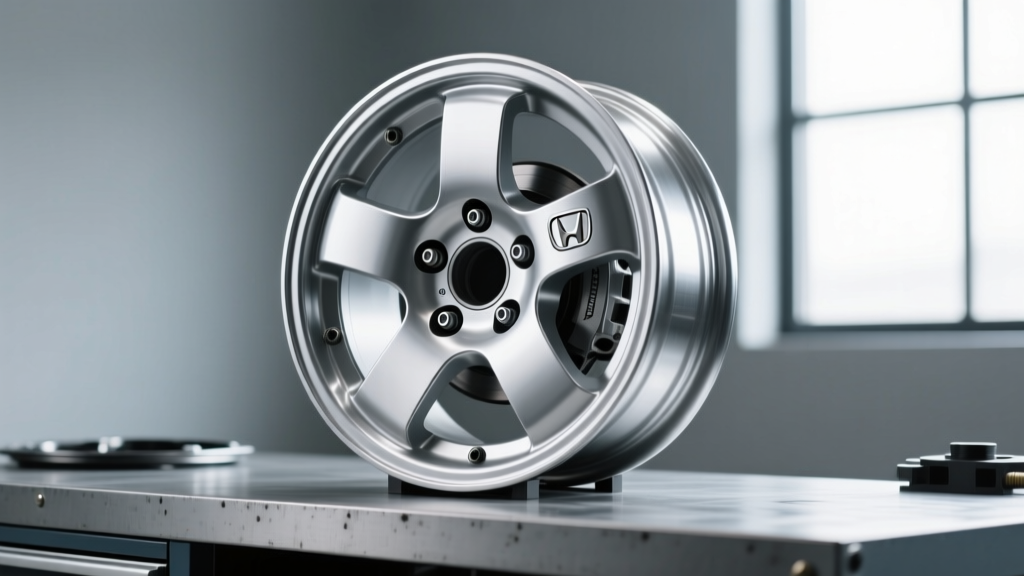
Every 2004 Honda Accord — whether LX, EX, DX, 4-cylinder, or V6 — shares the same wheel mounting pattern:
| Specification | Value |
|---|---|
| Bolt Pattern (PCD) | 5 x 114.3 mm (5 x 4.5 in) |
| Number of Lugs | 5 |
| Center Bore | 64.1 mm |
| Lug Nut Thread Size | M12 x 1.5 |
| Lug Nut Seat Type | Ball (spherical) seat |
| Typical Offset Range (OEM) | +40 to +55 mm |
| Recommended Torque | 80 lb-ft (108 Nm) |
The 5x114.3 bolt pattern (also expressed as 5x4.5 inches) is one of the most common patterns in the automotive world. It's shared by many Honda and Acura models, several Toyota and Lexus vehicles, and — critically for EV builders — some older Tesla adapter setups and aftermarket EV conversion hubs.
Why the Bolt Pattern Matters for EV Conversions
The 2004 Accord is a popular candidate for DIY electric vehicle conversions. Its engine bay accommodates a range of electric motors (NetGain Hyper9, Tesla drive units, or Nissan Leaf motors), and the chassis is well-documented. But the 5x114.3 pattern creates specific considerations:
- Wheel availability: The 5x114.3 pattern opens up an enormous selection of aftermarket wheels — far more than niche patterns like 5x112 (VW/Audi) or 5x120 (BMW). This is an advantage when sourcing lightweight forged wheels to offset battery weight.
- Hub-centric fitment: The 64.1 mm center bore must match your conversion hub or adapter plate. Running lug-centric wheels without proper hub-centric rings causes vibration at highway speeds — especially noticeable with the instant torque of an electric motor.
- Weight rating: EV conversions add 300–800 lbs over stock. Ensure any replacement wheel carries a load rating of at least 1,500 lbs per corner (6,000 lbs total) to handle the increased mass safely.
OEM Wheel Sizes for the 2004 Accord
Honda offered the 2004 Accord with several factory wheel configurations depending on trim:
| Trim Level | Wheel Size | Tire Size | Wheel Material |
|---|---|---|---|
| DX / LX (4-cyl) | 15 x 6.0 in | 205/65R15 | Steel w/ cover |
| LX (V6) / EX (4-cyl) | 16 x 6.5 in | 205/60R16 | Alloy |
| EX (V6) / EX-L | 16 x 6.5 in | 205/60R16 | Alloy |
When planning an EV conversion, most builders move to 17-inch or 18-inch wheels to clear larger brake calipers (often needed to handle the extra weight of battery packs) and to fit low-rolling-resistance tires that maximize electric range.
Compatible Wheel Options for EV Builds
The 5x114.3 bolt pattern gives you access to wheels from several manufacturers that produce EV-optimized or lightweight options:
- Konig Hypergram (17x8, 5x114.3): Flow-formed, approximately 17.8 lbs. Popular in the EV conversion community for reducing unsprung mass.
- Enkei RPF1 (17x8, 5x114.3): Cast aluminum, approximately 16.3 lbs. One of the lightest options available in this pattern.
- Honda OEM take-offs: Wheels from the 2013–2017 Accord, 2016–2024 Civic, and 2014–2020 Acura TLX all share the 5x114.3 pattern and 64.1 mm bore — direct bolt-on compatibility.
- Tesla Model 3 wheels (caution): Tesla uses a 5x114.3 pattern but with a 64.1 mm center bore on some years, making them technically compatible. However, Tesla's +35 to +40 mm offset is more aggressive than the Accord's +40 to +55 mm, which can cause fender rubbing on a stock Accord chassis.
Lug Nut and Torque Specifications
Getting the fasteners right is non-negotiable — especially on an EV conversion where instant motor torque and regenerative braking put cyclical stress on wheel hardware:
- Thread pitch: M12 x 1.5 — this is a fine thread. Do not confuse it with M12 x 1.25 (used on some Nissan/Subaru vehicles), which will cross-thread and damage the stud.
- Seat type: Honda uses a ball (spherical) seat lug nut, not the more common conical (tapered) seat found on most aftermarket wheels. If you install aftermarket wheels with conical lug seats, you must switch to conical-seat lug nuts. Using ball-seat lugs on conical wheels (or vice versa) creates an unsafe contact patch that can loosen under load.
- Torque spec: 80 lb-ft (108 Nm). Always torque in a star pattern and re-check after the first 50 miles. EV conversions should check lug torque monthly due to the higher drivetrain forces.
Offset, Backspacing, and Clearance
The 2004 Accord's OEM offset range of +40 to +55 mm is designed for a relatively narrow wheel (6.0–6.5 inches wide). When fitting wider wheels for an EV build:
- 17x7.5 at +45 mm: Fits flush with no modifications. Safe choice for most conversions.
- 18x8.0 at +40 mm: Slightly aggressive stance. May require a 3–5 mm fender roll on lowered suspensions.
- 18x9.0 at +35 mm: Requires fender modification or camber adjustment. Not recommended for daily-driven conversions.
Brake clearance is the other constraint. If your EV conversion uses a Wilwood or similar big-brake kit, measure caliper-to-spoke clearance before ordering wheels. Many lightweight wheels in 5x114.3 have narrow spoke profiles that won't clear 4-piston calipers without a spacer — and spacers change your effective offset and load dynamics.
Frequently Asked Questions
What is the bolt pattern on a 2004 Honda Accord?
The 2004 Honda Accord uses a 5x114.3 mm bolt pattern (also written as 5x4.5 inches). This is consistent across all trims: DX, LX, EX, EX-L, 4-cylinder, and V6.
Can I put 5x114.3 Tesla wheels on a 2004 Accord?
Physically, yes — Tesla Model 3 and Model Y wheels share the 5x114.3 pattern and the 64.1 mm center bore. However, Tesla's lower offset (+35 to +40 mm vs. the Accord's +40 to +55 mm) pushes the wheel outward, which may cause fender contact. A test-fit before purchase is strongly recommended.
What size center bore does the 2004 Accord need?
64.1 mm. Any wheel with a larger bore will need a hub-centric ring (e.g., 73.1-to-64.1 mm) to prevent vibration. Wheels with a smaller bore will not physically mount.
Is the 2004 Accord a good car for an EV conversion?
It's a solid mid-tier candidate. The chassis is well-built, parts are plentiful, and the engine bay accommodates common EV motors. The main limitations are the trunk space (which limits battery pack size to roughly 30–40 kWh for a practical build) and the front-heavy weight distribution. Expect 70–110 miles of range from a typical conversion, with a total build cost of $12,000–$25,000 depending on components.
What lug nuts do I need for aftermarket wheels on a 2004 Accord?
If your aftermarket wheels have conical (tapered) lug seats — which most do — you need M12 x 1.5 conical-seat lug nuts. Honda's OEM ball-seat nuts will not seat properly on conical wheels. Always match the lug nut seat type to the wheel, not the car.
How much do EV conversion wheels cost?
Lightweight 5x114.3 wheels suitable for EV conversions range from $150–$250 each for cast options (Enkei RPF1) to $350–$600 each for flow-formed or forged options (Volk Racing, BBS). A set of four, plus lug nuts and hub-centric rings, typically budgets at $800–$2,800.
Key Takeaways for EV Builders and Accord Owners
Advantages of the 5x114.3 Pattern
- Massive aftermarket wheel selection
- Shared with Honda, Acura, Toyota, Lexus, Ford, and some Tesla models
- Easy to source lightweight options to offset battery weight
- Hub-centric rings widely available for bore adaptation
Watch-Outs
- Ball-seat OEM lug nuts don't fit most aftermarket wheels
- 64.1 mm center bore is smaller than many aftermarket defaults — rings required
- Offset must stay in +35 to +55 mm range to avoid clearance issues
- EV conversions need higher load-rated wheels than stock Accord specs
Whether you're maintaining a stock 2004 Accord, fitting a winter wheel set, or building an electric conversion, the 5x114.3 bolt pattern is one of the most versatile in the industry. The critical details are the 64.1 mm center bore, the M12 x 1.5 thread, and the ball-vs-conical lug seat distinction. Get those three right, and your wheel fitment will be safe and vibration-free. For conversion-specific guidance, consult the Honda-Tech forums where EV swap builders share hub adapter specs and brake clearance measurements for specific wheel-and-motor combinations.