The Original Electric F-150: What the 2004 Lightning Actually Was
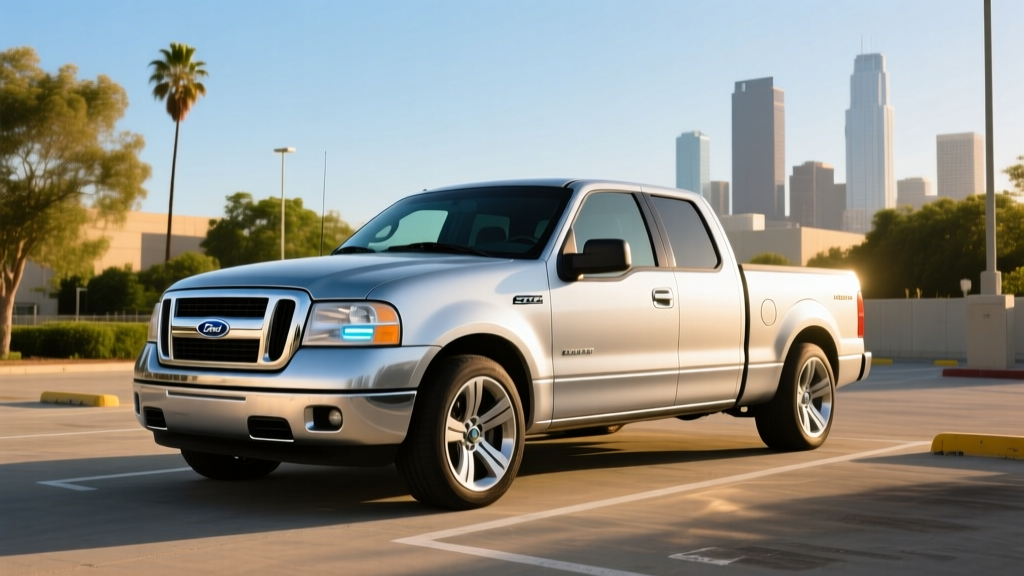
When enthusiasts search for the 2004 Ford F-150 Lightning, they're often looking for one of two things: the legendary SVT Lightning performance truck (a supercharged 5.4L V8 gas burner produced through 2004) or Ford's early electric truck experiments that predated the modern F-150 Lightning by nearly two decades. The truth is, Ford never produced a battery-electric F-150 in 2004 — but the company's EV research fleet and the Ranger EV program of the late 1990s and early 2000s laid critical groundwork for the F-150 Lightning that launched for the 2022 model year and continues through 2026.
This article unpacks what Ford was doing with electric trucks in the 2004 era, how those early platforms compared to today's F-150 Lightning, and what modern buyers should actually be evaluating when they consider Ford's current electric pickup.
Ford's Early Electric Truck Programs: The Pre-Lightning Era
Before the modern F-150 Lightning existed, Ford operated limited-production electric trucks under California's Zero Emission Vehicle (ZEV) mandate. The Ford Ranger EV (1998–2002) was the closest predecessor — a compact electric pickup with a nickel-metal hydride (NiMH) battery pack producing roughly 80 miles of range on a good day. Ford also tested electric F-150 prototypes in fleet applications around 2000–2004, but these were low-volume compliance vehicles, not consumer products.
These early electric trucks shared some characteristics:
- Battery chemistry: NiMH or lead-acid — heavy, low energy density, limited cycle life
- Range: 50–90 miles EPA equivalent, severely impacted by payload and temperature
- Charging: Level 1 (120V) only for most, with some inductive paddle chargers at 6.6 kW
- Availability: Lease-only fleet programs, primarily in California
The 2004 model year marked the end of the SVT Lightning gasoline performance truck and the winding down of Ford's early EV compliance programs. It would take nearly 18 more years before Ford committed to a production electric F-150.
2026 F-150 Lightning: The Electric Truck the 2004 Era Dreamed Of
Since anyone researching a "2004 Ford F-150 Lightning" in an EV context will ultimately want to know how the modern electric F-150 performs, here are the complete specs for the current-generation F-150 Lightning (2022–2026 model years, with 2026 updates noted).
| Specification | Standard Range | Extended Range |
|---|---|---|
| EPA Range | 240 miles | 320 miles |
| Battery Capacity | 98 kWh usable (LFP) | 131 kWh usable (NMC) |
| Battery Chemistry | Lithium Iron Phosphate (LFP) | Nickel Manganese Cobalt (NMC) |
| Horsepower | 452 hp | 580 hp |
| Torque | 775 lb-ft | 775 lb-ft |
| Drivetrain | Dual-motor AWD | Dual-motor AWD |
| 0–60 mph | ~3.8 sec | |
| Max DC Fast Charge | 150 kW | 150 kW |
| 10–80% DC Time | ~44 min | ~41 min |
| Level 2 Charge Rate | 11.3 kW (~25 mi/hr) | 19.2 kW (~42 mi/hr) w/ 80A charger |
| MPGe (Combined) | 68 MPGe | 70 MPGe |
| Efficiency | 49 kWh/100 mi | 48 kWh/100 mi |
| Max Towing | 7,700 lbs | 10,000 lbs (w/ Max Tow pkg) |
| Payload | 2,235 lbs | 1,952 lbs |
| Bed Length | 5.5 ft | 5.5 ft |
| Frunk Volume | 14.1 cu ft | 14.1 cu ft |
| Base MSRP | $54,995 (Pro) | $69,995 (Lariat) |
| Battery Warranty | 8 yr / 100,000 mi | 8 yr / 100,000 mi |
Sources: EPA fueleconomy.gov, Ford Motor Company
Real-World Range: What You'll Actually Get
EPA Sticker: 240 mi (Standard Range) / 320 mi (Extended Range)
Highway driving (70+ mph): Expect ~190–210 mi (Std) / ~255–280 mi (Ext)
Cold weather (below 32°F): Add 15–30% reduction — as low as ~165 mi (Std) / ~220 mi (Ext)
Towing (5,000+ lb trailer): Range drops 40–55% — plan for 110–140 mi (Ext) between stops
The F-150 Lightning's boxy aerodynamics and substantial curb weight (6,000–6,800 lbs depending on trim) work against highway efficiency. In Motor Trend and Edmunds real-world testing, Extended Range models consistently deliver 260–285 miles at mixed highway speeds, falling short of the 320-mile EPA figure. City driving with regenerative braking recovers more energy, sometimes exceeding EPA estimates in stop-and-go conditions.
The LFP Standard Range battery has a meaningful advantage in longevity — LFP chemistry tolerates frequent 100% charging without the degradation concerns of NMC. Ford recommends daily charging to 100% for LFP packs, whereas NMC Extended Range owners should target 80–90% daily for optimal battery life.
Charging Speed and Home Setup
| Level | Power | Miles Added/Hour | Use Case |
|---|---|---|---|
| Level 1 (120V) | 1.4 kW | ~3 mi/hr | Emergency / overnight trickle |
| Level 2 (240V, 32A) | 7.7 kW | ~17 mi/hr | Standard home charging |
| Level 2 (240V, 48A) | 11.3 kW | ~25 mi/hr | Ford Mobile Power Cord (Std Range) |
| Level 2 (240V, 80A) | 19.2 kW | ~42 mi/hr | Ford Charge Station Pro (Ext Range) |
| DC Fast Charge | Up to 150 kW | ~200 mi in 30 min | Road trips, Electrify America |
The F-150 Lightning's 150 kW DC fast-charge peak is modest compared to rivals like the Rivian R1T (which peaks at 200+ kW on newer packs) or the Silverado EV (350 kW capable). The charge curve tapers noticeably above 80% State of Charge, which is why Ford quotes 10–80% times rather than full charges. On a 150 kW Electrify America station, expect the Standard Range to add roughly 100 miles in 20 minutes, with the Extended Range adding similar mileage in slightly less time due to its larger thermal mass.
For home charging, the Ford Charge Station Pro (80A, $1,299 hardware) requires a 100-amp dedicated circuit. Professional installation typically runs $1,500–$3,500 depending on panel proximity and whether a service upgrade to 200A is needed. This is the only way to unlock the Extended Range battery's 19.2 kW onboard charger — without it, you're limited to 11.3 kW on a 48A circuit.
Technology, Driver Assists, and Standout Features
The F-150 Lightning runs Ford's SYNC 4A infotainment system on a 15.5-inch portrait touchscreen (Lariat and above) or a 12-inch screen (Pro, XLT). The truck supports wireless Apple CarPlay and Android Auto, over-the-air updates via Ford Power-Up, and includes a built-in 2 kW Pro Power Onboard generator in the bed (upgradeable to 9.6 kW on higher trims — enough to power job-site tools or serve as home backup during outages via Ford Intelligent Backup Power).
Driver assistance comes through Ford BlueCruise, which is a SAE Level 2 hands-free driving system on pre-mapped divided highways. BlueCruise allows hands-off operation with active driver monitoring via an infrared camera, but it is not autonomous — the driver must remain alert and ready to take over at any time. As of 2026, BlueCruise covers over 130,000 miles of qualified highways in North America.
Ford BlueCruise is a hands-free driver-assistance system, not self-driving. The driver must remain engaged and is legally responsible for vehicle operation at all times. Only Level 4 systems (like Waymo robotaxis) operate without a human driver.
The Mega Power Frunk (front trunk) remains a standout: 14.1 cubic feet of lockable, weatherproof storage with a 400-lb payload rating, drain plug for use as a cooler, and four 120V outlets plus two USB-C ports. No competitor offers equivalent front storage.
Pricing, Tax Credits, and Ownership Costs
| Trim | Battery | MSRP | Est. After §30D Credit |
|---|---|---|---|
| Pro | Standard Range (LFP) | $54,995 | $47,495* |
| XLT | Standard Range (LFP) | $59,995 | $52,495* |
| Lariat | Extended Range (NMC) | $69,995 | $62,495* |
| Platinum | Extended Range (NMC) | $84,995 | $77,495* |
*Federal tax credit estimates assume eligibility. See IRS rules below.
- Maximum credit: $7,500 (split: $3,750 for battery components + $3,750 for critical minerals)
- MSRP cap: Vans/SUVs/pickups must be under $80,000 — this excludes the Platinum trim
- Buyer income cap: $150,000 single / $225,000 head of household / $300,000 joint (MAGI)
- Battery sourcing: Must meet escalating critical-mineral and battery-component requirements per IRS §30D rules — check current-year manufacturer compliance letters
- Point-of-sale transfer: Eligible buyers can transfer the credit to the dealer for an upfront price reduction
- Assembly: Vehicle must undergo final assembly in North America (F-150 Lightning qualifies — built in Dearborn, MI)
Credit eligibility changes frequently. Consult a tax professional and verify on irs.gov before purchasing.
On the ownership-cost side, the F-150 Lightning's electricity cost averages $0.14/kWh nationally (varies widely by state), making a full Extended Range charge roughly $18.32 for 320 miles — about $0.057/mile. Compare that to a gas F-150 at 20 MPG and $3.50/gallon: $0.175/mile. Over 15,000 miles/year, that's a fuel savings of approximately $1,770 annually. However, insurance premiums for the Lightning run 15–25% higher than comparable gas F-150 trims, partially offsetting fuel savings.
F-150 Lightning vs. Competitors: Is It Worth Buying?
The electric pickup segment in 2026 includes the Rivian R1T, Chevrolet Silverado EV, and the upcoming Tesla Cybertruck (now in its third model year). Here's how the Lightning stacks up:
- Best-in-class frunk (14.1 cu ft)
- Pro Power Onboard (up to 9.6 kW V2L/V2H)
- LFP option for daily 100% charging
- Competitive towing (10,000 lbs max)
- Familiar F-150 ergonomics and dealer network
- BlueCruise hands-free highway driving
- 150 kW DC charging lags Rivian (200+ kW) and Silverado EV (350 kW)
- Real-world range falls 12–18% below EPA on highway
- Heavy: 6,800 lbs curb weight hurts efficiency
- Platinum trim exceeds $80K tax-credit cap
- Only 5.5-ft bed (no 6.5 or 8-ft option)
- Insurance costs notably higher than gas F-150
- Choose the Lightning if: You need a full-size truck for worksite power (Pro Power Onboard is unmatched), want the security of a massive frunk, prefer a traditional truck layout, and charge primarily at home. The LFP Standard Range Pro at ~$47,500 after credit is the value play.
- Look at the Rivian R1T if: You prioritize faster DC charging, adventure features (gear tunnel, quad-motor option), and don't need a full-size bed or 10,000-lb towing.
- Consider the Silverado EV if: Maximum range (400+ mi on 4WT trim) and 350 kW DC charging speed are your top priorities, and you can accept the polarizing design.
- Wait or choose a PHEV if: You regularly tow long distances, live in a charging desert, or need more than 320 miles between stops without route-planning hassle.
Warranty and Battery Longevity
Ford covers the F-150 Lightning's high-voltage battery for 8 years or 100,000 miles (whichever comes first) against defects and capacity loss below 70% of original capacity. The powertrain (motors, power electronics) carries the same 8-year/100,000-mile warranty. The basic bumper-to-bumper warranty is 3 years/36,000 miles.
For LFP Standard Range owners, real-world degradation data from early 2022–2023 fleet vehicles shows approximately 3–5% capacity loss over 60,000 miles — well within warranty thresholds. LFP chemistry's superior cycle life (2,000–3,000+ cycles vs. NMC's 1,000–2,000) makes the Standard Range battery a strong choice for high-mileage drivers who charge daily.
NMC Extended Range batteries show similar early-life degradation (2–4% at 50,000 miles) but are more sensitive to sustained high-State-of-Charge storage. Ford's thermal management system actively conditions the battery, and preconditioning for DC fast charging is automatic when a charge station is set as a navigation destination.
Frequently Asked Questions
Was there actually a 2004 Ford F-150 Lightning electric truck?
No. The 2004 Ford SVT F-150 Lightning was a gasoline-powered performance truck with a 380-hp supercharged 5.4L V8. Ford's battery-electric F-150 Lightning debuted for the 2022 model year. Ford did operate limited electric truck fleet programs (Ranger EV) around that era, but no production electric F-150 existed in 2004.
What is the real-world range of the 2026 F-150 Lightning?
The Extended Range model is EPA-rated at 320 miles, but real-world highway driving at 70+ mph typically yields 255–280 miles. Cold weather (below freezing) can reduce range an additional 15–30%. Towing cuts range by 40–55%. The Standard Range model's 240-mile EPA rating translates to roughly 190–210 highway miles.
How fast does the F-150 Lightning charge at home and on the road?
On DC fast chargers, the Lightning peaks at 150 kW, achieving a 10–80% charge in approximately 41–44 minutes. At home, the Extended Range battery can accept up to 19.2 kW on a dedicated 80A Level 2 circuit (adding ~42 miles per hour), while the Standard Range accepts 11.3 kW (~25 miles per hour) on a 48A circuit.
Does the F-150 Lightning qualify for the federal EV tax credit?
Most trims qualify for up to $7,500 under IRS §30D, provided the buyer meets income caps ($150K single/$300K joint) and the vehicle MSRP stays under $80,000 (which excludes the Platinum trim). Battery sourcing requirements must also be met — verify current-year compliance on irs.gov. The credit can be transferred to the dealer as a point-of-sale discount.
Is the F-150 Lightning good for towing?
The Extended Range with the Max Tow package can tow up to 10,000 lbs — competitive with mid-range gas F-150 configurations. However, towing significantly reduces range (expect 110–140 miles between charges with a heavy trailer). For frequent long-distance towing, a diesel or gas truck may still be more practical until DC charging infrastructure improves along towing corridors.
How does the 2004-era electric truck research compare to today's Lightning?
Ford's early 2000s electric trucks (Ranger EV) offered 50–90 miles of range with heavy NiMH batteries and 6.6 kW charging. The 2026 F-150 Lightning delivers 3–4× the range, 150 kW DC fast charging, 580 hp, Pro Power Onboard for job-site electricity, and BlueCruise hands-free driving — representing roughly 20 years of battery chemistry, power electronics, and software advancement.