The 2004 Ford F-150 Lightning Electric Truck Doesn't Exist — Here's What Does
If you've been searching for a 2004 Ford F-150 Lightning electric vehicle, you've likely encountered confusion, dead links, or AI-generated misinformation. Let's clear this up immediately: there was no 2004 Ford F-150 Lightning, electric or otherwise. The Lightning nameplate has a specific history, and understanding it will save you time and point you toward the trucks that actually exist.
This article breaks down what the Lightning name actually means across Ford's history, why you might be seeing references to a 2004 model, and provides the complete specs for the real electric F-150 Lightning you can buy today.
The Real History of the Ford F-150 Lightning Nameplate
The Ford F-150 Lightning badge has been used in exactly two distinct production eras — neither of which includes the 2004 model year.
First Generation: SVT Lightning (1993–1995)
Ford's Special Vehicle Team (SVT) introduced the original F-150 Lightning as a performance street truck. It featured a 5.8L Windsor V8 producing 240 horsepower — impressive for a truck in the early 1990s but modest by today's standards. This was a gasoline-powered, rear-wheel-drive truck with zero electrification.
Second Generation: SVT Lightning (1999–2004)
The second-generation SVT Lightning ran from the 1999 through 2004 model years. This is almost certainly the source of the "2004 F-150 Lightning" confusion. The 2004 SVT Lightning was powered by a supercharged 5.4L Triton V8 producing 380 horsepower and 470 lb-ft of torque. It was a gasoline-only, rear-wheel-drive performance truck. It was not a hybrid, not a plug-in, and certainly not a battery-electric vehicle.
After the 2004 model year, Ford retired the Lightning nameplate for 18 years.
Third Generation: F-150 Lightning EV (2022–Present)
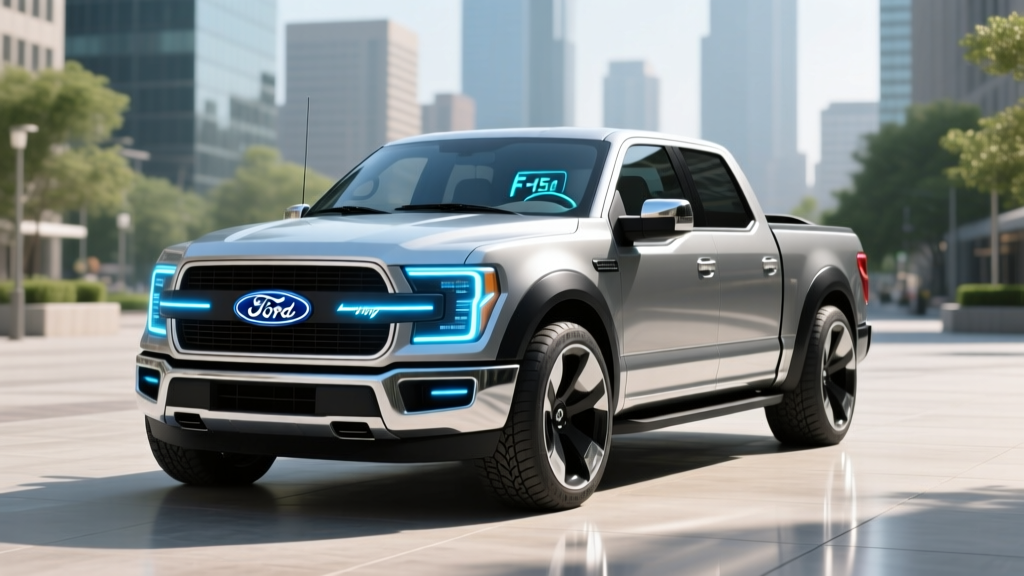
Ford resurrected the Lightning badge in 2022 — this time for a fully electric, dual-motor, all-wheel-drive pickup built on a dedicated EV platform. The 2026 F-150 Lightning continues this lineage with meaningful updates. This is the truck most people are actually looking for when they land on this search.
2026 Ford F-150 Lightning: Full EV Specs at a Glance
For buyers who arrived here looking for the electric F-150 Lightning, here are the current-generation specifications. These figures apply to the 2026 model year with the Standard Range and Extended Range battery packs.
| Spec | Standard Range | Extended Range |
|---|---|---|
| EPA Range | ~240 miles | ~320 miles |
| Battery Capacity (usable) | ~98 kWh | ~131 kWh |
| Battery Chemistry | NMC (Nickel Manganese Cobalt) | NMC |
| Drivetrain | Dual-motor AWD | Dual-motor AWD |
| Horsepower | 563 hp | 580 hp |
| Torque | 775 lb-ft | 775 lb-ft |
| 0–60 mph | ~4.0 seconds | ~3.8 seconds |
| Max DC Fast Charge | ~150 kW | ~150 kW |
| 10–80% DCFC Time | ~36 minutes | ~41 minutes |
| Level 2 Home Charging | 19.2 kW (up to ~30 mi/hr) | 19.2 kW (up to ~30 mi/hr) |
| MPGe (combined) | ~68 MPGe | ~66 MPGe |
| Max Towing Capacity | 7,700 lbs | 10,000 lbs |
| Max Payload | ~2,235 lbs | ~1,952 lbs |
| Starting MSRP | ~$54,995 | ~$69,995 |
Source: fueleconomy.gov and Ford Motor Company official specifications. Verify final 2026 figures with your dealer, as mid-year adjustments occur.
Real-World Range: What to Actually Expect
EPA Estimate: ~240 miles (Standard Range) / ~320 miles (Extended Range)
Real-World Highway (70 mph, 75°F): Expect ~200–215 miles (Std) / ~270–290 miles (Ext). The F-150 Lightning's boxy aerodynamics and 6,000+ lb curb weight hit efficiency hard at sustained highway speeds.
Cold Weather (below 32°F): Plan for 25–35% range reduction. The Extended Range pack may deliver ~210–240 miles in freezing conditions. The Lightning uses a resistive heater on some trims rather than a heat pump, which increases energy consumption in winter.
Towing: Range drops dramatically when towing — expect 50–60% reduction. A 320-mile Extended Range truck towing a 7,000-lb trailer may see 130–160 miles of real range. Plan charging stops accordingly.
The EPA number is a useful baseline, but the F-150 Lightning is one of the EVs where the gap between sticker and reality is most pronounced. Its frontal area and weight work against it on the highway, and cold weather compounds the issue. For daily commuting under 50 miles round-trip, this barely matters — you'll charge at home overnight and never think about it. For road trips and towing, route planning with fueleconomy.gov data and a charging app like PlugShare is essential.
Charging Speed: DC Fast Charging and Home Level 2
The F-150 Lightning's charging performance is adequate but not class-leading. Here's what the numbers look like in practice:
| Charging Level | Power (kW) | Miles Added per Hour | Notes |
|---|---|---|---|
| Level 1 (120V) | ~1.4 kW | ~2–3 mi/hr | Emergency only; full charge takes days |
| Level 2 (240V, 32A) | 7.7 kW | ~13 mi/hr | Standard mobile charger; overnight fill |
| Level 2 (240V, 80A) | 19.2 kW | ~30 mi/hr | Ford Charge Station Pro; requires 100A circuit |
| DC Fast Charge | Peak ~150 kW | N/A (time-based) | 10–80% in ~36–41 min; tapers above 80% |
The charging curve matters. The Lightning peaks near 150 kW only in the 10–40% state-of-charge window. From 40–80%, the rate tapers significantly — often dropping below 80 kW. This means the published 10–80% time is an average, not a sustained rate. On a road trip, you'll spend 35–45 minutes at a DC fast charger to go from 10% to 80%.
At home, the 80-amp Ford Charge Station Pro is the ideal setup, but it requires a dedicated 100-amp circuit. Many homes need a panel upgrade (200A service minimum) to support this. Budget $1,500–$3,500 for a licensed electrician to install a Level 2 setup, potentially more if your panel needs upgrading. The 32-amp mobile connector that ships with the truck works on a standard NEMA 14-50 outlet and delivers ~13 miles per hour — sufficient for daily drivers covering under 100 miles per day.
The Lightning uses the CCS1 connector for DC fast charging. Ford has announced NACS (Tesla Supercharger) adapter support, which expands the available fast-charging network significantly. Verify adapter availability and compatibility with your model year at purchase.
Pricing, Trims, and Federal Tax Credit Eligibility
| Trim | Battery | Base MSRP | Est. After §30D Credit |
|---|---|---|---|
| Pro | Standard Range | ~$54,995 | ~$47,495* |
| XLT | Standard Range | ~$59,995 | ~$52,495* |
| Lariat | Extended Range | ~$69,995 | ~$62,495* |
| Platinum | Extended Range | ~$89,995 | ~$82,495* |
*Tax credit estimates assume full eligibility. Actual credit amount depends on your individual tax situation and current IRS rules.
Federal EV Tax Credit (§30D) — Key Rules for 2026
The F-150 Lightning may qualify for up to $7,500 under the IRS §30D Clean Vehicle Credit, but eligibility is not automatic. Here are the requirements:
- MSRP Cap: Trucks/vans/SUVs must have an MSRP at or below $80,000. The Pro, XLT, and Lariat trims qualify. The Platinum trim may exceed this cap depending on options — verify the exact MSRP on the window sticker.
- Buyer Income Limits: Modified adjusted gross income (MAGI) must not exceed $300,000 (joint filers), $225,000 (head of household), or $150,000 (single filers).
- Battery Sourcing: The credit splits into two halves — $3,750 for critical minerals sourcing and $3,750 for battery component manufacturing. Both have escalating domestic-content requirements that tighten each year. Check the current IRS qualified vehicles list before purchasing.
- Point-of-Sale Transfer: As of 2024, eligible buyers can transfer the credit to the dealer at purchase, receiving it as an immediate price reduction rather than waiting to claim it on their tax return.
- Final Assembly: The F-150 Lightning is assembled in Dearborn, Michigan, satisfying the North American final assembly requirement.
Consult a tax professional before relying on the credit. IRS rules change, and your personal tax situation determines whether you can claim the full amount. State and local incentives may stack on top — check fueleconomy.gov and your state's energy office for additional rebates.
Performance, Cargo, and Technology
The F-150 Lightning's dual-motor all-wheel-drive powertrain delivers 563–580 horsepower and a massive 775 lb-ft of torque across all trims. The 0–60 mph sprint takes approximately 3.8–4.0 seconds depending on battery pack — making it one of the quickest trucks on the road, gas or electric. The instant torque delivery is particularly noticeable when merging onto highways or pulling away from stops with a loaded bed.
Cargo and Passenger Space
- Bed Length: 5.5 feet (SuperCrew cab configuration)
- Bed Volume: ~52.8 cu ft
- Mega Power Frunk: 14.1 cu ft of front trunk storage with 400 lbs payload capacity — this is a genuine differentiator. The frunk is lockable, weather-sealed, and includes a drain plug for use as a cooler.
- Front Legroom: ~43.9 inches
- Rear Legroom: ~43.6 inches
- Max Payload: Up to ~2,235 lbs (Standard Range)
- Max Towing: Up to 10,000 lbs (Extended Range with Max Trailer Tow Package)
Standout Technology
- Pro Power Onboard: Available 9.6 kW onboard generator turns the Lightning into a mobile power station. Run power tools at a job site, power a campsite, or provide backup power to your home during an outage (with the appropriate home integration system).
- SYNC 4A Infotainment: 15.5-inch touchscreen (Lariat and above) with wireless Apple CarPlay and Android Auto, over-the-air updates, and integrated navigation with charging stop routing.
- Ford BlueCruise: SAE Level 2 hands-free driver-assistance on pre-mapped divided highways. This is not autonomous driving — you must remain attentive, and the system monitors your eyes. BlueCruise is a genuine road-trip fatigue reducer, but it does not handle construction zones, unmapped roads, or complex urban driving.
- Intelligent Backup Power: With the Ford Charge Station Pro and a home transfer switch, the Lightning can power your home for up to three days during an outage (based on ~30 kWh/day average home usage).
Notable Drawbacks
- Charging speed is middling. At ~150 kW peak, the Lightning charges slower than rivals like the Rivian R1T (up to ~220 kW on newer packs) or the Chevrolet Silverado EV (~350 kW peak). Road-trip charging stops take longer.
- Towing range is brutal. Expect 50–60% range reduction under heavy tow. This is physics, not a Ford-specific flaw, but it limits the Lightning as a long-distance towing solution.
- No heat pump on all trims. Cold-weather efficiency suffers without one. Verify whether your selected trim includes a heat pump for winter optimization.
- Weight. At 6,000–6,500+ lbs, the Lightning is heavy even for a full-size truck. This affects tire wear, braking distances, and efficiency.
2026 F-150 Lightning vs. Key Competitors
| Spec | F-150 Lightning (Ext.) | Rivian R1T (Dual Max) | Chevy Silverado EV (4WT) |
|---|---|---|---|
| EPA Range | ~320 mi | ~410 mi | ~450 mi |
| Peak DCFC | ~150 kW | ~220 kW | ~350 kW |
| 0–60 mph | ~3.8 sec | ~3.5 sec | ~4.5 sec |
| Max Towing | 10,000 lbs | 11,000 lbs | 10,000 lbs |
| Starting MSRP | ~$54,995 | ~$79,900 | ~$55,000 |
| Frunk | 14.1 cu ft ✓ | 11.0 cu ft ✓ | 10.7 cu ft ✓ |
The F-150 Lightning wins on value. It undercuts the Rivian R1T by $20,000+ at the base level, offers the Pro Power Onboard feature no competitor matches, and benefits from Ford's massive dealer network for service. The Silverado EV offers more range and faster charging but arrived later to market with fewer trim options and a less established service footprint for EVs.
Choose the F-150 Lightning if: You want the best value in a full-size electric truck, need Pro Power Onboard for work or home backup, and prioritize dealer service accessibility over maximum range or charging speed.
Look elsewhere if: You need maximum road-trip range (Rivian R1T or Silverado EV), the fastest DC charging (Silverado EV at ~350 kW), or a smaller, more agile truck form factor (Rivian R1T).
Warranty and Battery Longevity
Ford backs the F-150 Lightning with the following coverage:
- Battery & Electric Powertrain: 8 years / 100,000 miles (whichever comes first), covering defects and capacity loss below 70% of original capacity.
- Bumper-to-Bumper: 3 years / 36,000 miles.
- Corrosion Perforation: 5 years / unlimited miles.
The NMC battery pack uses liquid thermal management to mitigate degradation. Based on data from 2022–2025 model-year Lightnings now accumulating high mileage, degradation appears moderate — most owners report 90–95% state of health after 30,000–50,000 miles. Long-term data (100,000+ miles) is still accumulating. To maximize battery life, Ford recommends limiting routine charging to 80–90% for daily use and only charging to 100% before long trips. Avoid frequent DC fast charging if Level 2 home charging is available.
Who Should Buy the F-150 Lightning?
- Home-charging commuters driving under 150 miles/day who can charge overnight and never visit a gas station.
- Job-site workers who benefit from Pro Power Onboard to run tools and equipment without a separate generator.
- Homeowners in outage-prone areas who value Intelligent Backup Power as a partial home generator replacement.
- F-150 loyalists who want to stay in the Ford truck ecosystem with familiar controls, dimensions, and dealer relationships.
❌ Think Twice If:
- You tow heavy trailers long distances regularly (range collapse makes this impractical without very frequent stops).
- You lack access to home Level 2 charging (public-only charging with a truck this size is expensive and time-consuming).
- You regularly drive in extreme cold and need maximum range retention (consider a PHEV truck or wait for future models with heat pump optimization).
Frequently Asked Questions
Was there a 2004 Ford F-150 Lightning electric truck?
No. The 2004 Ford F-150 SVT Lightning was a supercharged 5.4L V8 gasoline performance truck. Ford did not produce any electric or hybrid F-150 Lightning until the 2022 model year. If you're seeing "2004 F-150 Lightning EV" references online, they are either errors, AI hallucinations, or confusion with the gas-powered SVT model.
What is the real-world range of the F-150 Lightning?
The EPA rates the Extended Range at ~320 miles and Standard Range at ~240 miles. In real-world highway driving at 70 mph, expect ~270–290 miles (Extended) and ~200–215 miles (Standard). In freezing temperatures, subtract 25–35%. When towing, subtract 50–60%.
How fast does the F-150 Lightning charge?
On a DC fast charger, it peaks at ~150 kW and charges from 10–80% in approximately 36–41 minutes depending on battery size. At home on a Level 2 charger, the Ford Charge Station Pro delivers up to 19.2 kW (~30 miles of range per hour). A standard 32-amp Level 2 outlet adds ~13 miles per hour.
Does the F-150 Lightning qualify for the $7,500 federal tax credit?
It may, depending on the trim, your income, and current battery-sourcing rules. Trims with an MSRP at or below $80,000 qualify on the price cap. Buyer income must fall under IRS MAGI limits ($300K joint / $225K head of household / $150K single). Check the IRS qualified vehicle list for current battery-sourcing compliance, and consult a tax professional.
Is the F-150 Lightning worth buying over the Rivian R1T or Silverado EV?
For value and practicality, yes. The Lightning starts ~$20,000 less than the R1T, has the best frunk in the segment, and offers Pro Power Onboard and home backup power. If maximum range and faster charging are priorities, the Rivian R1T (Max Pack, ~410 mi) or Silverado EV (~450 mi, ~350 kW DCFC) are stronger. The Lightning is the best electric truck for buyers who want a workhorse at a reasonable price and charge primarily at home.
What is the biggest drawback of the F-150 Lightning?
Charging speed. At ~150 kW peak, it's the slowest DC fast-charging truck in its class. This adds 10–20 minutes to road-trip charging stops compared to the Silverado EV. For home-charging commuters, this barely matters. For frequent road-trippers, it's a genuine inconvenience.