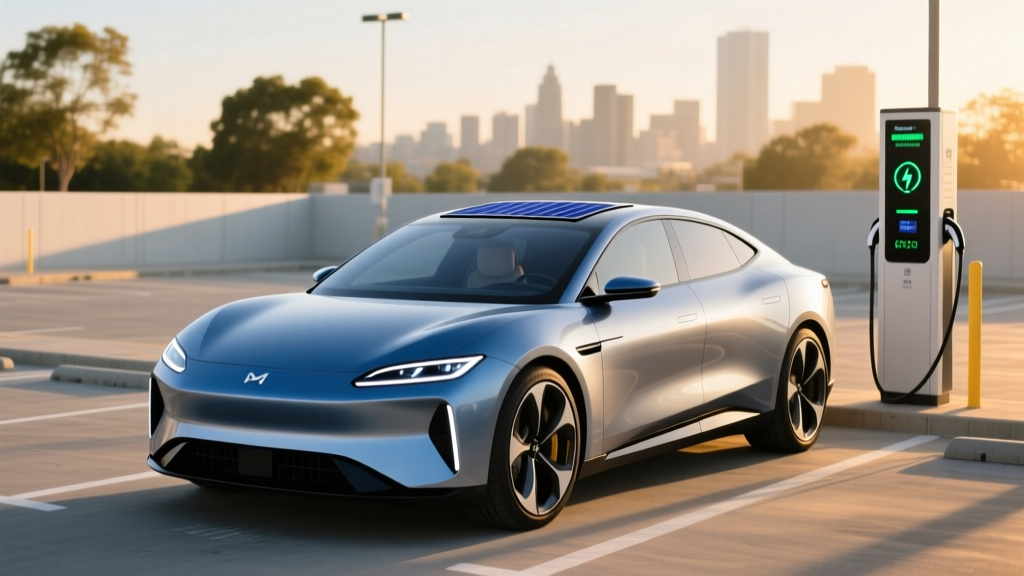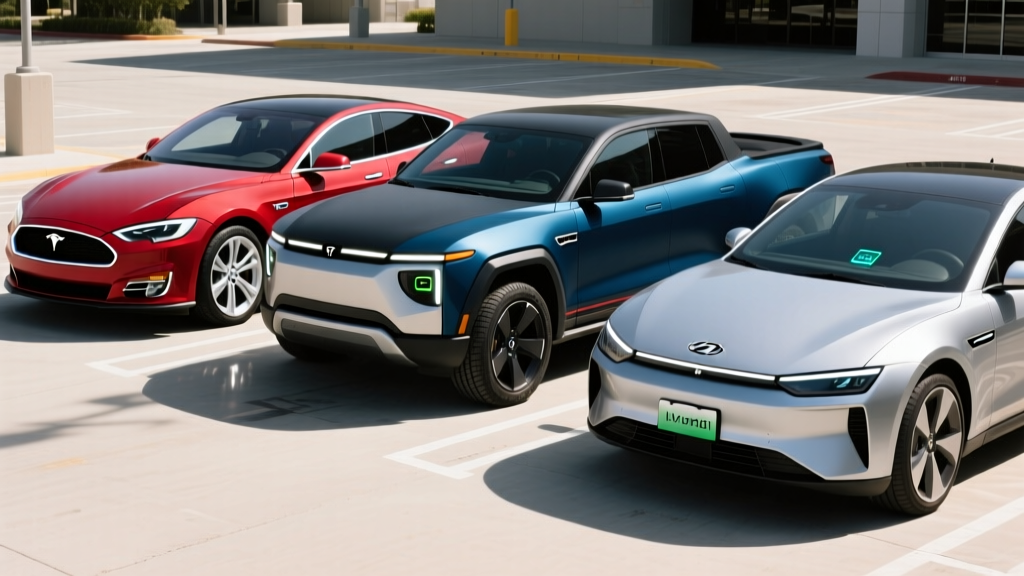
The 2003 Ford Mustang Mach I occupies a unique space in automotive history — a retro-styled muscle car revival that channeled the spirit of the original 1969-70 Mach 1 into Ford's New Edge platform. With its shaker hood scoop, 4.6-liter V8, and aggressive stance, it remains one of the most searched classic Mustangs among enthusiasts. But if you're researching the 2003 Ford Mustang Mach I today, there's a good chance you're weighing old-school muscle against modern electric performance — specifically, the Mustang Mach-E GT that carries the pony car nameplate into the EV era.
This article breaks down exactly what the 2003 Mach I offered, then holds it up against what Ford's electric platform delivers in 2026. We'll compare powertrain specs, real-world operating costs, and ownership economics with hard numbers — because nostalgia is powerful, but so is a calculator.
The 2003 Ford Mustang Mach I: Core Specifications
Before we can meaningfully compare eras, let's establish exactly what Ford built in 2003. The Mach I returned after a 25-year absence as a limited-production performance variant slotted between the GT and the SVT Cobra.
| Specification | 2003 Mustang Mach I |
|---|---|
| Engine | 4.6L DOHC V8 (Modular) |
| Horsepower | 305 hp @ 5,800 rpm |
| Torque | 320 lb-ft @ 4,200 rpm |
| Transmission | 5-speed manual (Tremec T-5) or 4-speed auto |
| 0-60 mph | ~5.5 seconds (manual) |
| Drivetrain | Rear-wheel drive |
| EPA Fuel Economy | 15 city / 23 hwy / 18 combined mpg |
| Fuel Tank | 15.7 gallons |
| Range (EPA combined) | ~283 miles per tank |
| Curb Weight | ~3,465 lbs |
| Original MSRP | $29,305 (base Mach I) |
| Cargo Volume | 10.9 cu ft (trunk) |
The Mach I's 4.6-liter four-valve V8 was a detuned version of the 2001 Cobra's engine, breathing through a functional shaker hood scoop that actually fed cold air to the intake. Ford rated it at 305 hp — a meaningful step above the standard GT's 260 hp but below the supercharged Cobra's 390 hp. The Tremec T-5 five-speed manual was the enthusiast's choice, though the four-speed automatic was available for those who preferred two-pedal driving.
The Electric Successor: 2026 Mustang Mach-E GT Profiled
The 2026 Ford Mustang Mach-E GT represents where Ford's performance philosophy landed after two decades of electrification. It's a battery-electric crossover that wears the Mustang badge — controversially, among purists — but delivers performance numbers the 2003 Mach I could never touch. Here's the full spec breakdown:
| Specification | 2026 Mustang Mach-E GT (Extended Range AWD) |
|---|---|
| Powertrain | Dual-motor AWD (permanent magnet) |
| Horsepower | 480 hp (500 hp w/ Rally edition tune) |
| Torque | 634 lb-ft |
| Battery Capacity | 91 kWh usable (NMC lithium-ion) |
| EPA Range | 290 miles |
| Real-World Range | ~245-265 mi (highway); ~200-220 mi (cold weather) |
| Efficiency | 84 MPGe combined / 40 kWh per 100 miles |
| Max DC Fast Charge | 150 kW peak |
| 10-80% DCFC Time | ~36 minutes |
| Level 2 Home Charging | 10.5 kW (32A) — ~26 miles per hour |
| 0-60 mph | 3.8 seconds |
| Cargo Volume | 29.7 cu ft (rear) + 4.7 cu ft (frunk) |
| Base MSRP | $59,995 (GT Extended Range AWD) |
| Battery Warranty | 8 years / 100,000 miles |
Charging the Mach-E GT: Home, Highway, and the Curve
Charging infrastructure is the single biggest ownership variable for any EV, and the Mach-E GT's charging profile reflects both its strengths and limitations in 2026.
| Charging Method | Power | Miles Added per Hour | Typical Use Case |
|---|---|---|---|
| Level 1 (120V outlet) | ~1.4 kW | ~3-4 miles/hr | Emergency / overnight trickle |
| Level 2 (240V, 48A circuit) | 10.5 kW | ~26 miles/hr | Home daily charging |
| DC Fast Charge (peak) | 150 kW | ~200+ miles/hr (initial) | Road trip stops |
At home on a properly installed Level 2 charger (240V, 60A circuit with a 48A continuous charger), the Mach-E GT recovers roughly 26 miles of range per hour. A full charge from 10% to 100% takes about 9-10 hours — ideal for overnight charging on a standard sleep schedule.
On the road, the Mach-E GT uses the CCS1 connector natively, though Ford now provides a complimentary NACS adapter enabling access to Tesla's Supercharger network — the most reliable DC fast-charging infrastructure in North America as of 2026. The 150 kW peak charge rate means you'll see the fastest charging between 10% and roughly 50% state of charge. Above 80%, the charge curve tapers significantly — this is standard for NMC lithium-ion batteries protecting cell longevity. A 10-80% session takes approximately 36 minutes under optimal thermal conditions (battery preconditioned, ambient temperature above 60°F).
Cold-weather charging note: In sub-freezing temperatures, a cold battery will accept charge more slowly until it warms via the thermal management system. Always use the Mach-E's navigation-based battery preconditioning when routing to a charger — it heats the pack en route for faster charging on arrival.
Performance Face-Off: 305 hp V8 vs 480 hp Dual-Motor
The numbers tell a stark story about two decades of powertrain evolution:
| Metric | 2003 Mach I | 2026 Mach-E GT |
|---|---|---|
| Horsepower | 305 hp | 480 hp |
| Torque | 320 lb-ft | 634 lb-ft |
| 0-60 mph | ~5.5 sec | 3.8 sec |
| Torque Delivery | Peak at 4,200 rpm | Instant (0 rpm) |
| Drivetrain | RWD | AWD (dual motor) |
| Curb Weight | ~3,465 lbs | ~4,900 lbs |
| Sound | V8 exhaust note | Synthesized audio (or silent) |
The Mach-E GT is 1.7 seconds quicker to 60 mph despite weighing over 1,400 pounds more. That's the physics of electric torque — 634 lb-ft available from standstill, no rev build, no clutch slip, no gear shift delay. The 2003 Mach I requires you to work for its performance: row the Tremec shifter, keep the V8 in its 4,000-6,000 rpm power band, manage the limited-slip differential on corner exit. It's an involving, analog experience that the Mach-E simply doesn't replicate.
That said, the Mach-E GT's AWD system and instant torque vectoring make it dramatically more accessible in rain and snow — a practical advantage the RWD Mach I can't match without dedicated winter tires and careful throttle management.
Ownership Economics: Fuel, Electricity, and the Tax Credit
This is where the comparison shifts from emotional to mathematical. Let's run the numbers for 15,000 miles of annual driving.
| Annual Cost Factor | 2003 Mach I (gas) | 2026 Mach-E GT (electric) |
|---|---|---|
| Energy Source | Gasoline (premium recommended) | Electricity (home + public mix) |
| Efficiency | 18 mpg combined | 40 kWh / 100 mi |
| Annual Energy Use | 833 gallons | 6,000 kWh |
| Cost per Unit (2026 avg) | $3.65/gal (premium) | $0.16/kWh (home avg) |
| Annual Energy Cost | ~$3,041 | ~$960 (home charging) |
| Annual Savings (EV) | — | ~$2,081/year |
Home charging is where the Mach-E GT's economics shine. At the national average residential electricity rate of roughly $0.16/kWh in 2026, filling the 91 kWh battery costs about $14.56 for 290 miles of range — roughly five cents per mile. The Mach I, burning premium fuel at 18 mpg combined, costs about 20 cents per mile. Over five years and 75,000 miles, that's a fuel savings of roughly $10,400 for the EV.
Public charging caveat: DC fast-charging on networks like Electrify America or EVgo typically costs $0.35-$0.55/kWh, which erodes the EV cost advantage significantly. If you rely primarily on public fast charging, your per-mile cost rises to 14-22 cents — much closer to gasoline. The Mach-E GT's economics depend heavily on access to affordable home or workplace Level 2 charging.
Federal EV Tax Credit: Does the Mach-E GT Qualify?
Under the IRS §30D Clean Vehicle Credit, the Mach-E GT may qualify for up to $7,500, but eligibility depends on several conditions that change annually:
- MSRP Cap: SUVs/crossovers must have an MSRP below $80,000 — the Mach-E GT at $59,995 qualifies.
- Buyer Income Cap: Modified AGI must not exceed $150,000 (single), $225,000 (head of household), or $300,000 (joint).
- Battery Sourcing: Critical minerals and battery components must meet escalating domestic-sourcing thresholds. Ford has worked to localize Mach-E battery supply, but full $7,500 eligibility varies by model year and production batch.
- Point-of-Sale Transfer: As of 2024, buyers can transfer the credit to the dealer at purchase, reducing the out-of-pocket price immediately rather than waiting for tax filing.
Effective price after credit (if fully eligible): $59,995 - $7,500 = $52,495. Always verify current-year eligibility at fueleconomy.gov before purchasing, as battery-sourcing compliance can change between model years.
Technology, Safety, and Daily Usability
The technology gap between 2003 and 2026 is arguably wider than the powertrain gap. The 2003 Mach I offered an AM/FM/CD player with an optional Mach 460 audio system, manual climate controls, and zero active safety features beyond ABS and traction control. No stability control, no airbags beyond dual front, no backup camera.
The 2026 Mach-E GT includes:
- 15.5-inch portrait touchscreen with SYNC 4A, wireless Apple CarPlay/Android Auto
- Ford Co-Pilot360 Active 2.0 (SAE Level 2 driver assist): adaptive cruise, lane centering, hands-free highway driving on pre-mapped roads
- Over-the-air updates that have added features and improved range estimation post-purchase
- Phone-as-a-key with Bluetooth proximity unlock
- 360-degree camera and automatic parking assist
- Heat pump for improved cold-weather cabin heating efficiency
Cargo practicality also favors the Mach-E enormously: 29.7 cubic feet behind the rear seats plus a 4.7 cu ft front trunk (frunk) with a drain plug — useful for tailgating or hauling ice. The 2003 Mach I's 10.9 cu ft trunk is tight even for a weekend bag, and the rear seats are essentially upholstered shelves.
Who Should Buy Which?
Choose the 2003 Mach I If:
- You want an analog, mechanical driving experience with a real V8 soundtrack
- You enjoy wrenching, modifying, and maintaining a classic
- You drive it as a weekend/hobby car, not a daily commuter
- Appreciation potential matters — clean examples are climbing in value ($25,000-$40,000+ in 2026)
- You don't need modern safety tech or cargo space
Choose the 2026 Mach-E GT If:
- You want supercar-rivaling acceleration in a practical daily driver
- Home charging is available and you drive 30+ miles daily
- You need AWD for inclement weather
- Modern safety tech (automatic emergency braking, blind spot, lane keep) is non-negotiable
- You want lower running costs (~$2,000/year fuel savings) and less maintenance
The Biggest Pros and Cons
Mach-E GT Pros
- 3.8-second 0-60 with instant electric torque
- ~$960/year home charging cost vs $3,041 gas
- 34.4 cu ft total cargo (frunk + rear)
- Hands-free highway driving (Level 2)
- OTA updates improve the car post-purchase
- Eligible for up to $7,500 federal tax credit
Mach-E GT Cons
- 150 kW peak DCFC lags rivals (Hyundai at 240+ kW)
- ~4,900 lbs — you feel the weight in corners
- No V8 sound — synthesized audio isn't the same
- Real-world highway range drops to ~250 mi
- $59,995 base is $30k+ more than a used 2003 Mach I
- Insurance premiums run higher than ICE equivalents
Frequently Asked Questions
What is the real-world range of the Mustang Mach-E GT?
The EPA rates it at 290 miles, but expect 245-265 miles in mixed highway driving and 200-220 miles in freezing temperatures. Highway speeds above 70 mph and cold weather are the two biggest range killers for any EV, and the Mach-E GT's NMC battery is no exception. Plan conservatively on road trips.
How fast does the Mach-E GT charge at home and on the road?
At home on Level 2 (240V, 48A), it charges at 10.5 kW — roughly 26 miles of range per hour, or a full charge overnight in about 9-10 hours. On a DC fast charger, it peaks at 150 kW and charges 10-80% in approximately 36 minutes. That's slower than the Hyundai Ioniq 5 or Kia EV6, which can peak at 240+ kW on 800V architectures.
How much does the Mach-E GT cost after tax credits?
The base MSRP is $59,995. If you meet all IRS §30D requirements (income under $150K/$300K, battery sourcing compliance), the $7,500 credit brings it to $52,495. With the point-of-sale transfer option, that discount applies at the dealership rather than on your tax return. Always verify eligibility at fueleconomy.gov before committing.
Is the Mach-E GT worth it vs competitors?
Against the Hyundai Ioniq 5 N ($67,500, 279 mi range, 240 kW charging) and Tesla Model Y Performance ($52,990, 277 mi range, 250 kW charging), the Mach-E GT sits in a competitive middle ground. It offers more horsepower than the Model Y, a more traditional dealership experience than Tesla, but slower charging than the Hyundai. If Ford's dealer network and the Mustang heritage matter to you, it's compelling. If charging speed is your priority, the Ioniq 5 wins.
Does the 2003 Mach I have any collector value in 2026?
Yes — clean, low-mileage 2003 Mach I examples have appreciated significantly. Well-maintained manual-transmission cars with under 50,000 miles are trading in the $30,000-$45,000 range in 2026, above their original MSRP. It's one of the few New Edge Mustangs showing genuine collector momentum, driven by its limited production run and the 4.6L four-valve V8's reputation.
Can I still buy a 2003 Ford Mustang Mach I?
Only on the used market — Ford hasn't produced the Mach I nameplate since the 2004 model year. Check enthusiast forums (StangNet, Mustang6G), Bring a Trailer, and Hemmings for well-documented examples. Prioritize cars with service records, no rust, and the original Tremec T-5 manual transmission.