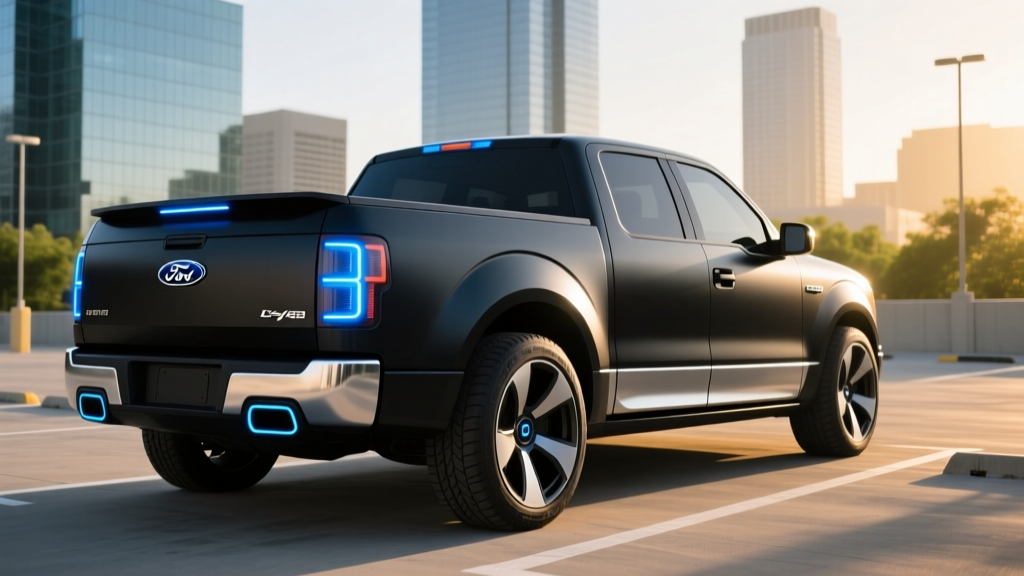
If you've landed here searching for a 2003 Ford F-150 Lightning, you're not alone — this query pulls over a thousand searches a month. But the honest answer, before we go further, is that Ford never built a 2003 F-150 Lightning as an electric vehicle, nor did it sell one as a gas performance truck that year. The SVT F-150 Lightning (gas, supercharged V8) ran from 1999-2004, and the electric F-150 Lightning we know today launched for the 2022 model year. What does exist, and what this search usually points to, is Ford's late-1990s electric pickup program — specifically the Ford Ranger EV (1998-2002) — and the modern Lightning that carries the nameplate forward.
This guide untangles the history, explains what's actually available, and helps you decide whether a used EV conversion, a classic Ranger EV, or the current-generation F-150 Lightning fits what you're actually after.
Why the 2003 F-150 Lightning EV Search Persists
The confusion is understandable. Three threads of Ford history overlap here:
- The SVT F-150 Lightning (1999-2004): A gas-powered performance truck with a 5.4L supercharged V8 making 360-380 hp. It was rear-wheel drive, not electric, and is now a collectible.
- The Ford Ranger EV (1998-2002): Ford's actual factory electric pickup from this era, built in limited numbers (roughly 1,500 units) with a nickel-metal hydride or lead-acid battery pack.
- The Ford F-150 Lightning (2022-present): The modern dual-motor battery-electric full-size truck with up to 320 miles of EPA range.
Search algorithms and forum shorthand have collapsed these into "2003 F-150 Lightning EV," but no such vehicle rolled off a Ford assembly line. What buyers usually want is either information on the vintage Ranger EV, a used EV-converted classic truck, or specs on the current Lightning.
The Real 1998-2002 Ford Ranger EV: Specs and Reality
| Spec | Value |
|---|---|
| Battery Chemistry | NiMH (later) / Lead-Acid (early) |
| Battery Capacity | ~26 kWh (NiMH pack) |
| EPA-Comparable Range | 50-65 miles (NiMH, new) |
| Motor Output | ~90 hp / 140 lb-ft |
| Top Speed | ~75 mph (governed) |
| Charge Time (120V) | ~8-10 hours (full) |
| Units Produced | ~1,500 (most lease-only, recalled/crushed) |
| Original MSRP (if sold) | Estimated $40,000+ equivalent |
The Ranger EV was a compliance-and-research vehicle, not a mainstream product. Most were leased to fleets and California customers, then recalled by Ford in 2002 under a controversial program that crushed the majority of them. A handful survived in private hands, which is why you occasionally see one pop up on auction sites or EV conversion forums.
Real-World Range: Then vs. Now
Ranger EV (1998-2002): Originally rated around 50-65 miles on the NiMH pack when new. In 2026, surviving examples with original packs show severe degradation — expect 20-35 miles unless the pack has been rebuilt or swapped to modern lithium cells.
Modern F-150 Lightning (2026): EPA-estimated 230-320 miles depending on battery pack and trim. Real-world highway driving at 70 mph typically yields 200-270 miles; cold-weather (below 32°F) can reduce range by 20-30%.
This gap is the single biggest reason the vintage Ranger EV is a collector curiosity rather than a practical daily driver. Two decades of battery chemistry progress — from NiMH to modern NMC and LFP lithium-ion — fundamentally changed what an electric pickup can do.
Modern F-150 Lightning (2026): What the Nameplate Became
If what you actually want is a Ford electric pickup with modern range, charging, and capability, the current-generation F-150 Lightning is the direct descendant of the nameplate. Here's what the 2026 lineup delivers:
| Trim | Battery | EPA Range | HP / Torque | 0-60 mph | Base MSRP |
|---|---|---|---|---|---|
| Pro (Standard Range) | ~98 kWh usable, NMC | ~240 mi | 452 hp / 775 lb-ft | ~4.5 sec | ~$52,000 |
| XLT (Extended Range) | ~131 kWh usable, NMC | ~320 mi | 580 hp / 775 lb-ft | ~3.8 sec | ~$65,000 |
| Lariat (Extended Range) | ~131 kWh usable, NMC | ~300 mi | 580 hp / 775 lb-ft | ~3.8 sec | ~$72,000 |
| Platinum (Extended Range) | ~131 kWh usable, NMC | ~290 mi | 580 hp / 775 lb-ft | ~3.8 sec | ~$87,000 |
All trims are dual-motor all-wheel drive. The Extended Range pack uses nickel-manganese-cobalt (NMC) chemistry for higher energy density; Ford has not adopted LFP for the Lightning as of the 2026 model year, reserving that chemistry for lower-cost, standard-range applications elsewhere in its lineup.
Charging: DC Fast and Home Level 2
| Level | Rate | Time / Notes |
|---|---|---|
| DC Fast Charge (Standard Range) | Peak ~150 kW | 10-80% in ~41 minutes |
| DC Fast Charge (Extended Range) | Peak ~170 kW | 10-80% in ~44 minutes (large pack) |
| Level 2 (Home, 48A / 11.5 kW) | ~23 miles/hour | Full charge ~10-14 hours |
| Level 2 (80A Pro Power, 19.2 kW) | ~30+ miles/hour | Requires upgraded panel / dedicated circuit |
| Level 1 (120V household) | ~2-3 miles/hour | Emergency/top-up only |
A note on charge curves: peak kW is not sustained. The Extended Range pack hits ~170 kW only below ~30% state of charge and tapers significantly past 70%. Plan road trips around 10-80% stops of roughly 40-45 minutes, not the peak number.
Efficiency, Towing, and Payload
The Extended Range Lightning lands around 66-70 MPGe combined (~50 kWh/100 mi) per fueleconomy.gov. That's thirsty for an EV but competitive for a 6,500-pound full-size truck. Towing capacity maxes around 10,000 lbs (properly equipped), though real-world range while towing drops 40-60% — a hard physics reality no electric truck has solved.
Federal Tax Credit: Does the Lightning Qualify?
Under IRS §30D rules current for 2026, the F-150 Lightning's eligibility is not a simple yes/no. Here's the checklist that determines whether you actually receive the credit:
- MSRP cap: Trucks must be at or below $80,000. The Pro, XLT, and most Lariat builds qualify; Platinum trims above $80,000 MSRP do not.
- Buyer income cap: AGI ≤ $150,000 (single), $225,000 (head of household), $300,000 (joint).
- Battery sourcing & critical minerals: The credit splits into two $3,750 halves based on battery-component and critical-mineral origin. Ford has worked to North Americanize its supply chain, but exact credit amounts ($3,750 or $7,500) shift as sourcing rules tighten annually.
- Point-of-sale transfer: Eligible buyers can apply the credit at purchase, reducing out-of-pocket cost immediately (dealer must be IRS-registered).
- Always verify: Confirm current-year eligibility on irs.gov or with a tax professional before relying on the credit in your budget.
| Trim | MSRP (est.) | Potential Credit | Effective Price (est.) |
|---|---|---|---|
| Pro Standard Range | $52,000 | Up to $7,500 | ~$44,500 |
| XLT Extended Range | $65,000 | Up to $7,500 | ~$57,500 |
| Lariat Extended Range | $72,000 | Up to $7,500 | ~$64,500 |
| Platinum Extended Range | $87,000 | $0 (over cap) | $87,000 |
State incentives (California, Colorado, Massachusetts, etc.) may stack on top but vary by jurisdiction — check your state's energy office for current programs.
Pros, Cons, and Who This Truck Fits
Pros
- Full-size truck utility with a usable frunk (~14 cu ft, 400 lb capacity)
- Strong towing (10,000 lb) and payload (~2,000 lb) for an EV
- Pro Power Onboard turns the pack into a job-site or home-backup generator (up to 9.6 kW)
- Quiet, torque-heavy daily driving; 0-60 in under 4 seconds on Extended Range
- Over-the-air updates and BlueCruise hands-free highway driving (SAE Level 2 — driver must remain attentive)
Cons
- Highway and cold-weather range loss is significant for a truck this size
- Towing collapses range — plan 150-180 miles between charges under load
- Extended Range trims approach or exceed the $80K tax-credit cap
- Public DC charging reliability still varies by network and region
- Insurance premiums run higher than gas F-150 equivalents
Best for: Homeowners with Level 2 charging who need a daily-driver truck for commuting, job-site power, weekend hauling, and occasional road trips under 250 miles. Think twice if: you tow long distances regularly, live in an apartment without charging access, or routinely drive in sub-freezing climates without garage parking.
Classic Ranger EV vs. Modern Lightning vs. EV Conversion
If the 2003-era query reflects genuine interest in a vintage electric Ford truck, here's how the realistic options stack up:
| Path | Range | Cost (2026) | Practicality |
|---|---|---|---|
| Original Ranger EV (survivor) | 20-40 mi (degraded) | $15,000-$35,000 collector | Show/curiosity only |
| Classic truck EV conversion | 80-150 mi (shop-built) | $40,000-$80,000+ | Project car; varies by builder |
| 2026 F-150 Lightning | 230-320 mi EPA | $52,000-$87,000 | Daily-driver capable, warrantied |
For 99% of buyers, the modern Lightning is the rational choice. The vintage paths are for collectors, restorers, and builders who value the project over the practicality.
Warranty and Longevity on the Modern Lightning
Ford covers the F-150 Lightning battery and electric powertrain for 8 years / 100,000 miles, with a capacity-retention threshold typically set at 70% of original. The bumper-to-bumper warranty runs 3 years / 36,000 miles. For buyers concerned about long-term battery health, the NMC pack benefits from Ford's liquid thermal management — preconditioning before DC fast charging is automatic when the navigation system routes to a charger.
Frequently Asked Questions
Was there a 2003 Ford F-150 Lightning electric truck?
No. Ford never produced a 2003 F-150 Lightning as an electric vehicle. The 1999-2004 SVT F-150 Lightning was a supercharged V8 gas truck. The electric F-150 Lightning debuted for the 2022 model year. The factory electric pickup of that era was the Ford Ranger EV (1998-2002).
What was the real-world range of the 1998-2002 Ford Ranger EV?
When new with the NiMH pack, roughly 50-65 miles under ideal conditions. Surviving examples in 2026 with original batteries typically deliver 20-40 miles; rebuilt lithium packs can restore or exceed original range, depending on the conversion.
How fast does the 2026 F-150 Lightning charge?
Extended Range models peak around 170 kW on DC fast chargers, reaching 10-80% in roughly 44 minutes. At home on a 48A Level 2 charger (~11.5 kW), expect about 23 miles of range per hour of charging, or a full charge in 10-14 hours.
Does the 2026 F-150 Lightning qualify for the federal EV tax credit?
Potentially, with conditions. Trims at or under the $80,000 MSRP cap (Pro, XLT, most Lariat) can qualify for up to $7,500 under IRS §30D, subject to buyer income limits and battery-sourcing rules that tighten each year. Platinum trims above $80,000 do not qualify. Always verify on irs.gov before purchasing.
Is the F-150 Lightning worth buying over competitors like the Silverado EV or Rivian R1T?
It depends on use case. The Lightning wins on traditional truck familiarity, F-150 parts/service network, and Pro Power Onboard. The Rivian R1T is more off-road capable and tech-forward but pricier and smaller in bed length. The Chevy Silverado EV offers a larger available battery and longer range claims but has had a slower rollout. Cross-shop all three with your specific towing, range, and budget needs in mind.
What are the biggest drawbacks of the F-150 Lightning?
Range drops sharply when towing or driving in cold weather; public DC charging reliability is inconsistent in some regions; higher trims exceed the federal tax-credit MSRP cap; and insurance costs tend to be higher than equivalent gas F-150s.
If your search for a "2003 Ford F-150 Lightning" was really about whether Ford made an electric truck two decades ago — they did, just not under that name. And if it was about whether today's Lightning lives up to the nameplate, the answer is a qualified yes: it's a genuinely capable electric truck, provided you go in with realistic expectations about range, charging, and what a 6,500-pound EV actually costs to own.