The Original Electric F-150: What Ford Built in 2003
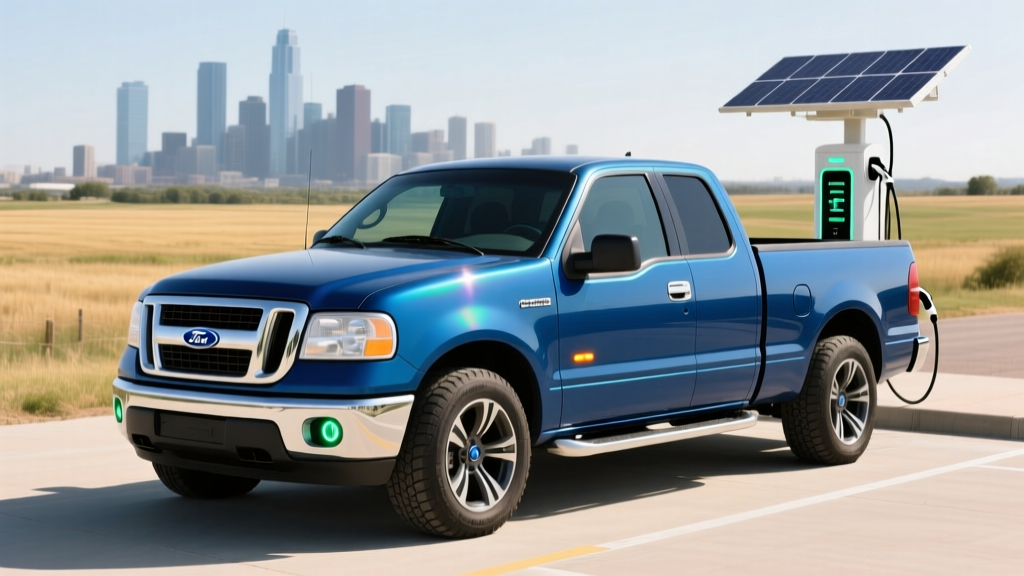
Search for "2003 Ford F-150 Lightning" and you'll find a fascinating footnote in electric vehicle history — a battery-electric pickup Ford engineered more than two decades before the current-generation F-150 Lightning hit dealer lots. The 2003 model was never a production vehicle sold to consumers. It was a limited-run fleet prototype, part of Ford's early electrification experiments alongside the Ranger EV and the Think City. Yet understanding what Ford attempted in 2003 illuminates just how far EV truck technology has come — and why the modern Lightning exists in the form it does today.
This review dissects the 2003 Ford F-150 Lightning EV prototype's engineering, compares it against the 2026 F-150 Lightning you can actually buy, and explains what classic EV concepts like this one teach us about battery chemistry, range expectations, and charging infrastructure.
| Specification | 2003 Prototype | 2026 F-150 Lightning Ext. Range |
|---|---|---|
| EPA Range | ~100 miles (estimated) | 320 miles |
| Battery Capacity | ~30 kWh (NiMH) | 131 kWh usable (NMC lithium-ion) |
| Battery Chemistry | Nickel-Metal Hydride | NMC (Nickel Manganese Cobalt) |
| Peak DC Fast Charge | None (Level 2 only) | ~150 kW (peak) |
| 10–80% Charge Time | N/A | ~41 minutes |
| Level 2 Charging | ~6.6 kW | 19.2 kW (80A) |
| Horsepower | ~120 hp (estimated) | 580 hp |
| 0–60 mph | N/A (not tested) | ~3.8 seconds |
| Drivetrain | Rear-wheel drive (single motor) | Dual-motor AWD |
| MPGe (combined) | ~60 MPGe (estimated) | 70 MPGe |
| Base MSRP | Not sold to public | $77,990 (Lariat Ext. Range) |
| Battery Warranty | N/A | 8 years / 100,000 miles |
Battery and Range: NiMH vs. Modern Lithium-Ion
The 2003 F-150 Lightning prototype used a nickel-metal hydride (NiMH) battery pack — the same chemistry found in the original Toyota Prius and the GM EV1. NiMH was the best available technology at the time, but it suffered from low energy density (roughly 60–80 Wh/kg compared to 250+ Wh/kg for modern NMC cells), significant memory effect, and poor thermal stability under heavy loads.
Ford never published an official EPA range figure for the prototype, but internal documents and fleet testing from the era suggest the pack held approximately 30 kWh of usable energy, yielding an estimated 80–100 miles of range under ideal conditions.
Range Reality Check: The 2003 prototype's ~100-mile estimated range would drop to approximately 60–70 miles under highway driving (65+ mph) or in cold weather (below 40°F), based on NiMH discharge characteristics and the lack of a modern heat pump or liquid thermal management system. By comparison, the 2026 F-150 Lightning Extended Range carries an EPA-rated 320 miles, with real-world highway testing yielding roughly 260–280 miles and cold-weather driving reducing that to approximately 220–250 miles.
The chemistry gap explains everything. Modern NMC lithium-ion cells store roughly four times the energy per kilogram compared to NiMH, and the 2026 Lightning's 131 kWh pack weighs less proportionally than the 2003 prototype's 30 kWh unit. Ford's decision to abandon NiMH and eventually invest in lithium-ion for the production Lightning was driven by these fundamental physics constraints.
Charging Infrastructure: Then and Now
Charging the 2003 F-150 Lightning prototype was a fundamentally different experience. DC fast charging as we know it did not exist in 2003 — the CHAdeMO standard wasn't published until 2010, and CCS arrived in 2013. The prototype relied exclusively on Level 2 AC charging via an inductive paddle or early J1772-variant connector.
| Charging Level | 2003 Prototype | 2026 F-150 Lightning |
|---|---|---|
| Level 1 (120V / 12A) | ~1.4 kW (~3 mi/hr) | ~1.4 kW (~2 mi/hr) |
| Level 2 (240V) | ~6.6 kW (~14 mi/hr) | 19.2 kW / 80A (~30 mi/hr) |
| DC Fast Charge | Not available | ~150 kW peak (10–80% in ~41 min) |
| Connector | Inductive / early J1772 | NACS (Tesla Supercharger compatible) |
| Full Charge Time (Level 2) | ~5 hours | ~8 hours (131 kWh pack at 19.2 kW) |
The 2026 F-150 Lightning's transition to the NACS connector means access to Tesla's Supercharger network — over 25,000 stalls in North America as of early 2026 — plus Electrify America, EVgo, and other networks via adapters. The 2003 prototype had none of this. Fleet operators charged overnight at depots, and road trips were simply not feasible.
One critical note on the 2026 Lightning's charging curve: peak 150 kW is sustained only between roughly 10–45% state of charge. Above 60%, the charge rate tapers significantly, dropping to approximately 80 kW by 70% and below 40 kW past 85%. This is standard lithium-ion charge-curve behavior driven by cell-protection protocols, and it's why the 10–80% time (~41 minutes) is the more meaningful metric than peak kW alone.
Performance and Drivetrain Engineering
The 2003 prototype used a single rear-mounted electric motor producing an estimated 120 horsepower — adequate for city fleet use but wholly insufficient for a full-size pickup's expected towing and hauling duties. Ford never published a 0–60 mph time, and given the vehicle's curb weight (likely over 5,500 lbs with the NiMH pack), acceleration was modest at best.
The 2026 F-150 Lightning is a fundamentally different machine. The dual-motor all-wheel-drive powertrain produces 580 horsepower and 775 lb-ft of torque (Extended Range), launching the truck to 60 mph in approximately 3.8 seconds — quicker than most sports sedans. The standard-range model produces 452 hp with the same torque figure.
Towing capacity tells a similar story of generational progress. The 2003 prototype's towing rating was limited (likely under 3,000 lbs given the motor output and battery constraints), while the 2026 Lightning is rated for up to 10,000 lbs when properly equipped (Max Trailer Tow Package, Extended Range, Lariat or higher trim). However, towing at maximum capacity reduces range by roughly 40–50%, bringing the 320-mile EPA figure down to approximately 160–190 miles — a critical consideration for buyers planning to haul regularly.
Pricing, Tax Credits, and Ownership Economics
The 2003 F-150 Lightning prototype was never priced for retail sale. Ford built a small number of units for fleet testing and eventually recalled and scrapped most of them — a controversial move that mirrored the fate of the GM EV1 and the Toyota RAV4 EV.
The 2026 F-150 Lightning, by contrast, is a mainstream production vehicle with clear pricing across multiple trims:
| Trim | Battery | MSRP | Est. After §30D Credit | Credit Eligible? |
|---|---|---|---|---|
| Pro (Standard Range) | 98 kWh | $54,995 | ~$47,495 | Yes (if sourcing + income requirements met) |
| XLT (Standard Range) | 98 kWh | $62,990 | ~$55,490 | Yes |
| Lariat (Extended Range) | 131 kWh | $77,990 | ~$70,490 | Yes (MSRP under $80K truck cap) |
| Platinum (Extended Range) | 131 kWh | $96,874 | Not eligible | No — exceeds $80K MSRP cap for trucks |
Federal tax credit eligibility under IRS §30D requires meeting several conditions simultaneously:
- MSRP cap: Trucks and vans must have an MSRP at or below $80,000. The Platinum trim exceeds this and is ineligible.
- Buyer income cap: Modified adjusted gross income must not exceed $150,000 (single), $225,000 (head of household), or $300,000 (joint filing).
- Battery sourcing: A percentage of critical minerals and battery components must be sourced from the US or free-trade-agreement partners. These thresholds increase annually and may affect eligibility for specific build dates.
- Point-of-sale transfer: As of 2024, buyers can transfer the credit to the dealer at purchase, reducing the sale price directly rather than waiting for a tax refund.
Always verify current eligibility with your tax professional and the IRS before purchasing, as battery-sourcing requirements and manufacturer compliance can change between model years.
Cargo, Interior Space, and Practical Utility
One area where the 2003 prototype and the 2026 production model share DNA is the fundamental F-150 body architecture. Both use a full-size pickup platform with a crew cab configuration and a 5.5-foot (2026) or 6.5-foot (2003 prototype) bed.
The 2026 F-150 Lightning offers concrete utility advantages:
- Bed volume: 52.8 cu ft (5.5-ft bed)
- Front trunk (frunk): 14.1 cu ft — a direct benefit of removing the engine block, sealed and drainable for use as a cooler or secure storage
- Front legroom: 43.9 inches
- Rear legroom: 41.2 inches
- Pro Power Onboard: Up to 9.6 kW of onboard power output (240V and 120V outlets in the bed and cabin), capable of running job-site tools or powering essential home circuits during an outage
The 2003 prototype had no frunk (the motor and power electronics occupied the engine bay), no bidirectional charging capability, and a smaller battery that consumed significant underbody space without offering comparable utility.
Technology and Driver Assistance
The technology gap between 2003 and 2026 is perhaps the most dramatic difference. The prototype featured a basic instrument cluster with a state-of-charge gauge, a simple radio, and no driver-assistance systems whatsoever. Stability control was emerging technology; lane-keeping and adaptive cruise control did not exist in production vehicles.
The 2026 F-150 Lightning includes Ford's latest SYNC 4A infotainment system on a 12-inch (or available 15.5-inch portrait) touchscreen, wireless Apple CarPlay and Android Auto, over-the-air software updates, and Ford Co-Pilot360 2.0 — a Level 2 driver-assistance suite including:
- Adaptive cruise control with stop-and-go
- Lane-centering assist
- Automatic emergency braking with pedestrian detection
- Blind-spot monitoring with trailer coverage
- Available BlueCruise (hands-free highway driving on pre-mapped divided highways, SAE Level 2 — driver must remain attentive)
SAE Level Reminder: BlueCruise is an SAE Level 2 system. Despite "hands-free" marketing, the driver must remain engaged, keep eyes on the road (monitored by a driver-facing camera), and be prepared to take over at any time. This is not autonomous driving — only Level 4 services like Waymo operate without a human driver in the loop.
Pros, Cons, and Verdict
Pros of the 2026 F-150 Lightning
- 320-mile EPA range (Extended Range) is competitive for a full-size truck
- 14.1 cu ft frunk and Pro Power Onboard offer unmatched utility
- 580 hp / 775 lb-ft delivers sports-car acceleration in a truck
- Up to 10,000-lb towing capacity
- NACS connector provides access to Tesla Supercharger network
- Eligible for up to $7,500 federal tax credit on qualifying trims
- 8-year / 100,000-mile battery warranty with 70% capacity retention guarantee
Cons of the 2026 F-150 Lightning
- Towing at max capacity cuts range by 40–50%
- Extended Range models are heavy (6,500+ lbs), increasing tire wear
- Platinum trim exceeds $80K MSRP cap — no federal tax credit
- DC fast charging peaks at ~150 kW, slower than Hyundai/Kia E-GMP platforms
- Cold-weather range loss of 20–30% is significant for northern-climate owners
- Insurance premiums run 15–25% higher than comparable gas F-150s
Who Should Buy the F-150 Lightning — and Who Shouldn't
Best for: Homeowners with Level 2 charging access who need a full-size truck for daily commuting, weekend towing (under 5,000 lbs for range preservation), job-site power needs (Pro Power Onboard), and occasional road trips within the 250-mile real-world envelope. The Lightning excels as a daily driver that can do truck things — not as a dedicated long-haul tow rig.
Consider alternatives if: You regularly tow over 7,000 lbs on highways (the range penalty is severe), you lack reliable home charging and depend solely on public DC fast chargers (the 150 kW peak is slower than competitors like the Rivian R1T or Silverado EV), or you need a sub-$50,000 truck (the Pro trim starts at ~$55K before incentives).
Frequently Asked Questions
Was the 2003 Ford F-150 Lightning a real production vehicle?
No. The 2003 F-150 Lightning EV was a fleet prototype built in very limited numbers for testing and evaluation. Ford never sold it to the public. Most units were eventually recalled and dismantled, similar to the GM EV1. The name "Lightning" was previously used for Ford's supercharged gas-powered F-150 SVT Lightning (1993–1995 and 1999–2004), which is a separate vehicle entirely.
What is the real-world range of the 2026 F-150 Lightning?
The Extended Range model carries a 320-mile EPA rating. In real-world highway driving (70–75 mph), expect approximately 260–280 miles. In cold weather (below 30°F), that drops to roughly 220–250 miles due to battery resistance and cabin heating demands. The Standard Range model (98 kWh, EPA 240 miles) delivers approximately 190–210 miles on the highway.
How fast does the 2026 F-150 Lightning charge?
On a DC fast charger, the Extended Range model peaks at approximately 150 kW, achieving a 10–80% charge in roughly 41 minutes. At home on a Level 2 charger (240V / 80A), it adds approximately 30 miles of range per hour, requiring about 8 hours for a full charge of the 131 kWh pack. Level 1 (120V) trickle charging adds roughly 2 miles per hour.
Does the 2026 F-150 Lightning qualify for the federal EV tax credit?
Most trims qualify for up to $7,500 under IRS §30D, provided the buyer meets income caps ($150K single / $300K joint), the truck's MSRP is at or below $80,000 (excluding the Platinum trim), and battery-sourcing requirements are met for the specific build date. The credit can be transferred to the dealer at point of sale. Always confirm current eligibility with the IRS and a tax professional.
Is the F-150 Lightning worth buying over the Rivian R1T or Chevy Silverado EV?
The Lightning offers the best value in the full-size electric truck segment for traditional truck buyers who want a familiar F-150 experience with electric benefits (frunk, Pro Power, low running costs). The Rivian R1T is more capable off-road and charges faster but costs more and has a smaller bed. The Chevy Silverado EV offers more range (up to 400+ miles on certain trims) but is larger, heavier, and has a higher starting price. For fleet buyers and daily-driver truck owners, the Lightning remains the most practical choice in 2026.
What is the battery warranty on the F-150 Lightning?
Ford covers the high-voltage battery for 8 years or 100,000 miles (whichever comes first), warranting that the pack will retain at least 70% of its original capacity during that period. The electric powertrain components (motors, inverters) carry the same 8-year/100,000-mile coverage.