Why F-150 Owners Search the 2000 Ford F-150 Bolt Pattern
If you've landed here typing "2000 Ford F-150 bolt pattern" into a search bar, you're probably staring at a set of wheels in your garage, trying to figure out if they'll fit your truck. The answer for the 2000 model year is straightforward: the F-150 uses a 6-lug, 135 mm bolt circle — commonly written as 6x135 or 6x5.3 inches. The center bore is 87.1 mm, and the lug nuts are 14mm x 2.0 thread pitch. This pattern has been consistent on the F-150 since the 1997 model year redesign and carried forward for decades.
But here's the thing: if you're wrenching on a 25-year-old truck and researching wheel fitment, there's a good chance you're also weighing whether it's time to trade up. And in 2026, the Ford F-150 Lightning is the conversation you need to have — especially if you use your truck for daily driving, job-site work, or towing. So let's bridge the gap: we'll give you the bolt pattern data you came for, then deliver a full, spec-driven review of Ford's electric flagship.
2000 Ford F-150 Bolt Pattern: The Quick Reference
| Specification | Value |
|---|---|
| Bolt Pattern | 6 x 135 mm (6x5.3") |
| Lug Count | 6 |
| Center Bore | 87.1 mm |
| Thread Size | M14 x 2.0 |
| Typical OEM Wheel Size | 16" x 7" (varies by trim) |
| Offset Range (stock) | +10 to +25 mm |
This 6x135 pattern is shared with the 2000-era Ford Expedition and Lincoln Navigator, making used OEM wheels relatively easy to source from junkyards or online marketplaces. Aftermarket 6x135 wheels remain widely available from brands like Method, Fuel, and Pro Comp.
The 2026 Ford F-150 Lightning: Full EV Review
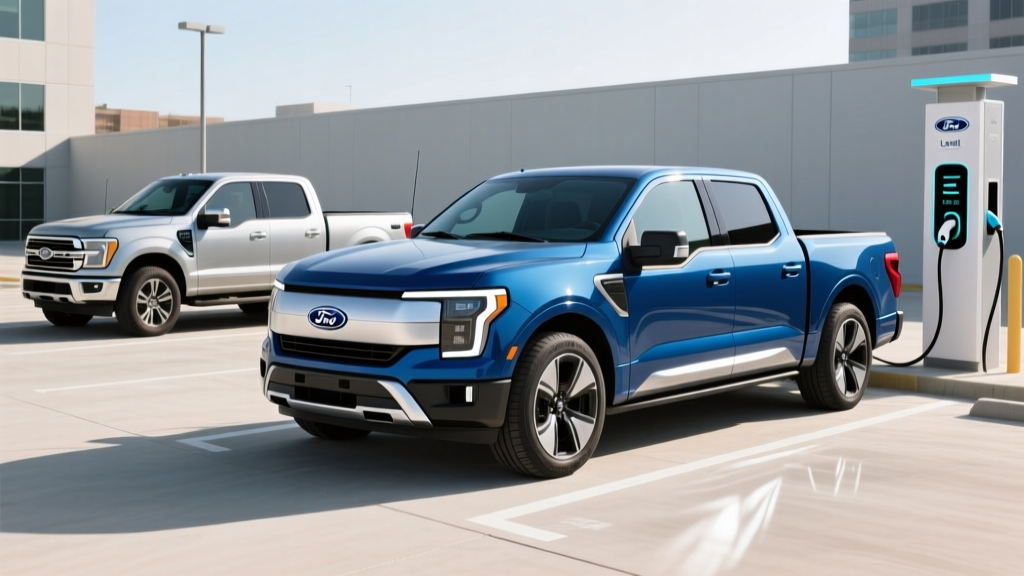
Now let's talk about what Ford's electric truck actually delivers in 2026. The F-150 Lightning has matured past its rocky 2022-2023 launch, with Ford addressing early battery supply constraints, improving software stability, and refining the thermal management system. Here's the complete picture for buyers considering the switch from a legacy F-150.
Spec Table: 2026 F-150 Lightning at a Glance
| Spec | Standard Range (Pro/XLT) | Extended Range (Lariat/Platinum) |
|---|---|---|
| EPA Range | 240 miles | 320 miles |
| Battery Capacity (usable) | 98 kWh (LFP) | 131 kWh (NMC) |
| Drivetrain | Dual-motor AWD | Dual-motor AWD |
| Horsepower | 452 hp | 580 hp |
| Torque | 775 lb-ft | 775 lb-ft |
| 0-60 mph | ~5.0 sec | ~3.8 sec |
| Max DC Fast Charge | 120 kW | 150 kW |
| 10-80% DCFC Time | ~44 min | ~41 min |
| Level 2 Home Charge Rate | 11.3 kW (~20 mi/hr) | 19.2 kW (~30 mi/hr)* |
| EPA Efficiency | 68 MPGe (2.0 kWh/mi) | 77 MPGe (1.8 kWh/mi) |
| Max Towing | 7,700 lbs | 10,000 lbs (w/ Max Trailer Tow) |
| Payload | ~2,235 lbs | ~1,800 lbs |
| Base MSRP | $54,995 | $69,995 (Lariat ER) |
*19.2 kW Level 2 requires the Ford Charge Station Pro and a dedicated 100-amp circuit with hardwired installation. The standard 48-amp Mobile Power Cord delivers ~11.3 kW on a NEMA 14-50 outlet.
Real-World Range: What to Actually Expect
EPA Sticker: 320 miles (Extended Range) / 240 miles (Standard Range)
Real-World Expectation:
- Mixed driving (city + suburban): ~290-310 mi (ER) / ~220-235 mi (SR)
- Sustained 75 mph highway: ~250-270 mi (ER) / ~190-210 mi (SR)
- Cold weather (below 32°F): Expect 20-30% reduction — as low as ~200 mi (ER) without preconditioning
- Towing a 5,000-lb trailer: Range drops to roughly 130-160 mi (ER) depending on aerodynamics and terrain
The Extended Range battery's 131 kWh of usable capacity is among the largest in any production vehicle. That mass — roughly 700 lbs just in cells — is why the Lightning's efficiency trails lighter EVs. But for truck buyers who need range to offset towing and payload demands, the trade-off is deliberate. The LFP Standard Range pack sacrifices distance but offers superior cycle life and can be charged to 100% daily without degradation concerns — a genuine advantage for fleet and job-site users who charge overnight and need full capacity every morning.
Charging: DC Fast Charge, Home Setup, and the Curve Reality
The Lightning's charging story is where Ford has drawn the most criticism from EV enthusiasts, and it's important to understand why. The truck uses a CCS1 connector (with a NACS adapter available for Tesla Supercharger access) and peaks at 150 kW on the Extended Range model. That's well below the 250-350 kW peaks offered by Hyundai's E-GMP platform or GM's Ultium trucks.
| Charge Level | Power / Rate | Miles Added per Hour | Typical Use Case |
|---|---|---|---|
| Level 1 (120V household) | ~1.4 kW | ~2-3 mi/hr | Emergency / trickle top-up |
| Level 2 (240V, 48A Mobile Cord) | 11.3 kW | ~20 mi/hr | Standard home overnight charging |
| Level 2 (240V, 80A Charge Station Pro) | 19.2 kW | ~30 mi/hr | Fast home charging; requires 100A circuit |
| DC Fast Charge (Standard Range) | Peak 120 kW | ~140 mi in 30 min (peak) | Road trips, public stations |
| DC Fast Charge (Extended Range) | Peak 150 kW | ~160 mi in 30 min (peak) | Road trips, public stations |
The charge curve matters more than peak kW. The Extended Range Lightning hits 150 kW only briefly between roughly 15-30% State of Charge (SoC), then tapers progressively. From 10-80%, Ford quotes ~41 minutes at a capable 150+ kW station. Above 80%, charging slows dramatically — a 90-100% top-up can add another 25-30 minutes. For road trips, plan your stops around the 10-80% window and skip topping off unless you need the final miles.
At home, the Charge Station Pro at 19.2 kW is a genuine differentiator. A full overnight charge (8 hours) adds roughly 240 miles — enough to replenish nearly the entire Extended Range battery. However, installing a 100-amp dedicated circuit isn't trivial: expect $1,500-$3,500 for the electrician work depending on your panel capacity, plus $600-$800 for the Charge Station Pro hardware itself. If your home has a 200-amp main panel that's already heavily loaded, a panel upgrade to 300-400 amps could add $2,000-$4,000. Always get a quote from a licensed electrician before committing.
Pricing, Trims, and the Federal Tax Credit Equation
The F-150 Lightning lineup in 2026 spans from work-truck basic to luxury-truck premium:
| Trim | Battery | MSRP (incl. destination) | Est. Federal Credit | Effective Price |
|---|---|---|---|---|
| Pro (Standard Range) | 98 kWh LFP | $54,995 | Up to $7,500* | ~$47,495 |
| XLT (Standard Range) | 98 kWh LFP | $59,995 | Up to $7,500* | ~$52,495 |
| Lariat (Extended Range) | 131 kWh NMC | $69,995 | Up to $7,500* | ~$62,495 |
| Platinum (Extended Range) | 131 kWh NMC | $84,995 | Up to $7,500* | ~$77,495 |
*Critical tax credit caveats: Under IRS §30D rules, the full $7,500 credit requires meeting both critical minerals and battery component sourcing thresholds, which shift annually. The F-150 Lightning qualifies as a truck (MSRP cap: $80,000), so all trims clear the price ceiling. Buyer income caps apply: $150,000 single / $225,000 head of household / $300,000 joint (modified AGI). The credit can be transferred to the dealer as a point-of-sale discount. Always verify current eligibility on fueleconomy.gov before purchasing, as battery sourcing compliance can change model year to model year.
Performance, Towing, and Daily-Driving Impressions
The dual-motor AWD layout on every Lightning trim means you get full-time all-wheel drive with no mechanical linkage between axles. The Extended Range model's 3.8-second 0-60 time makes it the quickest F-150 Ford has ever sold — faster than the previous-generation Raptor. But straight-line speed isn't why truck buyers should care.
Towing is the Lightning's most honest conversation. With the Max Trailer Tow package on the Extended Range, the 10,000-lb rating is legitimate, and the instant torque delivery makes low-speed trailer maneuvering remarkably smooth. The onboard scales feature (available on Lariat and above) estimates payload and displays it on the center screen and via the taillight LED bar. However, towing a 7,000-lb enclosed trailer at highway speeds will cut range nearly in half — plan for 140-160 mile legs between charging stops. If your work regularly involves heavy towing over long distances, a diesel F-150 or the F-150 PowerBoost hybrid remains the pragmatic choice.
Cargo and space: The 5.5-foot bed offers 52.8 cu ft of volume. The front trunk (frunk) provides 14.1 cu ft of lockable, drainable storage — large enough for tools, charging cables, or a cooler. Interior passenger space mirrors the SuperCrew gas F-150: 43.9 inches of front legroom and 43.6 inches rear, with seating for five (or six with the front bench option on Pro trim).
Tech and driver assists: The 12-inch center touchscreen (15.5-inch on Lariat/Platinum) runs SYNC 4 with wireless Apple CarPlay and Android Auto. Ford's BlueCruise hands-free driving system is available on divided highways — this is an SAE Level 2 driver-assist system, meaning you must remain attentive and keep your eyes on the road. It is not autonomous driving. The system monitors driver gaze via an infrared camera and will issue escalating warnings if attention drifts. When it works, it reduces fatigue on long highway stretches; when it encounters construction zones or faded lane markings, it disengages abruptly. Treat it as enhanced cruise control, not a replacement for driving.
Battery Warranty, Longevity, and Chemistry Trade-Offs
Ford covers the Lightning's high-voltage battery for 8 years or 100,000 miles (whichever comes first), with a capacity retention threshold of 70%. If the battery degrades below 70% of original capacity within the warranty period, Ford will repair or replace it. The powertrain (motors, inverters, reduction gear) carries the same 8-year/100,000-mile coverage.
The chemistry split between Standard and Extended Range models is worth understanding:
| Factor | Standard Range (LFP) | Extended Range (NMC) |
|---|---|---|
| Chemistry | Lithium Iron Phosphate | Nickel Manganese Cobalt |
| Energy Density | Lower (heavier pack for less range) | Higher (more range per kg) |
| Cycle Life | 3,000+ cycles (superior longevity) | 1,500-2,000 cycles |
| Daily 100% Charging | Recommended — no degradation penalty | Not recommended — keep at 80-90% daily |
| Cold-Weather Performance | More range loss in freezing temps | Better low-temperature discharge |
| Cobalt Content | Zero cobalt | Contains cobalt (supply-chain concern) |
For fleet operators, daily commuters with home charging, and buyers who plan to keep the truck past 150,000 miles, the LFP Standard Range pack is arguably the smarter long-term play — you sacrifice range but gain cycle life and charging flexibility. The NMC Extended Range pack is the right call for road-trippers, heavy towers, and buyers in cold climates who need every available mile.
Who Should Buy the F-150 Lightning (and Who Shouldn't)
Pros
- Massive frunk (14.1 cu ft) is a genuine work and lifestyle advantage
- Pro Power Onboard (up to 9.6 kW) runs tools, appliances, or powers a home during outages
- Instant torque makes towing low-speed maneuvers and merging effortless
- LFP option offers exceptional long-term battery durability for fleet/daily use
- Quiet, vibration-free daily driving experience vs. any gas or diesel truck
- Federal tax credit eligibility significantly reduces effective price
Cons
- DC fast charging peaks at 150 kW — slower than rivals (Rivian R1T, Silverado EV)
- Towing at highway speeds cuts range by 40-50%, requiring frequent stops
- Extended Range battery adds significant weight, reducing payload capacity
- Home charging infrastructure (100A circuit) can cost $2,000-$5,000+ to install
- Real-world highway range falls well short of EPA estimates, especially in cold
- BlueCruise is useful but limited — not a substitute for attentive driving
Choose the F-150 Lightning if: You commute daily under 100 miles round-trip, have home charging access, want a truck that doubles as a mobile power source, and your towing needs are moderate-distance. The Pro or XLT Standard Range at ~$47,000-$52,000 after the tax credit is a compelling work truck.
Look elsewhere if: You regularly tow heavy trailers over 200+ mile routes, live in an apartment without charging access, or need the longest possible road-trip range. The Rivian R1T (Dual-Motor, ~350 mi range) or the Chevy Silverado EV (4WT trim, 440 mi range) may better serve those use cases. And if your daily driving involves remote job sites far from DC fast chargers, the F-150 PowerBoost hybrid remains a strong bridge option.
Frequently Asked Questions
What is the real-world range of the F-150 Lightning?
The Extended Range model's EPA estimate is 320 miles, but expect 250-270 miles at sustained highway speeds, and potentially 200 miles in sub-freezing temperatures without preconditioning. The Standard Range model delivers roughly 190-220 real-world highway miles.
How fast does the F-150 Lightning charge at home and on the road?
At home on a 19.2 kW Ford Charge Station Pro (80A circuit), the Extended Range gains about 30 miles per hour — a full charge in roughly 8-9 hours. On DC fast chargers, it peaks at 150 kW (Extended Range) or 120 kW (Standard Range), with a 10-80% session taking approximately 41-44 minutes at a capable station.
How much does the F-150 Lightning cost after the federal tax credit?
The Pro Standard Range starts at $54,995 and can drop to approximately $47,495 after the full $7,500 federal credit, assuming you meet IRS income limits and the vehicle's battery sourcing qualifies in the current tax year.
Does the 2026 F-150 Lightning qualify for the federal EV tax credit?
As of 2026, the F-150 Lightning is eligible for up to $7,500 under §30D, provided the buyer's modified AGI is within limits ($150K single / $300K joint) and the vehicle meets critical minerals and battery component sourcing requirements. Because it's classified as a truck, the MSRP cap is $80,000 — all trims qualify on price. Always confirm current sourcing compliance on fueleconomy.gov before purchase.
Is the F-150 Lightning worth buying vs. the Rivian R1T or Silverado EV?
The Lightning wins on price (starting ~$15,000 below the R1T), frunk utility, and Pro Power Onboard capability. The Rivian R1T offers superior range, faster DC charging, and a more refined adventure-oriented platform. The Silverado EV leads on maximum range (440 mi on 4WT). Your choice depends on budget, range needs, and whether you prioritize work utility or road-trip capability.
Does the 2000 F-150 bolt pattern (6x135) fit the F-150 Lightning?
No. The 2026 F-150 Lightning uses a 6x139.7 mm (6x5.5") bolt pattern with a different center bore and offset specification. Wheels from a 2000 F-150 will not fit the Lightning. Always confirm fitment with the wheel manufacturer or a tire professional before purchasing aftermarket wheels for any vehicle.