The Short Answer
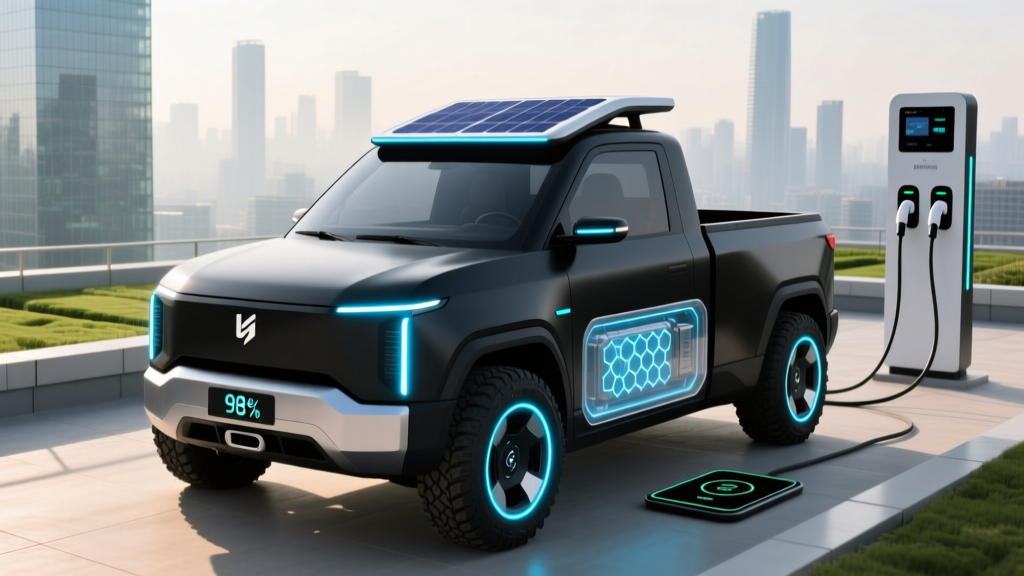
A brand-new, street-legal, highway-capable electric truck for $2,000 does not exist in the U.S. market in 2026. What you can find near that price point are low-speed electric utility vehicles (often imported from China via Alibaba or sold by brands like E-Ride, Bigfoot, or various Amazon/Alibaba sellers). These typically offer 20–45 miles of range, top speeds of 25–35 mph, and battery packs in the 3–7 kWh range. They work as neighborhood utility carts, farm/property vehicles, or short-commute runabouts — but they are not substitutes for a full-size pickup like a Ford F-150 Lightning or Rivian R1T.
What Exactly Is a "$2,000 Electric Mini Truck"?
When buyers search for a $2000 electric mini truck, they usually encounter one of three product categories:
- Low-Speed Vehicles (LSVs) / Neighborhood Electric Vehicles (NEVs): Street-legal on roads with speed limits up to 35 mph in most states. These include models from Polaris GEM (though new GEMs cost well above $10,000), as well as cheaper Chinese imports.
- Off-road utility carts: Electric side-by-sides or UTVs not legal for public roads. Often sold on Alibaba, Amazon, or direct from importers. Prices start around $1,500–$3,000.
- Used or heavily discounted micro-EVs: Occasionally, older NEVs or retired fleet vehicles surface on eBay or Craigslist near $2,000, but battery health is often degraded.
None of these categories offer what most Americans picture when they think of a "truck." If you need highway speeds, crash protection, or more than 40 miles of range, your realistic budget starts around $30,000–$40,000 for a used compact EV or $50,000+ for a new electric pickup.
Real Specs: What $2,000 Buys You in 2026
Here's a representative spec profile based on the most commonly available electric mini trucks near the $2,000 price point (composite of popular Alibaba/Amazon-sourced models):
| Spec | Value |
|---|---|
| Base Price (before shipping/import fees) | $1,500–$2,500 |
| Battery Capacity | 3–7 kWh (lead-acid or basic LFP) |
| Battery Chemistry | Lead-acid (cheapest) or LFP (lithium iron phosphate, +$500–$1,000) |
| Claimed Range | 25–50 miles (at 20 mph, flat terrain) |
| Real-World Range | 15–30 miles (mixed use, hills, cargo load) |
| Top Speed | 25–35 mph |
| Motor Power | 2–5 kW (2.7–6.7 HP) |
| Charging (Level 1, 120V) | 6–10 hours to full |
| DC Fast Charging | Not available |
| Payload Capacity | 500–1,100 lbs |
| Cargo Bed Size | ~4 ft × 3 ft |
| Warranty | Typically 6–12 months (if any) |
| Street Legal? | LSV-class only (roads ≤35 mph); varies by state |
Cost Breakdown: Purchase, Charging, and Ownership
One of the main draws of a $2,000 electric mini truck is the promise of ultra-low operating costs. Let's break down the real numbers.
| Cost Factor | Electric Mini Truck ($2,000) | Gas UTV (e.g., Honda Pioneer) | Used Gas Pickup (e.g., 2018 Ranger) |
|---|---|---|---|
| Purchase Price | $1,800–$2,500 | $10,000–$15,000 | $18,000–$25,000 |
| Energy/Fuel (per year, 3,000 mi) | $45–$90 (electricity) | $350–$500 (gasoline) | $1,200–$1,600 (gasoline) |
| Maintenance (per year) | $0–$100 | $200–$400 | $500–$1,000 |
| Insurance (per year) | $0–$200 (if insurable) | $300–$600 | $800–$1,500 |
| Battery Replacement (every 2–5 yr) | $400–$1,200 | N/A | N/A |
| Estimated 5-Year Total Cost | $3,500–$7,000 | $16,000–$22,000 | $28,000–$38,000 |
Charging cost math: A 5 kWh battery charged at the U.S. average residential rate of ~$0.16/kWh costs about $0.80 per full charge. If you drive 10 miles per day and charge every other day, your annual electricity cost is roughly $70–$90. That's genuinely cheap — but the trade-off is extremely limited capability.
The hidden cost: Lead-acid batteries in cheap mini trucks typically last 300–500 charge cycles before significant degradation. If you charge daily, that's roughly 1–2 years before you notice severe range loss. A replacement lead-acid pack runs $400–$800; upgrading to LFP lithium costs $800–$1,500 but extends cycle life to 2,000+ cycles.
How Does It Compare to Gas Alternatives?
The $2,000 electric mini truck competes less with highway EVs and more with gas-powered UTVs, riding mowers, and golf carts. Here's how the comparison breaks down:
| Category | $2,000 Electric Mini Truck | Gas UTV (Side-by-Side) |
|---|---|---|
| Upfront Cost | $1,800–$2,500 | $10,000–$20,000 |
| Top Speed | 25–35 mph | 55–70 mph |
| Range | 15–30 miles (real-world) | 100–200 miles (8–10 gal tank) |
| Refuel/Recharge Time | 6–10 hours (Level 1) | 3 minutes (gas station) |
| Noise Level | Near-silent | 75–85 dB |
| Towing/Payload | 500–1,100 lbs payload, minimal towing | 1,000–2,000 lbs towing |
| Cold-Weather Performance | 20–30% range loss below 40°F | Minimal impact |
| Maintenance Burden | Very low (no oil, filters, exhaust) | Moderate (oil, belts, filters, spark plugs) |
| Emissions (tailpipe) | Zero | Significant (small engines are less regulated) |
Bottom line: The electric mini truck wins on upfront cost, noise, and per-mile energy cost. The gas UTV wins on range, speed, refueling time, payload, and all-weather reliability. Your choice depends entirely on your use case.
Real-World Ownership Considerations
Home Charging Access
These vehicles charge on standard 120V household outlets — no special installation required. A 5 kWh pack pulls about 500–800 watts during charging, similar to a desktop computer. If you have a garage, carport, or outdoor outlet near where you park, charging is trivial. If you lack access to any outlet near your parking spot, these vehicles become impractical — there is no public charging infrastructure for LSV-class mini trucks.
Climate and Terrain
Lead-acid batteries suffer badly in cold weather. If you live in northern states with sub-freezing winters, expect 25–35% range loss and slower charging. LFP (lithium) packs handle cold somewhat better but still lose 10–20%. Hilly terrain also dramatically increases energy consumption — a mini truck rated for 40 miles on flat ground may deliver only 20 miles in mountainous areas.
Legal and Safety Realities
Most $2,000 electric mini trucks from Chinese importers are classified as Low-Speed Vehicles (LSVs) under NHTSA regulations. That means:
- Legal on roads with speed limits up to 35 mph (varies by state and municipality)
- Required to have headlights, taillights, turn signals, seat belts, and a VIN
- Not required to meet full crash-test standards — no airbags, no crumple zones
- Not legal on highways or interstates
- Registration and titling requirements vary significantly by state
Many cheap imports arrive without proper DOT certification or a valid VIN, making them impossible to register for street use. Always verify DOT/EPA compliance before purchasing.
Common Misconceptions About $2,000 Electric Mini Trucks
| Myth | Fact |
|---|---|
| "I can get a real electric truck for $2,000." | These are LSV-class utility carts, not highway-capable trucks. No crash protection, no highway speeds. |
| "40-mile range means I can drive 40 miles." | Claimed range assumes ideal conditions (flat, 15 mph, no cargo). Real-world range is 50–60% of the sticker claim. |
| "It charges from any outlet, so I don't need home charging." | You still need an outlet within reach of your parking spot. Extension cords for 8-hour charging sessions are a fire hazard. |
| "No maintenance means no costs." | Battery replacement every 2–5 years ($400–$1,500) is a significant recurring cost, especially for lead-acid packs. |
| "It qualifies for the $7,500 federal EV tax credit." | LSVs and off-road vehicles do not qualify for the IRS §30D clean vehicle credit. Only highway-capable vehicles meeting specific battery sourcing and MSRP requirements qualify. |
| "It's green because it's electric." | Tailpipe emissions are zero, but the upstream electricity grid mix matters. Also, lead-acid battery manufacturing and disposal carry environmental costs. |
Tax Credit and Incentive Reality
A frequent question: does a $2,000 electric mini truck qualify for any federal or state incentives? In almost every case, no.
The IRS §30D federal tax credit applies only to new, highway-capable plug-in vehicles with battery packs of at least 7 kWh, that meet critical-mineral and battery-component sourcing requirements, and that fall under MSRP caps ($80,000 for trucks, $55,000 for cars). LSVs, off-road vehicles, and golf carts are excluded.
Some states and utility companies offer small rebates for LSVs or electric utility equipment — check your state energy office or local utility for programs. But these are typically $200–$500, not thousands.
Decision Framework: Should You Buy One?
If / Then Buying Guide
- IF you need a vehicle for farm/property work, short neighborhood errands, or campus use AND you have access to a 120V outlet AND your daily driving is under 15 miles → A $2,000 electric mini truck can work well.
- IF you need highway speeds, crash safety, or year-round all-weather capability → This is not the right vehicle. Look at a used Nissan Leaf ($8,000–$12,000), a used Chevy Bolt ($12,000–$18,000), or save for a new compact EV.
- IF you want a work truck for a job site, towing, or hauling heavy loads → Consider a used gas Ranger/Tacoma ($15,000–$25,000) or save for a Ford F-150 Lightning ($50,000+).
- IF you want the cheapest possible electric vehicle for road use → Look at used NEVs like the Polaris GEM ($4,000–$8,000 used) or wait for the growing market of compliant Chinese LSVs with proper DOT certification.
- IF you're considering Alibaba direct import → Budget an extra $500–$1,500 for shipping, customs duties, potential DOT compliance modifications, and the risk of zero warranty support.
Frequently Asked Questions
Are $2,000 electric mini trucks from Alibaba street-legal?
Some are, but many are not. To be street-legal in the U.S., an LSV must have a valid 17-digit VIN, DOT certification, and meet Federal Motor Vehicle Safety Standard (FMVSS) No. 500 for low-speed vehicles. Many Alibaba listings do not include these certifications. Always request documentation before purchasing and verify with your state DMV.
How long do the batteries last in a cheap electric mini truck?
Lead-acid batteries typically last 300–500 full charge cycles — roughly 1.5–3 years with daily use. LFP (lithium iron phosphate) upgrades last 2,000–3,000 cycles, or 5–8 years. Battery replacement costs $400–$800 for lead-acid, $800–$1,500 for LFP.
Can I upgrade the battery to get more range?
Technically yes, but it's complicated. Swapping from lead-acid to LFP lithium can roughly double usable range while cutting weight. However, you may need a compatible BMS (battery management system) and charger. Aftermarket kits exist but add $800–$2,000 to total cost.
Is a $2,000 electric mini truck cheaper than a golf cart?
Comparable. A new gas golf cart runs $8,000–$12,000; a new electric golf cart from Club Car or E-Z-GO costs $10,000–$16,000. The $2,000 mini truck is cheaper upfront but offers less refinement, no dealer support network, and questionable build quality. A used electric golf cart ($3,000–$6,000) is often a more reliable budget choice.
What's the cheapest real electric truck I can buy in 2026?
For a highway-capable, crash-tested, street-legal electric pickup, the most affordable new option is the Ford F-150 Lightning starting around $52,000 (before potential tax credits). On the used market, you might find early Lightning models or a Rivian R1T starting around $35,000–$45,000. There are no new full-size electric pickups under $40,000 in 2026.
Do these mini trucks have regenerative braking?
Most do not. At this price point, motor controllers are typically simple PWM (pulse-width modulation) units without regen capability. Some higher-end imports ($3,000+) include basic regen, which can extend range by 5–10% in stop-and-go use.