The Short Answer on "2 Person Electric Boat"
A 2 person electric boat—such as a small electric pontoon, fishing dinghy, or personal watercraft—is not classified as an electric vehicle (EV) under U.S. federal law. It does not qualify for the IRS §30D Clean Vehicle Credit, cannot be registered with a DMV as a highway-capable automobile, and falls outside the scope of EPA range testing, NHTSA safety ratings, and SAE automation standards. If you arrived here researching electric transportation, this guide will clarify the distinction and help you evaluate whether an actual road-legal EV—battery electric (BEV) or plug-in hybrid (PHEV)—better serves your needs and budget.
Electric Boats vs. Electric Cars: What the Law Says
The term "electric vehicle" carries a specific legal and regulatory definition in the United States. Under IRS §30D, a qualifying clean vehicle must be a four-wheeled, highway-capable automobile with a gross vehicle weight rating (GVWR) under 14,000 pounds, powered primarily by an electric motor drawing from a rechargeable battery of at least 7 kWh. A 2 person electric boat meets none of these criteria.
Here is how the regulatory landscape breaks down:
| Category | Road-Legal EV (BEV/PHEV) | 2 Person Electric Boat |
|---|---|---|
| IRS §30D Tax Credit | Up to $7,500 (subject to MSRP, income, and battery-sourcing caps) | Not eligible |
| EPA Range / MPGe Testing | Required — published on fueleconomy.gov | Not applicable |
| NHTSA Safety Ratings | Crash-tested and rated | Not applicable — governed by U.S. Coast Guard |
| DMV Registration | Required for road use | State watercraft registration, not DMV |
| Connector Standards | NACS, CCS1, J1772 | Proprietary marine connectors or standard AC |
| Battery Chemistry | LFP or NMC, 40–130+ kWh | Typically lead-acid or small LFP, 1–10 kWh |
The confusion is understandable. Both product categories use lithium-ion or lead-acid batteries, electric motors, and shore-power charging. But the engineering, safety, and regulatory frameworks are entirely separate. If your interest is in electrified transportation that saves money on daily commuting, a road-legal EV is the relevant purchase.
The Real Cost Comparison: Electric Car vs. Gas Car vs. Electric Boat
Let's ground this in concrete numbers. Below is a five-year total cost of ownership (TCO) comparison for a typical buyer choosing between a 2026 BEV, a comparable gasoline sedan, and a recreational 2 person electric boat.
| Cost Factor | 2026 BEV Sedan (e.g., Hyundai Ioniq 6 SE) | 2026 Gas Sedan (e.g., Toyota Camry LE) | 2 Person Electric Boat (Recreational) |
|---|---|---|---|
| Base MSRP | $37,500 | $28,500 | $8,000–$18,000 |
| Federal Tax Credit | Up to $7,500 (if eligible) | $0 | $0 |
| Effective Purchase Price | ~$30,000 | $28,500 | $8,000–$18,000 |
| Annual "Fuel" Cost | ~$550 (home charging, 12¢/kWh avg, 12,000 mi/yr) | ~$1,560 (30 MPG, $3.90/gal, 12,000 mi/yr) | ~$50–$120 (seasonal use, shore power) |
| Annual Maintenance | ~$300 (tire rotation, cabin filter, fluid top-offs) | ~$800 (oil, filter, spark plugs, belts) | ~$200–$500 (hull, motor brushes, battery) |
| Annual Insurance | ~$1,800 | ~$1,400 | ~$300–$600 (watercraft policy) |
| 5-Year Energy/Fuel Total | $2,750 | $7,800 | $250–$600 |
| 5-Year Maintenance Total | $1,500 | $4,000 | $1,000–$2,500 |
| 5-Year Insurance Total | $9,000 | $7,000 | $1,500–$3,000 |
| 5-Year Total Cost | ~$43,250 | ~$47,300 | $10,750–$24,100 |
Key takeaway: The BEV sedan costs more upfront but saves roughly $4,000–$5,000 over five years in fuel and maintenance compared to the gas sedan. The electric boat is a recreational expense—it does not replace a car and does not generate commuting savings.
If You Want an EV for Daily Driving: What to Know
If your search for a "2 person electric boat" was actually the beginning of a broader exploration of electric transportation, here is what a first-time EV buyer needs to evaluate before purchasing a road-legal BEV or PHEV in 2026.
Home Charging Access Is the Deciding Factor
Over 80% of EV charging happens at home. Before you buy, determine whether you can install a Level 2 (240V) home charger. A typical Level 2 installation costs $800–$2,500 for the equipment and electrician labor, depending on whether your electrical panel needs an upgrade to 200 amps. If you live in an apartment or lack off-street parking, public DC fast charging becomes your primary option—and that changes the economics significantly, with DC fast charging costing 2–3× more per kWh than home charging.
Real-World Range vs. EPA Stickers
The EPA range sticker is a laboratory estimate. In real-world driving, expect the following adjustments:
- Highway driving at 75+ mph: subtract 10–15% from EPA range
- Cold weather (below 32°F): subtract 20–35% without a heat pump; 10–20% with one
- DC fast charging taper: charging slows significantly above 80% state of charge (SoC), so plan for 10–80% charges on road trips, not 0–100%
For example, a 2026 BEV with an EPA-rated 310-mile range will realistically deliver 250–270 miles on a warm-weather highway trip and potentially 200–230 miles in freezing conditions.
Understanding kW vs. kWh
This is the single most common point of confusion for new EV buyers:
- kWh (kilowatt-hours) measures battery energy capacity—think of it as the size of your "fuel tank." A 77 kWh battery holds 77 kWh of usable energy.
- kW (kilowatts) measures power flow rate—how fast energy moves into or out of the battery. A 150 kW DC fast charger delivers energy at 150 kilowatts, but only at peak; the actual charge curve tapers as the battery fills.
Electric Boat Ownership: What It Actually Looks Like
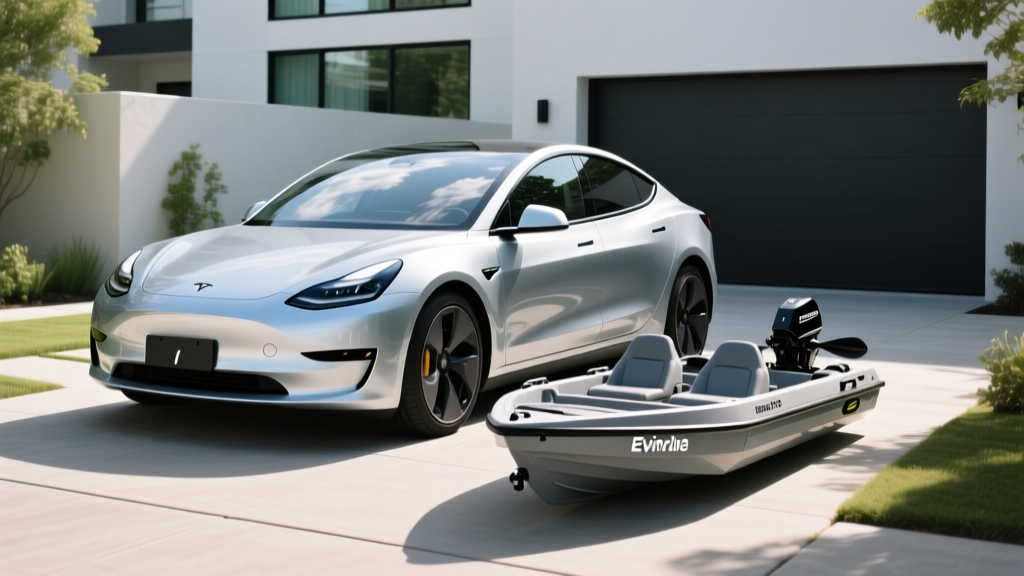
For readers who genuinely want a 2 person electric boat for lake fishing, harbor cruising, or tender use, here is an honest picture of ownership. Popular options in 2026 include small electric pontoons from brands like Avalon and Sun Tracker, electric fishing boats from brands like Bass Buggy, and compact electric dinghies with Torqeedo or ePropulsion outboard motors.
Typical specifications for a 2 person electric boat:
- Battery: 2–6 kWh lithium iron phosphate (LFP) or sealed lead-acid (SLA)
- Motor: 1–5 kW electric outboard
- Range: 10–30 miles at trolling speed (3–5 mph); significantly less at full throttle
- Charge time: 4–10 hours on standard 120V AC shore power
- Top speed: 5–15 mph depending on hull design and motor power
These are enjoyable for calm-water recreation but are not transportation in the commuting sense. They also carry no federal EV incentives and have limited dealer infrastructure compared to road-legal EVs.
Common Misconceptions: Myth vs. Fact
| Myth | Fact |
|---|---|
| "Electric boats qualify for the $7,500 federal EV tax credit." | They do not. IRS §30D applies only to four-wheeled, highway-capable vehicles meeting MSRP, income, and battery-sourcing requirements. |
| "A 2 person electric boat can replace my car for commuting." | Unless your commute is across a lake, no. Electric boats are recreational watercraft with 5–15 mph top speeds and 10–30 mile range. |
| "EV batteries need replacing every few years." | Modern BEV batteries (LFP and NMC) are warrantied for 8 years / 100,000 miles minimum, with most retaining 85–90% capacity at that point. Replacement is rare before 150,000+ miles. |
| "Public charging is unreliable everywhere." | Reliability varies by network. Tesla Superchargers consistently report 95%+ uptime. Electrify America and EVgo have improved but still lag. Check PlugShare for station-specific reviews. |
| "EVs are always more expensive than gas cars." | Upfront MSRP is often higher, but after the §30D credit and five years of fuel/maintenance savings, many BEVs reach cost parity or beat comparable gas models. |
Decision Framework: What Should You Actually Buy?
Choose a Road-Legal BEV If:
- You want to save $1,000+ per year on fuel and maintenance
- You have access to home charging (garage, driveway, or workplace Level 2)
- Your daily commute is under 80 miles round-trip
- You qualify for the §30D credit (income under $150K single / $300K joint, vehicle MSRP under $55K sedan / $80K SUV/truck)
Choose a PHEV If:
- You lack reliable home charging but want some electric-only driving (typically 25–45 miles)
- You regularly take road trips exceeding 300 miles and don't want to plan around DC fast chargers
- You want EV-like commuting with gas-engine flexibility for longer trips
Choose a 2 Person Electric Boat If:
- You want quiet, emission-free recreation on lakes, ponds, or calm rivers
- You already have a primary vehicle for daily transportation
- You understand this is a leisure purchase, not a commuting solution or tax-credit-eligible investment
Frequently Asked Questions
Can I get a tax credit for buying an electric boat?
No. The federal §30D Clean Vehicle Credit applies exclusively to qualifying four-wheeled, highway-capable plug-in vehicles. Some states may offer separate incentives for electric marine equipment, but these are rare and vary by jurisdiction. Check your state's energy office for current programs.
How much does it cost to charge a 2 person electric boat?
Very little. A typical 4 kWh boat battery charged at the national average residential rate of $0.16/kWh costs about $0.64 per full charge. Over a season of weekend use, you might spend $30–$60 on electricity.
What's the best 2 person electric boat in 2026?
This falls outside our coverage at AutoEdgeView, as we focus on road-legal electrified vehicles. For electric boat reviews, consult marine publications like BoatUS or Panbo. We can, however, help you evaluate the EV you'll drive to the dock.
Do electric boats have enough range for a full day on the water?
At trolling speeds (3–5 mph), a typical 2 person electric boat with a 4–6 kWh battery can run 4–8 hours, covering 15–30 miles. At full throttle, range drops sharply to 1–2 hours. For all-day use, some owners carry a portable generator or a spare battery pack.
Should I buy an electric car or an electric boat first?
If you don't already own an EV, the electric car delivers far more financial return—saving $1,000–$1,500 per year in fuel and maintenance, qualifying for up to $7,500 in federal tax credits, and reducing your daily carbon footprint. The electric boat is a discretionary recreational purchase best made after your primary transportation is optimized.
Where to Go From Here
If this guide clarified that your next electrified purchase should be a car rather than a boat, explore our in-depth reviews of the top 2026 BEVs and PHEVs. Each review includes EPA range data, real-world range expectations, DC fast charging curves, §30D tax credit eligibility, and five-year total cost of ownership calculations. If you do proceed with an electric boat, apply the same analytical rigor: compare battery kWh, motor kW, charge times, and warranty terms before you buy—just as you would for any electrified vehicle.