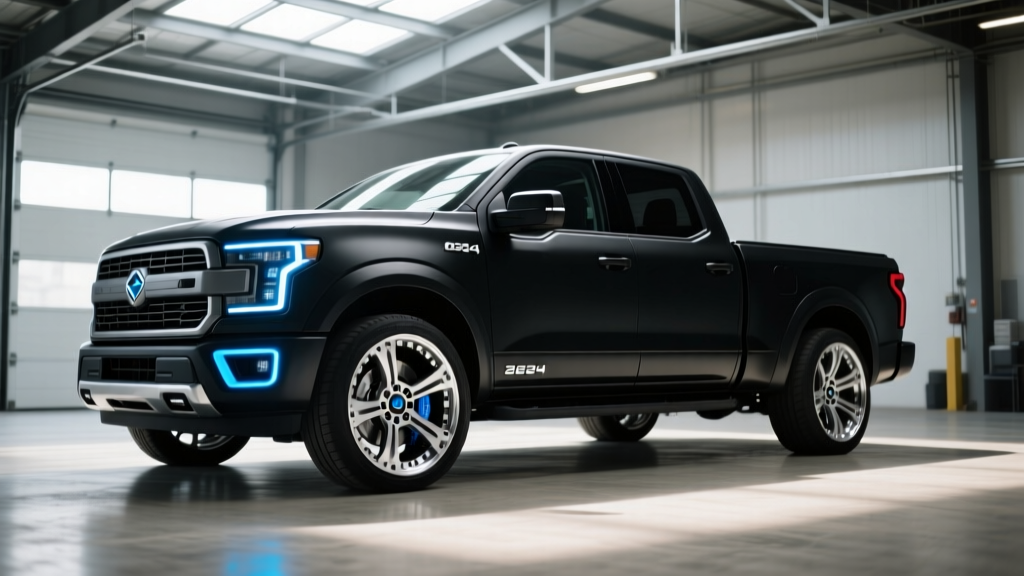
If you own a classic 1999 Ford F-150 and have browsed EV truck forums, you may have searched for the 1999 F-150 bolt pattern wondering whether wheels from a modern Ford F-150 Lightning will fit your older rig — or vice versa. This guide breaks down the exact bolt pattern, hub bore, and lug specifications for the 1999 F-150, then compares them directly to the current-generation electric F-150 Lightning and other popular EV trucks to answer the wheel-compatibility question once and for all.
Along the way, we'll profile the 2025/2026 F-150 Lightning's real-world range, charging speeds, and pricing, so you can see how Ford's electric truck stacks up whether you're cross-shopping or simply curious about the EV evolution of America's best-selling nameplate.
1999 Ford F-150 Bolt Pattern: The Exact Specs
The 1999 Ford F-150 (10th generation, 1997–2003) uses the following wheel mounting specifications:
| Specification | Value |
|---|---|
| Bolt Pattern (Lug Count × PCD) | 5 × 139.7 mm (5 × 5.5 inches) |
| Center Bore | 87.1 mm (hub-centric) |
| Lug Thread Size | 1/2"-20 UNF |
| Lug Type | Cone-seat (60° taper) — nut, not bolt |
| Typical OEM Wheel Diameter | 15"–17" |
| Offset Range (OEM) | +10 to +25 mm (varies by wheel) |
The 5×139.7 mm pattern (commonly written as 5×5.5" in the U.S.) was standard on most half-ton F-150 models through the 10th and 11th generations. This is critical context when comparing to modern EV trucks, which have largely moved to different bolt patterns to handle increased vehicle weight and torque.
Will F-150 Lightning Wheels Fit a 1999 F-150?
The short answer: No — not without adapters, and adapters are not recommended for daily or heavy-duty use.
Here's why. The current-generation Ford F-150 Lightning (2022–2026) uses a 6 × 135 mm bolt pattern — six lugs instead of five, on a different pitch-circle diameter. The center bore is also different (approximately 87.1 mm on the Lightning vs. the same on the '99, but the lug count mismatch makes direct mounting impossible).
| Vehicle | Bolt Pattern | Lug Type | Center Bore | Compatible with '99 F-150? |
|---|---|---|---|---|
| 1999 Ford F-150 | 5 × 139.7 mm | Nut, cone-seat | 87.1 mm | — |
| 2025 Ford F-150 Lightning | 6 × 135 mm | Nut, cone-seat | 87.1 mm | No (different lug count) |
| 2025 Rivian R1T (Dual-Motor) | 6 × 139.7 mm | Bolt, cone-seat | 77.8 mm | No |
| 2025 Chevrolet Silverado EV | 6 × 139.7 mm | Nut, cone-seat | 78.1 mm | No |
| 2025 Tesla Cybertruck | 6 × 139.7 mm | Bolt, cone-seat | 77.8 mm | No |
Modern EV trucks carry significantly more weight than a 1999 F-150 — the Lightning weighs approximately 6,000–6,800 lbs curb weight versus the '99's roughly 4,300–5,000 lbs. Automakers moved to six-lug patterns to distribute the increased load (especially from heavy battery packs) more safely across the hub. Wheel adapters that convert 5-lug to 6-lug patterns exist on the aftermarket, but they introduce a spacer offset that alters scrub radius and can compromise handling, especially under the high instant torque of an EV powertrain.
2025 Ford F-150 Lightning: Full EV Profile
Whether you're a classic F-150 owner considering the jump to electric or an EV shopper comparing trucks, here's the complete spec profile for the current F-150 Lightning.
| Spec | Standard Range | Extended Range |
|---|---|---|
| EPA Range | 240 miles | 320 miles |
| Battery Capacity (usable) | 98 kWh | 131 kWh |
| Battery Chemistry | NMC (nickel manganese cobalt) | NMC |
| Drivetrain | Dual-motor AWD | Dual-motor AWD |
| Horsepower | 563 hp | 563 hp |
| Torque | 775 lb-ft | 775 lb-ft |
| 0–60 mph | ~4.5 seconds | ~3.8 seconds |
| Max DC Fast Charge | 150 kW | 150 kW |
| 10–80% DC Charge Time | ~44 minutes | ~41 minutes |
| Level 2 Home Charge Rate | 11.3 kW (~25 mi/hr) | 19.2 kW (~42 mi/hr)* |
| Efficiency (MPGe combined) | 68 MPGe | 70 MPGe |
| Max Towing | 7,700 lbs | 10,000 lbs |
| Payload | 2,235 lbs | 1,800 lbs |
| Cargo Bed Length | 5.5 ft | 5.5 ft |
| Frunk Volume | 14.1 cu ft | 14.1 cu ft |
| Base MSRP (Pro trim) | $52,090 | $69,090 (Lariat) |
*19.2 kW Level 2 charging requires Ford's optional 80A Charge Station Pro and a dedicated 100A circuit. Standard 48A Mobile Power Cord delivers ~11.3 kW on a 240V/50A outlet.
The EPA rates the Extended Range Lightning at 320 miles, but real-world results vary. Expect approximately 260–280 miles on highway trips at 70–75 mph, and 200–230 miles in cold weather (below 32°F) due to battery resistance and cabin heating demands. The Standard Range model's 240-mile EPA figure drops to roughly 190–210 miles in mixed highway/cold conditions. Towing a 5,000-lb trailer can cut range by 40–50%, yielding roughly 120–150 miles before needing a charge. Source: fueleconomy.gov.
Charging the F-150 Lightning: Speeds and Home Setup
Charging speed is where the Lightning's large battery presents a trade-off: more range means longer charge sessions unless you have access to high-power infrastructure.
| Level | Power | Miles of Range Added per Hour | Notes |
|---|---|---|---|
| Level 1 (120V outlet) | 1.4 kW | ~3 mi/hr | Emergency/top-up only; full charge takes 3–4 days |
| Level 2 (240V, 32A Mobile Cord) | 7.7 kW | ~17 mi/hr | Standard included cord; overnight charge ~10–12 hrs |
| Level 2 (240V, 48A Wall Connector) | 11.3 kW | ~25 mi/hr | Aftermarket or Ford Connect Station; ~8 hrs overnight |
| Level 2 (240V, 80A Charge Station Pro) | 19.2 kW | ~42 mi/hr | Requires 100A dedicated circuit; ~5 hrs for Extended Range |
| DC Fast Charge (public) | 150 kW peak | ~140 mi in 20 min | Charge curve tapers significantly above 80% SoC |
A critical detail for Lightning buyers: the charge curve tapers hard above 80% State of Charge. On a 150 kW DC fast charger, the truck pulls peak power from roughly 10–50% SoC, then gradually reduces to ~80 kW by 70% and below 40 kW past 85%. This means a 10–80% session takes about 41 minutes for the Extended Range, but pushing from 80–100% adds another 30+ minutes. For road trips, plan stops at 80% and move on.
Home installation for a Level 2 charger typically costs $500–$2,500 depending on your electrical panel's capacity. The 80A Charge Station Pro requires a 100A breaker, which may necessitate a panel upgrade ($1,500–$3,000) if your home has a standard 100A or 150A service. Consult a licensed electrician before purchasing equipment.
Pricing, Trims, and Federal Tax Credit Eligibility
| Trim | Battery | MSRP (incl. destination) | Est. After §30D Credit |
|---|---|---|---|
| Pro | Standard Range (98 kWh) | $52,090 | $44,590* |
| XLT | Standard Range | $57,090 | $49,590* |
| Lariat | Extended Range (131 kWh) | $69,090 | $61,590* |
| Platinum | Extended Range | $86,090 | $78,590* |
*Federal §30D credit of up to $7,500 is not automatic. Eligibility depends on multiple IRS requirements that change frequently.
- MSRP Cap: Trucks/vans/SUVs must have an MSRP at or below $80,000. The Lightning Platinum ($86,090) exceeds this cap and does NOT qualify.
- Buyer Income Cap: Modified AGI must not exceed $150,000 (single), $225,000 (head of household), or $300,000 (joint filers).
- Battery Sourcing: A percentage of critical minerals and battery components must be sourced from the U.S. or free-trade-agreement partners. These thresholds tighten annually. Verify current-year requirements at IRS.gov §30D.
- Point-of-Sale Transfer: As of 2024, you can transfer the credit to the dealer at purchase, reducing the sale price directly rather than waiting for a tax refund.
- Recommendation: Confirm eligibility with a tax professional before purchase. Rules and sourcing requirements can change between model years.
Tech, Interior, and Driver Assistance
The Lightning's cabin retains the conventional F-150 layout but adds EV-specific features:
- SYNC 4A infotainment with a 12" touchscreen (15.5" portrait screen on Lariat/Platinum)
- Ford BlueCruise — a Level 2 hands-free driving system approved for specific divided highways (the driver must remain attentive; this is NOT autonomous driving)
- Pro Power Onboard — up to 9.6 kW of exportable 120V/240V power from the bed and frunk outlets, enough to run power tools or back up essential home circuits during an outage
- Intelligent Range system that factors in weather, terrain, payload, and driving habits for more accurate range predictions
- Mega Power Frunk — 14.1 cu ft lockable front trunk with 400 lbs payload capacity and drain plug
Notable drawbacks include a rear seat that doesn't fold flat (unlike the gas F-150's flip-up cushions), a ride that can feel firm when unloaded due to the heavy battery pack, and road-trip charging that requires more planning than a gas truck given the 150 kW peak charge rate (competitors like the Silverado EV can accept up to 350 kW on compatible chargers).
BlueCruise enables hands-free driving on pre-mapped divided highways, but it requires continuous driver supervision. It does not handle construction zones, unmapped roads, or complex intersections autonomously. This is fundamentally different from Level 4 robotaxi services like Waymo. Keep your eyes on the road.
Who Should Buy the F-150 Lightning (and Who Shouldn't)?
Best For
- Homeowners with Level 2 charging who commute under 100 miles daily
- Job-site users who benefit from Pro Power Onboard (no generator needed)
- Drivers who want truck utility with sports-car acceleration (3.8s to 60 mph)
- Fleet operators with depot charging infrastructure
- Those wanting a massive, secure frunk for gear storage
Think Twice If
- You tow heavy trailers long distances (range drops 40–50%)
- You frequently drive in remote areas with sparse DC fast-charging
- You need a sub-$45,000 truck (the Lightning starts at $52K+)
- You want the fastest possible road-trip charging (150 kW lags behind 350 kW competitors)
- Your home electrical panel can't support a 48A+ Level 2 circuit
Warranty and Long-Term Ownership
| Coverage | Term |
|---|---|
| Bumper-to-Bumper | 3 years / 36,000 miles |
| Powertrain (motors, reduction gear) | 5 years / 60,000 miles |
| Battery Pack (retains ≥70% capacity) | 8 years / 100,000 miles |
| Corrosion Perforation | 5 years / unlimited miles |
| Roadside Assistance | 5 years / 60,000 miles |
Ford guarantees the high-voltage battery will retain at least 70% of its original capacity over 8 years or 100,000 miles. Real-world data from early 2022–2024 Lightning owners suggests NMC degradation of approximately 5–8% over the first 50,000 miles under normal use — well within warranty thresholds. Avoid routinely charging to 100% for daily use (set to 80–90% for longevity) and use DC fast charging sparingly when Level 2 is available.
Frequently Asked Questions
Can I put 1999 F-150 wheels on a Ford F-150 Lightning?
No. The 1999 F-150 uses a 5×139.7 mm (5×5.5") bolt pattern, while the Lightning uses 6×135 mm. The lug count and pitch-circle diameter are different, making direct fitment impossible. Beyond the bolt pattern, the Lightning's 6,000+ lb curb weight and 775 lb-ft of instant torque demand wheels rated for significantly higher loads than a 1999 half-ton truck wheel was designed to carry.
What is the real-world range of the F-150 Lightning?
The EPA rates the Extended Range at 320 miles and the Standard Range at 240 miles. In real-world highway driving at 70+ mph, expect 260–280 miles (Extended) or 190–210 miles (Standard). Cold weather (below freezing) reduces these figures by 15–30%. Towing cuts range roughly in half.
How fast does the Lightning charge at home and on the road?
At home on a 48A Level 2 charger (11.3 kW), you'll add about 25 miles of range per hour — a full overnight charge for most daily needs. On a 150 kW DC fast charger, a 10–80% session takes approximately 41–44 minutes. Charging slows significantly above 80% due to the battery management system protecting cell longevity.
Does the F-150 Lightning qualify for the $7,500 federal tax credit?
It depends on the trim and your income. The Pro, XLT, and Lariat trims fall under the $80,000 MSRP cap for trucks and may qualify if you meet IRS income limits and battery-sourcing requirements. The Platinum trim ($86,090 MSRP) exceeds the cap and does not qualify. Always verify current rules at IRS.gov and consult a tax professional.
Is the F-150 Lightning worth buying over the Rivian R1T or Silverado EV?
The Lightning wins on price (starting ~$52K vs. the R1T at ~$70K+), frunk utility, and Pro Power Onboard for job-site use. The Rivian R1T offers superior off-road capability, a more car-like driving experience, and a quad-motor option. The Silverado EV provides a longer bed option and faster 350 kW DC charging. If you prioritize value and work-truck features, the Lightning is the strongest choice; for adventure or maximum road-trip charging speed, look at the competitors.
What bolt pattern do I need if I'm restoring a 1999 F-150?
Stick with 5×139.7 mm (5×5.5") wheels with an 87.1 mm center bore and 1/2"-20 cone-seat lug nuts. Aftermarket wheels in this pattern are widely available from brands like American Racing, Moto Metal, and Fuel Off-Road. Ensure the wheel's load rating meets or exceeds your truck's gross axle weight rating (GAWR), found on the driver's door jamb sticker.
Sources: fueleconomy.gov, Ford Motor Company, IRS.gov §30D.