Quick Answer: The 1997 GMC Electric Vehicle
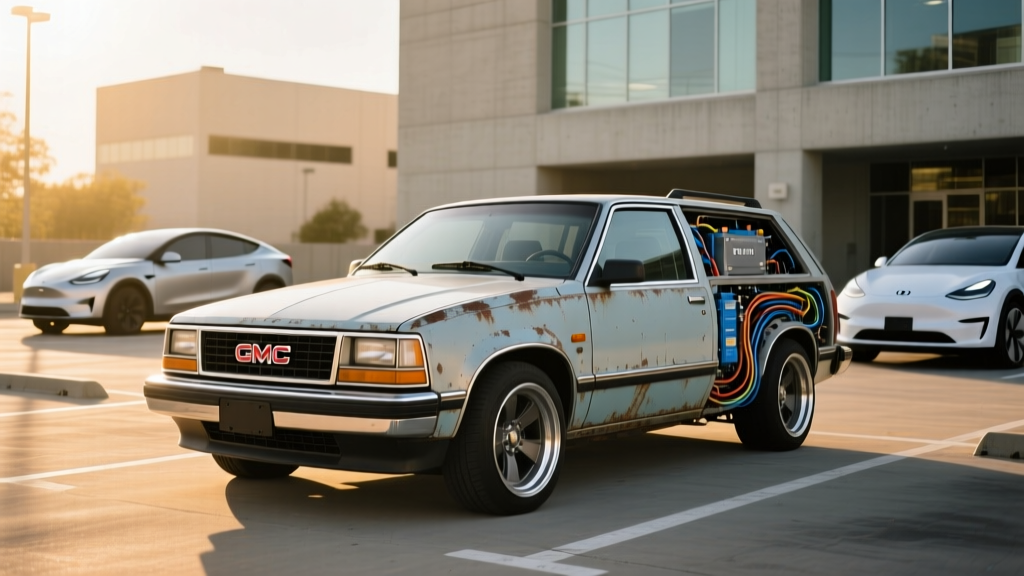
The 1997 GMC electric vehicle most commonly referenced is the GMC EV1 electric pickup concept — a battery-electric truck prototype developed by General Motors during the same era as the famous EV1 coupe. GM also produced a limited-run 1997 Chevrolet S-10 Electric (badged under the GMC truck division's corporate umbrella) with a lead-acid battery pack delivering roughly 40–50 miles of range and a top speed of about 70 mph. These vehicles were never sold to consumers; they were leased to fleet operators and later recalled and crushed. No 1997 GMC electric vehicle is available for purchase today, but understanding this early EV history provides critical context for anyone buying a modern electric truck like the 2026 GMC Sierra EV or Chevrolet Silverado EV.
What Was the 1997 GMC Electric Vehicle?
During the mid-1990s, California's Zero Emission Vehicle (ZEV) mandate pushed automakers to develop battery-electric vehicles. General Motors responded with several programs. The most famous was the GM EV1 coupe (1996–1999), but GM also explored electric trucks under its GMC and Chevrolet brands.
The 1997 Chevrolet S-10 Electric — the closest production vehicle to a "1997 GMC electric vehicle" — was a compact pickup converted to battery power. Here are the known specifications:
| Specification | 1997 Chevrolet S-10 Electric |
|---|---|
| Battery Chemistry | Lead-acid (later NiMH in 1998 revision) |
| Battery Capacity | ~16.2 kWh (lead-acid pack) |
| EPA-Equivalent Range | ~40–50 miles (lead-acid); ~90 miles (NiMH, 1998) |
| Motor Output | 85 kW (~114 hp) |
| Top Speed | ~70 mph (electronically limited) |
| Charge Time (Level 2, 240V) | ~6–8 hours (lead-acid) |
| Curb Weight | ~4,400 lbs (battery weight significant) |
| Payload Capacity | Severely reduced vs. gas S-10 |
| Availability | Fleet lease only; never sold retail |
GM produced approximately 500 S-10 Electric units across the 1997–1998 model years. Like the EV1, these vehicles were leased to government and commercial fleets, primarily in California. When GM abandoned its EV programs in the early 2000s, most were recalled and destroyed — a fate documented in the 2006 film Who Killed the Electric Car?
1997 Electric Truck vs. 2026 GMC Sierra EV: What 29 Years of Progress Looks Like
The gap between the 1997 GMC-era electric truck and today's 2026 GMC Sierra EV illustrates how far battery technology, charging infrastructure, and electric drivetrains have come. This comparison is essential context if you're shopping for a modern electric pickup and encounter references to GM's early EV experiments.
| Metric | 1997 S-10 Electric (GMC era) | 2026 GMC Sierra EV Denali Edition 1 |
|---|---|---|
| Battery Chemistry | Lead-acid | NMC (nickel manganese cobalt) lithium-ion, Ultium platform |
| Usable Battery Capacity | ~16.2 kWh | ~200 kWh (estimated, GM Ultium large pack) |
| EPA Range | ~40–50 miles | ~440 miles (EPA est., Denali Edition 1) |
| Real-World Highway Range | ~30 miles at 65 mph | ~340–370 miles (highway/cold weather caveat) |
| Peak DC Fast Charge Rate | None (Level 2 only) | ~350 kW (800V architecture) |
| 10–80% DC Charge Time | N/A | ~22 minutes (est., on 350 kW charger) |
| Motor Output | 85 kW / 114 hp | 559 kW / 754 hp (dual motor AWD) |
| 0–60 mph | ~13 seconds | ~4.3 seconds |
| Towing Capacity | Not rated for towing | ~10,000 lbs (est.) |
| MSRP | Not sold (fleet lease only) | $99,495 (Denali Edition 1); lower trims from ~$55,000 |
| Federal Tax Credit (§30D) | N/A | Up to $7,500 if buyer meets income/MSRP/sourcing requirements |
The numbers make the evolution stark: modern lithium-ion packs store 12x the energy at a fraction of the per-kWh weight, DC fast charging didn't exist in consumer form in 1997, and today's electric trucks can tow, carry payload, and cross state lines — things the S-10 Electric simply couldn't do.
Real Costs: What EV Ownership Actually Looks Like in 2026
If you've landed on this page searching for a "1997 GMC electric vehicle," you may be researching EV history — or you may be considering your first electric vehicle purchase. Here's what modern EV ownership costs look like compared to a gas truck.
| Cost Category | 2026 GMC Sierra EV (AT4, ~$75,000 MSRP) | 2026 GMC Sierra 1500 Gas (AT4, ~$62,000 MSRP) |
|---|---|---|
| Purchase Price (before incentives) | $75,000 | $62,000 |
| Federal Tax Credit (§30D) | Up to $7,500 (point-of-sale transfer available; subject to income caps, MSRP caps, battery sourcing rules — see IRS §30D guidelines) | $0 |
| Effective Purchase Price | ~$67,500 (if full credit applies) | $62,000 |
| Fuel/Energy Cost per Mile | ~$0.04–$0.06/mile (home charging at $0.15/kWh, 2.0 mi/kWh) | ~$0.18–$0.22/mile (gas at $3.50/gal, 17 mpg combined) |
| Annual Fuel/Energy (12,000 miles) | ~$480–$720 | ~$2,160–$2,640 |
| Annual Maintenance | ~$300–$500 (no oil changes, fewer moving parts) | ~$800–$1,200 (oil, filters, transmission fluid) |
| Insurance (annual avg.) | ~$2,200–$2,800 (EVs typically 15–25% more to insure) | ~$1,800–$2,200 |
| 5-Year Total Fuel + Maintenance | ~$3,900–$6,100 | ~$14,800–$19,200 |
| 5-Year Total Cost of Ownership (est.) | Higher upfront, lower operating — break-even around year 3–5 depending on mileage | Lower upfront, higher operating |
The operating-cost advantage of an EV is real and measurable. According to fueleconomy.gov, electric vehicles convert over 77% of electrical energy to power at the wheels, compared to 12–30% for gasoline vehicles. But the higher upfront cost, potentially higher insurance premiums, and home charging installation costs ($500–$2,500 for a Level 2 setup, more if your panel needs upgrading) are real factors that must be budgeted.
What Early EV History Teaches Modern Buyers
The story of the 1997-era GM electric trucks carries lessons that remain relevant for 2026 EV shoppers:
Battery Chemistry Determines Everything
The S-10 Electric's lead-acid batteries were heavy (~1,400 lbs of the truck's curb weight), energy-poor (~35 Wh/kg energy density), and degraded quickly. The 1998 switch to nickel-metal hydride (NiMH) nearly doubled range — a preview of how chemistry upgrades transform EV viability. Today's NMC and LFP (lithium iron phosphate) batteries deliver 160–260 Wh/kg at the cell level, and solid-state batteries (expected in limited production by 2027–2028) promise 350+ Wh/kg.
Charging Infrastructure Is Make-or-Break
In 1997, there was no public charging network. The S-10 Electric could only charge at fleet depots or home Level 1/Level 2 outlets. Today, the U.S. has over 190,000 public charging ports (per the DOE's Alternative Fuels Data Center), with Tesla's Supercharger network opening to NACS-equipped GM vehicles. But charging deserts remain real in rural areas, and public charger reliability is still a pain point — something early EV fleet operators understood intimately.
Range Must Match Your Driving Pattern
The S-10 Electric's 40-mile range was adequate for short urban fleet routes but useless for anything else. Modern EVs solve this for most drivers — the EPA-rated 440-mile range of the Sierra EV Denali covers most daily needs with enormous margin. But real-world buyers should always plan for the worst case: highway driving at 75 mph reduces range by 15–25%, and cold weather (below 30°F) can reduce it by 20–40% depending on whether the vehicle has a heat pump.
Common Misconceptions About EVs — Then and Now
| Myth | Fact |
|---|---|
| "EVs don't have enough range for real use." | In 1997, this was true (40 miles). In 2026, most new EVs deliver 250–440+ EPA miles. The median American drives ~37 miles/day (DOT data). |
| "EV batteries need replacing every few years." | Modern lithium-ion EV batteries are warrantied for 8 years/100,000 miles (federal minimum). Real-world data shows ~10–15% degradation at 150,000 miles for NMC chemistries. LFP batteries degrade even less. |
| "EVs are worse in cold weather." | Range loss in cold is real (20–40%), but EVs start instantly in any temperature (no cold-start issues), and preconditioning while plugged in mitigates most range loss. Gas vehicles also lose efficiency in cold — it's just less visible at the pump. |
| "Charging takes too long." | Home Level 2 charging adds ~25–44 miles per hour of charging — sufficient for overnight replenishment. DC fast charging at 250–350 kW adds 100+ miles in 10–15 minutes. You charge where you park, not where you stop. |
| "EVs are worse for the environment because of battery mining." | Lifecycle analyses (including from Argonne National Laboratory) consistently show EVs produce fewer total emissions than gas vehicles over their lifetime, even accounting for battery manufacturing. The grid is also getting cleaner each year. |
Decision Framework: Should You Buy an EV, Hybrid, or Stick With Gas?
If/Then EV Buying Guide
- IF you have access to home charging (garage, driveway, or workplace Level 2) AND your daily driving is under 80 miles round-trip → THEN a battery-electric vehicle (BEV) will likely save you $1,500–$2,000/year in fuel and maintenance vs. a gas equivalent.
- IF you regularly drive 300+ miles in a single trip, live in a region with sparse DC fast charging, or frequently tow heavy loads → THEN a plug-in hybrid (PHEV) like the 2026 Jeep Wrangler 4xe (22 miles electric-only, then gas) offers electric commuting with gas flexibility.
- IF you cannot install home charging (apartment, street parking) AND your area has limited public charging → THEN a conventional hybrid (HEV) like the Toyota RAV4 Hybrid (39 MPG combined) gives you efficiency without charging dependency.
- IF you want an electric truck specifically → THEN evaluate the 2026 GMC Sierra EV, Chevrolet Silverado EV, Ford F-150 Lightning, and Rivian R1T side-by-side on range, towing, payload, and charging speed — not just sticker price.
What First-Time EV Buyers Must Know in 2026
If the 1997 GMC electric vehicle search brought you here and you're now considering a modern EV, here's a practical checklist before you buy:
- Verify home charging feasibility first. A Level 2 home charger (240V, 32–48 amps) is the single biggest quality-of-life factor in EV ownership. Budget $500–$1,500 for the charger hardware and $500–$2,500 for electrician installation. If your home has a 100-amp electrical panel, you may need a $1,500–$3,000 panel upgrade.
- Understand kW vs. kWh. kWh (kilowatt-hours) measures battery capacity — how much energy the vehicle stores (like gallons in a gas tank). kW (kilowatts) measures power — how fast the vehicle charges or accelerates. A 100 kWh battery charging at 200 kW will theoretically fill in 30 minutes (in practice, charge curves slow the rate above 80% SoC).
- Check §30D tax credit eligibility before assuming you'll get $7,500. The federal clean vehicle credit has income caps ($150K single / $300K joint), MSRP caps ($80K for SUVs/pickups, $55K for sedans), and battery sourcing requirements that change annually. The credit can now be transferred to the dealer as a point-of-sale discount. Verify current rules at irs.gov.
- Plan for real-world range, not EPA stickers. If an EV is rated at 320 miles EPA, expect ~250–270 miles on a sustained highway trip at 75 mph, and ~200–240 miles in sub-freezing temperatures. Plan road trips around DC fast charger locations, not around the full battery.
- Test the charging experience, not just the driving experience. On your test drive, ask the dealer to demonstrate the vehicle's charging interface, preconditioning features, and route-planning software. The quality of these systems varies enormously between brands.
Frequently Asked Questions
Was there actually a GMC-branded electric vehicle in 1997?
Not under the GMC badge directly. General Motors produced the Chevrolet S-10 Electric in 1997–1998, which was part of GM's truck division (the same corporate umbrella as GMC). GM also developed electric vehicle concepts and prototypes that carried GMC badging at auto shows, but no GMC-badged electric truck was produced for consumers in 1997. The EV1 coupe was the only GM electric vehicle available to the public (via lease) during that period.
Can I buy or drive a 1997 GM electric vehicle today?
Effectively, no. GM recalled and destroyed the vast majority of its EV1 and S-10 Electric vehicles in the early 2000s. A handful of EV1s survive in museums (such as the Smithsonian), and a very small number of S-10 Electrics may exist in private hands, but they are not road-legal production vehicles you can purchase. If you want a classic electric vehicle, your best options are later conversions or modern EVs with classic styling.
How does the 1997 S-10 Electric compare to a modern electric truck?
There is no meaningful comparison in terms of capability. The 1997 S-10 Electric offered ~40 miles of range, no DC fast charging, ~114 hp, and essentially no payload or towing capacity. The 2026 GMC Sierra EV offers ~440 miles of range, 350 kW DC fast charging, 754 hp, and up to ~10,000 lbs of towing. The technology gap is 29 years of battery chemistry, power electronics, and software advancement.
What happened to GM's early electric vehicle programs?
GM discontinued the EV1 program in 2003, citing high costs, limited battery technology, and insufficient consumer demand at the time. California's ZEV mandate was also weakened after automaker lobbying. GM's decision to recall and crush the EV1 fleet became one of the most controversial episodes in automotive history. GM re-entered the EV market seriously with the Chevrolet Bolt EV (2017) and the Ultium platform (2022+), and now offers multiple electric vehicles including the Sierra EV, Silverado EV, Equinox EV, Blazer EV, and Cadillac Lyriq.
Is the GMC Sierra EV worth buying over a gas Sierra in 2026?
It depends on your use case. The Sierra EV offers dramatically lower fuel costs (~$0.05/mile vs. ~$0.20/mile), instant torque, a front trunk (frunk), V2L/V2H capability (powering tools or your home), and less maintenance. But it carries a higher purchase price, potentially higher insurance, and charging logistics on long road trips. If you drive under 200 miles daily and can charge at home, the EV pays for its premium within 3–5 years for most drivers. If you regularly tow over 8,000 miles long-distance or operate in areas with minimal charging infrastructure, the gas Sierra or a diesel remains more practical today.