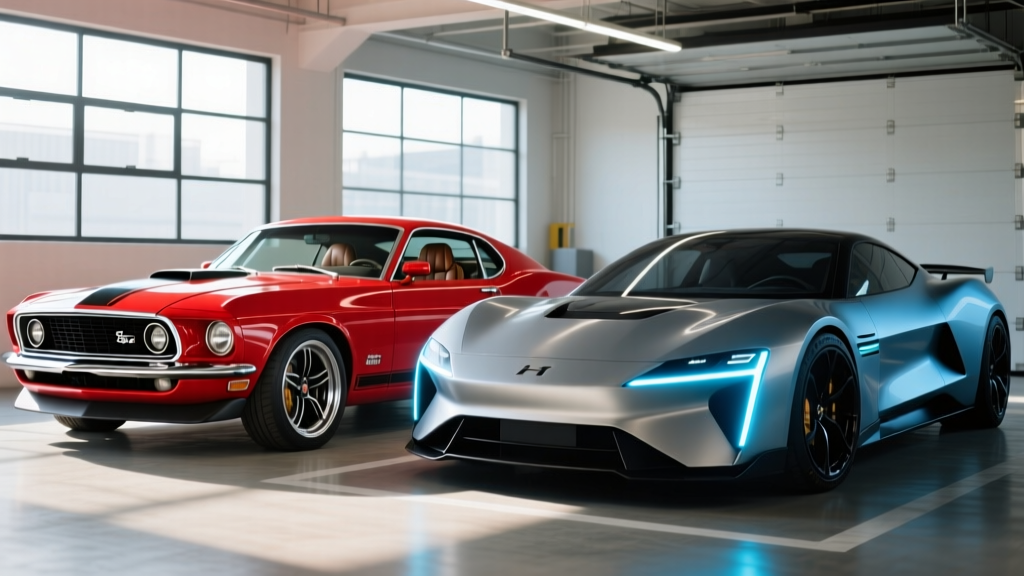
The 1969 Mustang Mach 1 is an icon — a 335-horsepower, 428 Cobra Jet V8 legend that defined American muscle. But if you love that Mach 1 spirit and are wondering whether a modern electric performance car can replicate (or exceed) the thrill, you're not alone. This isn't a review of a gas car — it's a data-driven comparison of what the original Mustang Mach 1 1969 delivered versus what today's electric muscle machines bring to the table in 2026.
We're putting the Ford Mustang Mach-E GT (the spiritual electric successor), the Tesla Model 3 Performance, and the Dodge Charger Daytona Scat Pack EV head-to-head on the metrics that matter to EV buyers: range, charging speed, performance, price, tax credits, and real-world ownership. The 1969 Mach 1 is our nostalgia baseline; these EVs are what you can actually buy and drive today.
The 1969 Mustang Mach 1: What Made It Legendary
Before we evaluate modern electric muscle, let's establish what the original Mustang Mach 1 1969 actually delivered. Ford sold over 72,000 Mach 1 units that year, making it one of the most successful performance Mustangs ever. Here's what buyers got:
- Engine: 428 Cobra Jet V8, 335 hp (gross), 440 lb-ft torque
- 0-60 mph: ~5.5–6.0 seconds (period road tests varied)
- Fuel economy: ~8–10 mpg combined
- Fuel tank: 20 gallons (~160–200 miles range)
- Curb weight: ~3,600 lbs
By 2026 standards, those numbers are modest. A modern electric performance car delivers comparable or superior acceleration, vastly lower operating costs, and zero tailpipe emissions — but with different trade-offs around charging infrastructure, weight, and sound. Let's get into the numbers.
Modern Electric Muscle: 2026 Contenders at a Glance
| Spec | Ford Mustang Mach-E GT | Tesla Model 3 Performance | Dodge Charger Daytona Scat Pack |
|---|---|---|---|
| EPA Range | 280 miles | 315 miles | 260 miles |
| Battery (usable) | 91 kWh (NMC) | 79 kWh (NMC) | 92 kWh (NMC) |
| Horsepower | 480 hp | 510 hp | 670 hp |
| 0-60 mph | 3.5 sec | 2.9 sec | 3.3 sec |
| Drivetrain | Dual-motor AWD | Dual-motor AWD | Dual-motor AWD |
| Max DC Fast Charge | 150 kW | 250 kW | 175 kW |
| 10-80% DCFC Time | ~45 min | ~25 min | ~32 min |
| Level 2 Home Rate | 10.5 kW (~30 mi/hr) | 11.5 kW (~44 mi/hr) | 11 kW (~32 mi/hr) |
| MPGe (combined) | 90 MPGe | 121 MPGe | 82 MPGe |
| EPA Efficiency | 37 kWh/100mi | 28 kWh/100mi | 41 kWh/100mi |
| Base MSRP | $56,995 | $54,990 | $59,995 |
| Battery Warranty | 8 yr / 100,000 mi | 8 yr / 120,000 mi | 8 yr / 100,000 mi |
EPA estimates assume moderate driving in ideal conditions. Expect 15–25% less range at sustained 75+ mph highway speeds. In freezing temperatures (below 32°F), battery chemistry and cabin heating demands can reduce range by 20–35%. The Mach-E GT's 280-mile EPA figure realistically translates to ~210–240 miles on a cold highway road trip. The Model 3 Performance's superior efficiency (28 kWh/100mi vs 37) means it holds up better in real-world mixed driving, delivering closer to ~260–280 miles in moderate conditions.
Charging Speed: How Long Will You Wait?
Charging speed is the single biggest differentiator for EV road trips — and this is where the 2026 contenders diverge sharply. Note the distinction: kW (kilowatts) measures the power flowing into the battery at any moment, while kWh (kilowatt-hours) measures total energy stored. Peak kW matters, but sustained charge rate and the shape of the charge curve matter more.
| Metric | Mach-E GT | Model 3 Perf. | Charger Daytona |
|---|---|---|---|
| Peak DCFC Rate | 150 kW | 250 kW | 175 kW |
| 10-80% Time | ~45 min | ~25 min | ~32 min |
| Home L2 (kW) | 10.5 kW | 11.5 kW | 11 kW |
| Full L2 Charge Time | ~9 hours | ~7 hours | ~8.5 hours |
| Connector | CCS (NACS adapter avail.) | NACS (native Tesla) | CCS (NACS adapter avail.) |
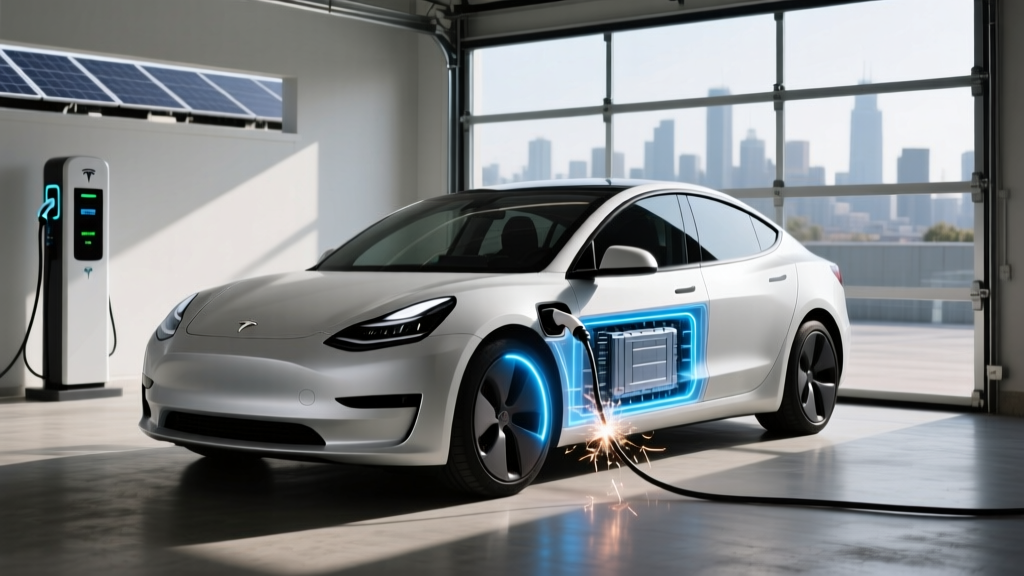
The Tesla Model 3 Performance dominates DC fast charging. Its 250 kW peak rate at V3 Superchargers means you're adding roughly 200 miles of range in 15 minutes under ideal conditions. The Mach-E GT's 150 kW ceiling is its weakest competitive metric — a 45-minute 10-80% session is noticeable on road trips. Ford has addressed this somewhat by enabling Tesla Supercharger access via a NACS adapter, but the vehicle's onboard charge acceptance remains the bottleneck.
Preconditioning tip: All three vehicles benefit from battery preconditioning before DC fast charging. Navigate to a fast charger in the car's built-in navigation (not a third-party app) and the thermal management system will warm the battery to its optimal charge temperature, shaving 5–10 minutes off your session. Skip this step in cold weather and your charge rate may be cut in half for the first several minutes.
Performance: Electric Torque vs V8 Nostalgia
The 1969 Mach 1 with the 428 Cobra Jet was quick for its era — 0-60 in roughly 5.5 seconds was headline-worthy. Every EV in this comparison obliterates that figure, but the character of the acceleration is fundamentally different.
The Tesla Model 3 Performance at 2.9 seconds to 60 mph is brutally fast in a way no carbureted V8 could match. Instant torque delivery means zero lag — you press the pedal and you're pressed into the seat. The Dodge Charger Daytona Scat Pack at 670 hp and 3.3 seconds is the horsepower king, and Dodge has engineered a synthetic "Fratzonic" exhaust note to simulate the visceral experience. The Mach-E GT at 3.5 seconds is the closest thing to wearing a Mustang badge in electric form.
Where the 1969 Mach 1 still wins: weight feel, mechanical feedback, and analog engagement. These EVs weigh 4,600–5,800 lbs — over 1,000 lbs heavier than the original. That mass is felt in corners, despite low centers of gravity. For drag-strip thrills, the EVs win. For back-road carving, the lighter, communicative classics still have an edge that physics can't fully overcome.
Pricing, Tax Credits, and Total Cost
Here's where the math gets interesting for 2026 buyers. Federal EV tax credit rules under IRS §30D are complex and vehicle-specific. Not every EV qualifies for the full $7,500 credit — and eligibility depends on MSRP caps, buyer income limits, and battery component/critical mineral sourcing requirements that shift annually.
| Vehicle | Base MSRP | As-Tested (typical) | §30D Credit Eligibility | Effective Price (est.) |
|---|---|---|---|---|
| Mach-E GT | $56,995 | $61,500 | Partial — sourcing rules may limit to $3,750 | ~$53,245 – $57,745 |
| Model 3 Perf. | $54,990 | $57,500 | Eligible for $7,500 (meets sourcing + MSRP cap) | ~$47,490 – $50,000 |
| Charger Daytona | $59,995 | $65,000 | Partial — sourcing rules may limit to $3,750 | ~$56,245 – $61,245 |
- MSRP cap: Sedans must be under $55,000; SUVs/trucks under $80,000. The Model 3 qualifies as a sedan; Mach-E and Charger qualify as SUVs.
- Income cap: Modified AGI must not exceed $150,000 (single), $225,000 (head of household), or $300,000 (joint).
- Battery sourcing: Credits are split — $3,750 for critical minerals, $3,750 for battery components. Sourcing requirements tighten annually. Verify current eligibility at fueleconomy.gov before purchasing.
- Point-of-sale transfer: Eligible buyers can transfer the credit to the dealer at purchase, reducing the purchase price directly rather than waiting for a tax refund.
For context on what the 1969 Mach 1 cost: it started around $3,100 — roughly $26,000 in 2026 dollars adjusted for inflation. Today's electric muscle starts at double that, but delivers triple the horsepower, vastly lower per-mile fuel costs, and modern safety technology.
Cargo, Space, and Daily Practicality
The 1969 Mach 1 was a 2+2 coupe with a cramped rear seat and an 8.5 cu ft trunk. Modern electric performance cars offer dramatically more utility:
- Mach-E GT: 29.7 cu ft rear cargo (63.3 cu ft with seats folded), 4.7 cu ft frunk. Rear legroom: 38.9 inches. Genuinely usable as a family daily driver.
- Model 3 Performance: 23 cu ft trunk, 3.1 cu ft frunk. Rear legroom: 35.2 inches. Tighter than the Mach-E but still a functional sedan.
- Charger Daytona: 16.5 cu ft trunk, 1.7 cu ft frunk. Rear legroom: 36.5 inches. The most coupe-like packaging of the three.
If you need to haul kids, gear, or road-trip luggage, the Mach-E GT is the clear practicality winner. The Model 3 is a capable commuter with enough trunk space for weekly groceries. The Charger Daytona prioritizes style over cargo — much like the original Mach 1 did.
Standout Tech and Notable Drawbacks
Ford Mustang Mach-E GT: SYNC 4A with a 15.5-inch portrait touchscreen, BlueCruise hands-free highway driving (SAE Level 2 — driver must remain engaged), FordPass app with remote preconditioning. Drawback: 150 kW DCFC ceiling is a competitive disadvantage. Build quality and panel gaps have drawn owner complaints.
Tesla Model 3 Performance: 15.4-inch center display, Tesla Autopilot standard (FSD Supervised available at $8,000 additional — still SAE Level 2, not self-driving), native NACS charging with access to 6,000+ Superchargers in North America, over-the-air updates, Track Mode with adjustable regen and torque split. Drawback: No traditional instrument cluster (speed is on the center screen). Minimalist interior polarizes buyers. Service center availability varies by region.
Dodge Charger Daytona Scat Pack: 12.3-inch cluster + 12.3-inch infotainment, Fratzonic synthetic exhaust, Dodge's new ADAS suite including adaptive cruise. Drawback: Heaviest of the three at ~5,800 lbs. Efficiency is the worst (41 kWh/100mi), meaning higher electricity costs and more frequent charging stops. CCS charging network access is less seamless than Tesla's native NACS.
- Fastest 0-60 (2.9s) and highest efficiency (121 MPGe)
- Best DCFC speed (250 kW, 10-80% in ~25 min)
- Full $7,500 tax credit eligibility
- Largest charging network (Supercharger)
- Lowest effective price after credit
- Most cargo space (29.7 cu ft) and rear legroom
- Wears the Mustang badge — brand heritage matters
- BlueCruise for hands-free highway commuting
- SUV ride height and practicality
- 670 hp — most powerful of the three
- Fratzonic exhaust simulates V8 character
- Bold, aggressive styling
- Closest spiritual successor to classic American muscle
Who Should Buy What?
Choose the Tesla Model 3 Performance if: You want the best real-world range, fastest charging, lowest operating cost, and full tax-credit eligibility. Best for daily commuters who take occasional road trips and value Supercharger network reliability.
Choose the Ford Mustang Mach-E GT if: You need SUV cargo space and rear-seat room for a family, want hands-free BlueCruise highway driving, and value the Mustang heritage. Best for households replacing a gas SUV.
Choose the Dodge Charger Daytona Scat Pack if: Maximum horsepower and muscle-car character are non-negotiable. You prioritize presence and sound over efficiency. Best for enthusiasts who drive shorter distances and have reliable home charging.
Keep hunting for a 1969 Mach 1 if: You want analog engagement, investment-grade collectibility, weekend car-show culture, and don't care about daily-driver practicality or fuel cost. The Mach 1 is a hobby car, not a commuter — and that's exactly its appeal.
Frequently Asked Questions
What is the real-world range of these electric muscle cars?
The Model 3 Performance delivers ~260–280 miles in moderate mixed driving (EPA 315). The Mach-E GT delivers ~210–240 miles (EPA 280). The Charger Daytona delivers ~200–220 miles (EPA 260). All three lose 20–35% range in freezing temperatures due to battery chemistry limitations and cabin heating loads. Sustained 80 mph highway driving reduces range by 15–25% versus the EPA combined estimate.
How fast do they charge at home and on the road?
At home on Level 2 (240V), expect 7–9 hours for a full charge depending on the vehicle and your charger's amperage. On DC fast chargers, the Model 3 Performance is fastest at 250 kW peak (~25 min 10-80%). The Charger Daytona peaks at 175 kW (~32 min). The Mach-E GT is slowest at 150 kW (~45 min). Always precondition the battery by navigating to the charger via the car's built-in nav for optimal charge speed.
Do these EVs qualify for the federal $7,500 tax credit?
The Tesla Model 3 Performance currently qualifies for the full $7,500 under §30D, as it meets battery sourcing requirements and falls under the $55,000 sedan MSRP cap. The Mach-E GT and Charger Daytona may qualify for only $3,750 (half-credit) depending on current-year critical mineral and battery component sourcing rules, which tighten annually. Buyer income must not exceed $150K single / $300K joint. Verify at fueleconomy.gov before purchase.
How does the 1969 Mach 1 compare in operating cost?
At 9 mpg and $3.50/gallon gas, the original Mach 1 costs roughly $0.39/mile in fuel alone. The Model 3 Performance at 28 kWh/100mi and $0.16/kWh national average electricity costs $0.045/mile — nearly 9x cheaper per mile. Over 15,000 miles/year, that's $5,850 in gas vs $675 in electricity. Add in zero oil changes, no spark plugs, and far less brake wear (thanks to regenerative braking), and the EV saves $5,000–$6,000 annually in operating costs.
Is an electric muscle car worth buying over a classic?
They serve entirely different purposes. The 1969 Mach 1 is a collectible, an experience, and a piece of automotive history — its value appreciates. Modern electric performance cars are daily drivers with vastly superior acceleration, lower running costs, modern safety, and practicality. If you want a weekend toy, the classic wins. If you want a daily driver with muscle-car spirit, the EVs are the rational and thrilling choice. Many enthusiasts own both.
What about battery longevity and replacement cost?
All three vehicles carry 8-year/100,000+ mile battery warranties guaranteeing at least 70% capacity retention. Real-world data from IIHS-monitored fleets and owner surveys shows NMC batteries in these vehicles typically retain 85–92% capacity after 100,000 miles. Out-of-warranty battery replacement costs range from $12,000–$18,000 depending on the vehicle, though this is rare within the first 15 years of ownership.