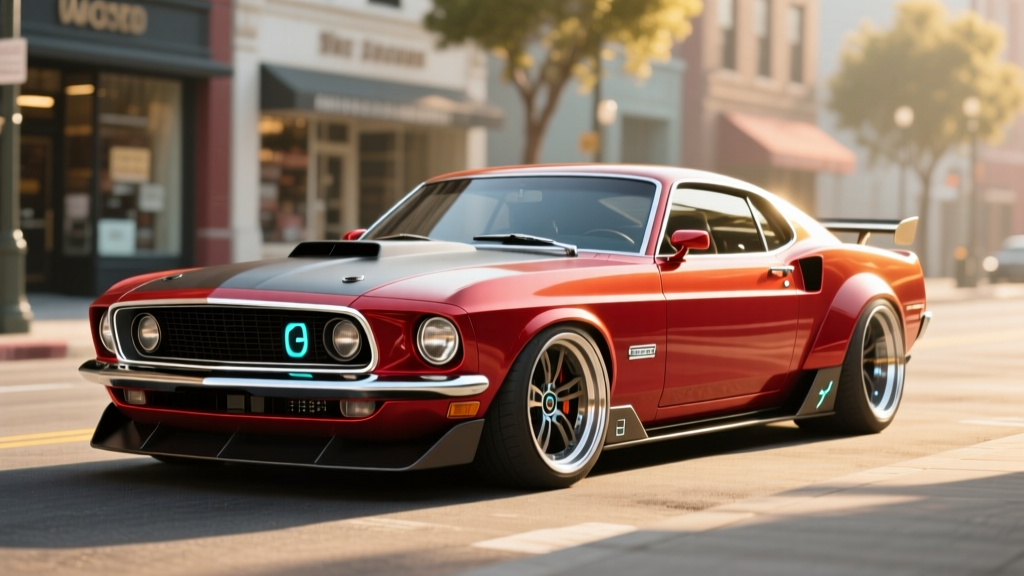
The 1969 Ford Mustang Mach 1 is one of the most iconic American muscle cars ever built. But in 2026, a growing number of specialty shops and owners are converting these classics to electric powertrains — or buying turnkey EV restomods that pair vintage sheet metal with modern battery tech. If you've been searching for a 1969 Ford Mustang Mach 1 and wondering whether an electric conversion makes sense, this guide breaks down exactly what these builds deliver in terms of range, charging, performance, and real-world usability.
Let's be clear upfront: there is no factory-produced electric 1969 Mustang. Ford's own Mustang Mach-E is a modern crossover SUV that shares only a name with the original. The EV conversions we're covering here are aftermarket restomods performed by shops like EV West, Icon, Kindred Autos, and others — or sourced as crate motor kits from companies like Ford Performance (via the Eluminator motor) and Cascadia Motion. This is a niche, high-cost segment, but the engineering is real and the results are measurable.
What an Electric 1969 Mustang Mach 1 Actually Is
An EV-converted 1969 Mustang Mach 1 typically retains the original body, chassis (often reinforced), and interior aesthetics while swapping the V8 engine, fuel tank, and exhaust for an electric motor, battery pack, inverter, and charging hardware. The goal is to preserve the car's visual and emotional character while gaining instant torque, zero tailpipe emissions, lower running costs, and improved daily-driver reliability.
Builds vary enormously depending on the shop and budget. A basic conversion might use a salvaged Tesla drive unit and modest battery pack for around $50,000 in parts and labor (on top of the donor car cost). High-end restomods with custom fabrication, modern interiors, and performance-oriented powertrains can exceed $150,000–$250,000 total. Because every build is different, the specs below represent a typical well-executed conversion using commonly available components in 2026.
Spec Overview: Typical EV Conversion Build
| Specification | Typical Value (Conversion) |
|---|---|
| EPA Range | Not EPA-rated; builder-estimated 150–220 miles |
| Battery Capacity | 50–75 kWh usable (NMC pouch or cylindrical cells) |
| Battery Chemistry | NMC (Nickel Manganese Cobalt) most common |
| Motor Output | 250–500 HP (single or dual motor) |
| 0–60 mph | 3.5–5.5 seconds (depending on motor and weight) |
| Drivetrain | RWD (single motor) or AWD (dual motor) |
| DC Fast Charging | 50–150 kW peak (CCS1 typical) |
| 10–80% DC Charge | ~30–50 minutes (varies by pack size and charger) |
| Level 2 Home Charging | 7.2–11.5 kW (~25–40 miles/hr) |
| Efficiency | ~2.5–3.5 kWh/mile (varies by build and driving style) |
| Cargo Space | Trunk ~8–10 cu ft; no frunk in most builds |
| Weight (curb) | ~3,800–4,300 lbs (heavier than original ~3,400 lbs) |
| Base Conversion Cost | $50,000–$100,000+ (plus donor car $25,000–$80,000+) |
| Federal Tax Credit | Not eligible (§30D requires new OEM vehicle) |
Real-World Range: What to Actually Expect
Builder-Estimated Range: 150–220 miles (varies by battery pack size)
Real-World Highway: Expect 120–170 miles at 70+ mph. Classic Mustang aerodynamics (boxy fastback shape, no underbody paneling) create significant drag, reducing highway efficiency compared to modern EVs.
Cold-Weather Impact: NMC packs without active thermal management may lose 25–40% of range below freezing. Builds with liquid-cooled packs (e.g., salvaged Tesla or LG modules with functioning BMS and cooling loops) perform far better.
The single biggest variable in range is battery pack size. Most conversion shops fit 50–75 kWh of usable capacity into the Mach 1's chassis, split between the engine bay and the former fuel tank area. The car's poor aerodynamics (a 1969 fastback has a drag coefficient around 0.44–0.48, compared to ~0.25 for a modern Tesla Model 3) means highway efficiency drops sharply above 65 mph. City driving with regenerative braking recovers more energy and typically yields better mileage per kWh.
For context, a 60 kWh pack in a Mach 1 conversion might deliver 2.8–3.2 kWh/mile on the highway, yielding roughly 185–215 miles under ideal conditions. Add cold weather, aggressive acceleration (tempting with instant torque), or hilly terrain, and 140–160 miles is a safer planning number.
Charging Speed: DC Fast and Home Level 2
Charging hardware depends entirely on the conversion shop's component choices. Most quality builds in 2026 use CCS1 connectors and DC-DC converters that support at least 50 kW DC fast charging. Higher-end builds with Tesla or Cascadia Motion components can accept 100–150 kW.
| Charging Level | Power (kW) | Miles Added Per Hour | Notes |
|---|---|---|---|
| Level 1 (120V outlet) | 1.4 kW | ~4–5 miles/hr | Emergency/trickle only |
| Level 2 (240V home) | 7.2–11.5 kW | ~25–40 miles/hr | Full charge overnight (6–10 hrs) |
| DC Fast (50 kW) | 50 kW | ~100–130 miles/hr | 10–80% in ~45–50 min |
| DC Fast (100+ kW) | 100–150 kW peak | ~200–280 miles/hr | 10–80% in ~30–35 min; taper above 80% |
A critical limitation: most conversion packs lack the sophisticated thermal management of a factory EV like a Hyundai Ioniq 5 or Porsche Taycan. This means sustained DC fast charging may throttle earlier to protect cells, especially on hot days or back-to-back charges. If road trips are part of your plan, prioritize a build with liquid-cooled battery modules and a high-quality BMS (Battery Management System).
For home charging, a Level 2 wall connector at 48 amps (11.5 kW) is ideal. Installation typically costs $800–$2,500 depending on your electrical panel capacity — a factor worth budgeting for alongside the conversion itself. See the Alternative Fuels Data Center for certified EV electricians in your area.
Performance: Instant Torque in a Classic Chassis
This is where the EV conversion really transforms the Mach 1 experience. A stock 1969 Mach 1 with the 428 Cobra Jet V8 produced 335 HP and ran 0–60 in roughly 5.5–6.0 seconds. An EV conversion with a single Cascadia Motion iDM or salvaged Tesla large drive unit can produce 300–450 HP at the wheels with instant torque — no rev build, no gear shifts, no turbo lag.
Dual-motor AWD builds using two Tesla small or large drive units can push 500+ HP and 0–60 times in the 3.0–3.5 second range, rivaling a modern Mustang Dark Horse. The weight penalty (typically 400–800 lbs heavier than stock due to batteries) affects handling, but the low center of gravity from floor-mounted packs can actually reduce body roll compared to the original nose-heavy V8 layout.
Braking is a common upgrade point: many converters install larger disc brakes and modern calipers to handle the extra weight and regenerative braking integration. Power steering conversion (electric rack-and-pinion) is also standard in quality builds, replacing the vague original hydraulic system.
Pricing, Cost of Ownership, and Tax Credit Reality
Here's the financial picture for a 1969 Mustang Mach 1 EV restomod:
| Cost Component | Typical Range |
|---|---|
| Donor Car (1969 Mach 1, running/non-running) | $25,000–$80,000+ |
| Conversion Parts (motor, inverter, batteries, BMS, charger) | $25,000–$60,000 |
| Labor (professional shop, 300–600+ hours) | $30,000–$100,000 |
| Upgrades (brakes, suspension, steering, interior) | $10,000–$40,000 |
| Total Build Cost | $90,000–$280,000+ |
| Federal §30D Tax Credit | $0 — not eligible (converted/used vehicle) |
| Used EV Credit (§25E) | $0 — requires OEM EV, not a conversion |
The IRS §30D clean vehicle credit applies only to new, OEM-produced electric vehicles that meet MSRP caps ($55,000 for sedans, $80,000 for SUVs/trucks), buyer income limits, and battery sourcing requirements. A converted classic does not qualify under any current federal incentive program. Some states offer rebates for EV conversions — check with your state energy office — but these are typically modest ($1,000–$3,000).
Running costs, however, are genuinely lower. Electricity at $0.14/kWh national average means roughly $0.40–$0.50 per mile (at 3 kWh/mile), compared to $1.50–$2.00+ per mile for a stock 428 V8 getting 10–12 MPG on premium fuel. Insurance for a valued classic will be higher regardless of powertrain — expect agreed-value collector car policies from Hagerty or similar.
Warranty, Reliability, and Long-Term Ownership
Unlike a factory EV with an 8-year/100,000-mile battery warranty, a conversion's warranty depends entirely on the shop and components used. Reputable converters typically offer:
- Battery pack: 3–5 years / 50,000 miles (shop-dependent)
- Motor and inverter: 1–3 years (often covered by component OEM like Cascadia Motion)
- Labor/workmanship: 1–2 years from the converting shop
Battery longevity is a real consideration. NMC cells from reputable sources (LG, Samsung SDI, Tesla salvage with verified low cycle counts) can last 1,500–2,500 full cycles before degrading to 80% capacity — roughly 200,000–400,000 miles in a conversion. However, cells without active thermal management degrade faster, especially in hot climates. Ask any converter for cell sourcing documentation and cycle-count data.
For reliability data on EV conversions broadly, the NHTSA does not track aftermarket conversions separately, so you're relying on shop reputation, owner forums (like the EV Conversion subreddit and DIY Electric Car forums), and component manufacturer track records.
Pros and Cons: The Honest Assessment
Pros
- Instant torque transforms a heavy classic into a genuinely quick car
- Zero tailpipe emissions; lower per-mile energy cost vs. premium gasoline
- Far more reliable daily-driver than a 55-year-old carbureted V8
- Preserves iconic exterior aesthetics while modernizing the drivetrain
- No oil changes, no exhaust rust, no fuel system degradation
- Regenerative braking reduces wear on friction brakes
- Quiet cruising with the option of synthetic V8 sound via speakers
Cons
- Extremely high total cost ($90,000–$280,000+) with no federal tax credit
- Range limited to ~150–220 miles; highway and cold weather reduce further
- No factory warranty; repair network limited to specialist shops
- Poor aerodynamics hurt highway efficiency vs. modern EVs
- Added weight (400–800 lbs) affects handling and tire wear
- Resale market is thin — finding a buyer for a converted classic takes time
- Some concours/show events disqualify modified vehicles
- Insurance appraisals can be complex for non-OEM EV builds
Who Should Consider an Electric 1969 Mach 1?
This build makes sense for a specific buyer: someone who already loves the 1969 Mach 1, has the budget for a premium restomod, wants a car they can actually drive regularly without carburetor tuning and fuel system anxiety, and values the conversation-starting combination of classic American muscle and modern electric propulsion.
It does not make sense as a cost-saving measure. You will spend more on this conversion than on a new Tesla Model 3 Performance or Ford Mustang Mach-E GT — both of which offer 300+ miles of range, full factory warranties, Supercharger/Tesla network access, and modern safety features. The EV Mach 1 is an emotional and aesthetic purchase, not a rational-economic one.
If your goal is classic car ownership with modern usability, consider also the Icon Mercury, Kindred Autos Porsche 911 EV, or Zero Labs Ford Bronco EV — all of which follow the same restomod-EV formula with varying degrees of sophistication and pricing.
Frequently Asked Questions
What is the real-world range of an electric 1969 Mustang Mach 1?
Expect 150–220 miles in mixed driving, dropping to 120–170 miles on the highway at 70+ mph due to poor aerodynamics. Cold weather (below 32°F) can reduce range by 25–40% if the pack lacks active thermal management.
How fast does a converted Mach 1 charge?
On a DC fast charger, most builds accept 50–150 kW, reaching 10–80% in roughly 30–50 minutes depending on pack size. At home on Level 2 (240V, 48A), expect a full charge in 6–10 hours — easily overnight.
Does a 1969 Mustang Mach 1 EV conversion qualify for the federal tax credit?
No. The IRS §30D credit applies only to new OEM-produced EVs meeting MSRP, income, and battery-sourcing requirements. Aftermarket conversions of used vehicles do not qualify. The §25E used EV credit also does not apply to conversions. Check with a tax professional for any applicable state-level incentives.
How much does a full EV conversion of a 1969 Mach 1 cost?
Total cost (donor car plus conversion) typically runs $90,000–$280,000+, depending on the shop, battery capacity, motor selection, and ancillary upgrades (brakes, suspension, interior). Budget builds using salvaged Tesla components start around $75,000 total.
Is an electric 1969 Mach 1 worth it vs. buying a modern EV?
Not on paper. A new Mustang Mach-E GT costs ~$55,000, delivers 280+ miles of range, includes a full warranty, and qualifies for potential incentives. The electric Mach 1 is a passion project — you're paying for uniqueness, aesthetics, and the fusion of classic and modern. If that emotional value justifies the cost, it's absolutely worth it. If you need practicality and value, buy a modern EV.
Can I drive an EV-converted Mach 1 daily?
Yes, with caveats. The range is adequate for most commutes (under 50 miles round trip), and home Level 2 charging means you start every day with a full battery. For road trips, plan charging stops carefully and verify your build's DC fast-charge capability and connector type before relying on public networks.