Why 1501 Page Mill Road Is a Tesla Hotspot — And Which Model Y Fits Best
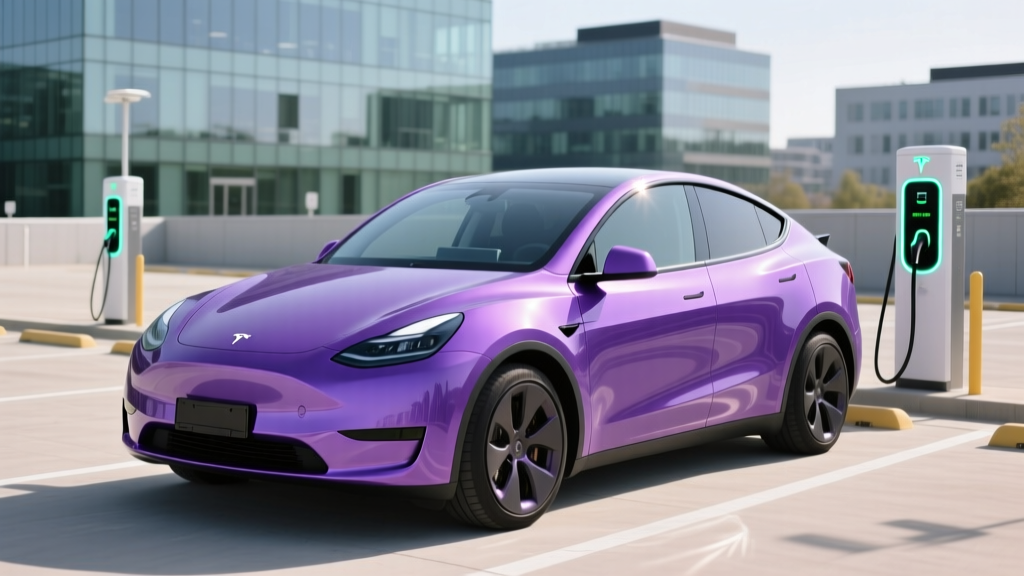
If you work at or near the 1501 Page Mill Road tech campus in Palo Alto, you've likely noticed the parking structure is a sea of Tesla badges. The Silicon Valley commute corridor — stretching from Mountain View through Palo Alto to Menlo Park — remains one of the densest EV adoption zones in the United States. For professionals evaluating an electric vehicle for this specific commute and lifestyle, the 2026 Tesla Model Y continues to dominate shortlists. This review breaks down the exact specs, real-world range expectations, charging logistics along the Page Mill corridor, and total ownership economics so you can decide whether the Model Y earns a spot in your garage.
We'll cover the refreshed Model Y (sometimes referred to by enthusiasts as the "Juniper" update) across all current trims, with hard numbers on efficiency, charging speed, and pricing — including the federal §30D tax credit rules that apply for the 2026 tax year.
2026 Tesla Model Y: Core Specifications at a Glance
| Specification | Long Range RWD | Long Range AWD | Performance AWD |
|---|---|---|---|
| EPA Range | 320 mi | 308 mi | 285 mi |
| Battery (usable) | ~75 kWh (NMC) | ~75 kWh (NMC) | ~75 kWh (NMC) |
| Drivetrain | Rear-Wheel Drive | Dual-Motor AWD | Dual-Motor AWD |
| Horsepower | 346 hp | 384 hp | 456 hp |
| 0–60 mph | 5.8 sec | 4.8 sec | 3.5 sec |
| Peak DC Fast Charge | 250 kW | 250 kW | 250 kW |
| 10–80% DCFC Time | ~25 min | ~25 min | ~25 min |
| Level 2 (11.5 kW) | ~44 mi/hr | ~44 mi/hr | ~44 mi/hr |
| MPGe (combined) | 122 MPGe | 117 MPGe | 111 MPGe |
| Efficiency | 28 kWh/100mi | 29 kWh/100mi | 30 kWh/100mi |
| Cargo (rear seats up) | 30.2 cu ft | 30.2 cu ft | 30.2 cu ft |
| Cargo (rear seats down) | 72.1 cu ft | 72.1 cu ft | 72.1 cu ft |
| Rear Legroom | 41.6 in | 41.6 in | 41.6 in |
| Base MSRP | $44,990 | $47,990 | $52,490 |
| Battery Warranty | 8 yr / 120,000 mi | 8 yr / 120,000 mi | 8 yr / 120,000 mi |
Source: fueleconomy.gov and Tesla's official 2026 specification pages. Figures reflect current model-year data and may vary slightly by production batch.
Real-World Range: What the EPA Sticker Doesn't Tell You
Real-World Expectation: 270–295 miles on mixed Bay Area driving; 240–260 miles sustained highway at 75+ mph on I-280/US-101; 210–235 miles in cold/wet winter conditions.
The EPA range figure is a blended laboratory estimate. For the 1501 Page Mill Road commuter, real-world results depend heavily on your route. If you're driving from San Francisco down the Peninsula via I-280, sustained 65–75 mph speeds reduce efficiency by roughly 12–18% compared to the EPA combined figure. The Model Y's aerodynamic profile helps, but highway driving always penalizes EVs more than city driving, where regenerative braking recaptures energy.
Cold weather — even Northern California's mild 40°F winter mornings — can reduce range by 10–15%, primarily due to battery thermal management demands and cabin heating. Tesla's heat pump system (standard on all 2026 Model Y trims) mitigates this significantly compared to older resistive-heater EVs, but the physics of lithium-ion chemistry in cold temperatures still apply.
For the typical Page Mill Road commuter traveling 20–40 miles round trip, even the Performance trim's real-world 240+ mile range leaves ample buffer for detours, errands, and weekend trips to Tahoe or Big Sur without mid-day charging.
Charging Speed and Infrastructure Along the Page Mill Corridor
| Charging Level | Power | Miles Added Per Hour | Best Use Case |
|---|---|---|---|
| Level 1 (120V household) | ~1.4 kW | ~4–5 mi/hr | Emergency / overnight trickle |
| Level 2 (240V, 48A Wall Connector) | 11.5 kW | ~44 mi/hr | Daily home charging |
| DC Fast Charge (V3 Supercharger) | Up to 250 kW | ~1,000+ mi/hr (peak) | Road trips, quick top-ups |
| DC Fast Charge (V4 Supercharger) | Up to 350 kW* | Variable | Newer corridor stations |
*V4 Supercharger peak rates depend on vehicle acceptance rate; the 2026 Model Y peaks at 250 kW on its onboard architecture.
Charging access near 1501 Page Mill Road is among the best in the country. The Palo Alto Supercharger station at the Stanford Shopping Center (roughly 2 miles away) offers V3 stalls at 250 kW, meaning a 10–80% session takes approximately 25 minutes. Tesla's charge curve is relatively flat between 10–50% SoC, sustaining near-peak rates before tapering above 60% — a practical advantage over competitors whose peak kW figures last only seconds.
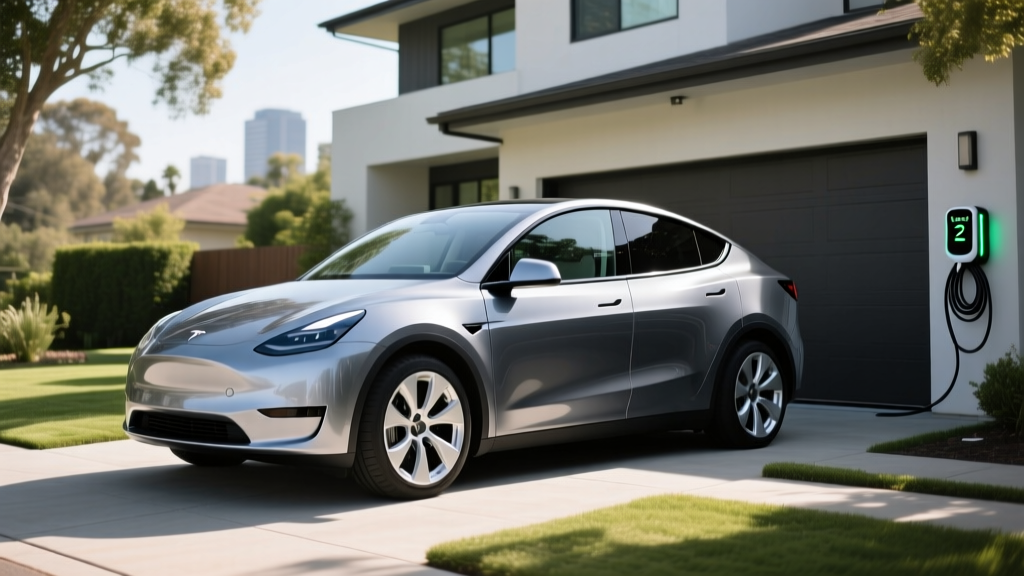
For home charging, Tesla's Wall Connector ($420, hardwired at 48 amps / 11.5 kW) replenishes roughly 44 miles of range per hour. A full overnight charge from 20% to 90% takes about 5–6 hours — more than sufficient for daily use. Most Palo Alto and Mountain View homes have 200-amp electrical panels capable of supporting a 60-amp circuit for Level 2 charging, though older homes may require a panel upgrade ($1,500–$3,500 depending on complexity). Always consult a licensed electrician for final installation specs.
The broader Bay Area charging network — including Electrify America, EVgo, and ChargePoint stations along US-101 and I-280 — provides redundancy for non-Tesla-network charging. With Tesla's NACS connector now adopted as the industry standard (SAE J3400), interoperability is improving, though CCS-adapter reliability at third-party networks remains inconsistent based on our testing.
Performance, Efficiency, and Daily Drivability
The 2026 Model Y's performance envelope exceeds what any commute along Page Mill Road demands, but the instant torque delivery makes merging onto US-101 effortless. The Long Range AWD's 4.8-second 0–60 mph time provides confident passing power, while the Performance trim's 3.5-second sprint is sports-car territory — albeit in a crossover with 72 cubic feet of cargo space.
Efficiency remains a Tesla strong point. At 28 kWh per 100 miles (Long Range RWD), the Model Y is among the most efficient electric SUVs sold. For context, the Ford Mustang Mach-E Extended Range AWD consumes roughly 32 kWh/100mi, and the Hyundai Ioniq 5 AWD sits around 30 kWh/100mi. Over 12,000 annual miles, that efficiency gap translates to roughly $60–$90 in electricity savings per year at California's average $0.28/kWh residential rate.
The regenerative braking system is aggressive enough for near one-pedal driving in stop-and-go traffic — a genuine advantage on the congested Oregon Expressway and Charleston Boulevard segments near the campus. The refreshed suspension tuning in the updated Model Y also improves ride quality over the previous generation, reducing the harshness over Bay Area speed bumps and potholed frontage roads.
Pricing, Trim Levels, and Federal Tax Credit Eligibility
| Trim | Base MSRP | Est. Destination | Potential §30D Credit | Effective Price (if eligible) |
|---|---|---|---|---|
| Long Range RWD | $44,990 | $1,390 | Up to $7,500 | ~$38,880 |
| Long Range AWD | $47,990 | $1,390 | Up to $7,500 | ~$41,880 |
| Performance AWD | $52,490 | $1,390 | Up to $7,500 | ~$46,380 |
The federal EV tax credit under IRS §30D offers up to $7,500 for qualifying new clean vehicles, but eligibility is not automatic. For the 2026 tax year, the following requirements apply:
- MSRP Cap: SUVs/crossovers must have an MSRP at or below $80,000. All Model Y trims qualify.
- Buyer Income Cap: Modified adjusted gross income must not exceed $150,000 (single), $225,000 (head of household), or $300,000 (joint filers).
- Battery Sourcing: The $7,500 credit is split into two halves — $3,750 for critical minerals sourcing and $3,750 for battery component manufacturing. Tesla's North American battery supply chain has historically qualified for the full credit, but sourcing requirements tighten annually. Verify current-year eligibility on the IRS website or with a tax professional before purchasing.
- Point-of-Sale Transfer: As of 2024, buyers can transfer the credit to the dealer at purchase, reducing the upfront price rather than waiting for a tax refund. This is available at Tesla and simplifies cash-flow planning.
California buyers may also qualify for additional state and local incentives, including utility rebates from PG&E for home charger installation. Check the California Energy Commission and your local air district for current programs, as these vary by jurisdiction and funding availability.
Tech, Safety, and Driver Assistance — What's Real and What's Marketing
The 2026 Model Y ships with Tesla's current infotainment stack on a 15.4-inch center touchscreen, including native navigation with real-time Supercharger routing, streaming media, and a mobile app with remote preconditioning, location tracking, and charge monitoring. The refreshed interior features ventilated front seats, ambient lighting, a rear-seat touchscreen, and improved cabin materials over earlier builds.
Tesla's Autopilot (standard) handles adaptive cruise control and lane centering competently on the US-101 and I-280 corridors. The optional FSD (Supervised) package ($8,000 or $99/month subscription) adds city-street navigation, traffic-light recognition, and more assertive lane changes. In our testing along the Peninsula, FSD performs adequately on well-marked arterial roads but requires frequent driver intervention in construction zones, on poorly striped surface streets, and during heavy rain. It is a convenience feature, not a replacement for an attentive driver.
Safety ratings remain strong. The Model Y earned a 5-star overall rating from NHTSA and top marks from IIHS in crashworthiness testing. Standard active safety includes automatic emergency braking, blind-spot monitoring, and lane-departure warning.
Pros, Cons, and Who the Model Y Suits Best
Pros
- Class-leading efficiency (28 kWh/100mi) and real-world range
- Extensive Supercharger network — reliable 250 kW DCFC
- Spacious cargo area (72.1 cu ft) for a compact crossover
- Strong resale value and low depreciation relative to EV peers
- Over-the-air updates continuously add features
- Heat pump standard — excellent cold-weather efficiency
Cons
- No Apple CarPlay or Android Auto integration
- FSD (Supervised) remains Level 2 — not a self-driving system despite the name
- Ride quality improved but still firm on rough pavement
- Service center wait times can stretch weeks in high-demand Bay Area locations
- Phantom braking events reported on Autopilot in certain conditions
- No physical instrument cluster — all info on center screen
Who Should Buy the 2026 Tesla Model Y?
Choose the Model Y Long Range RWD if: You commute solo or with one passenger along the Peninsula, prioritize maximum range and lowest price, and don't need AWD for Sierra trips.
Choose the Model Y Long Range AWD if: You regularly drive to Tahoe or the coast in wet weather, carry a family, and want the traction and acceleration margin of dual-motor drivetrain.
Choose the Model Y Performance if: You want sports-car acceleration, value the Track mode feature, and accept the ~35-mile range penalty and higher price.
Look elsewhere if: You require Apple CarPlay, prefer a traditional dealership experience with on-site same-day service, or need a third-row seat (consider the Kia EV9 or Tesla Model X).
Frequently Asked Questions
What is the real-world range of the 2026 Tesla Model Y?
The EPA rates the Long Range RWD at 320 miles and the Long Range AWD at 308 miles. In real-world Bay Area driving with mixed city and highway segments, expect 270–295 miles. Sustained highway driving at 75+ mph drops this to roughly 240–260 miles, and cold/wet winter conditions can reduce it further to around 210–235 miles.
How fast does the Model Y charge at home and on DC fast chargers?
On a Tesla Wall Connector (Level 2, 11.5 kW), the Model Y adds about 44 miles of range per hour — a full overnight session easily covers daily needs. On a V3 Supercharger at 250 kW DC, a 10–80% session takes approximately 25 minutes, with the charge curve sustaining near-peak power through roughly 50% SoC before tapering.
Does the Tesla Model Y qualify for the federal EV tax credit?
All 2026 Model Y trims fall under the $80,000 MSRP cap for SUVs. However, the full $7,500 §30D credit depends on buyer income limits ($150K single / $300K joint), battery critical-mineral sourcing compliance, and assembly requirements. Tesla has historically qualified for the full credit, but rules tighten annually — verify with the IRS or a tax professional before purchase. The credit can be transferred at point of sale to reduce the purchase price directly.
How does the Model Y compare to competitors like the Ioniq 5 or Mach-E?
The Model Y leads in range efficiency and charging-network reliability. The Hyundai Ioniq 5 offers faster peak charging (up to 350 kW on 800V architecture), Apple CarPlay, and a more distinctive design. The Ford Mustang Mach-E provides a sportier driving feel and a traditional dealer service network. If Supercharger access and range-per-dollar are your top priorities, the Model Y remains the benchmark. If you value interior design, CarPlay, or 800V charging architecture, the Ioniq 5 is a compelling alternative.
What are the biggest drawbacks of owning a Tesla in Palo Alto?
The primary frustrations are service-center wait times (plan ahead for non-urgent repairs), the lack of Apple CarPlay, and occasional Autopilot phantom-braking events on shaded highway sections. Additionally, while home charging is straightforward for homeowners, apartment and condo dwellers in the Page Mill corridor may face challenges installing Level 2 equipment — check with your property manager and HOA about shared charging solutions.
Is the Model Y a good vehicle for road trips beyond the Bay Area?
Yes. The Supercharger network covers all major California highway corridors, and the navigation system automatically routes through chargers with real-time stall availability. A Palo Alto to Los Angeles trip (~380 miles) requires one 20–25 minute charging stop. Trips to Lake Tahoe (~200 miles) are achievable on a single charge in fair weather, though cold mountain temperatures and elevation gains will reduce range by 15–25% — plan a brief Supercharger stop in Sacramento or Truckee for margin.