Quick Answer: Is a 1000 Horsepower Electric Motor Worth It?
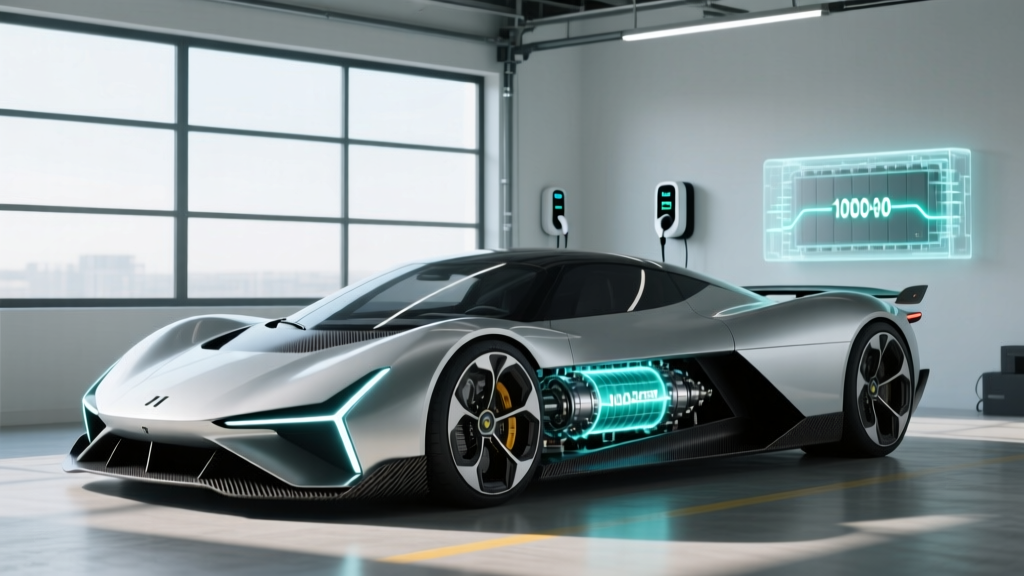
A 1000 horsepower electric motor (or multi-motor setup producing ~1000 HP) delivers 0-60 mph times under 3.0 seconds and instant torque that no gas supercar can match at low speeds. However, the real-world ownership picture is more nuanced: vehicles in this power class typically carry 100+ kWh battery packs, weigh 4,500-5,500 lbs, achieve 250-350 miles of EPA range, and cost $90,000-$200,000+. They also consume more energy per mile (lower MPGe), which raises charging costs and accelerates battery wear if you DC fast-charge frequently. If you want thrill-on-demand with daily usability and can charge at home, a 1000 HP EV is viable. If you track the car often or live in a charging desert, the compromises compound quickly.
What a 1000 HP Electric Motor Actually Means for Performance
When shoppers search for a 1000 horsepower electric motor, they're usually looking at tri-motor or quad-motor EVs where the combined system output reaches or exceeds 1,000 HP. In 2026, this territory includes vehicles like the Tesla Model S Plaid (1,020 HP, tri-motor), Lucid Air Sapphire (1,234 HP, tri-motor), Porsche Taycan Turbo GT (1,019 HP with Launch Control, dual-motor), and the GMC Hummer EV (1,000 HP, tri-motor). Even the Hyundai Ioniq 5 N and upcoming Rivian R1T Tri-Motor flirt with this threshold.
Unlike a gas engine that needs to rev into its power band, electric motors deliver peak torque from 0 RPM. That means a 1000 HP EV launches with violence that a 700 HP V8 supercar simply can't replicate off the line. Here's how the physics translate to real numbers:
| Metric | ~1000 HP EV (e.g., Model S Plaid) | ~700 HP Gas Supercar (e.g., Corvette Z06) |
|---|---|---|
| 0-60 mph | 1.99 seconds | 2.6 seconds |
| Peak torque delivery | 0 RPM (instant) | ~4,500 RPM |
| 1/4 mile | ~9.2 sec @ 150 mph | ~10.5 sec @ 131 mph |
| Drivetrain | AWD (tri-motor) | RWD |
| Curb weight | ~4,766 lbs | ~3,434 lbs |
| Fuel/Energy cost per 1/4 mi pass | ~$0.08 (electricity) | ~$0.50+ (premium gas) |
The weight penalty is real, though. At nearly 4,800 lbs, these EVs carry 1,300+ lbs more than a comparable gas supercar. That mass shows up in tire wear (expect to replace tires every 15,000-20,000 miles under aggressive driving), braking distances, and energy consumption on sustained highway runs.
Range and Efficiency: The Power-vs-Range Tradeoff
A 1000 HP electric motor setup demands a large battery to sustain that power output — typically 100-130 kWh usable capacity. But more power also means more energy draw, which compresses efficiency. Here's what the EPA numbers look like for current 1000 HP-class EVs, alongside what you'll actually experience:
Real-World Range vs. EPA Sticker
Tesla Model S Plaid: EPA 396 mi | Real-world highway (75 mph): ~300-320 mi | Cold weather (30°F): ~260-280 mi
Lucid Air Sapphire: EPA 427 mi | Real-world highway: ~330-350 mi | Cold weather: ~280-300 mi
Porsche Taycan Turbo GT: EPA 269 mi | Real-world highway: ~220-240 mi | Cold weather: ~185-200 mi
GMC Hummer EV: EPA 329 mi | Real-world highway: ~260-280 mi | Cold weather: ~220-240 mi
Sources: fueleconomy.gov, manufacturer specifications, and independent testing. Highway and cold-weather figures reflect sustained 70-80 mph driving with climate control active.
The Lucid Air Sapphire stands out because its 118 kWh battery pack and exceptional drivetrain efficiency (over 4 mi/kWh in mixed driving) let it deliver both 1,234 HP and class-leading range. The Porsche Taycan Turbo GT, by contrast, prioritizes repeatable track performance over range — its 105 kWh pack and 800-volt architecture enable brutal lap after lap, but you'll stop to charge more often on road trips.
If your daily driving is under 60 miles and you charge at home, range matters less. But if you plan 400-mile road trips, the Hummer EV and Taycan Turbo GT will require at least one charging stop, while the Model S Plaid and Air Sapphire can often do it in one stretch — provided you're not driving into headwinds at 80 mph in January.
Charging Requirements: What 1000 HP Demands From Your Electrical Setup
Owning a 1000 HP EV means managing a massive battery. Here's what charging looks like across levels:
| Charging Level | Power (kW) | Miles of Range Added Per Hour | Typical Use Case |
|---|---|---|---|
| Level 1 (120V outlet) | 1.4 kW | 3-5 mi/hr | Emergency only; ~3 days for a full 100 kWh pack |
| Level 2 (240V, 48A) | 11.5 kW | 30-40 mi/hr | Overnight home charging; 8-10 hours for full charge |
| Level 2 (240V, 80A) | 19.2 kW | 50-65 mi/hr | Faster home charging (Tesla Wall Connector, Lucid); 5-7 hours full |
| DC Fast Charge (250 kW) | 250 kW peak | ~800-1,000 mi/hr (peak) | Road trips; 10-80% in ~20-30 min depending on vehicle |
| DC Fast Charge (350 kW) | 350 kW peak | ~1,000-1,400 mi/hr (peak) | Taycan Turbo GT on 800V; 10-80% in ~18 min |
Home charging is nearly mandatory for a satisfying ownership experience. A 100+ kWh battery on a standard 120V outlet is impractical — you'd add maybe 15 miles of range overnight. You need a Level 2 home charger, which requires a 240V circuit (typically 60A or higher) installed by a licensed electrician.
| Item | Estimated Cost Range |
|---|---|
| Level 2 charger hardware (48A-80A) | $400 - $800 |
| Electrician labor (240V/60A circuit run) | $800 - $2,500 |
| Permit and inspection | $100 - $400 |
| Electrical panel upgrade (if needed, 200A service) | $1,500 - $4,000 |
| Total (no panel upgrade) | $1,300 - $3,700 |
| Total (with panel upgrade) | $2,800 - $7,700 |
For a 1000 HP EV with a large battery, I strongly recommend a 60A or 80A circuit rather than the minimum 40A. The difference between charging at 11.5 kW and 19.2 kW is significant when you're refilling a 130 kWh pack — that's the difference between waking up to 85% or 100% after an overnight session.
On road trips, the Porsche Taycan's 800-volt architecture gives it an edge at 350 kW chargers, sustaining high charge rates deeper into the session. Tesla's Supercharger network (now open to NACS-equipped vehicles from other brands) offers the most reliable plug-and-charge experience, though peak speeds on the Model S Plaid top out around 250 kW.
Total Cost of Ownership: The Real Numbers
This is where the 1000 horsepower electric motor conversation gets grounded. These aren't budget vehicles, and the ownership economics reflect that. Let's compare a ~$110,000 EV (Tesla Model S Plaid) against a ~$115,000 gas supercar over 5 years and 60,000 miles:
| Cost Category | Model S Plaid (1,020 HP EV) | Comparable Gas Supercar (~700 HP) |
|---|---|---|
| Purchase price (MSRP) | $108,490 | $115,000 |
| Federal tax credit (§30D) | $0 (MSRP cap + income limits) | $0 |
| Energy/fuel (60,000 mi) | $4,200 (avg $0.14/kWh, 3 mi/kWh) | $9,600 (15 MPG, $4.00/gal premium) |
| Maintenance (5 years) | $1,800 (tires, cabin filter, wipers, fluid top-offs) | $6,500 (oil changes, brakes, belts, plugs, tires) |
| Insurance (annual avg) | $3,800/yr = $19,000 | $3,200/yr = $16,000 |
| Tire replacement (2 sets) | $3,600 (high-performance EV-rated) | $2,800 |
| Depreciation (est. 5yr) | ~$48,000 | ~$42,000 |
| Total 5-year cost | ~$185,090 | ~$191,900 |
The EV edges out on total cost, primarily due to fuel and maintenance savings. But note the caveats: EV insurance premiums run 15-25% higher than gas equivalents (insurers factor in battery replacement risk and higher repair costs after collisions). Depreciation on luxury EVs has been steeper than on comparable gas exotics, though this is stabilizing as the market matures.
Also critical: the IRS §30D federal tax credit does NOT apply to most vehicles in this price tier. The sedan MSRP cap is $55,000 and SUV/truck cap is $80,000. Buyer income limits ($150K single / $300K joint) further restrict eligibility. At the 1000 HP level, you're paying full sticker — though some states offer separate incentives that aren't MSRP-capped.
Common Misconceptions About 1000 HP EVs
| Myth | Fact |
|---|---|
| "1000 HP EVs can't sustain their power — they overheat." | Modern thermal management (liquid-cooled batteries and motors) allows repeated hard launches. The Taycan Turbo GT is specifically engineered for repeatable track laps. However, sustained high-speed runs (150+ mph for extended periods) will still trigger power limiting in most models. |
| "The battery will degrade quickly with that much power." | Battery degradation is driven by heat and charge cycles, not peak power draw alone. Most 1000 HP EVs use sophisticated thermal preconditioning. Expect 85-90% State of Health after 100,000 miles under normal use. Warranties typically cover 8 years / 100,000-150,000 miles with a 70% capacity retention threshold. |
| "You'll never use 1000 HP on public roads." | Partially true — you can't legally use full power on public roads. But the benefit isn't top speed; it's effortless merging, passing, and low-speed acceleration. The headroom means the car never feels strained, even at highway speeds with a full load. |
| "EVs this powerful are unreliable." | Electric drivetrains have far fewer moving parts than a twin-turbo V8. There's no transmission, no exhaust system, no timing chain. The main reliability concerns are software glitches, air suspension components, and 12V auxiliary battery failures — not the motors or battery pack itself. |
| "Charging takes too long for road trips." | A 10-80% DC fast charge takes 18-30 minutes in these vehicles — roughly a bathroom-and-coffee stop. The real constraint is charger availability and reliability, not charge speed. Plan routes around Superchargers or Electrify America stations and the experience is manageable. |
Decision Framework: Should You Buy a 1000 HP EV?
Choose a 1000 HP Electric Motor EV If:
- You have reliable home Level 2 charging — this is non-negotiable for a good experience with a 100+ kWh battery.
- You want supercar acceleration with sedan practicality — a Model S Plaid seats five and has a usable trunk, something no mid-engine gas supercar offers.
- Your daily commute is under 100 miles round-trip — you'll charge at home and rarely think about range.
- You value instant torque and silent power — the character of electric acceleration is fundamentally different from a gas engine's crescendo.
- You can absorb higher insurance premiums — get a quote before buying; some 1000 HP EVs cost $4,000-$6,000/year to insure.
Consider a Lower-Power EV or Gas Alternative If:
- You rely exclusively on public charging — a 130 kWh battery at a 50 kW public charger is a painful 2+ hour experience.
- You track the car frequently — while thermal management has improved, a dedicated track car (gas or a purpose-built EV like the Taycan Turbo GT with Weissach package) will outlast a luxury sedan used hard at track days.
- You live in extreme cold — expect 25-35% range loss below 20°F, which turns a 350-mile EV into a 230-mile EV. A heat pump (standard on most 2026 models) helps but doesn't eliminate this.
- Budget is a primary concern — a 600 HP dual-motor EV (like the BMW iX M60 at ~$90K or Tesla Model Y Performance at ~$53K) delivers thrilling acceleration at a fraction of the cost, with better efficiency and lower insurance.
First-Time EV Buyer Essentials for High-Power Models
If this is your first EV and you're jumping straight into the 1000 HP deep end, here's what you need to know that brochures won't tell you:
1. Preconditioning matters enormously. When you navigate to a DC fast charger using the car's built-in navigation, the battery preheats (or precools) to optimal temperature. This can be the difference between a 150 kW and a 250 kW peak charge rate. Always use the car's nav for charging stops — don't just drive to a charger cold.
2. The charge curve tapers hard above 80%. That "250 kW peak" rate only applies between roughly 10-50% State of Charge. Above 80%, speeds drop to 50 kW or less. This is why we measure "10-80% time" rather than "0-100% time" — and why road-trip strategy means charging to 80% and moving on rather than waiting for a full battery.
3. Regenerative braking changes your driving. Most 1000 HP EVs offer aggressive regen that enables one-pedal driving around town. On the highway, lifting off the throttle slows the car noticeably. This recaptures energy but takes a week or two to adapt to if you're coming from a gas car.
4. Tire costs will surprise you. High-performance EV-specific tires (like the Michelin Pilot Sport EV or Pirelli P Zero Elect) cost $300-$500 per corner and wear faster than standard all-seasons. Budget $1,500-$2,000 every 20,000 miles.
5. kW vs. kWh — know the difference. kW (kilowatts) measures power — how fast you're charging or how much power the motor produces. kWh (kilowatt-hours) measures energy — how much the battery holds. A 100 kWh battery charged at 100 kW takes roughly one hour. Confusing these is the most common EV knowledge gap.
Frequently Asked Questions
How fast is a 1000 horsepower electric motor in real driving?
In real-world conditions, a 1000 HP EV delivers 0-60 mph in approximately 2.0-3.0 seconds depending on the model, surface grip, and battery state of charge. The Tesla Model S Plaid achieves 1.99 seconds on a prepped surface with a fully charged battery. At highway speeds (60-100 mph), these vehicles continue accelerating with force that makes merging effortless. However, top speed is typically electronically limited to 155-200 mph.
Does a 1000 HP EV qualify for the $7,500 federal tax credit?
Almost certainly not. Under current IRS §30D rules, the vehicle MSRP must be under $55,000 for sedans or $80,000 for SUVs/trucks, and buyer adjusted gross income must be under $150,000 (single) or $300,000 (joint). Nearly every 1000 HP EV exceeds these caps. Always verify current-year eligibility with a tax professional before relying on the credit.
What's the battery replacement cost for a 1000 HP EV?
Out-of-warranty battery replacement for a 100+ kWh pack typically runs $15,000-$25,000 including labor, depending on the manufacturer and pack design. However, modern lithium-ion packs with active thermal management are lasting well — most owners will see 85-90% capacity retention at 150,000 miles. The 8-year/100,000+ mile powertrain warranty provides substantial coverage.
Can I daily-drive a 1000 HP EV in winter?
Yes, but plan for range reduction. In temperatures below 20°F, expect 25-35% less range than the EPA sticker. A 350-mile EV becomes a 230-260 mile EV. All-wheel drive (standard on virtually all 1000 HP EVs) provides excellent snow traction, and the low center of gravity helps stability. Preconditioning the battery while plugged in preserves range and ensures full power availability.
How does a 1000 HP EV compare to a 1000 HP gas hypercar?
Electric vehicles win decisively on launch acceleration (instant torque, no gear shifts), per-mile energy cost ($0.07-$0.14/mile vs. $0.40-$0.80/mile for premium gas), and maintenance simplicity. Gas hypercars win on top-end speed sustainment, lighter weight (better handling agility), and refueling speed (3 minutes vs. 20+ minutes). For most real-world driving, the EV delivers more accessible performance more often.