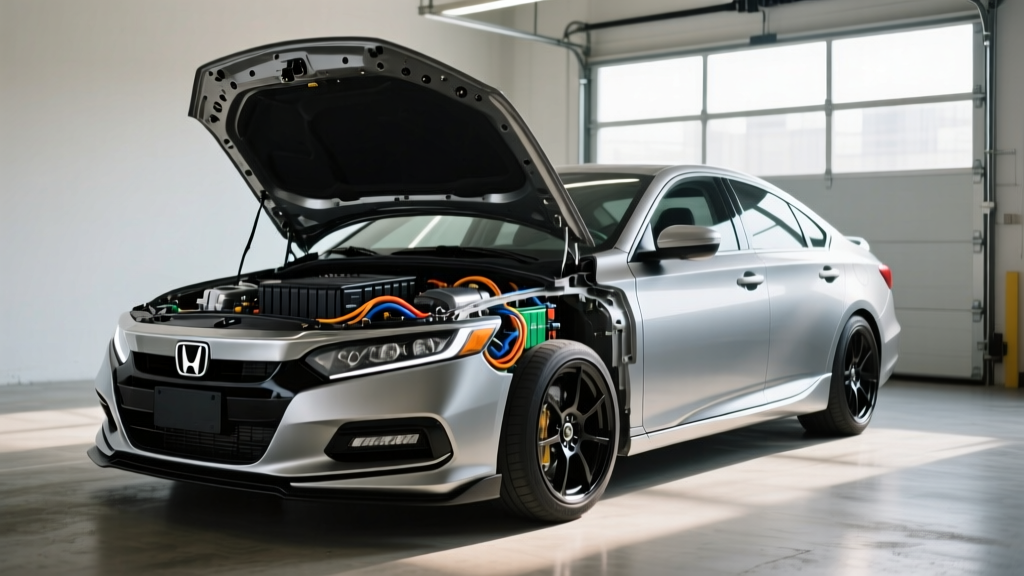
If you've landed here searching for the 05 Honda Accord bolt pattern, you likely fall into one of two camps: you're maintaining a beloved seventh-generation Accord and need wheel compatibility data, or you're scoping out an EV conversion project using a mid-2000s sedan as a donor chassis. Either way, this guide covers the exact bolt pattern specs, what they mean for wheel sourcing, and — if you're dreaming of going electric — whether an EV swap on this platform makes sense versus buying a modern, purpose-built EV in 2026.
The 05 Honda Accord Bolt Pattern: Exact Specs
The 2005 Honda Accord uses a 5x114.3mm bolt pattern (also expressed as 5x4.5 inches). This is one of the most common bolt patterns in the automotive world, shared across decades of Honda, Acura, Toyota, Nissan, Ford, and Hyundai vehicles. Here are the full wheel-mounting specifications:
| Specification | Value |
|---|---|
| Bolt Pattern | 5x114.3mm (5x4.5") |
| Center Bore | 64.1mm |
| Lug Nut Thread Size | M12 x 1.5 |
| Stock Wheel Size (DX/LX) | 15x6.0" |
| Stock Wheel Size (EX V6) | 16x6.5" |
| Typical Offset Range | +35mm to +45mm |
The 64.1mm center bore is critical. If you're sourcing aftermarket wheels with a larger bore (common on Toyota or Nissan fitments), you'll need hub-centric rings to prevent vibration at highway speeds. Wheels with a smaller center bore will not physically mount.
Why the 5x114.3 Bolt Pattern Matters for EV Conversions
The 5x114.3mm pattern is a favorite in the DIY EV conversion community because it opens up an enormous wheel and tire catalog. If you're converting a 2005 Accord to electric power — or any vehicle sharing this bolt pattern — you can source lightweight, low-rolling-resistance EV-specific tires from nearly every major brand. Wheels from a Tesla Model 3 (also 5x114.3) can physically bolt on, though the center bore differs (Tesla uses 64.1mm as well, making the fitment surprisingly straightforward).
However, bolt pattern compatibility is just the starting point. An EV conversion on a 2005 Accord chassis involves significant engineering:
- Weight: A converted Accord with a 40-60 kWh battery pack will weigh 3,800-4,200 lbs, exceeding the original curb weight by 600-900 lbs. Suspension upgrades (springs, dampers) are mandatory.
- Brakes: The stock brakes were spec'd for a ~3,100 lb vehicle. Upgraded rotors and calipers are a safety necessity with added battery mass.
- Drivetrain: Most conversions retain the front-wheel-drive layout with a mated electric motor and reduction gear, or use a rear-mounted transaxle from a salvaged EV.
- Cost: A competent DIY EV conversion typically runs $15,000-$30,000 in parts alone, not counting hundreds of hours of fabrication labor.
Modern EV Alternatives: What $25,000-$38,000 Buys in 2026
If your goal is reliable, efficient daily electric transportation, a 2026 production EV offers dramatically better range, charging, safety, and warranty coverage than any conversion. Here's how three popular 2026 EVs compare — all of which coincidentally also use the 5x114.3mm bolt pattern or similar common fitments:
| Spec | 2026 Hyundai Ioniq 6 SE | 2026 Tesla Model 3 RWD | 2026 Honda Prologue EX |
|---|---|---|---|
| EPA Range | 361 mi | 341 mi | 296 mi |
| Battery (usable kWh) | 77.4 kWh (NMC) | 60 kWh (LFP) | 85 kWh (NMC) |
| Peak DC Fast Charge | 240 kW | 170 kW | 190 kW |
| 10-80% DCFC Time | ~18 min | ~25 min | ~32 min |
| Level 2 Home Charging | 10.9 kW (~44 mi/hr) | 11.5 kW (~46 mi/hr) | 11.5 kW (~37 mi/hr) |
| 0-60 mph | 6.1 sec | 5.8 sec | 7.6 sec |
| Horsepower | 168 hp (RWD) | 271 hp (RWD) | 212 hp (FWD) |
| EPA Efficiency | 140 MPGe | 132 MPGe | 99 MPGe |
| Base MSRP | $37,850 | $38,990 | $47,400 |
| Bolt Pattern | 5x114.3mm | 5x114.3mm | 5x120mm |
| Battery Warranty | 10 yr / 100,000 mi | 8 yr / 120,000 mi | 8 yr / 100,000 mi |
The Hyundai Ioniq 6 SE stands out for efficiency-focused commuters with its slippery 0.21 Cd drag coefficient and best-in-class MPGe. The Tesla Model 3 RWD uses an LFP (lithium iron phosphate) battery, which tolerates daily 100% charging without degradation concerns — ideal for owners who want maximum daily range without babysitting state of charge. The Honda Prologue, built on GM's Ultium platform, offers the most interior volume for families but trails on efficiency and charging speed.
Real-World Range: What the EPA Sticker Doesn't Tell You
EPA Estimated: 361 miles
Expect on Highway (70-75 mph): ~280-310 miles
Expect in Cold Weather (below 30°F): ~230-270 miles
City/Mixed Commuting: ~340-360 miles (regen braking recovers energy)
EPA range testing uses a blend of low-speed and moderate-speed cycles that favor regenerative braking and don't reflect sustained 75 mph interstate driving. Every EV loses 15-25% of its EPA range at highway speeds due to aerodynamic drag, and lithium-ion batteries lose an additional 10-20% in freezing temperatures because internal resistance increases and energy is diverted to battery heating. The Ioniq 6's heat pump (standard on all trims) mitigates some cold-weather loss compared to vehicles using resistive cabin heating.
For a converted 2005 Accord, expect none of these modern thermal management advantages. Most conversions use passively cooled or minimally heated battery packs, meaning winter range can drop 30-40% and fast charging is either unavailable or limited to protect cold cells.
Charging Speed: The Spec That Defines Daily Usability
| Level | Power (kW) | Miles Added/Hour | Typical Use |
|---|---|---|---|
| Level 1 (120V) | 1.2-1.9 kW | 3-5 mi/hr | Overnight top-up, emergency |
| Level 2 (240V) | 7.2-11.5 kW | 25-46 mi/hr | Home daily charging, workplace |
| DC Fast Charge | 50-350 kW | 150-1,000+ mi/hr | Road trips, rapid top-up |
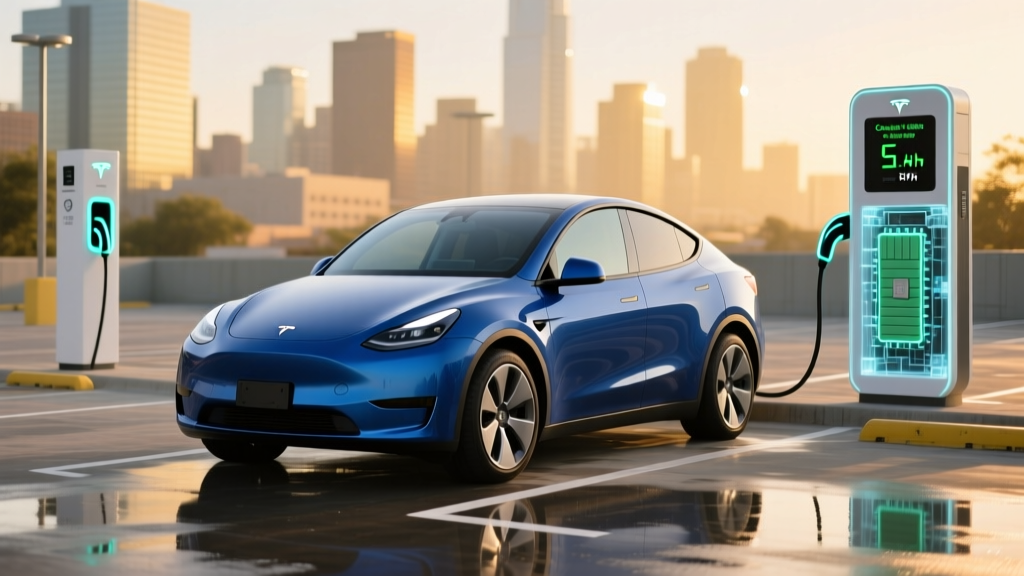
kW (kilowatts) measures the rate of energy transfer — think of it as how fast the "pump" flows. kWh (kilowatt-hours) measures total energy stored — the size of the "tank." A 77.4 kWh battery charged at 11.5 kW takes roughly 6.7 hours from empty to full. That same battery on a 240 kW DC fast charger can go from 10-80% in about 18 minutes, though the charge rate tapers significantly above 80% to protect cell longevity.
This charge-curve taper is why manufacturers quote 10-80% times rather than 0-100%. On the Ioniq 6, you'll see peak 240 kW only between roughly 15-45% state of charge. From 80-100%, the rate drops to under 30 kW. For road trips, the optimal strategy is short, frequent stops (10-80% in 18 minutes) rather than waiting for a full charge.
For a 2005 Accord EV conversion, most builders use a Level 2 onboard charger rated at 3.3-6.6 kW. DC fast charging is rarely feasible due to the cost and complexity of integrating CCS or CHAdeMO protocol communication with aftermarket battery management systems. This means a "full charge" takes 6-12 hours — fine for a weekend project car, impractical as primary transportation.
Federal Tax Credit Eligibility (IRS §30D) — 2026 Rules
The federal clean vehicle credit under IRS §30D can reduce your tax liability by up to $7,500 for qualifying new EVs — or, since 2024, can be transferred to the dealer as a point-of-sale discount. However, eligibility depends on several factors that change regularly:
- MSRP Cap: Sedans must have a base MSRP ≤ $55,000; SUVs, vans, and trucks ≤ $80,000.
- Buyer Income Cap (AGI): $300,000 joint / $225,000 head of household / $150,000 single.
- Battery Component Sourcing: Increasing percentages of battery components must be manufactured or assembled in North America (phased annually).
- Critical Minerals: A percentage of critical minerals must be sourced from the US or free-trade-agreement partners.
- Final Assembly: Vehicle must undergo final assembly in North America.
| Vehicle | Base MSRP | Est. Credit | Notes |
|---|---|---|---|
| Hyundai Ioniq 6 SE | $37,850 | Up to $7,500* | Assembled in GA; verify sourcing annually |
| Tesla Model 3 RWD | $38,990 | Up to $7,500* | Assembled in CA; LFP battery sourcing varies |
| Honda Prologue EX | $47,400 | Up to $7,500* | Assembled in Mexico on GM Ultium; verify minerals |
*Credit amount depends on your tax liability, income, and current-year battery sourcing compliance. The $3,750 critical minerals component and $3,750 battery components component are evaluated separately. Always consult a tax professional and verify current eligibility at fueleconomy.gov before purchasing.
An EV conversion on a 2005 Accord does not qualify for the §30D new vehicle credit. Some states offer rebates for conversions, but these are niche programs — check your state energy office for details.
Pros and Cons: Conversion vs. Modern EV
2005 Accord EV Conversion
Pros:- Unique, custom project vehicle
- 5x114.3 bolt pattern = huge wheel selection
- Low donor car cost ($1,500-$4,000)
- Educational — learn EV systems hands-on
- 80-120 mi realistic range
- No DC fast charging
- No crash-test validation with added weight
- No federal tax credit
- Insurance is difficult and expensive
- Hundreds of hours of labor
2026 Production EV (e.g., Ioniq 6)
Pros:- 280-361 mi real-world range
- 18-min DC fast charging (10-80%)
- Full ADAS suite (AEB, LKA, adaptive cruise)
- 10-year battery warranty
- Up to $7,500 federal tax credit
- IIHS Top Safety Pick+ rated
- Higher upfront cost ($30K-$40K after credit)
- Depreciation uncertainty long-term
- Insurance premiums 15-25% higher than ICE
- Less personalization than a build project
Who Should Consider Each Path?
Choose a 2026 production EV if: You need reliable daily transportation, want 250+ miles of real-world range, need DC fast charging for road trips, want modern safety features and warranty coverage, and plan to leverage the federal tax credit to reduce purchase cost.
Frequently Asked Questions
What is the bolt pattern on a 2005 Honda Accord?
The 2005 Honda Accord uses a 5x114.3mm (5x4.5 inch) bolt pattern with a 64.1mm center bore and M12 x 1.5 lug nuts. This pattern is shared with many Honda, Acura, Toyota, Nissan, and Ford vehicles, making wheel sourcing easy.
Can I put Tesla Model 3 wheels on a 2005 Honda Accord?
Physically, yes — both use 5x114.3mm bolt patterns and 64.1mm center bores. However, you must verify offset (Tesla Model 3 uses +35mm to +40mm, which is within the Accord's acceptable range) and ensure the tire diameter doesn't cause rubbing or speedometer error.
How much does an EV conversion on a 2005 Accord cost?
A basic conversion with a salvaged Nissan Leaf battery pack and NetGain motor runs $15,000-$25,000 in parts. A more refined build with a new 50+ kWh pack, proper BMS, thermal management, and upgraded suspension and brakes can reach $30,000-$50,000. This does not qualify for the federal EV tax credit.
What 2026 EVs share the 5x114.3 bolt pattern?
The Hyundai Ioniq 5/6, Tesla Model 3/Y, Kia EV6, Nissan Ariya, and several others use 5x114.3mm. This means aftermarket wheel options are extensive for these EVs as well.
Does the 2005 Accord bolt pattern matter for EV tire selection?
Indirectly, yes. The 5x114.3 pattern gives you access to EV-optimized low-rolling-resistance tires like the Michelin e.Primacy, Hankook iON evo, and Continental EcoContact 6 EV in the correct sizes. Proper tire selection can improve EV range by 5-10% compared to standard all-season tires.
Is an EV conversion street-legal?
It depends on your state. Some states (California, Oregon, Washington) have established registration pathways for converted vehicles, often requiring a smog-exempt designation, brake and light inspections, and a special construction permit. Other states have no clear process. Check with your local DMV before starting a build.