Quick Answer: What Does "Watt" Mean When Buying an EV?
When EV shoppers search for watt EV information, they're usually trying to decode two critical numbers: kW (kilowatts), which measures power — how fast a charger delivers electricity or how much output the motor produces — and kWh (kilowatt-hours), which measures energy capacity — the size of the battery and how far you can drive. Think of kW as the width of a hose (flow rate) and kWh as the size of the bucket (total fuel). A 2026 Hyundai Ioniq 5, for example, has an 84 kWh battery (bucket) and can accept up to 240 kW of DC fast charging (flow rate), reaching 10–80% in roughly 18 minutes.
The Single Most Important Distinction in EV Shopping: kW vs kWh
Misunderstanding these two units is the most common mistake first-time EV buyers make. Automakers and charger companies use both constantly, and confusing them leads to bad purchase decisions and unrealistic expectations.
| Unit | Measures | Analogy | Where You See It | Example (2026 Models) |
|---|---|---|---|---|
| kW (kilowatt) | Power (rate) | Hose diameter / water pressure | Charger speed, motor output | Level 2 home charger: 11.5 kW; Tesla Supercharger V4: 325 kW peak |
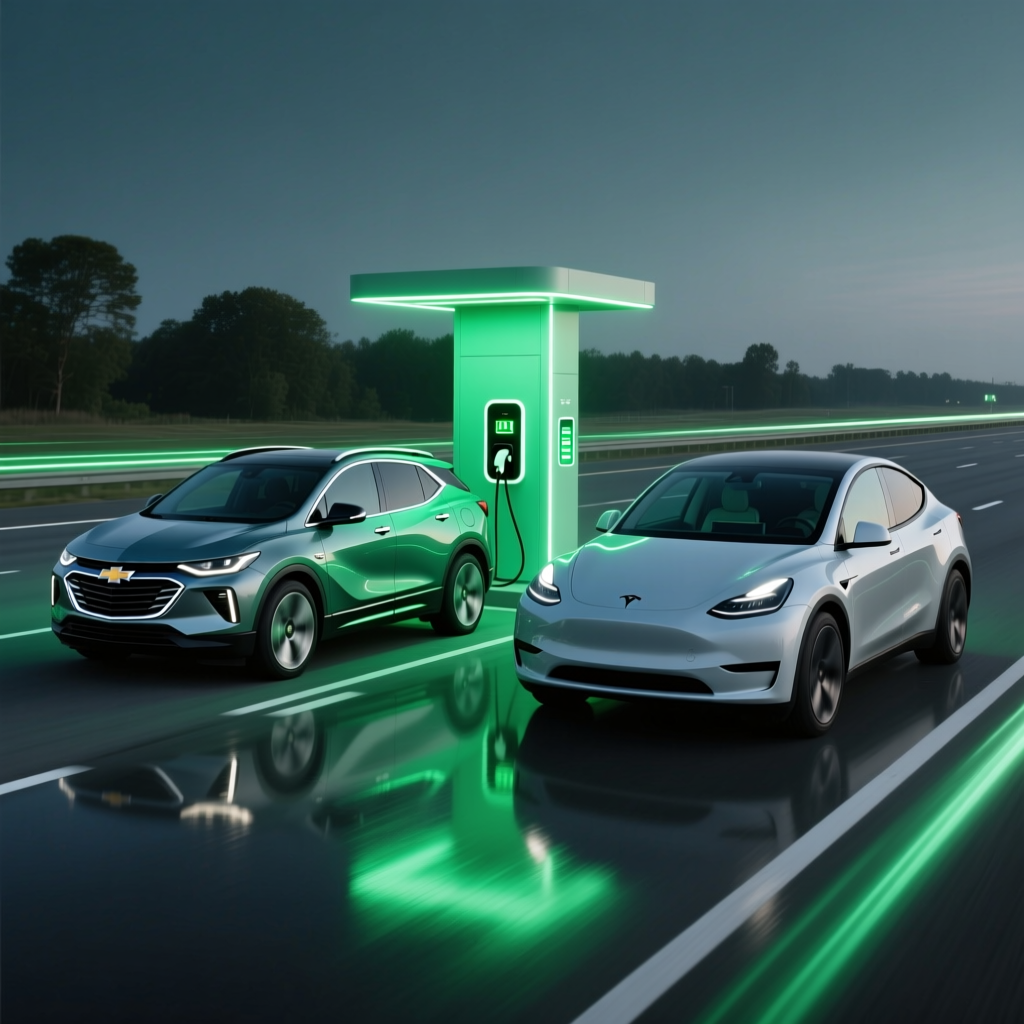
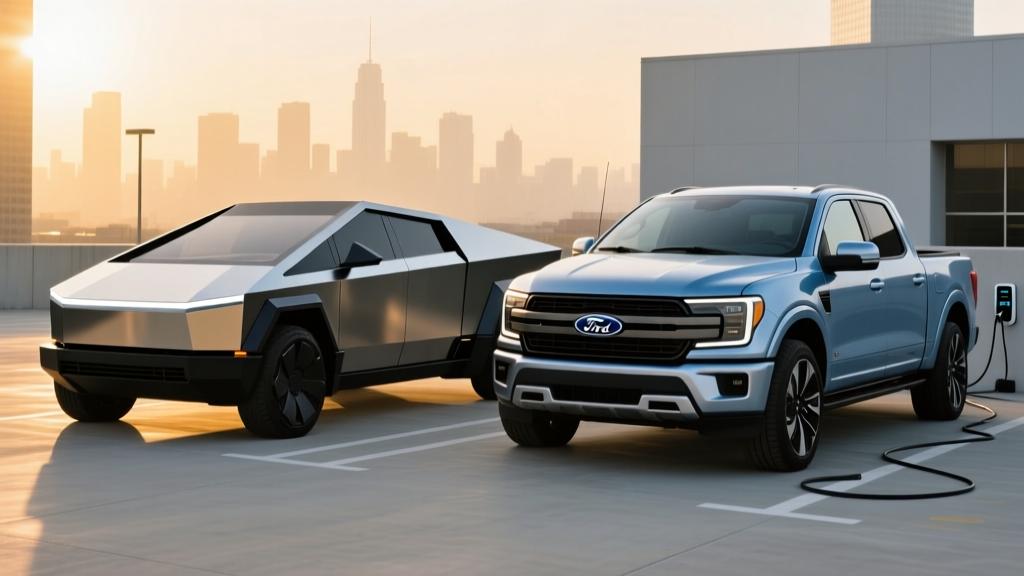
| kWh (kilowatt-hour) | Energy (capacity) | Bucket size / gas tank gallons | Battery size, energy consumption | Chevy Equinox EV: 85 kWh usable; Ford F-150 Lightning Extended: 131 kWh |
Why this matters: A charger advertising "350 kW" doesn't deliver 350 kWh to your battery — it delivers energy at a rate of up to 350 kW, and only if your vehicle can accept that rate. Most 2026 EVs peak between 150–270 kW, and charging speed tapers significantly above 80% state of charge (SoC). Meanwhile, a "100 kWh battery" doesn't tell you how fast it charges — only how much total energy it stores.
Real Charging Speeds: What Those Watt Numbers Actually Deliver
Marketing materials love peak kW figures, but sustained charging speed is what determines your actual road-trip downtime. Here's what different charging levels actually deliver in practice:
| Level | Power (kW) | Typical Miles Added/Hour | Best Use Case | 2026 Equipment Cost |
|---|---|---|---|---|
| Level 1 (120V) | 1.2–1.9 kW | 3–5 mi/hr | Overnight top-off for short commutes | $0 (included cord) |
| Level 2 (240V) | 7.2–19.2 kW | 20–60 mi/hr | Daily home charging, workplace | $500–$1,800 installed |
| DC Fast Charge | 50–350 kW | 150–1,200 mi/hr (peak) | Road trips, highway corridors | Public use: $0.30–$0.55/kWh |
The charging curve reality: When a manufacturer says "charges at 240 kW," that's a peak figure usually reached between 10–30% SoC. As the battery fills, internal resistance increases and the charge rate tapers. A typical 240 kW-capable vehicle like the Ioniq 5 will average closer to 150–170 kW across a 10–80% session. The last 20% (80–100%) can take as long as the first 70% due to this taper, which is why most road-trippers charge to 80% and keep moving.
Real-World Range Expectations: The EPA rates the 2026 Hyundai Ioniq 5 Long Range at 310 miles with its 84 kWh battery. In practice: expect ~270–285 miles in moderate highway driving (65–70 mph), ~240–260 miles in winter cold (below 32°F), and ~250–270 miles at sustained 80+ mph. Your kWh/100mi efficiency — typically 28–33 for this vehicle — is the number that actually predicts your range.
EV vs Gas vs Hybrid: The Watt-Based Cost Comparison
Understanding watts translates directly to dollars. Here's how a midsize EV stacks up against comparable gas and hybrid options over 5 years of ownership, assuming 15,000 miles/year:
| Vehicle | Type | Efficiency | Cost/Mile | 5-Year Fuel/Energy Cost |
|---|---|---|---|---|
| Hyundai Ioniq 5 SEL | BEV | 30 kWh/100mi | $0.042 (home) / $0.13 (public) | $3,150 (home) / $9,750 (public) |
| Toyota Camry Hybrid LE | HEV | 51 MPG combined | $0.065 | $4,875 |
| Honda Accord EX 1.5T | Gas | 30 MPG combined | $0.11 | $8,250 |
| Toyota RAV4 Prime | PHEV | 94 MPGe / 38 MPG gas | $0.038 (electric) / $0.092 (gas) | $4,200 (mixed use) |
Assumptions: $3.30/gal gas, $0.14/kWh home electricity (national average), $0.43/kWh public DC fast charging. Source: fueleconomy.gov EPA data. Actual costs vary by region, utility rate, and driving mix.
The takeaway: EV energy savings are massive when you charge at home, but evaporate significantly if you rely entirely on public DC fast charging. If you cannot install a Level 2 home charger, a hybrid or PHEV may deliver better economics.
Total Ownership Cost Breakdown: Beyond the Sticker Price
Fuel savings are only one piece of the puzzle. Here's a realistic 5-year total cost of ownership for a $45,000 EV versus a $33,000 gas equivalent:
| Category | EV (e.g., Ioniq 5 SEL) | Gas (e.g., Accord EX) |
|---|---|---|
| Purchase price (MSRP) | $45,100 | $33,000 |
| Federal tax credit (§30D) | –$3,750 to –$7,500* | $0 |
| Home charger install (Level 2) | $1,200 | $0 |
| Fuel/energy (5 years, home charging) | $3,150 | $8,250 |
| Maintenance (5 years) | $1,500 | $3,800 |
| Insurance (5 years) | $9,500 | $7,200 |
| Estimated depreciation | $18,000 | $12,500 |
| Net 5-Year Cost | $29,700–$36,200 | $32,750 |
*§30D Tax Credit Note: The federal EV tax credit under IRS §30D ranges from $3,750 to $7,500 depending on battery component and critical mineral sourcing requirements. Eligibility also depends on buyer income caps ($150K single / $300K joint AGI), vehicle MSRP caps ($55K sedans / $80K SUVs/trucks), and North American final assembly. Always verify current eligibility on irs.gov before purchasing, as sourcing rules tighten annually through 2032.
Common EV Misconceptions — Fact vs Fiction
| Myth | Fact |
|---|---|
| "EV batteries need replacing every few years" | Federal law mandates 8-year/100,000-mile battery warranties. Real-world data from fueleconomy.gov and fleet studies show most 2026 NMC and LFP batteries retain 85–92% capacity at 150,000 miles. Full replacement costs $8,000–$18,000 but is rarely needed within typical ownership. |
| "A 350 kW charger charges any EV in 15 minutes" | Your vehicle's onboard charge acceptance rate is the bottleneck. A Chevy Equinox EV accepting 150 kW peak won't benefit from a 350 kW stall. And even compatible vehicles taper above 80% SoC, making 10–80% the practical fast-charge window (18–25 min for most 2026 models). |
| "EVs are worse in cold weather" | Range drops 20–35% below freezing due to battery chemistry and cabin heating demand. However, preconditioning (warming the battery while plugged in) recovers much of this loss. A heat pump — standard on most 2026 EVs — reduces heating energy draw by 40–60% vs resistive heaters. |
| "EVs cost more to insure" | Generally true: 15–25% higher premiums on average due to repair costs and parts pricing. However, this gap has narrowed since 2023 as body shops gain EV repair certification. Always get quotes before purchasing. |
| "Home charging requires a full panel upgrade" | Most homes with a 200-amp panel can support a 48-amp (11.5 kW) Level 2 charger on a 60-amp circuit without upgrades. Older homes with 100-amp service may need a $1,500–$3,000 panel upgrade. Have a licensed electrician assess your specific setup. |
First-Time EV Buyer Decision Framework
If-This-Then-That: Which Electrified Vehicle Fits Your Life?
IF you have home charging access AND drive under 250 miles/day AND live in a moderate climate:
→ A BEV (battery electric vehicle) is your best bet. You'll charge overnight for $0.03–0.05/mile and rarely visit a gas station. Consider models with 250+ EPA miles of range and 150+ kW DC fast charging for road-trip flexibility.
IF you lack home charging AND rely on street parking or apartment living:
→ A HEV (hybrid) like the Toyota Camry Hybrid (51 MPG combined) or a PHEV (plug-in hybrid) like the RAV4 Prime (42 miles electric-only) may be more practical. You'll still save significantly on fuel without depending on charger access.
IF you tow, haul, or regularly drive 400+ miles in rural areas:
→ A PHEV truck/SUV or a BEV with 320+ miles EPA range and NACS (Tesla Supercharger network) access. Public charging infrastructure remains sparse in rural corridors — plan accordingly using tools like PlugShare or A Better Routeplanner.
IF you want maximum tax credit value:
→ Check the IRS §30D qualifying vehicle list before shopping. As of 2026, sourcing requirements for critical minerals and battery components have tightened, and some popular models have dropped from full $7,500 eligibility to $3,750 or $0. The credit can now be transferred to the dealer at point of sale, reducing your purchase price directly.
IF you want the lowest possible battery degradation:
→ Choose an LFP (lithium iron phosphate) battery chemistry (available in Tesla Model 3/Y Standard Range, some BYD models). LFP batteries tolerate daily 100% charging and show minimal degradation over 200,000+ miles, though they sacrifice 10–15% energy density versus NMC chemistries.
Key Specs That Actually Matter When Comparing EVs
When you're evaluating specific models, these are the numbers that determine daily satisfaction — not the marketing headlines:
- Usable battery kWh: Total minus buffer. A "77 kWh battery" may only offer 72.6 kWh usable. This directly determines range.
- EPA range + real-world caveat: Subtract 10–15% for highway driving, 20–35% for cold weather.
- Peak DC fast charge kW AND 10–80% time: Peak alone is misleading. The 10–80% time captures the full charge curve.
- Level 2 onboard charger kW: Determines how fast you charge at home. 11.5 kW adds ~35 mi/hr; 7.2 kW adds ~22 mi/hr.
- Efficiency (kWh/100mi or MPGe): Lower kWh/100mi = cheaper to operate. Most 2026 crossovers fall between 27–35 kWh/100mi.
- Battery chemistry (LFP vs NMC): LFP = longer cycle life, daily 100% OK, less range. NMC = more range, charge to 80% daily recommended.
- Battery warranty: Minimum 8 yr/100,000 mi federally mandated. Check the capacity retention threshold — most warrant 70% SoH (State of Health).
- Charging port: As of 2026, most new EVs use NACS (North American Charging Standard, Tesla's connector). Legacy CCS1 vehicles can access Superchargers via adapter.
Frequently Asked Questions
How many watts does an EV use to charge at home?
A Level 1 (120V) charger draws about 1,200–1,900 watts (1.2–1.9 kW). A Level 2 (240V) home charger typically draws 7,200–11,500 watts (7.2–11.5 kW). For context, a Level 2 charger running for 8 hours consumes roughly 58–92 kWh — enough to fully charge most EV batteries. Your home's electrical panel must support this continuous load; a licensed electrician can verify capacity.
Does a higher kW charger always mean faster charging?
No. Your EV's onboard charge acceptance rate is the limiting factor. If your vehicle accepts a maximum of 150 kW DC, plugging into a 350 kW charger won't speed things up. Additionally, charging speed tapers as the battery fills — the 10–80% window is where fast charging is most effective. Above 80%, speeds drop to protect battery longevity.
What's the difference between kW and kWh in plain terms?
kW is how fast energy flows (like gallons per minute from a hose). kWh is how much energy you've stored (like total gallons in a bucket). A 10 kW charger running for 5 hours delivers 50 kWh of energy. Your EV's battery size (in kWh) divided by its efficiency (in kWh per mile) tells you how far you can drive.
How much does it cost to charge an EV per mile?
At the 2026 national average residential electricity rate of ~$0.14/kWh, a typical EV consuming 30 kWh/100mi costs about $0.042 per mile to charge at home. Public DC fast charging at $0.40–$0.55/kWh raises this to $0.12–$0.17 per mile. Compare this to a 30 MPG gas car at $3.30/gallon: $0.11 per mile. Home charging delivers the strongest savings.
Should I charge my EV to 100% every day?
It depends on battery chemistry. For NMC/NCA batteries (most long-range EVs), daily charging to 80% maximizes lifespan — charge to 100% only before long trips. For LFP batteries (Tesla Model 3/Y Standard Range, select others), manufacturers recommend regular 100% charging because LFP chemistry tolerates full states of charge without accelerated degradation, and the battery management system needs full charges for accurate SoC calibration.
Always verify current federal and state incentive eligibility through irs.gov and your state energy office before purchasing. Vehicle specs and pricing reflect manufacturer data available at time of publication and may vary by trim and model year.