Quick Answer: Should You Buy an Electric Volkswagen?
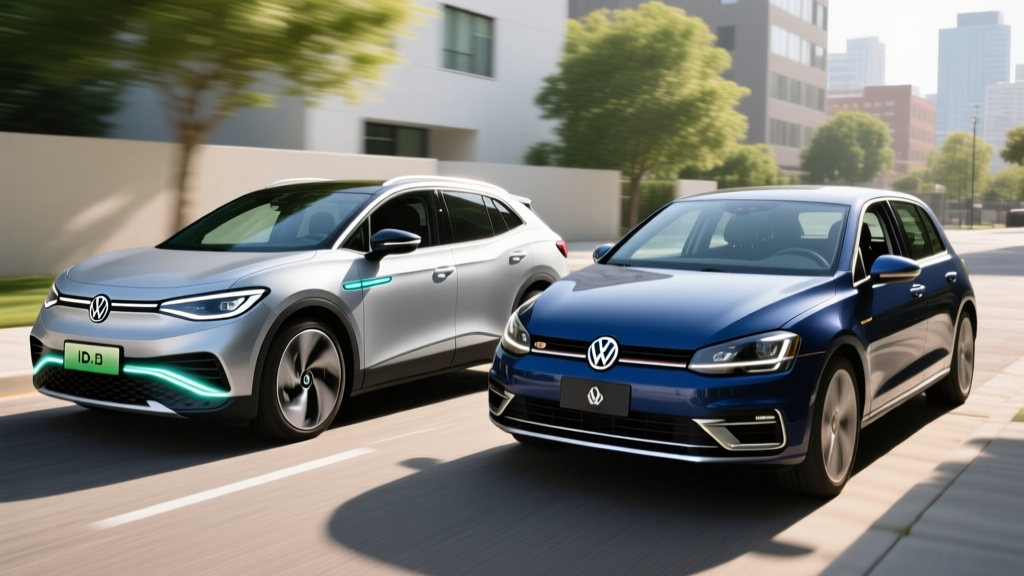
If you're searching for a golf electric volkswagen, here's what you need to know in 2026: Volkswagen no longer sells the gas-powered Golf in the United States. The closest electric equivalent in VW's current U.S. lineup is the Volkswagen ID.4, a compact electric SUV built on VW's MEB platform. The ID.4 starts around $39,735 (2026 Standard trim), delivers an EPA-estimated 291 miles of range (RWD, 82 kWh battery), and may qualify for the $7,500 federal tax credit via point-of-sale transfer — bringing the effective price to roughly $32,235. For buyers who loved the Golf's practical hatchback spirit, the ID.4 offers similar interior volume with zero tailpipe emissions and dramatically lower fueling costs. The trade-off: a higher upfront price (before incentives), DC fast-charging that peaks at 170 kW (slower than rivals like the Hyundai Ioniq 5), and real-world highway range closer to 230–250 miles.
Why There's No New Electric Golf in the U.S.
Volkswagen discontinued the gas Golf in the U.S. after the 2021 model year, and the all-electric ID.3 hatchback — sold widely in Europe — has never been officially imported stateside. VW's American electrification strategy pivoted to the ID.4 crossover and the upcoming ID.7 sedan. If you specifically want an electric VW hatchback with Golf-like dimensions, your only current U.S. option is the used market (the e-Golf was sold through 2019 with just 125 miles of EPA range — a tough recommendation in 2026).
For practical purposes, the ID.4 is the electric Volkswagen that American buyers cross-shop against the memory of the Golf. It's slightly larger, rides higher, and carries a premium price tag — but it also delivers modern EV tech that the e-Golf never offered.
2026 VW ID.4: Specs That Matter
Before comparing costs, here's the exact data on the current ID.4 lineup. Volkswagen offers three main trims with two battery and drivetrain configurations for the 2026 model year:
| Spec | Standard (RWD) | Pro (RWD) | Pro S AWD |
|---|---|---|---|
| Base MSRP | $39,735 | $43,735 | $49,235 |
| Battery (usable) | 63 kWh (LFP) | 82 kWh (NMC) | 82 kWh (NMC) |
| EPA Range | 206 mi | 291 mi | 263 mi |
| Horsepower | 201 hp | 282 hp | 335 hp |
| 0–60 mph | ~7.7 sec | ~6.7 sec | ~5.4 sec |
| Peak DC Charge Rate | 140 kW | 170 kW | 170 kW |
| 10–80% DC Time | ~28 min | ~30 min | ~30 min |
| Level 2 (AC) Rate | 11 kW | 11 kW | 11 kW |
| MPGe (combined) | 107 MPGe | 104 MPGe | 95 MPGe |
| Battery Warranty | 8 yr / 100,000 mi | 8 yr / 100,000 mi | 8 yr / 100,000 mi |
Real-World Range Reality
The EPA rates the ID.4 Pro RWD at 291 miles. In real-world highway driving at 70–75 mph, expect 230–250 miles in mild weather. In cold conditions (below 30°F), range can drop to 190–210 miles due to battery resistance and cabin heating demands. The ID.4 does include a heat pump on Pro trims, which mitigates some cold-weather loss, but physics still wins. Plan road trips around 200-mile legs to keep a comfortable buffer.
ID.4 vs Gas Compact: The Cost Breakdown
Let's compare the ID.4 Pro RWD ($43,735 MSRP) against a representative gas compact crossover — the 2026 Honda HR-V EX ($28,500 MSRP, 30 MPG combined) — over five years and 75,000 miles. This mirrors what a former Golf buyer might actually cross-shop today.
| Cost Factor | VW ID.4 Pro RWD | Gas Compact (30 MPG) |
|---|---|---|
| Purchase Price | $43,735 | $28,500 |
| Federal Tax Credit (§30D) | −$7,500 (if eligible) | $0 |
| Effective Purchase Price | $36,235 | $28,500 |
| Fuel/Energy (75k mi) | $2,625 (home L2, $0.14/kWh) | $8,750 ($3.50/gal) |
| Maintenance (5 yr) | ~$1,200 | ~$3,500 |
| Insurance (5 yr avg) | ~$9,500 | ~$7,500 |
| 5-Year Total Cost | ~$49,560 | ~$48,250 |
Source: Energy costs based on fueleconomy.gov MPGe data and EIA average residential electricity rates. Tax credit eligibility per IRS §30D rules — income caps ($150k single / $300k joint), MSRP caps ($55k SUVs), and battery-sourcing requirements apply. Confirm eligibility at purchase.
The takeaway: After the tax credit, the ID.4's five-year cost nearly matches a gas compact, with the gap closing further if gas prices rise or you have access to free/cheap workplace charging. The ID.4 pulls ahead decisively in year six and beyond. Without the tax credit, the ID.4 costs roughly $8,800 more over five years — a meaningful premium you need to weigh against the driving refinement and environmental benefit.
Charging at Home and on the Road
Charging infrastructure is the single biggest ownership variable. Here's what ID.4 buyers need to plan for:
Home Charging (Where 80%+ of Charging Happens)
The ID.4 accepts up to 11 kW on Level 2 (240V). That means a full overnight charge from 10% to 100% takes roughly 8 hours on the 82 kWh battery — perfect for a standard overnight cycle. A Level 2 home charger installation typically costs $800–$2,000 total (charger hardware plus electrician labor), assuming your electrical panel has capacity. If you need a panel upgrade from 100A to 200A, add $1,500–$3,000.
| Level | Power | Miles Added/Hour | Use Case |
|---|---|---|---|
| Level 1 (120V) | ~1.4 kW | ~4 mi/hr | Emergency/top-off only |
| Level 2 (240V) | 11 kW (ID.4 max) | ~32 mi/hr | Daily home charging |
| DC Fast | Up to 170 kW | ~170 mi in 30 min | Road trips |
Public DC Fast Charging
The ID.4 uses the NACS connector (VW switched to Tesla's standard for 2025+ models), giving you native access to the Tesla Supercharger network — a major advantage over CCS-equipped rivals that still need adapters. At a 170 kW-capable Supercharger or Electrify America station, the ID.4 Pro charges from 10–80% in roughly 30 minutes.
Charging-curve reality: The 170 kW peak only holds between roughly 15–35% state of charge. Above 60%, the rate tapers to ~80 kW, and above 80% it drops to ~40 kW. This is normal for NMC batteries, but it means a 10–90% stop takes closer to 45 minutes. Plan accordingly on road trips — charge to 80% and go.
Tax Credit Eligibility: What You Actually Need to Know
The federal §30D clean vehicle credit can knock up to $7,500 off your ID.4 purchase, and since 2024 it can be transferred to the dealer at point of sale — meaning you get the discount on day one, not as a tax refund next April. But eligibility is not automatic:
- Buyer income cap: Modified AGI ≤ $150,000 (single) or ≤ $300,000 (married filing jointly)
- MSRP cap: Vehicle MSRP must be ≤ $55,000 for SUVs (all ID.4 trims qualify)
- Battery sourcing: Critical minerals and battery components must meet phased-in percentage thresholds from U.S./FTA-trade partners — VW has restructured supply chains, but verify the specific VIN at fueleconomy.gov
- Point-of-sale transfer: You elect this at the dealer; the dealer must be IRS-registered
- One credit per person: You can only claim one new EV credit per calendar year
Important: These rules reflect 2026 IRS guidance and are subject to legislative change. Consult a tax professional and check the IRS's official §30D page before committing.
Common Misconceptions About Electric Volkswagens
| Myth | Fact |
|---|---|
| "The electric Golf is available new in the U.S." | VW discontinued the U.S. Golf after 2021. The e-Golf ended in 2019. The ID.4 is VW's current U.S. EV. |
| "EV batteries need replacing every 5 years." | VW warranties the ID.4 battery for 8 years/100,000 miles with a 70% capacity retention floor. Industry data shows most NMC packs retain 85–90% at 100k miles. |
| "Charging takes too long for road trips." | 10–80% in ~30 min at a DC fast charger. Most road-trip stops involve a restroom and food anyway. Plan 30-min stops every 200 miles. |
| "EVs are worse in winter." | Range drops 15–30% in freezing temps (true for all EVs), but the ID.4's heat pump and battery preconditioning mitigate this. Traction and instant torque are actually advantages in snow. |
| "The tax credit is guaranteed." | Eligibility depends on your income, the vehicle's battery sourcing, and MSRP. Always verify the specific VIN before purchase. |
Decision Framework: Is the Electric Volkswagen Right for You?
Choose the VW ID.4 if:
- You have access to Level 2 home charging (garage or driveway with a 240V circuit)
- Your daily commute is under 80 miles round-trip (the 206-mi Standard trim covers this easily)
- You qualify for the §30D tax credit (income under $150k/$300k) — this is the make-or-break for value
- You want a practical, quiet, comfortable daily driver with VW build quality and don't need class-leading charging speed
- You take 2–4 road trips per year and can plan around 30-minute charging stops
Look elsewhere if:
- You live in an apartment with no charging access and rely entirely on public infrastructure — the ID.4's 170 kW peak charge rate will frustrate you compared to a Hyundai Ioniq 5 (240 kW) or Tesla Model Y (250 kW)
- You need a true hatchback footprint — consider the Chevrolet Bolt EV/EUV (used market) or wait for potential future VW ID.2/ID.3 U.S. introduction
- You don't qualify for the tax credit and every dollar matters — a gas compact crossover will cost ~$8,000+ less over five years
- You regularly tow — the ID.4's 2,700-lb tow rating is modest; the Ford F-150 Lightning or Rivian R1S are better for hauling
First-Time EV Buyer Checklist
If the ID.4 is your first electric vehicle, here's what to prepare before delivery day:
- Get a Level 2 charger installed before the car arrives. Budget $800–$2,000 for a quality 48A charger (like the Emporia Vue or ChargePoint Home Flex) plus electrician labor. Get quotes from at least two licensed electricians.
- Check your electrical panel. If you're already near capacity on a 100A panel, a 200A upgrade adds $1,500–$3,000 but future-proofs for a second EV or heat pump.
- Download the charging apps now. PlugShare, Electrify America, and the Tesla app (for Supercharger access via NACS) are essential. Learn where chargers are along your common routes.
- Practice preconditioning. The ID.4 lets you set departure times — the car will warm or cool the battery and cabin while plugged in, saving range and improving charge speed.
- Adjust your insurance. EV insurance averages 15–25% higher than equivalent gas cars. Get quotes before signing the purchase agreement.
Frequently Asked Questions
Can I still buy a Volkswagen Golf in 2026?
No. Volkswagen discontinued the Golf for the U.S. market after the 2021 model year. The Golf R and GTI remain available, but the standard gas Golf and the electric e-Golf are no longer sold new. The ID.4 is VW's primary electric vehicle for American buyers.
Does the VW ID.4 qualify for the $7,500 tax credit?
The ID.4 is generally eligible for up to $7,500 under §30D, but your personal eligibility depends on income (≤$150k single / ≤$300k joint), and the vehicle must meet battery-sourcing requirements. The credit can be transferred to the dealer at point of sale. Verify your specific VIN's eligibility at fueleconomy.gov before purchasing.
How long does it take to charge the ID.4 at home?
On a Level 2 (240V) charger at the ID.4's 11 kW max rate, a full charge from 10% to 100% takes about 8 hours for the 82 kWh battery (Pro trims) or about 6 hours for the 63 kWh battery (Standard). This is ideal for overnight charging.
What is the real-world range of the ID.4?
The EPA rates the ID.4 Pro RWD at 291 miles. Expect 230–250 miles in real-world highway driving at 70+ mph, and 190–210 miles in sustained freezing temperatures. The Standard trim (206 mi EPA) delivers roughly 160–175 miles highway in mild weather.
Is the ID.4 better than a gas car for daily commuting?
For commutes under 80 miles with home charging, the ID.4 costs roughly $0.04–$0.05 per mile in electricity versus $0.12–$0.14 per mile in gas for a 30 MPG compact. You'll also eliminate oil changes and reduce brake wear thanks to regenerative braking. The break-even point against a gas car is typically 3–5 years depending on credit eligibility and local electricity rates.
Does the ID.4 have a NACS or CCS charging port?
Starting with the 2025 model year, Volkswagen switched the ID.4 to the NACS (Tesla-style) connector for the North American market, giving native access to the Tesla Supercharger network. 2024 and earlier models use CCS1.