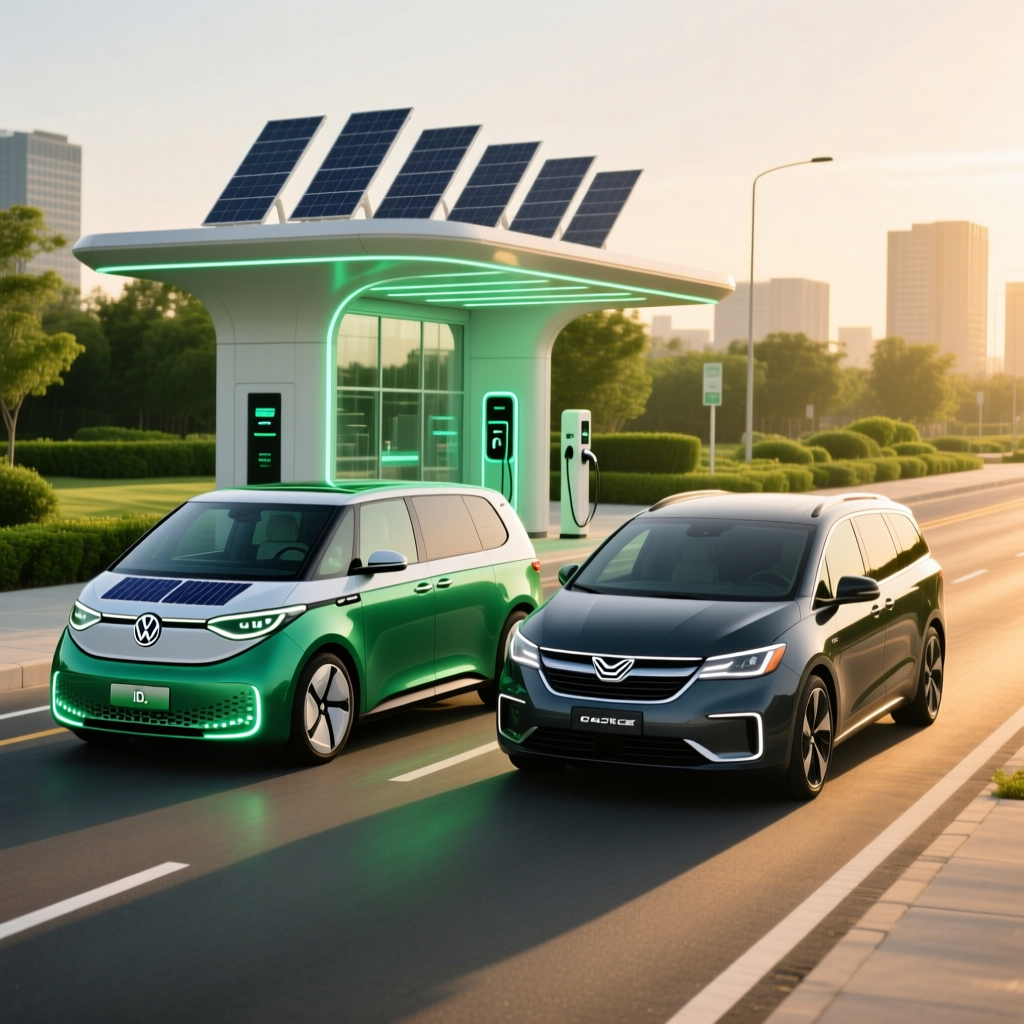
VW ID. Buzz vs Chrysler Pacifica Hybrid: The Ultimate Family Hauler Comparison
Choosing the right family vehicle has never been more complicated — or more exciting. The VW ID. Buzz and the Chrysler Pacifica Hybrid represent two fundamentally different philosophies for hauling kids, cargo, and everything in between. One channels retro-futuristic charm with a fully electric powertrain, while the other delivers proven plug-in hybrid versatility with the practicality Chrysler has refined over generations of minivans.
If you're cross-shopping these two, you're likely a parent or adventurer who wants three-row comfort, modern technology, and lower running costs. But which one actually fits your lifestyle? In this comprehensive head-to-head comparison, we break down every critical dimension — from range and charging speed to interior space and warranty coverage — so you can drive away confident in your decision.
For our individual takes on each model, check out our VW ID. Buzz review and our Chrysler Pacifica Hybrid review. And if you want to see how both stack up against the broader market, browse our best electric minivans rankings.
Overview: Two Very Different Approaches to Family Mobility
The Volkswagen ID. Buzz is VW's all-electric revival of the iconic Microbus, reimagined for the modern era. Built on Volkswagen's MEB electric platform, the ID. Buzz offers a fully electric powertrain with zero tailpipe emissions, a spacious three-row cabin, and unmistakable retro styling that turns heads at every school drop-off. Available in rear-wheel drive and all-wheel-drive (4Motion) configurations, the ID. Buzz is positioned as a lifestyle vehicle that happens to be incredibly practical.
The Chrysler Pacifica Hybrid, by contrast, is a plug-in hybrid minivan that blends a gasoline engine with an electric motor and battery pack. It can operate as a pure electric vehicle for short trips (typically around 32 miles of EPA-rated electric range) before seamlessly transitioning to hybrid operation. This dual-powertrain approach eliminates range anxiety entirely while still offering meaningful fuel savings and electric commuting capability for many families.
The fundamental question is straightforward: Are you ready to go fully electric, or do you need the safety net of a gasoline engine for longer road trips? Your answer will shape which vehicle deserves a spot in your driveway.
Side-by-Side Specification Comparison
| Specification | VW ID. Buzz | Chrysler Pacifica Hybrid |
|---|---|---|
| Powertrain | All-Electric (BEV) | Plug-In Hybrid (PHEV) |
| EPA-Estimated Range | Up to 234 miles (RWD) | 32 miles (electric) + 520+ miles (total) |
| Battery Capacity | 91 kWh (usable: ~86 kWh) | 16 kWh |
| Horsepower | 282 hp (RWD) / 335 hp (AWD) | 260 hp (combined system) |
| Torque | 406 lb-ft (RWD) / 406 lb-ft (AWD) | 362 lb-ft (combined system) |
| Drivetrain | RWD or AWD (4Motion) | FWD |
| Seating Capacity | 7 passengers | 7 passengers |
| Cargo Volume (behind 3rd row) | 18.6 cu ft | 32.3 cu ft |
| Max Cargo Volume | 143.2 cu ft | 140.5 cu ft |
| DC Fast Charging | Up to 175 kW | N/A (Level 2 max) |
| Level 2 Charging Time (0–100%) | ~8.5 hours (11 kW) | ~2 hours (Level 2) |
| Starting MSRP | ~$59,995 | ~$49,995 |
| Federal Tax Credit Eligibility | Up to $7,500 | Up to $7,500 |
| Towing Capacity | 2,500 lbs | 3,600 lbs |
For a deeper dive into the numbers, visit our EV specs comparison tool to explore these and other vehicles side by side.
Range & Efficiency: Electric Purity vs Hybrid Flexibility
Range is where these two vehicles diverge most dramatically, and your daily driving patterns will determine which approach serves you better.
VW ID. Buzz: Going the Distance on Electrons Alone
The VW ID. Buzz with rear-wheel drive delivers an EPA-estimated range of approximately 234 miles on a full charge. The all-wheel-drive 4Motion variant sees a modest reduction, typically rated around 220 miles. These figures are competitive for a vehicle of this size and weight, though they fall short of some electric SUVs and sedans.
Real-world range depends heavily on driving conditions. Highway driving at higher speeds, cold weather, and heavy cargo loads can reduce range by 15–30%. In independent testing by outlets like Edmunds, the ID. Buzz has demonstrated range results close to its EPA estimates in mixed driving, though winter conditions naturally compress those numbers. For families whose daily driving stays under 100 miles round-trip — which covers the vast majority of American commuters — the ID. Buzz offers more than enough range with comfortable margin.
The ID. Buzz also features regenerative braking with adjustable levels, helping to recapture energy during stop-and-go driving and extending real-world range in urban environments.
Chrysler Pacifica Hybrid: The Best of Both Worlds
The Pacifica Hybrid offers roughly 32 miles of EPA-rated all-electric range before its gasoline engine kicks in. While that number might seem modest compared to a full EV, it's remarkably practical: the average American drives approximately 37 miles per day, meaning many families can complete most daily errands and school runs on electricity alone.
When the battery depletes, the Pacifica Hybrid operates as a conventional hybrid with an EPA-estimated combined fuel economy of around 30 mpg. With a fuel tank capacity that enables over 520 miles of total range, road trips require nothing more than a quick stop at any gas station. There is zero range anxiety — a significant advantage for families who regularly travel long distances or who lack reliable home charging infrastructure.
For a full breakdown of how the Pacifica Hybrid manages its dual powertrains, see our Chrysler Pacifica Hybrid review.
Which Wins on Range?
If your priority is daily electric driving with zero emissions, the ID. Buzz is the clear winner with over 200 miles of pure electric range. If your priority is total flexibility and road-trip readiness, the Pacifica Hybrid's combined gas-and-electric range of 520+ miles is hard to beat. Consider your typical weekly mileage, access to charging, and how often you take long trips before deciding.
Price & Value: Sticker Shock vs Long-Term Savings
Upfront cost and long-term value tell very different stories for these two vehicles.
Sticker Price and Trim Levels
The Chrysler Pacifica Hybrid starts at a significantly lower price point — approximately $49,995 for the base trim — and tops out around $59,000 for the fully loaded Pinnacle trim. The VW ID. Buzz starts closer to $59,995 and can climb past $69,000 for the top-tier 4Motion configuration with premium packages.
That $10,000+ gap at the entry level is substantial and represents a meaningful advantage for the Pacifica Hybrid, especially for budget-conscious families.
Federal and State Incentives
Both vehicles may qualify for the federal plug-in vehicle tax credit of up to $7,500, subject to current IRS guidelines and income limitations. Many states also offer additional rebates or incentives for electric and plug-in hybrid vehicles. These incentives can narrow the price gap considerably. Always check the latest eligibility requirements on fueleconomy.gov before making your purchase decision.
Total Cost of Ownership
Where the ID. Buzz begins to close the value gap is in long-term operating costs. Electricity is generally far cheaper per mile than gasoline, and electric vehicles have fewer moving parts — no oil changes, no spark plugs, no transmission fluid replacements. Maintenance costs for EVs are typically 30–50% lower than internal combustion vehicles over a five-year ownership period, according to data from Consumer Reports.
The Pacifica Hybrid still benefits from reduced fuel consumption during electric operation, but its gasoline engine requires standard maintenance intervals. Over time, the ID. Buzz's lower running costs can offset its higher purchase price, particularly for high-mileage drivers.
For a detailed cost analysis, explore our EV total cost of ownership calculator.
Charging Speed & Convenience
How quickly and easily you can replenish your vehicle's energy supply affects daily satisfaction more than most buyers anticipate.
VW ID. Buzz: DC Fast Charging Capability
The ID. Buzz supports DC fast charging at up to 175 kW, enabling a 10–80% charge in approximately 26 minutes at a compatible station. This is a competitive charging speed that makes road-trip stops manageable — grab a coffee and a snack, and you're back on the road with substantial range.
At home, the ID. Buzz charges at up to 11 kW on a Level 2 (240-volt) connection, requiring roughly 8.5 hours for a full charge. Most owners will plug in overnight and wake up to a full battery every morning. Installing a home Level 2 charger is highly recommended and typically costs between $500 and $1,500 including installation.
The ID. Buzz uses the CCS (Combined Charging System) connector, which is widely available across public charging networks including Electrify America, EVgo, and ChargePoint. As Volkswagen is transitioning to the NACS (Tesla-style) connector in future models, adapters and infrastructure are evolving — stay informed through our EV charging networks guide.
Chrysler Pacifica Hybrid: Simple and Fast Level 2
The Pacifica Hybrid does not support DC fast charging, but it doesn't need to. With only a 16 kWh battery, a Level 2 (240-volt) charge completes in approximately 2 hours. Even on a standard 120-volt household outlet, a full charge takes roughly 14 hours — easily manageable with overnight plugging.
This simplicity is actually an advantage for many families. There's no need to seek out fast-charging stations or plan road trips around charging infrastructure. You plug in at home, get your 32 miles of electric range, and the gasoline engine handles everything else.
Charging Verdict
If you have reliable home charging and want to maximize electric driving, the ID. Buzz offers a compelling package with robust fast-charging capability for road trips. If charging infrastructure in your area is limited or you prefer minimal planning, the Pacifica Hybrid's simple overnight charging plus gasoline backup is remarkably convenient.
Performance & Driving Dynamics
Minivans aren't typically purchased for their performance credentials, but how a vehicle drives daily — its responsiveness, smoothness, and confidence — matters enormously to family satisfaction.
VW ID. Buzz: Electric Torque and Composed Handling
The ID. Buzz delivers the instant torque that defines electric vehicles. With 282 horsepower and 406 lb-ft of torque in the rear-wheel-drive model, acceleration from 0–60 mph takes approximately 7.5 seconds. The 4Motion all-wheel-drive variant bumps output to 335 horsepower and shaves roughly a second off that time, delivering genuinely quick off-the-line performance that makes highway merging effortless.
The low center of gravity created by the underfloor battery pack gives the ID. Buzz surprisingly composed handling for a tall, boxy vehicle. Body roll is well-controlled, and the ride quality is smooth and quiet — a hallmark of electric powertrains that lack engine noise and vibration. At highway speeds, the ID. Buzz is remarkably serene, which passengers (especially sleeping children) will appreciate.
The available all-wheel drive adds confidence in rain, snow, and light off-pavement conditions, making the ID. Buzz a genuine four-season family vehicle.
Chrysler Pacifica Hybrid: Smooth and Familiar
The Pacifica Hybrid combines a 3.6-liter V6 engine with two electric motors for a combined system output of 260 horsepower. In electric mode, acceleration is smooth and responsive — ideal for city driving and school-zone speeds. When the gasoline engine engages, the transition is generally seamless, though attentive drivers may notice the shift.
The Pacifica Hybrid is front-wheel drive only, which limits its all-weather capability compared to the ID. Buzz 4Motion. However, the Pacifica's ride quality is excellent, with a well-tuned suspension that absorbs bumps and maintains stability at highway speeds. Chrysler's decades of minivan engineering experience show in the polished, confident driving feel.
One notable advantage: the Pacifica Hybrid can tow up to 3,600 pounds, significantly more than the ID. Buzz's 2,500-pound rating. If you regularly tow a small trailer, boat, or camper, the Pacifica Hybrid has the edge.
Performance Verdict
The ID. Buzz wins on acceleration, quietness, and available all-wheel drive. The Pacifica Hybrid wins on towing capacity and proven, familiar minivan dynamics. For most daily family driving, both are thoroughly competent — but the ID. Buzz's electric smoothness is genuinely a cut above.
Interior Space, Comfort & Practicality
Interior space is arguably the most critical factor in any minivan purchase. These vehicles live and die by their ability to comfortably transport people and their belongings.
VW ID. Buzz: Retro Charm Meets Modern Flexibility
The ID. Buzz offers seating for seven across three rows. The second row features two captain's chairs that slide, recline, and fold forward to provide third-row access. The third row is a three-passenger bench that folds flat into the floor, creating a massive 143.2 cubic feet of cargo space — slightly more than the Pacifica Hybrid.
Behind the third row, cargo space measures 18.6 cubic feet — adequate for a few grocery bags or a couple of backpacks, but tight for a full family's worth of luggage with all seats occupied. This is a known trade-off with the ID. Buzz: maximum passenger capacity means limited rear cargo room.
The cabin design is a highlight, with high-quality materials, vibrant color options, and thoughtful touches like ambient lighting, USB-C ports throughout, and a configurable digital cockpit. The flat floor (thanks to the electric skateboard platform) creates an airy, open feeling that passengers love. However, some reviewers have noted that the second-row seats don't fold into the floor like the Pacifica's Stow & 'n Go system, limiting quick-reconfiguration flexibility.
Chrysler Pacifica Hybrid: The Space and Flexibility King
The Pacifica Hybrid seats seven and excels in interior versatility. Chrysler's legendary Stow & 'n Go seating system allows the second and third rows to fold completely into the floor, transforming the Pacifica from a seven-passenger people-mover into a flat-floored cargo van in minutes — no heavy seat removal required.
Behind the third row, the Pacifica Hybrid offers 32.3 cubic feet of cargo space — substantially more than the ID. Buzz. This means you can actually carry luggage for a family road trip with all three rows in use, a practical advantage that many families will value daily.
The Pacifica Hybrid's interior materials and design are upscale, particularly in the Pinnacle trim with its quilted leather seats and premium finishes. Rear-seat entertainment systems, built-in vacuum cleaners (available), and abundant storage cubbies reflect Chrysler's deep understanding of family needs.
One caveat: the Pacifica Hybrid's battery pack is located beneath the floor, which slightly reduces the under-floor storage compartments compared to the gas-only Pacifica. It's a minor trade-off that most owners barely notice.
Interior Verdict
The Pacifica Hybrid wins on cargo flexibility and behind-third-row space. The ID. Buzz wins on maximum total cargo volume (with seats folded), cabin ambiance, and the flat-floor experience. If you regularly need both seven passengers and cargo space simultaneously, the Pacifica Hybrid is the more practical choice.
Technology & Safety Features
Modern families expect modern technology — from infotainment and connectivity to advanced driver assistance systems.
VW ID. Buzz: Digital-Forward with Room to Grow
The ID. Buzz features a 12.9-inch touchscreen infotainment system running Volkswagen's latest software, wireless Apple CarPlay and Android Auto, a digital instrument cluster, and an available head-up display with augmented reality navigation. The system is visually impressive, though some users have reported that the touch-sensitive controls (for climate and volume) can be less intuitive than physical buttons, especially while driving.
On the safety front, the ID. Buzz comes equipped with VW's IQ.DRIVE suite, including adaptive cruise control, lane-keeping assist, automatic emergency braking, blind-spot monitoring, and rear cross-traffic alert. The available Travel Assist system provides semi-autonomous highway driving capability, reducing fatigue on long trips.
Over-the-air software updates ensure the ID. Buzz can receive new features and improvements remotely, keeping the technology current throughout ownership.
Chrysler Pacifica Hybrid: Proven and Family-Focused
The Pacifica Hybrid features Chrysler's Uconnect 5 infotainment system with a 10.1-inch touchscreen, widely regarded as one of the most user-friendly systems in the industry. Wireless Apple CarPlay and Android Auto, built-in Amazon Alexa, and available rear-seat entertainment with dual screens keep everyone connected and entertained.
The available FamCAM interior camera lets parents monitor rear-seat passengers through the infotainment screen — a genuinely useful feature for families with young children. The Pacifica Hybrid also offers a comprehensive suite of safety features including adaptive cruise control, lane-keeping assist, automatic emergency braking, surround-view camera, and available ParkSense automated parking.
While the Pacifica Hybrid doesn't offer over-the-air updates or semi-autonomous driving features comparable to the ID. Buzz's Travel Assist, its technology is mature, reliable, and purpose-built for family convenience.
Technology Verdict
The ID. Buzz offers more cutting-edge technology and future-proofing with OTA updates and advanced driver assistance. The Pacifica Hybrid delivers more practical, family-oriented features like FamCAM and a more intuitive infotainment interface. Both are well-equipped — the difference is innovation versus refinement.
Warranty & Reliability
Long-term peace of mind matters enormously when investing in a family vehicle.
VW ID. Buzz
Volkswagen backs the ID. Buzz with a 4-year/50,000-mile limited warranty and a 8-year/100,000-mile battery warranty, which is standard for the EV industry. The battery warranty guarantees that the pack will retain at least 70% of its original capacity during the coverage period.
As a relatively new vehicle, long-term reliability data for the ID. Buzz is still being accumulated. However, the MEB platform underpinning it has been in production across multiple VW Group vehicles, providing a growing body of real-world durability evidence. Volkswagen's scheduled maintenance requirements for the ID. Buzz are minimal — primarily cabin air filter replacements and tire rotations.
Chrysler Pacifica Hybrid
Chrysler offers a 3-year/36,000-mile limited warranty and a 5-year/60,000-mile powertrain warranty. The hybrid battery is covered for 8 years/100,000 miles (10 years/150,000 miles in certain states with California emissions standards).
The Pacifica Hybrid has been on the market for several years, providing a more established reliability track record. While generally well-regarded, some owners have reported issues with the hybrid system's complexity, including occasional software glitches and transmission-related concerns. Regular maintenance is more involved than the ID. Buzz, given the gasoline engine, but Chrysler's dealer network is extensive and service is widely accessible.
For reliability ratings and owner satisfaction scores, consult resources like J.D. Power and Consumer Reports.
Warranty Verdict
The ID. Buzz offers a slightly better basic warranty and the advantage of fewer mechanical components that can fail. The Pacifica Hybrid provides a longer-established track record and broader dealer service network. Both hybrid battery warranties are strong and competitive.
The Verdict: Which Family Hauler Is Right for You?
After examining every dimension, here's our clear recommendation based on buyer type:
Choose the VW ID. Buzz If:
- You have reliable home charging and want to maximize zero-emission driving
- Your daily driving is under 150 miles and you take road trips infrequently
- You value cutting-edge technology, over-the-air updates, and semi-autonomous driving features
- You want all-wheel drive for all-weather confidence
- You appreciate distinctive design and want a vehicle that stands out
- Lower long-term maintenance costs are a priority
Choose the Chrysler Pacifica Hybrid If:
- You need maximum cargo flexibility with seven passengers and their gear
- You take regular road trips and don't want to plan around charging stations
- Your budget is closer to $50,000 and you want more value per dollar
- You need higher towing capacity for trailers or boats
- You prefer proven, user-friendly technology over cutting-edge features
- Stow & 'n Go seating versatility is essential for your lifestyle
There is no wrong choice here — only the right choice for your family. The ID. Buzz represents the future of family transportation: clean, quiet, and technologically advanced. The Pacifica Hybrid represents the pragmatic present: versatile, affordable, and ready for anything without compromise.
Ready to explore more options? Check out our best electric minivans rankings and our best family EVs guide for additional recommendations.
Frequently Asked Questions
Can the VW ID. Buzz handle long road trips?
Yes, the ID. Buzz can handle road trips with some planning. Its 175 kW DC fast charging capability adds significant range in about 26 minutes, and public charging infrastructure continues to expand nationwide. For families who take one or two long trips per year, a brief charging stop every 2–3 hours is manageable and can actually make for a more relaxed journey. For families who road-trip every weekend, the Pacifica Hybrid's gasoline flexibility may be more convenient.
Is the Chrysler Pacifica Hybrid worth it if I rarely plug it in?
Even without regular plug-in charging, the Pacifica Hybrid operates as an efficient conventional hybrid, delivering around 30 mpg combined — better than most gasoline-only minivans. However, to maximize the value of the hybrid system and enjoy the lowest possible operating costs, regular plugging is recommended. If you genuinely cannot charge at home or work, a conventional gasoline Pacifica may be a more cost-effective choice, as you'd be paying for hybrid capability you aren't fully utilizing.
Which vehicle is better in snow and inclement weather?
The VW ID. Buzz with 4Motion all-wheel drive has a clear advantage in snow and adverse conditions. Electric all-wheel drive provides instant torque to all four wheels with precise electronic control, delivering excellent traction. The Pacifica Hybrid is front-wheel drive only, which is adequate for light snow with proper winter tires but cannot match the confidence of AWD. If you live in an area with harsh winters, the ID. Buzz 4Motion is the stronger choice.
How do insurance costs compare between the two vehicles?
Insurance costs vary significantly by location, driving record, and provider. Generally, the VW ID. Buzz may carry slightly higher insurance premiums due to its higher purchase price and the specialized repair requirements of electric vehicles. The Pacifica Hybrid, with its more conventional powertrain and lower MSRP, tends to be less expensive to insure. We recommend getting quotes from multiple insurers for both vehicles before making your final decision to understand the true cost difference in your specific situation.