The Short Answer on VW Electric SUVs
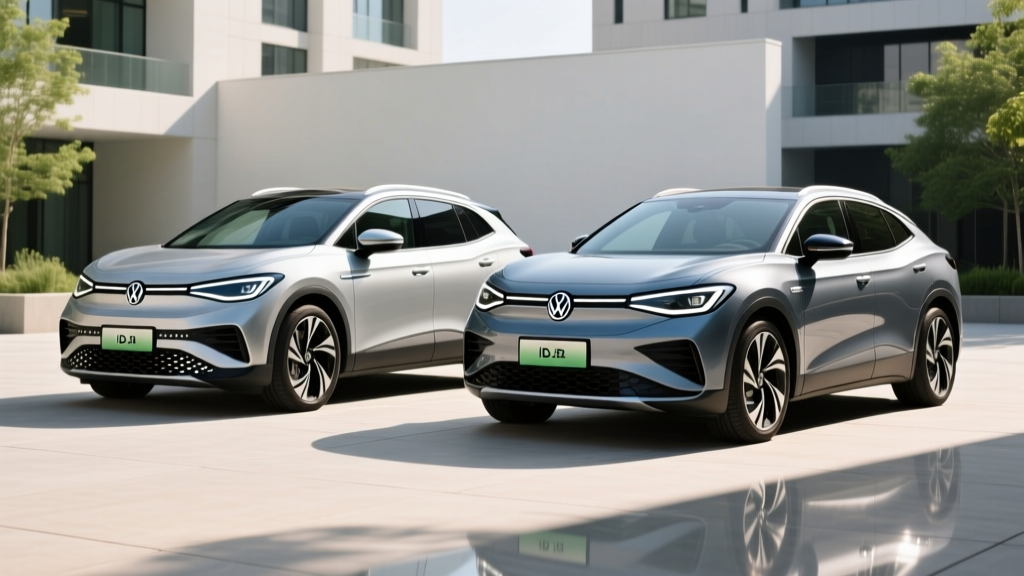
Volkswagen sells two battery-electric SUVs in the U.S. for 2026: the ID.4 (compact crossover, ~275 miles EPA range, starting around $40,790) and the sleeker ID.5 (~290 miles EPA, starting around $44,990). Both use a 77 kWh (usable) NMC battery, peak at 175 kW DC fast charging (10–80% in roughly 28 minutes), and qualify for the §30D federal tax credit of up to $7,500 if you meet IRS income, MSRP, and battery-sourcing requirements. If you need cargo space and a lower price, pick the ID.4. If you want more range and coupe styling, the ID.5 wins. If you lack home charging or live in a deep-cold climate, read the ownership section carefully before buying.
2026 VW Electric SUV Specs at a Glance
Volkswagen's U.S. EV lineup centers on the MEB-platform ID.4 and its fastback sibling, the ID.5. Both share core powertrain hardware but differ in body style, range, and pricing. Here are the numbers that matter.
| Spec | 2026 VW ID.4 Pro S (RWD) | 2026 VW ID.5 Pro S (RWD) | 2026 ID.4 AWD Pro S |
|---|---|---|---|
| EPA Range | ~275 mi | ~290 mi | ~263 mi |
| Battery (usable) | 77 kWh, NMC | 77 kWh, NMC | 77 kWh, NMC |
| Horsepower | 282 hp | 282 hp | 335 hp |
| 0–60 mph | ~7.7 sec | ~7.5 sec | ~5.4 sec |
| Peak DC Charge Rate | 175 kW | 175 kW | 175 kW |
| 10–80% DC Fast Charge | ~28 min | ~28 min | ~28 min |
| Level 2 (240V) Rate | 11 kW | 11 kW | 11 kW |
| MPGe (combined) | ~104 MPGe | ~107 MPGe | ~97 MPGe |
| Cargo Volume (behind 2nd row) | 30.3 cu ft | 27.2 cu ft | 30.3 cu ft |
| Base MSRP | $40,790 | $44,990 | $44,290 |
| Battery/Powertrain Warranty | 8 yr / 100,000 mi | 8 yr / 100,000 mi | 8 yr / 100,000 mi |
Sources: EPA fueleconomy.gov, Volkswagen USA. Figures reflect 2026 model-year estimates; confirm with window sticker.
Real-World Range: What the EPA Sticker Doesn't Tell You
EPA vs. Reality: The ID.4 Pro S posts an EPA-estimated 275 miles, but expect ~220–245 miles during sustained 70+ mph highway driving and ~195–215 miles in sub-30°F winter conditions without a heat pump engaged. The ID.5's aerodynamic fastback roofline helps it hold range slightly better at highway speed.
Volkswagen's MEB platform uses liquid thermal management, which helps in extreme temperatures, but physics still applies. NMC chemistry loses roughly 15–25% of available range in deep cold, and highway speeds above 75 mph erode efficiency due to the ID.4's boxy profile (drag coefficient ~0.28). If your commute is mostly city and suburban driving under 50 mph, you'll often beat the EPA number thanks to regenerative braking. Road-trippers should plan charging stops assuming ~210 usable miles per leg in summer and ~185 in winter to keep a safety buffer.
One ownership nuance: VW's B-mode (stronger regen) doesn't enable full one-pedal driving like a Nissan Leaf or Chevrolet Bolt. You'll still use the friction brake to come to a complete stop. It's a minor adaptation, but first-time EV buyers accustomed to aggressive regen should test-drive before committing.
Charging Speed and Infrastructure: Home vs. Public
Both VW electric SUVs accept up to 175 kW on a DC fast charger. That's competitive but not class-leading — the Hyundai Ioniq 5 peaks at 240 kW, and the Tesla Model Y at roughly 250 kW. Here's what charging actually looks like across the three levels:
| Level | Power | Miles Added per Hour | Typical Use Case |
|---|---|---|---|
| Level 1 (120V) | ~1.4 kW | ~4–5 mi/hr | Emergency / overnight trickle |
| Level 2 (240V, 48A) | 11 kW | ~35–38 mi/hr | Home daily charging (full in ~7.5 hrs) |
| DC Fast Charge | Peak 175 kW | ~190 mi in 30 min | Road trips, 10–80% in ~28 min |
Charging curve reality: The 175 kW peak only holds between roughly 10–35% State of Charge. From 35–60%, expect ~120–140 kW. Above 80%, the rate tapers sharply to protect the battery, dropping below 50 kW. This is why VW (and most automakers) quote 10–80% times rather than 0–100%. On a road trip, charging from 80–100% can add 15+ minutes for only ~40 extra miles — rarely worth the wait.
VW includes three years of complimentary charging on the Electrify America network (typically 2,000 kWh or a time limit, whichever comes first). After that, expect to pay $0.40–$0.58/kWh at public DC chargers depending on your region. The ID.4 uses the CCS1 connector; VW has committed to adopting the NACS (Tesla) connector on future models, but 2026 ID.4/ID.5 vehicles still ship with CCS, meaning you'll need a NACS adapter for Supercharger access where available.
Home Charging Installation
Most VW electric SUV buyers will want a Level 2 home charger. The ID.4's onboard charger accepts up to 11 kW (48 amps), which requires a 60-amp dedicated circuit. Here's a realistic cost breakdown:
| Item | Estimated Cost |
|---|---|
| Level 2 charger (e.g., ChargePoint Home Flex, Emporia) | $400–$700 |
| Electrician labor (standard install, panel adjacent) | $500–$1,500 |
| Permit and inspection | $50–$200 |
| Panel upgrade (if needed — 200A service) | $1,500–$3,500 |
| Total (typical, no panel upgrade) | $950–$2,400 |
If your home has a 100-amp electrical panel with limited breaker space, a panel upgrade to 200 amps may be required. Always get a quote from a licensed electrician before purchasing a charger. The IRS §30C credit may cover up to 30% of home charger equipment and installation costs (max $1,000), subject to census-tract eligibility.
Cost of Ownership: VW Electric SUV vs. Gas Compact SUV
The purchase price of an ID.4 or ID.5 is higher than a comparable gas SUV like the Toyota RAV4 or Honda CR-V. But total cost of ownership narrows — or flips — once you factor in fuel, maintenance, and tax incentives.
| Cost Factor (5-Year Estimate) | 2026 VW ID.4 Pro S (RWD) | 2026 Toyota RAV4 AWD (Gas) |
|---|---|---|
| MSRP (before incentives) | $40,790 | $33,500 |
| Federal Tax Credit (§30D) | Up to –$7,500* | $0 |
| Effective Purchase Price | ~$33,290 | $33,500 |
| Fuel/Energy (15,000 mi/yr) | $2,700 (home charging)** | $8,400 (gas at $3.50/gal, 28 MPG) |
| 5-Year Fuel/Energy Total | $13,500 | $42,000 |
| Maintenance (5 years) | ~$1,200 | ~$3,500 |
| Insurance (avg. annual) | ~$1,900/yr | ~$1,500/yr |
| 5-Year Total Cost (est.) | ~$57,490 | ~$86,500 |
* §30D credit eligibility requires meeting income caps ($150K single / $300K joint), MSRP caps ($80K SUVs), and battery critical-mineral/sourcing rules. Confirm at IRS.gov. ** Based on $0.14/kWh national average home electricity; public charging costs more.
The ID.4 wins on five-year cost primarily through massive fuel savings and lower maintenance (no oil changes, fewer brake replacements due to regen). Insurance runs ~20–30% higher on the VW due to repair-cost data on EVs. Depreciation remains a wildcard — EV resale values have softened since 2023 due to Tesla price cuts and rapid model turnover, so lease buyers may be better insulated.
Federal Tax Credit: Do You Qualify?
The §30D Clean Vehicle Credit offers up to $7,500 for new EV purchases, but eligibility hinges on several requirements that change periodically:
- Income caps: Modified AGI ≤ $150,000 (single), $225,000 (head of household), $300,000 (joint)
- MSRP cap: SUVs must have a base MSRP ≤ $80,000 (both ID.4 and ID.5 qualify)
- Battery sourcing: Critical minerals and battery components must meet escalating domestic/free-trade-partner thresholds — check the DOE/FuelEconomy credit lookup for the specific VIN
- Point-of-sale transfer: You can transfer the credit to the dealer at purchase for an immediate price reduction, or claim it on your tax return
- Lease loophole: Leased EVs may qualify for the $7,500 commercial credit (§45W) regardless of sourcing rules, which the lessor may pass through as a lease incentive
Always verify current eligibility before signing a purchase agreement. Battery-sourcing rules tighten annually, and a model that qualifies in January may lose eligibility mid-year.
Common Misconceptions About VW Electric SUVs
| Myth | Fact |
|---|---|
| "The ID.4 can self-drive." | VW's IQ.DRIVE is a SAE Level 2 driver-assistance system (adaptive cruise + lane centering). You must keep your hands on the wheel and eyes on the road at all times. It is not autonomous. |
| "EV batteries need replacing every 5 years." | VW warranties the ID.4/ID.5 battery for 8 years/100,000 miles against capacity loss below 70%. Real-world data from MEB vehicles shows ~5–8% degradation at 100,000 miles under normal use. Full replacement (if ever needed) runs $12,000–$18,000 out of warranty. |
| "Public charging is unreliable everywhere." | Electrify America uptime has improved since 2024, and the expanding NACS adapter network adds Tesla Supercharger access for CCS vehicles. Reliability varies by region — urban corridors are well-served; rural routes require planning. |
| "I need a 200-amp panel upgrade to charge at home." | Many homes with existing 100A or 150A service can add a 40A–48A EV circuit without a full panel upgrade, especially with a load-management device. Get an electrician assessment first. |
| "The ID.4 charges as fast as any other EV." | At 175 kW peak, the ID.4 is mid-pack. The Ioniq 5 (240 kW), Tesla Model Y (~250 kW), and Lucid Gravity (300+ kW) charge significantly faster on compatible infrastructure. |
Decision Framework: Is a VW Electric SUV Right for You?
Choose the VW ID.4 if:
- You want a practical compact EV SUV with strong cargo space (30.3 cu ft) and a sub-$41K starting price
- You have Level 2 home charging access and drive under 200 miles daily
- You qualify for the §30D tax credit, bringing effective price near $33K
- You prefer a traditional SUV shape over a coupe-crossover
Choose the VW ID.5 if:
- You want ~15 extra miles of EPA range and are willing to sacrifice 3 cu ft of cargo
- You prefer fastback styling and don't mind the ~$4,200 premium
- Highway efficiency matters for your commute pattern
Look elsewhere if:
- You need 300+ miles of range — consider the Hyundai Ioniq 5 (318 mi) or Tesla Model Y Long Range (320+ mi)
- You frequently tow — the ID.4 maxes out at 2,700 lbs (AWD), which trails the Ford Mustang Mach-E and Rivian R1S
- You rely exclusively on public fast charging in a region with sparse Electrify America or Supercharger coverage
- You need three rows of seating — the ID.4/ID.5 are strictly two-row; look at the Kia EV9 or Tesla Model X
First-Time EV Buyer Checklist
If this is your first electric vehicle, run through these ownership realities before signing:
- Verify home charging feasibility. Can you install a 240V outlet or hardwired Level 2 charger in your garage or driveway? If you live in an apartment without charging access, public-only charging adds cost and time to your routine.
- Map your worst-case trip. Don't plan for your average commute — plan for your longest regular drive (e.g., visiting family 250 miles away in January). Can the ID.4 handle it with one DC fast-charge stop?
- Test the infotainment. VW's ID. Software 4.0 (current on 2026 models) is a major improvement over earlier ID.3/ID.4 firmware, but some users still find the capacitive touch sliders for climate and volume frustrating. Spend 15 minutes with it on the test drive.
- Understand the warranty. The 8-year/100,000-mile battery warranty covers capacity below 70%. The basic vehicle warranty is 4 years/50,000 miles. Scheduled maintenance is minimal but not zero — cabin air filter, brake fluid checks, tire rotation still apply.
- Check your insurance rate before buying. Get a quote on the specific VIN. EV insurance premiums can be 20–35% higher than gas equivalents due to repair complexity and parts costs.
- Confirm tax credit eligibility. Use the IRS tool and the dealer's point-of-sale transfer paperwork to lock in the credit before delivery day.
Frequently Asked Questions
Does the VW ID.4 qualify for the full $7,500 federal tax credit?
It can, but eligibility depends on your income, the vehicle's battery-sourcing compliance for the current year, and the MSRP cap (which the ID.4 clears). Always verify on IRS.gov and the DOE's fueleconomy.gov credit lookup before purchasing. Leasing may offer a workaround if purchase eligibility is uncertain.
How long does it take to charge the VW ID.4 at home?
On a Level 2 charger (240V, 48A, 11 kW), a full 0–100% charge takes roughly 7.5–8 hours. Most owners charge from 20–80% overnight, which takes about 4.5 hours. On a standard 120V outlet (Level 1), expect 3–4 miles of range per hour of charging — sufficient only for low-mileage drivers or as a supplement.
How does the ID.4 handle in snow and cold weather?
The AWD Pro S variant provides confident traction in snow, and VW's thermal management system preconditions the battery to mitigate cold-weather range loss. Expect a 15–25% range reduction in sustained sub-30°F driving. Using the seat and steering-wheel heaters instead of cabin heat saves energy. Preconditioning while plugged in preserves range for your commute.
Is the VW ID.4 reliable compared to a gas SUV?
Early ID.4 models (2021–2023) had software-related complaints addressed through OTA updates. The 2026 model year benefits from VW's ID. Software 4.0, which resolved most infotainment and charging-handshake bugs. Mechanically, EVs have far fewer moving parts than gas vehicles — no timing belt, no transmission fluid, no exhaust system. Long-term reliability data for MEB platforms is still building, but the powertrain simplicity favors lower maintenance costs.
Can I use Tesla Superchargers with the VW ID.4?
The 2026 ID.4 ships with a CCS1 connector. VW has indicated future models will adopt NACS natively, but for now, you'll need a CCS-to-NACS adapter (sold separately, ~$200–$250) to access Tesla Superchargers that have opened to non-Tesla vehicles. Electrify America remains VW's primary charging partner in the U.S.