Quick Answer: Which VW Electric Car Should You Buy?
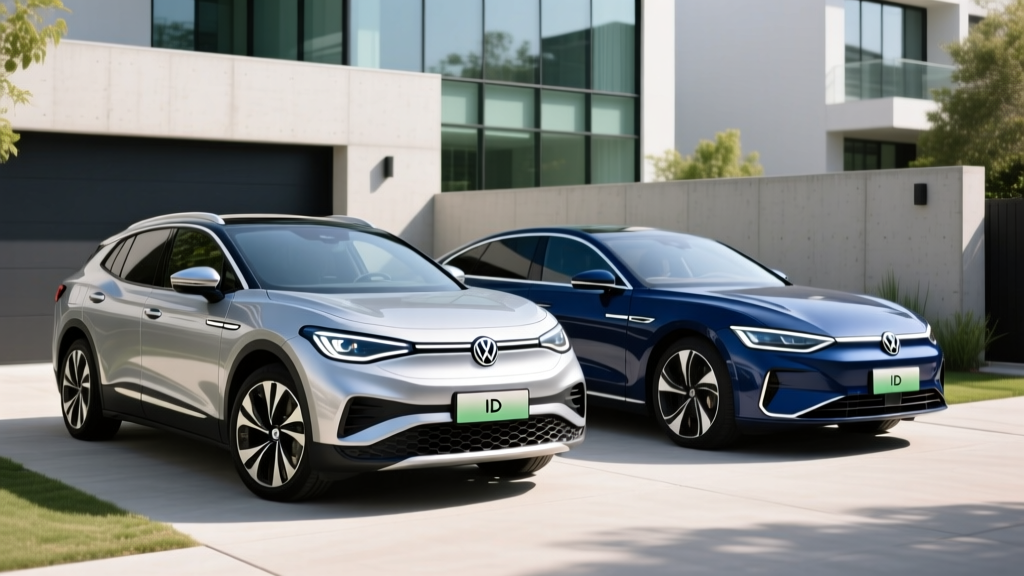
Volkswagen currently sells two battery-electric models in the U.S.: the ID.4 compact SUV (EPA range up to 291 miles, starting ~$40,790) and the ID.7 sedan (EPA range up to 360 miles, starting ~$49,990). The ID.4 suits families needing cargo space and available AWD; the ID.7 targets commuters and road-trippers prioritizing range and efficiency. Both use an 82 kWh (usable) NMC battery, support up to 175 kW DC fast charging (10–80% in ~28 minutes), and may qualify for a partial or full §30D federal tax credit depending on your income, the vehicle's MSRP, and battery-sourcing compliance — rules that shift frequently, so verify at purchase time.
The 2026 VW EV Lineup: ID.4 and ID.7 at a Glance
Volkswagen's U.S. EV strategy centers on its MEB-platform vehicles built in Chattanooga, Tennessee (ID.4) and imported from Germany (ID.7). The long-promised ID. Buzz retro van is sold separately as a niche lifestyle vehicle, and smaller models like the ID.2/ID.3 remain Europe-only. For mainstream buyers, the decision comes down to two vehicles.
| Spec | 2026 VW ID.4 (Pro S RWD) | 2026 VW ID.7 (Pro S) |
|---|---|---|
| Body Style | Compact SUV | Midsize Sedan |
| EPA Range | 291 mi | ~360 mi |
| Battery (usable) | 82 kWh, NMC | 82 kWh, NMC (enhanced) |
| Motor / HP | 282 hp (RWD) / 335 hp (AWD) | 282 hp (RWD) |
| 0–60 mph | 7.3 sec (RWD) / 5.4 sec (AWD) | ~6.5 sec |
| Max DC Fast Charge | 175 kW | 175 kW (200 kW w/ updated software) |
| 10–80% DC Charge | ~28 min | ~26 min |
| Level 2 (AC) Rate | 11 kW (~37 mi/hr) | 11 kW (~42 mi/hr) |
| MPGe (combined) | 107 MPGe | ~120 MPGe |
| Cargo Volume | 30.3 cu ft (rear seats up) | ~18.8 cu ft trunk |
| Base MSRP | $40,790 | $49,990 |
| Battery/Powertrain Warranty | 8 yr / 100,000 mi | 8 yr / 100,000 mi |
Real-World Range Reality Check
ID.4: EPA 291 miles. Expect 240–260 miles on highway trips at 70+ mph, and 180–210 miles in sub-freezing winter conditions. The AWD trims drop EPA to ~263 miles.
ID.7: EPA ~360 miles. The sedan's superior aerodynamics translate to ~300–320 real highway miles and ~250+ in cold weather — a meaningful gap over the ID.4 for road trippers.
VW EVs vs Gas and Hybrid Alternatives: The Numbers
The ID.4 competes against the Toyota RAV4 Hybrid, Honda CR-V Hybrid, and gas crossovers like the Subaru Outback. The ID.7 slots into sedan territory largely abandoned by most automakers, competing against the Toyota Camry Hybrid and Hyundai Ioniq 6.
| Metric | VW ID.4 Pro S | Toyota RAV4 Hybrid XLE | VW ID.7 Pro S | Toyota Camry Hybrid LE |
|---|---|---|---|---|
| MSRP | $40,790 | $33,975 | $49,990 | $29,495 |
| EPA Range / Tank | 291 mi | ~448 mi (14.5 gal) | ~360 mi | ~572 mi (13 gal) |
| Fuel/Energy Cost (15k mi/yr) | ~$560/yr* | ~$1,260/yr | ~$475/yr* | ~$975/yr |
| CO₂ Tailpipe | None | ~4.6 tons/yr | None | ~3.8 tons/yr |
| Maintenance (5-yr est.) | ~$1,800 | ~$3,500 | ~$1,800 | ~$3,200 |
*Based on U.S. average electricity rate of $0.16/kWh and home charging. Public DC fast charging costs 2–3× more.
The EV's energy-cost advantage is substantial — roughly $600–$800/year in fuel savings — but the ID.4 carries a $6,800 MSRP premium over a RAV4 Hybrid. That gap narrows significantly if you qualify for the federal tax credit. The ID.7's premium over a Camry Hybrid is steeper (~$20,000), making the ownership-cost math harder unless you drive high annual miles or value the driving experience.
Real Ownership Costs: 5-Year Breakdown
Purchase price is only the start. Here's what five years of ownership actually looks like, assuming 15,000 miles/year, home Level 2 charging, and no major battery issues.
| Cost Category | ID.4 Pro S (5 yr) | RAV4 Hybrid (5 yr) |
|---|---|---|
| Purchase (after est. credit) | $33,290** | $33,975 |
| Energy/Fuel | $2,800 | $6,300 |
| Maintenance | $1,800 | $3,500 |
| Insurance (avg) | $7,200 | $5,800 |
| Depreciation (est.) | ~$14,000 | ~$11,000 |
| Total 5-Year Cost | ~$59,090 | ~$60,575 |
**Assumes $7,500 point-of-sale credit applied. Actual eligibility depends on IRS §30D rules including buyer income caps ($150K single / $300K joint), MSRP caps ($80K SUVs, $55K sedans), and battery critical-mineral sourcing requirements that change annually.
Key takeaway: The ID.4 reaches near cost-parity with a RAV4 Hybrid over five years when the tax credit applies. Without the credit, the EV costs roughly $7,500 more. Insurance runs 15–25% higher on VW EVs due to repair-cost data — get quotes before committing.
Charging at Home and on the Road: What VW Owners Actually Experience
VW equips both the ID.4 and ID.7 with a CCS1 connector (though VW has announced NACS adoption for future models). Through partnerships, VW owners have access to Electrify America's network — a legacy of the Dieselgate settlement — though reliability varies by station.
| Level | Power | Miles Added/Hour | Typical Use Case |
|---|---|---|---|
| Level 1 (120V) | 1.4 kW | ~4–5 mi/hr | Overnight top-up, emergencies |
| Level 2 (240V home) | 11 kW | ~37–42 mi/hr | Daily charging, full overnight refill |
| DC Fast Charge | Up to 175 kW | ~500+ mi/hr (peak) | Road trips, 10–80% in ~28 min |
Home charging reality: A Level 2 home charger (like a ChargePoint Home Flex or Emporia V2) costs $500–$700 for the unit plus $500–$2,000 for electrician installation, depending on whether your panel needs a 200-amp upgrade. Budget $1,000–$2,500 total. Without home charging, EV ownership becomes significantly less convenient and more expensive (public DC charging at $0.35–$0.50/kWh eliminates most fuel-cost savings).
Charging curve honesty: The ID.4 and ID.7 peak at 175 kW but only sustain that rate briefly between 10–30% State of Charge. From 50–80%, expect rates to taper to 80–100 kW. This is why manufacturers quote 10–80% times rather than full charges — the last 20% can add another 20+ minutes. Always precondition the battery via the vehicle's navigation system before arriving at a DC charger to hit peak rates.
Tax Credit Eligibility: Don't Assume You Qualify
The §30D federal tax credit offers up to $7,500 for new EVs, but the rules are layered and change as battery-sourcing requirements tighten. For VW's U.S.-built ID.4, eligibility has been more stable than for imported models.
- Income caps: AGI ≤ $150,000 (single) / $225,000 (head of household) / $300,000 (joint)
- MSRP caps: ≤ $80,000 for SUVs/vans/pickups (ID.4 qualifies); ≤ $55,000 for sedans (ID.7 qualifies at base trim)
- Battery sourcing: Critical minerals and battery components must meet escalating domestic-content thresholds — verify the specific VIN with your dealer
- Point-of-sale transfer: You can apply the credit as a down-payment reduction at purchase rather than waiting for tax filing
- One EV per 3 years: The credit is limited per buyer, not per vehicle
Common Misconceptions About VW Electric Cars
| Myth | Fact |
|---|---|
| "The battery will need replacing in 5 years" | VW warranties the battery for 8 years/100,000 miles against degradation below 70% capacity. Real-world data from early MEB vehicles shows ~5–8% degradation at 60,000 miles — well within warranty. |
| "You can't road-trip an EV" | With 291–360 miles of range and 28-minute DC fast charges, both VW EVs handle road trips. The constraint is charging-desert routing in rural areas — plan with A Better Routeplanner or PlugShare. |
| "EVs are worse in winter" | Range drops 20–30% in sub-freezing temps due to battery chemistry and cabin heating demands. Both VWs include a heat pump (standard on most trims) that recovers ~10% of that loss. Preconditioning while plugged in mitigates further. |
| "VW's software is broken" | Early ID.4 models (2021–2022) had significant software complaints. VW's ID.Software 4.0+ update (rolled out 2024–2025) resolved most infotainment lag, charging-preconditioning bugs, and phantom warning lights. Current models are substantially improved. |
| "Electricity isn't really cleaner" | Even on coal-heavy grids, EVs produce fewer lifecycle emissions than gas cars per EPA analysis. On the U.S. average grid mix, an ID.4 produces roughly 50% fewer grams CO₂/mile than a comparable gas SUV. |
Decision Framework: Which VW EV (If Any) Is Right for You?
Choose the VW ID.4 if:
- You need SUV cargo space (30.3 cu ft) and available AWD for snow or light trails
- Your daily commute is under 100 miles and you can charge at home
- You want a U.S.-built EV with stronger tax-credit eligibility odds
- Your budget is $35,000–$50,000 after incentives
Choose the VW ID.7 if:
- Range is your top priority (360 mi EPA saves 1–2 charging stops on long trips)
- You commute long distances and value the sedan's superior highway efficiency (~120 MPGe)
- You don't need AWD or significant cargo volume
- Your budget accommodates $50,000+ and you verify tax-credit eligibility for the sedan MSRP cap
Look elsewhere if:
- You lack home or workplace charging access — public-only charging erodes cost savings and convenience
- You regularly tow — the ID.4's 2,700-lb tow rating is modest; neither VW EV suits heavy towing
- You need 3-row seating — VW's electric lineup doesn't offer it
- You want the lowest-cost entry into EV ownership — a used Chevy Bolt or Nissan Leaf costs far less
First-Time VW EV Buyer Checklist
- Confirm charging access: Can you install a 240V/40-amp+ circuit at home? Get an electrician quote before buying.
- Verify tax-credit eligibility: Check your AGI, confirm the specific VIN's battery-sourcing compliance with the dealer, and review current IRS §30D guidance.
- Test the software: Spend 15 minutes with the infotainment during your test drive. Navigate to a destination, adjust climate via the touchscreen, and pair your phone.
- Get insurance quotes: EV premiums run higher. Compare quotes from 3+ carriers before signing.
- Plan your first road trip: Map a route on PlugShare or A Better Routeplanner to build confidence in charging logistics.
- Understand the warranty: 4-year/50,000-mile bumper-to-bumper; 8-year/100,000-mile battery and powertrain. The battery warranty guarantees ≥70% capacity retention.
Is the VW ID.4 eligible for the $7,500 federal tax credit?
The U.S.-built ID.4 has generally qualified for at least partial credit, but eligibility depends on battery-sourcing rules that tighten annually, your income, and the MSRP cap ($80K for SUVs). Always confirm with your dealer using the specific VIN and cross-check with IRS guidance before relying on the credit.
How long does it take to charge a VW ID.4 at home?
On a Level 2 (240V, 11 kW) home charger, a full 0–100% charge takes roughly 8–9 hours. Most owners plug in overnight and wake to a full battery daily. On a standard 120V outlet (Level 1), a full charge takes 3+ days — only practical for low-mileage drivers or emergency use.
Do VW electric cars hold their resale value?
EV depreciation has been steeper than gas vehicles in the 2023–2025 market correction, partly due to Tesla price cuts and rapid battery-tech improvements. Expect the ID.4 to retain roughly 45–55% of its value after 3 years — below a RAV4 Hybrid (~60–65%) but competitive with other EVs. The purchase tax credit effectively offsets some depreciation loss.
Can I charge a VW at Tesla Superchargers?
As of 2026, VW EVs use the CCS1 connector. Tesla has opened some Supercharger stations to non-Tesla CCS vehicles via the Magic Dock adapter, but availability is limited and requires the Tesla app. VW has announced future NACS adoption, but current models require an adapter for Tesla network access.
What happens if the battery degrades significantly?
VW's battery warranty covers capacity loss below 70% for 8 years or 100,000 miles. If your battery falls below this threshold, VW will repair or replace it at no cost. Out-of-warranty battery replacement costs $15,000–$20,000, though full replacements are rare — individual module repairs cost significantly less.