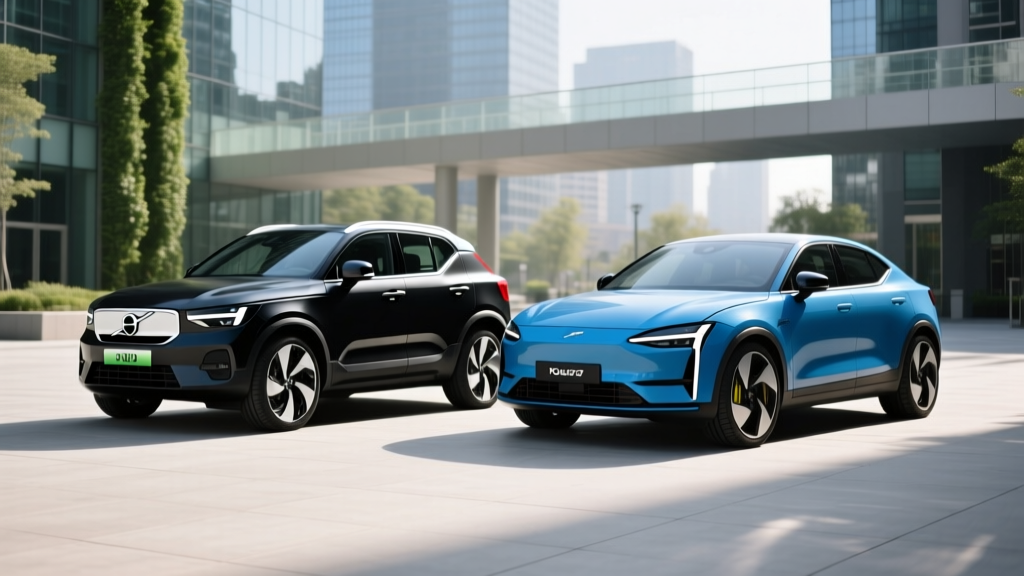
The Volvo XC40 Recharge and Polestar 2 share Geely's CMA platform and a Swedish design ethos, but they serve distinctly different buyer profiles. One is a compact SUV maximizing cargo and ride height; the other is a lifted fastback prioritizing driving dynamics and efficiency. This comparison uses current 2026 model-year specifications, EPA data, and real-world ownership variables to help you decide which fits your daily driving and budget.
Side-by-Side Specifications: XC40 Recharge vs Polestar 2
Both vehicles are available with single-motor (rear-wheel drive) and dual-motor (all-wheel drive) powertrains. The table below compares the most popular configurations: the single-motor extended-range variants that maximize efficiency and value, plus the dual-motor performance trims for buyers who prioritize acceleration and all-weather traction.
| Specification | Volvo XC40 Recharge (Single Motor) | Polestar 2 (Single Motor) | Volvo XC40 Recharge (Twin Motor AWD) | Polestar 2 (Dual Motor AWD) |
|---|---|---|---|---|
| EPA Range | 293 miles | 320 miles | 254 miles | 276 miles |
| Battery (usable) | 78 kWh (NMC) | 78 kWh (NMC) | 78 kWh (NMC) | 78 kWh (NMC) |
| Horsepower | 295 hp | 299 hp | 402 hp | 421 hp |
| 0–60 mph | 6.9 sec | 6.2 sec | 4.5 sec | 4.2 sec |
| Peak DC Fast Charge | 200 kW | 205 kW | 200 kW | 205 kW |
| 10–80% DC Charge Time | ~28 min | ~27 min | ~28 min | ~27 min |
| Level 2 Charging (AC) | 11 kW | 11 kW | 11 kW | 11 kW |
| Combined MPGe | 85 MPGe | 94 MPGe | 79 MPGe | 85 MPGe |
| Efficiency (kWh/100 mi) | 39 | 36 | 43 | 40 |
| Cargo Volume (rear seats up) | 17.8 cu ft + 1.5 cu ft frunk | 14.4 cu ft + 1.4 cu ft frunk | 17.8 cu ft + 1.5 cu ft frunk | 14.4 cu ft + 1.4 cu ft frunk |
| Base MSRP | $53,550 | $49,900 | $58,250 | $54,400 |
| Battery/Powertrain Warranty | 8 yr / 100,000 mi | 8 yr / 100,000 mi | 8 yr / 100,000 mi | 8 yr / 100,000 mi |
Range and Charging: Which Goes Farther and Charges Faster?
The Polestar 2 Single Motor wins the range contest with an EPA-estimated 320 miles versus the XC40 Recharge Single Motor's 293 miles. That 27-mile gap is driven by two factors: the Polestar 2's lower curb weight (by roughly 150 lbs in single-motor form) and its more aerodynamic fastback body, which reduces drag at highway speeds where aerodynamic losses dominate.
On the DC fast-charging front, both vehicles are closely matched. The Polestar 2 edges ahead with a 205 kW peak rate versus 200 kW for the XC40 Recharge, translating to a roughly one-minute advantage in a 10–80% session. However, peak kW is not sustained kW. In real-world testing on 150+ kW chargers (such as Electrify America or Tesla Superchargers with the Magic Dock adapter), both vehicles hold near-peak rates up to approximately 40% state of charge, then taper progressively. Expect average charging speeds closer to 130–145 kW across the full 10–80% session for both cars.
Neither vehicle supports NACS natively in the 2026 model year. Both use the CCS1 connector, though Tesla Supercharger access is available via adapter or the expanding NACS adapter programs from each manufacturer. For home Level 2 charging, both accept 11 kW AC, meaning a full 0–100% charge on a 48-amp Level 2 home charger takes roughly 8–9 hours for either vehicle — easily accomplished overnight.
Performance and Driving Dynamics
If you prioritize acceleration, the dual-motor AWD variants of both vehicles deliver serious thrust: the Polestar 2 Dual Motor hits 60 mph in 4.2 seconds versus 4.5 seconds for the XC40 Recharge Twin Motor. The gap is narrow enough to be academic in real-world driving, but the Polestar 2's lower center of gravity and firmer tuning give it a clear edge on twisty roads.
The XC40 Recharge counters with a more compliant ride, better outward visibility thanks to its SUV seating position, and a slightly tighter turning circle that makes it easier to maneuver in urban settings. Its 5.7 inches of ground clearance also provides more confidence on rough roads and light snow compared to the Polestar 2's 5.1 inches.
Both vehicles feature one-pedal driving with adjustable regenerative braking. The Polestar 2 offers more granular regen customization through its settings menu, while the XC40 Recharge keeps things simpler with a one-pedal mode toggle. Neither offers a true "coast" mode that disconnects the motor for maximum efficiency on downhill stretches — a missed opportunity for hypermilers.
Pricing, Tax Credits, and Value Comparison
Price is where these siblings diverge meaningfully, and where federal tax credit eligibility can shift the calculus.
| Trim / Configuration | MSRP | Est. Federal Credit (§30D) | Effective Price |
|---|---|---|---|
| Volvo XC40 Recharge Core (Single Motor) | $53,550 | Up to $7,500* | ~$46,050 |
| Volvo XC40 Recharge Plus (Single Motor) | $56,050 | Up to $7,500* | ~$48,550 |
| Polestar 2 Core (Single Motor) | $49,900 | Up to $7,500* | ~$42,400 |
| Polestar 2 Plus (Single Motor) | $52,400 | Up to $7,500* | ~$44,900 |
| Volvo XC40 Recharge Twin Motor AWD | $58,250 | Up to $7,500* | ~$50,750 |
| Polestar 2 Dual Motor AWD | $54,400 | Up to $7,500* | ~$46,900 |
*Federal §30D tax credit eligibility depends on buyer income limits ($150K single / $300K joint AGI), vehicle MSRP caps ($80K for SUVs like the XC40, $55K for sedans/liftbacks like the Polestar 2), and battery component/critical mineral sourcing requirements that change annually. Both vehicles currently qualify for at least partial credit, but the exact amount varies by build date and battery supply chain. The credit can be applied at the point of sale as a price reduction. Always verify current eligibility at IRS.gov and consult a tax professional before purchasing.
A critical note on MSRP caps: The XC40 Recharge qualifies under the $80,000 SUV cap (classified as a light truck/SUV by the IRS), meaning even fully loaded trims remain eligible. The Polestar 2, classified as a sedan/liftback, faces the stricter $55,000 MSRP cap. Higher-trim Polestar 2 configurations with the Plus or Pilot packages can push past $55,000, potentially disqualifying them from the credit. This makes the base Polestar 2 Core an especially strong value play if you want to stay under the cap.
Choose the Volvo XC40 Recharge if:
- You need maximum cargo space (17.8 cu ft behind the rear seats vs. 14.4 cu ft)
- You prefer a higher seating position and SUV ride height for visibility and snow confidence
- You frequently carry rear-seat passengers who benefit from the more upright roofline
- You want Volvo's reputation for safety and plan to keep the car past the warranty period
- Your typical trips are under 250 miles and you prioritize comfort over maximum efficiency
Choose the Polestar 2 if:
- You want the best range per dollar (320 miles EPA at ~$42,400 after credit)
- Driving dynamics matter — you prefer a sportier, more connected feel behind the wheel
- You want to stay under the $55K sedan MSRP cap to secure the full federal tax credit
- You value Google's Android Automotive OS with deeply integrated Google Maps navigation and Assistant
- You don't need maximum cargo volume and rarely carry more than one passenger
Technology and Interior: Google vs. Volvo's Google
Both vehicles run Google's Android Automotive OS natively, meaning you get Google Maps for navigation, Google Assistant for voice control, and access to the Google Play Store for in-car apps. However, the execution differs.
The Polestar 2 presents its infotainment through an 11.2-inch portrait touchscreen with a minimalist, almost stark interface that mirrors the car's Scandinavian design ethos. The 12.3-inch digital driver display is clear but offers limited customization. The center console is slim, which opens up cabin space but limits physical storage. Build quality is excellent, with standard textile or available Nappa leather upholstery made from recycled and bio-based materials.
The XC40 Recharge uses a 9-inch portrait touchscreen — smaller than the Polestar's — but compensates with a more traditional interior layout that includes more physical storage cubbies, a larger center console bin, and more rear-seat headroom. Volvo's interior material quality is a step above, particularly in the Plus and Ultimate trims with available wool-blend or Nappa leather options. The 12.3-inch driver display offers slightly more information density.
Both vehicles support over-the-air (OTA) updates, wireless Apple CarPlay, and come with a suite of ADAS features (adaptive cruise, lane centering, blind-spot monitoring). These are SAE Level 2 driver-assistance systems — they require continuous driver engagement and do not constitute self-driving. Neither system matches the hands-free capability of GM's Super Cruise or Ford's BlueCruise on mapped highways.
Ownership Costs: Efficiency, Insurance, and Maintenance
Beyond the purchase price, the Polestar 2 holds a slight edge in ongoing operating costs:
| Cost Category | Volvo XC40 Recharge | Polestar 2 |
|---|---|---|
| Energy Cost (15,000 mi/yr, $0.14/kWh avg) | $4,095 | $3,780 |
| Estimated Insurance (annual avg) | $2,100–$2,400 | $1,900–$2,200 |
| Scheduled Maintenance (5 yr) | $600–$800 | $600–$800 |
| Tire Replacement (1 set) | $1,000–$1,400 | $900–$1,200 |
| Depreciation (est. 5 yr) | ~48–52% | ~50–55% |
The Polestar 2's 36 kWh/100 mi efficiency versus the XC40 Recharge's 39 kWh/100 mi translates to roughly $315 in energy savings over five years at average electricity rates. The gap widens if you rely heavily on DC fast charging at higher per-kWh rates ($0.35–$0.50/kWh at public chargers).
Insurance premiums for both vehicles are above the EV average due to repair costs and parts pricing, but the Polestar 2 tends to be slightly cheaper to insure due to its lower MSRP. Get quotes from your provider for both vehicles before deciding — individual results vary significantly by zip code and driving history.
Depreciation is a wildcard. Historically, Volvo has held resale value slightly better than Polestar, which as a newer brand has less established used-market demand. However, Polestar's growing model lineup and brand recognition may narrow this gap by the time you sell or trade in.
Category Winners at a Glance
320 miles EPA (Single Motor) vs. 293 miles. Lower drag and lighter weight deliver 27 more miles per charge.
205 kW vs. 200 kW peak is negligible. Both take ~27–28 min for 10–80%. Real-world sessions are virtually identical.
Lower base MSRP, easier path under the $55K tax-credit cap, and better efficiency make it the cost-conscious pick.
17.8 cu ft vs. 14.4 cu ft behind the rear seats, plus a more usable cargo shape and easier rear-seat access.
Lower center of gravity, sharper steering, and a more engaging chassis tune make it the driver's choice.
Larger 11.2-inch screen and a cleaner execution of Android Automotive OS, though both run the same underlying platform.
Softer suspension tuning, more compliant over rough roads, and a quieter cabin at highway speeds.
Volvo's longstanding safety reputation, plus both vehicles earn top marks from IIHS.
Final Recommendation
There is no universal winner between the Volvo XC40 Recharge and Polestar 2 — the right choice depends entirely on your priorities.
If you need a daily driver that handles weekend cargo hauls, provides a commanding view of traffic, and delivers a plush ride over imperfect roads, the Volvo XC40 Recharge is the more practical and comfortable vehicle. Its SUV form factor is simply more versatile for families, pet owners, and anyone who regularly loads bulky items. The slightly lower range is a trade-off most buyers in this segment will accept.
If you want the most range and efficiency per dollar, enjoy spirited driving on back roads, and can live with less cargo space, the Polestar 2 is the sharper, more rewarding choice. Its lower price and easier path to the full federal tax credit make it the stronger financial play, particularly in the Single Motor Core trim at under $50,000 before incentives.
Test-drive both back-to-back if possible. The seating position difference alone — upright SUV versus sporty low-slung fastback — often decides the purchase more than any spec sheet comparison.
Frequently Asked Questions
Do the XC40 Recharge and Polestar 2 share the same battery?
Yes. Both use a 78 kWh usable NMC (nickel manganese cobalt) lithium-ion battery pack built on Geely's CMA platform. The battery chemistry, thermal management system, and 8-year/100,000-mile warranty are identical. The range difference comes from vehicle weight, aerodynamics, and efficiency tuning — not battery capacity.
Which qualifies for the full $7,500 federal tax credit?
Both can qualify, but eligibility depends on your income (AGI under $150K single / $300K joint), the vehicle's MSRP staying under the cap ($80K for the XC40's SUV classification, $55K for the Polestar 2's sedan classification), and battery sourcing requirements that shift annually. The Polestar 2 Core trim is the safest bet to stay under the $55K cap. Verify current rules at IRS.gov before purchasing, and consider the point-of-sale transfer option to apply the credit as an upfront discount.
Can I charge either vehicle at Tesla Superchargers?
Both vehicles use the CCS1 connector natively. Tesla has opened select Supercharger stations to non-Tesla EVs via the Magic Dock adapter, and both Volvo and Polestar have announced or provided NACS adapters for their CCS-equipped vehicles. Check the Tesla app or your vehicle's navigation for compatible stations in your area. Supercharger access continues to expand through 2026 but is not yet universal for non-Tesla vehicles.
How does cold weather affect range on each vehicle?
Expect a 20–30% range reduction in sustained sub-freezing temperatures for both vehicles. The XC40 Recharge Single Motor, rated at 293 miles EPA, may deliver 200–230 miles in harsh winter conditions. The Polestar 2 Single Motor, at 320 miles EPA, may drop to 225–260 miles. Both vehicles include a heat pump (standard on 2026 models), which reduces the energy penalty of cabin heating compared to resistive heaters. Preconditioning the battery while plugged in before departure helps preserve range and improves regenerative braking performance in cold weather.
Which is cheaper to insure?
The Polestar 2 generally carries slightly lower insurance premiums due to its lower MSRP, though both are above the EV insurance average. Expect annual premiums in the $1,900–$2,400 range depending on your location, driving record, and coverage level. Always get personalized quotes before committing to a purchase — insurer algorithms weight EV repair costs differently.
Which has better resale value?
Volvo historically retains value slightly better than Polestar, which as a younger brand has a less established used-market track record. However, EV depreciation is heavily influenced by battery health, mileage, and market conditions at trade-in time. Both vehicles' 8-year/100,000-mile battery warranties provide a floor of confidence for second owners. According to fueleconomy.gov, both vehicles' efficiency ratings have remained stable across model years, supporting long-term desirability.