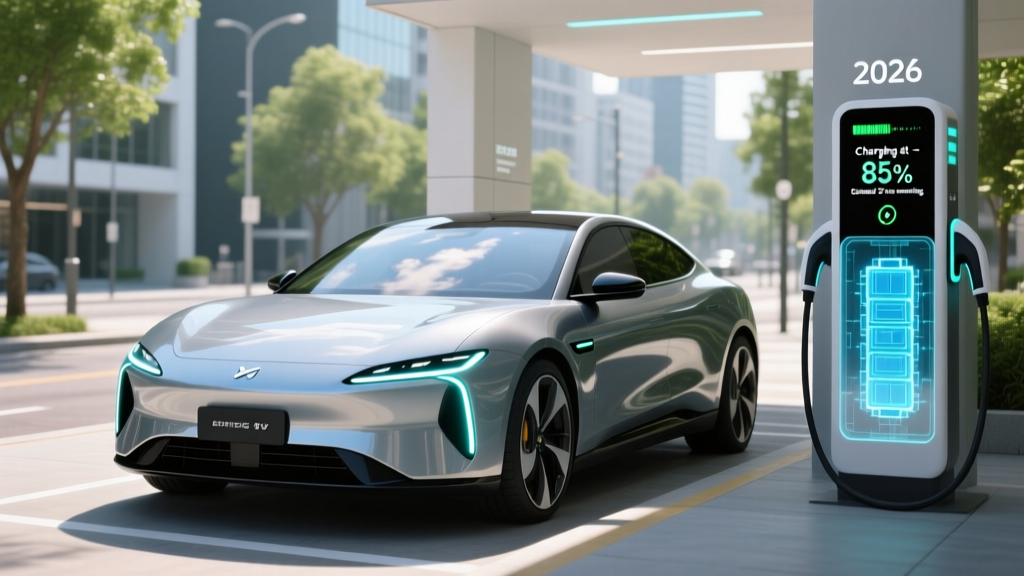
If you're searching for a Volvo XC40 electric lease deal in 2026, you're likely weighing the compact luxury EV against its gas sibling and rivals like the BMW iX1 or Audi Q4 e-tron. The XC40 Recharge (now officially the EX40 in Volvo's updated naming convention, though many dealers still list it as the XC40 Recharge) delivers 293 miles of EPA range, 402 horsepower, and a premium Scandinavian cabin. But the real question isn't just the monthly payment — it's the total cost of ownership, tax credit eligibility, and whether leasing or buying makes more financial sense.
This guide breaks down every dollar: the lease math, the IRS §30D federal tax credit (and whether you actually qualify), real-world charging costs versus premium gasoline, insurance premiums, maintenance savings, and depreciation trends. We'll use concrete 2026 figures so you can run the numbers yourself.
2026 Volvo EX40 (XC40 Recharge): Key Specs at a Glance
| Spec | 2026 EX40 Single Motor | 2026 EX40 Twin Motor AWD |
|---|---|---|
| EPA Range | 293 miles | 254 miles |
| Battery (usable) | 78 kWh (NMC) | 78 kWh (NMC) |
| Horsepower | 248 hp | 402 hp |
| 0–60 mph | 7.0 sec | 4.5 sec |
| Peak DC Fast Charge | 200 kW | 200 kW |
| 10–80% DC Charge | ~28 min | ~28 min |
| Level 2 Charge Rate | 11 kW (~37 mi/hr) | 11 kW (~37 mi/hr) |
| MPGe (combined) | 95 MPGe | 87 MPGe |
| Starting MSRP | $53,550 | $57,250 |
| Battery/Powertrain Warranty | 8 yr / 100,000 mi | 8 yr / 100,000 mi |
XC40 Electric Lease: How the Monthly Math Works
A typical 2026 EX40 Twin Motor AWD lease runs 36 months at 10,000 miles per year. Here's what the numbers look like based on current market offers:
- MSRP (Twin Motor Plus trim): ~$57,250
- Negotiated cap cost: ~$54,000 (with dealer discount)
- Residual value (55% at 36 mo): ~$29,700
- Money factor: ~0.0025 (equivalent to ~6% APR)
- Monthly payment (before tax): ~$750–$820
- Due at signing: $3,000–$4,500 (first month + fees + cap cost reduction)
Lease payments are subject to local sales tax on the monthly payment in most states, not on the full vehicle price — which can save you thousands compared to purchasing in high-tax states.
Can You Apply the Federal Tax Credit to a Lease?
This is where the XC40 electric lease decision gets nuanced. Under current IRS §30D rules, the federal EV tax credit is structured as a purchase incentive. When you lease, the leasing company (the lessor) technically owns the vehicle. Some manufacturers pass the credit's value through as a "lease cash" incentive that reduces your cap cost; others absorb it.
For 2026, Volvo has periodically offered lease cash incentives on the EX40 that effectively pass through the value of available credits. Always confirm with your dealer whether the current lease offer includes any manufacturer incentive or "lease cash" that reduces your monthly payment. If it doesn't, purchasing may be the better path to capture the full credit.
Federal Tax Credit: Do You Actually Qualify for $7,500?
The IRS §30D Clean Vehicle Credit can provide up to $7,500 for a new EV purchase — but eligibility depends on multiple requirements that tightened significantly in recent years. Here's the full checklist:
- Income caps: Modified AGI must not exceed $300,000 (married filing jointly), $225,000 (head of household), or $150,000 (single filers)
- MSRP cap: Vehicle MSRP must be ≤ $80,000 for SUVs, vans, and trucks; ≤ $55,000 for sedans. The EX40 qualifies as an SUV under IRS rules.
- Battery component sourcing: Battery components must be manufactured or assembled in North America (phased percentages increase yearly)
- Critical minerals sourcing: A percentage of critical minerals must be sourced from the U.S. or free-trade-agreement countries (threshold increases annually)
- Point-of-sale transfer: As of 2024, you can transfer the credit to the dealer at purchase, receiving it as an immediate price reduction rather than waiting for tax filing
- One credit per VIN: Each vehicle can only receive the credit once; not available on used purchases unless under the separate §25E used-EV credit
Source: IRS Clean Vehicle Credits. Eligibility rules change annually. Consult a tax professional for your specific situation.
The EX40's sourcing challenge: Volvo manufactures the EX40 (and previously the C40 Recharge) in Ghent, Belgium. Battery cell sourcing and critical-mineral supply chains have been a moving target for European-built EVs. As of early 2026, the EX40 Twin Motor's eligibility for the full $7,500 depends on whether Volvo's current battery supply chain meets the critical-minerals and component thresholds. Some trims or build months may qualify for $3,750 (half credit) or the full amount; others may not qualify at all.
Before signing a purchase agreement, ask the dealer for the vehicle's specific VIN and cross-reference it on fueleconomy.gov to confirm the exact credit amount for that build.
5-Year Total Cost of Ownership: EX40 vs. Gas XC40
Numbers tell the real story. Below is a 5-year / 60,000-mile ownership comparison between the EX40 Twin Motor AWD and the gas-powered XC40 B5 AWD (which starts around $41,000). We assume 12,000 miles per year, home Level 2 charging at the national average electricity rate, and premium gasoline for the ICE model.
| Cost Category | EX40 Twin Motor (EV) | XC40 B5 AWD (Gas) |
|---|---|---|
| Purchase price (after incentives) | $50,250 (est. w/ $7,500 credit) | $41,000 |
| Fuel/energy (60,000 mi) | $4,320 ($0.14/kWh, 3.0 mi/kWh) | $8,640 (26 MPG, $3.75/gal premium) |
| Maintenance (5 years) | $1,800 | $4,500 |
| Insurance (5 years) | $12,600 ($210/mo avg) | $9,000 ($150/mo avg) |
| Estimated depreciation | $24,000 (~48%) | $16,400 (~40%) |
| 5-Year Total | $92,970 | $79,540 |
| Cost per mile | $1.55/mi | $1.33/mi |
Charging vs. Gasoline: The Per-Mile Math
This is where the EX40 shines. Let's break down the energy cost per mile with concrete assumptions:
| Scenario | EX40 (EV) | XC40 B5 (Gas) |
|---|---|---|
| Energy/fuel price | $0.14/kWh (home avg) | $3.75/gal (premium) |
| Efficiency | 3.0 mi/kWh (real-world) | 26 MPG combined |
| Cost per mile | $0.047/mi | $0.144/mi |
| Annual cost (12k mi) | $564 | $1,728 |
| Savings per year | $1,164 in favor of EV | |
Important caveats:
- These figures assume home charging at the national average residential rate. Public DC fast charging at networks like Electrify America or EVgo typically costs $0.35–$0.55/kWh, which brings the per-mile cost to $0.12–$0.18/mi — nearly matching gasoline.
- If you live in a state with cheap electricity (Washington, Idaho, Louisiana at $0.08–$0.10/kWh), your EV fuel cost drops to ~$0.03/mi.
- In high-cost states (California, Hawaii at $0.25–$0.40/kWh), home charging costs $0.08–$0.13/mi — still cheaper than gas but the gap narrows.
Maintenance Savings: Where the EV Advantage Is Real
EVs eliminate several recurring maintenance items. Here's a 5-year comparison based on manufacturer service schedules and typical dealer pricing:
| Maintenance Item | EX40 (EV) | XC40 B5 (Gas) |
|---|---|---|
| Oil changes (5 yrs) | $0 | $750 (5× at ~$150) |
| Brake pads (regen extends life) | $0 (unlikely needed) | $600–$900 |
| Transmission fluid | $0 | $200–$350 |
| Engine air filter | $0 | $150–$250 |
| Spark plugs | $0 | $400–$600 |
| Cabin air filter | $300 | $300 |
| Tire rotation/replacement | $1,500 (EV tires wear faster) | $1,200 |
| Coolant/other fluids | $0 | $350 |
| Total (5 yr est.) | $1,800 | $4,500 |
The EX40's regenerative braking significantly reduces brake pad wear — many EV owners go 80,000+ miles on original pads. However, EV tires tend to wear 15–25% faster than on comparable gas vehicles due to the EX40's 4,700+ lb curb weight and instant torque delivery. Budget for a tire replacement around year 3 or 4.
Insurance: The Cost That Catches Buyers Off Guard
EV insurance premiums are typically 15–40% higher than equivalent gas vehicles. For the EX40, expect to pay $190–$240/month depending on your state, driving record, and coverage level. Here's why:
- Higher repair costs: EV battery packs and power electronics are expensive to replace after collisions. Even minor rear-end damage can trigger battery safety inspections costing thousands.
- Specialized labor: Fewer body shops are certified for high-voltage EV repairs, increasing labor rates and claim totals.
- Higher vehicle value: The EX40's $53,000+ starting price means higher comprehensive and collision payouts.
- Total-loss thresholds: Insurers are more likely to declare an EV a total loss after battery-adjacent damage, driving up claim averages.
Before committing to a purchase or XC40 electric lease, get a quote from your current insurer and at least two competitors. Some carriers (like Geico and Progressive) have started offering EV-specific discounts, while others still price EVs at a significant premium.
Depreciation and Resale Value: The EV Wildcard
EV depreciation has been volatile. According to industry data from sources like iSeeCars and Kelley Blue Book, luxury compact EVs have depreciated 45–55% over 3 years in recent model years — steeper than comparable gas vehicles at 35–45%. Several factors explain this:
- Price wars: Tesla's aggressive price cuts in 2023–2024 cascaded through used EV valuations industry-wide.
- Rapid tech advancement: Newer models with longer range and faster charging make 2–3-year-old EVs feel dated.
- Battery health uncertainty: Used-EV buyers discount for unknown long-term battery degradation, even though most modern packs retain 90%+ capacity at 100,000 miles.
- Tax credit competition: The $7,500 credit on new EVs suppresses used-EV demand, as buyers can get a new vehicle for a similar net cost.
For a 2026 EX40 Twin Motor at $57,250 MSRP, expect a 5-year residual value of approximately $26,000–$30,000 (47–52% depreciation). Volvo's strong brand reputation and the EX40's competitive range may help it hold value better than some rivals, but the structural headwinds facing used EVs are real.
Leasing advantage: A lease transfers the depreciation risk to the leasing company. If residual values collapse, you simply return the car at lease end. This makes a Volvo XC40 electric lease an attractive hedge against EV resale uncertainty — though you'll pay for that protection in the money factor.
State, Local, and Utility Incentives
Beyond the federal §30D credit, many states, municipalities, and electric utilities offer additional EV incentives. These can significantly improve the EX40's ownership math — but they're location-specific and subject to change:
- State rebates: Colorado offers up to $5,000; California's CVRP provides up to $7,000 for income-qualified buyers; Massachusetts offers $3,500 via MOR-EV.
- Utility rebates: Many utilities offer $500–$1,500 for home Level 2 charger installation, plus time-of-use rates that reduce charging costs.
- HOV lane access: States like California, Colorado, and Virginia grant EVs access to carpool lanes regardless of occupancy.
- Registration fee offsets: Some states charge higher EV registration fees ($100–$225/year) to replace lost gas tax revenue — factor this into your cost model.
Check your state energy office and local utility for current programs. Database of State Incentives for Renewables & Efficiency (DSIRE) is a comprehensive resource.
Lease vs. Buy: Which Makes Sense for the EX40?
Choose the XC40 electric lease if:
- You want to hedge against EV depreciation risk
- You drive fewer than 12,000 miles per year
- You prefer lower upfront costs and predictable monthly payments
- You want to upgrade to newer EV tech every 3 years
- The manufacturer is offering lease cash that effectively passes through credit value
Choose to buy if:
- You qualify for the full $7,500 federal credit (and it's not available via lease)
- You drive more than 12,000 miles/year (lease overage fees are $0.20–$0.30/mile)
- You plan to keep the vehicle 5+ years to amortize the higher purchase price
- You want to build equity and avoid perpetual car payments
- Your state offers a purchase-only rebate that doesn't apply to leases
Frequently Asked Questions
How much does it really cost to own a Volvo EX40 over 5 years?
Approximately $93,000 over 5 years / 60,000 miles including purchase price (after estimated $7,500 federal credit), energy, maintenance, insurance, and depreciation. That works out to about $1.55 per mile. Without the tax credit, the total rises to roughly $100,500.
Do I qualify for the federal tax credit on the EX40?
Possibly. You must meet income caps ($150K single / $300K joint), and the vehicle's battery must meet critical-mineral and component sourcing thresholds that change yearly. The EX40's MSRP is under the $80,000 SUV cap. Check the specific VIN on fueleconomy.gov and consult a tax professional before relying on the credit.
How much do I save on fuel and maintenance vs. the gas XC40?
Combined fuel and maintenance savings are approximately $7,000 over 5 years. Fuel savings alone are ~$4,320 (assuming home charging at $0.14/kWh vs. premium gas at $3.75/gal), and maintenance savings add ~$2,700 (no oil changes, fewer brake replacements, no spark plugs).
Are EVs more expensive to insure?
Yes. Expect EX40 insurance to cost $190–$240/month, roughly 25–40% more than the gas XC40 B5. Higher repair costs, specialized labor, and the vehicle's higher MSRP all contribute. Always get a quote before purchasing.
How well does the EX40 hold its value?
Luxury compact EVs have depreciated 45–55% over 3 years in recent years. The EX40 may fare slightly better due to Volvo's brand strength, but expect roughly 48–52% depreciation over 5 years. Leasing shifts this risk to the lessor.
Can I charge the EX40 at Tesla Superchargers?
Volvo has adopted the NACS (North American Charging Standard) connector for newer models. For the 2026 EX40, check your specific build — some units ship with NACS ports natively, while earlier production may include a CCS-to-NACS adapter for Supercharger access. Volvo's official EX40 page confirms connector details by build date.