Volkswagen ID.4 vs Hyundai Ioniq 5: Which Electric SUV Wins?
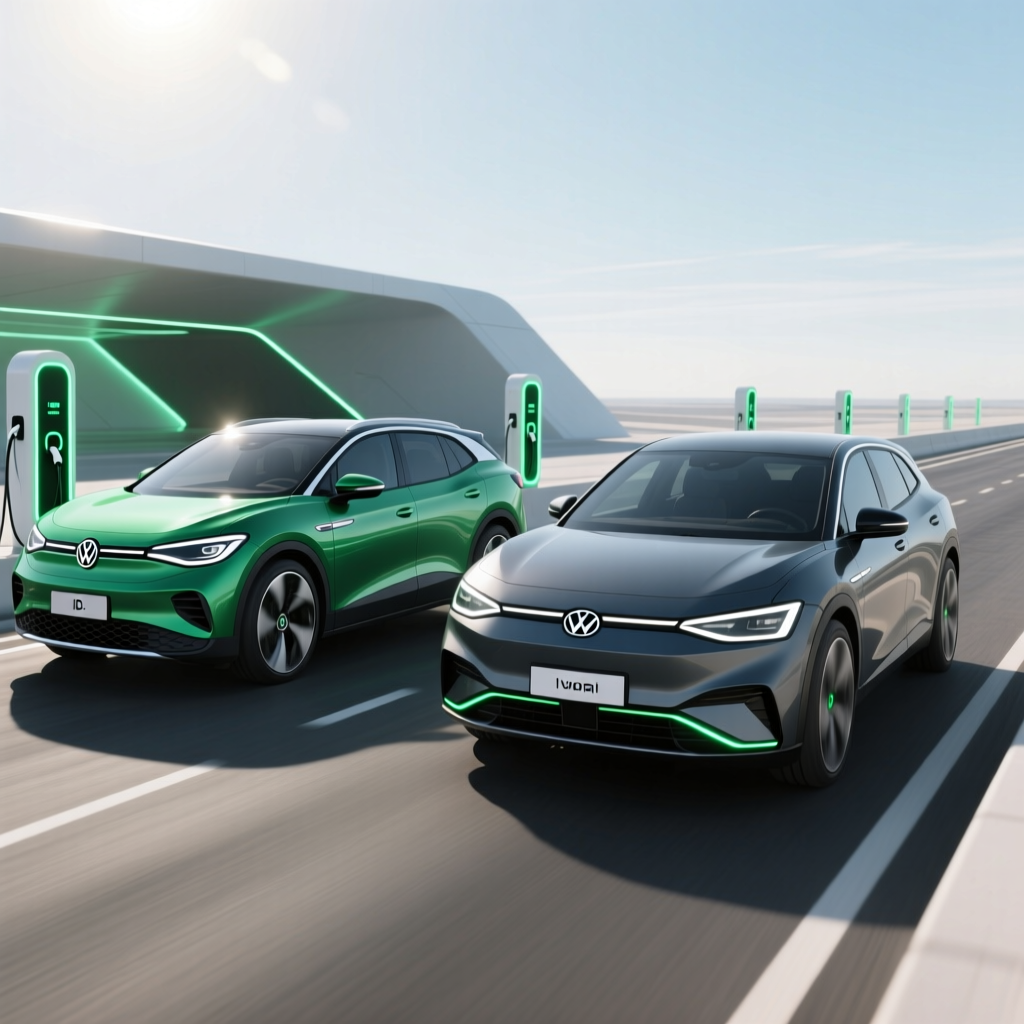
The compact electric SUV segment has become one of the most competitive spaces in the automotive market, and two nameplates consistently rise to the top of every shopper's list: the Volkswagen ID.4 and the Hyundai Ioniq 5. Both offer compelling combinations of range, practicality, technology, and value, but they take distinctly different approaches to the electric vehicle formula. Whether you prioritize ultra-fast charging, interior versatility, driving dynamics, or outright affordability, this head-to-head comparison will help you decide which electric SUV deserves a spot in your driveway.
In this comprehensive comparison, we break down every critical category — from EPA-estimated range and charging speeds to cargo space, warranty coverage, and real-world performance. If you are cross-shopping these two EVs, you are already looking at two of the best options available. Let us find out which one is the better fit for you.
Overview: Volkswagen ID.4 and Hyundai Ioniq 5 at a Glance
The Volkswagen ID.4 is VW's global electric SUV built on the company's dedicated MEB platform. It emphasizes practicality, a comfortable ride, and a relatively approachable price point. With seating for five, a spacious cargo area, and available all-wheel drive, the ID.4 is designed as a sensible family hauler that happens to be electric. Volkswagen has steadily refined the ID.4 since its launch, improving infotainment responsiveness, adding more standard features, and expanding battery options.
The Hyundai Ioniq 5, built on Hyundai's Electric Global Modular Platform (E-GMP), takes a more design-forward and tech-heavy approach. Its retro-futuristic styling, ultra-fast 800-volt charging architecture, and available vehicle-to-load (V2L) power capability set it apart in a crowded field. The Ioniq 5 also offers a sliding center console, a flat floor, and a surprisingly roomy cabin thanks to its long wheelbase.
Both vehicles are available with rear-wheel drive or dual-motor all-wheel drive configurations, and both qualify for various federal and state EV incentives depending on your location and trim selection. For a broader look at the segment, check out our best electric SUVs ranking to see how these two stack up against the full competition.
Side-by-Side Specification Comparison
| Specification | Volkswagen ID.4 | Hyundai Ioniq 5 |
|---|---|---|
| Starting MSRP (RWD) | ~$39,000 | ~$42,000 |
| EPA Range (RWD, max battery) | Up to 275 miles | Up to 303 miles |
| Battery Capacity (usable) | 77 kWh | 77.4 kWh |
| Horsepower (RWD) | 201 hp | 168 hp (Standard Range) / 225 hp (Long Range) |
| Horsepower (AWD) | 295 hp | 320 hp |
| 0–60 mph (AWD) | ~5.4 seconds | ~4.5 seconds |
| Max DC Fast Charging | 170 kW | ~240 kW (800V) |
| 10–80% DC Fast Charge Time | ~28 minutes | ~18 minutes |
| AC Charging (Level 2) | 11 kW | 10.9 kW |
| Cargo Volume (behind rear seats) | 30.3 cu ft | 27.2 cu ft |
| Cargo Volume (rear seats folded) | 64.2 cu ft | 59.3 cu ft |
| Wheelbase | 108.9 in | 118.1 in |
| Front Trunk (Frunk) | No | Yes (0.85 cu ft / 24 L on AWD) |
| Vehicle-to-Load (V2L) | No | Yes (up to 3.6 kW) |
| Towing Capacity | Up to 2,700 lbs | Up to 2,300 lbs |
| Basic Warranty | 4 years / 50,000 miles | 5 years / 60,000 miles |
| Battery Warranty | 8 years / 100,000 miles | 10 years / 100,000 miles |
Note: Specifications reflect the most recent data available from EPA Fuel Economy and manufacturer sources. Exact figures vary by trim, wheel size, and drivetrain. Always verify with your local dealer.
Range and Efficiency: Which EV Goes Farther?
Range anxiety remains one of the biggest concerns for EV buyers, and this is an area where the Hyundai Ioniq 5 holds a clear advantage. The Ioniq 5 Long Range RWD achieves an EPA-estimated 303 miles on a single charge, placing it among the top performers in the compact electric SUV class. The dual-motor AWD version still delivers a very respectable 260 to 290 miles depending on wheel and trim selection.
The Volkswagen ID.4 with its larger battery and RWD configuration reaches an EPA-estimated 275 miles. That is a solid number and sufficient for most daily driving and moderate road trips, but it trails the Ioniq 5 by roughly 28 miles at the top end. AWD versions of the ID.4 drop to approximately 245 to 263 miles depending on configuration.
In real-world highway testing conducted by independent reviewers, both vehicles tend to fall slightly short of their EPA estimates — a common trait among EVs when driven at sustained high speeds in cold weather. However, the Ioniq 5's superior efficiency (measured in miles per kWh) gives it an edge on long road trips where every mile of range counts. The Ioniq 5 typically achieves between 3.5 and 4.0 miles per kWh in mixed driving, while the ID.4 hovers around 3.2 to 3.7 miles per kWh.
If maximizing range is your top priority, the Ioniq 5 wins this round. For more insights on long-distance EV travel, see our guide to the best electric SUVs for road trips.
Price and Value: Getting the Most for Your Money
The Volkswagen ID.4 has traditionally held an advantage in starting price, often undercutting the Ioniq 5 by several thousand dollars at the base trim level. With an entry point near $39,000, the ID.4 positions itself as one of the most affordable electric SUVs from a legacy automaker. Volkswagen has also been aggressive with lease deals and manufacturer incentives, which can make the ID.4 an exceptional value for budget-conscious buyers.
The Hyundai Ioniq 5 starts closer to $42,000 for the Standard Range RWD trim, with the more desirable Long Range versions pushing into the mid-to-upper $40,000 range. However, the Ioniq 5 justifies its premium with more standard technology, faster charging, and a longer warranty. When you factor in the value of features like V2L capability, the 800-volt architecture, and the additional battery warranty years, the price gap narrows considerably.
Both vehicles have been eligible for federal EV tax credits and various state-level rebates, though eligibility can change based on battery sourcing requirements and MSRP caps. Always check the latest federal incentive guidelines before purchasing.
Verdict on price: The ID.4 wins on sticker price, but the Ioniq 5 delivers more value per dollar when you account for technology, charging speed, and warranty coverage.
Charging Speed: The Ioniq 5's Secret Weapon
This is where the Hyundai Ioniq 5 truly separates itself from the competition. Thanks to its 800-volt electrical architecture — a feature shared with luxury EVs like the Porsche Taycan and Lucid Air — the Ioniq 5 can accept DC fast charging speeds of up to approximately 240 kW at a compatible charger. Under ideal conditions, the Ioniq 5 can charge from 10 to 80 percent in roughly 18 minutes. That is a game-changer for road trippers and anyone who relies on public charging infrastructure.
The Volkswagen ID.4, by contrast, uses a conventional 400-volt architecture and peaks at around 170 kW on a DC fast charger. A 10-to-80-percent charge takes approximately 28 minutes — perfectly acceptable for most drivers, but noticeably slower than the Ioniq 5. On a long road trip with multiple charging stops, that 10-minute difference per stop adds up.
Both vehicles support Level 2 AC charging at roughly 11 kW, meaning a full charge from empty at home or at a workplace charger takes about 7 to 8 hours for either SUV. This is standard for the segment and works well for overnight charging.
The Ioniq 5 also offers vehicle-to-load (V2L) capability, which allows you to power external devices — from laptops and camping gear to small appliances — using the car's battery. This feature is not available on the ID.4 and adds genuine utility for outdoor enthusiasts and those who want backup power capability.
For a closer look at how charging infrastructure factors into EV ownership, read our complete EV charging guide.
Performance and Driving Dynamics
If you want straight-line speed, the Hyundai Ioniq 5 AWD is the clear winner. With 320 horsepower and 446 lb-ft of torque in dual-motor configuration, the Ioniq 5 rockets to 60 mph in approximately 4.5 seconds — quick enough to surprise passengers and merge onto highways with absolute confidence. The RWD Long Range version, with 225 horsepower, is more sedate but still adequately quick for daily driving.
The Volkswagen ID.4 AWD produces 295 horsepower and reaches 60 mph in about 5.4 seconds. It is not slow by any means, and the instant torque delivery that defines all EVs makes it feel responsive around town. The RWD version with 201 horsepower prioritizes efficiency over acceleration and feels best suited to relaxed commuting.
Where the ID.4 shines is ride quality. Volkswagen has tuned the suspension to be compliant and comfortable, soaking up bumps and rough pavement with a maturity that feels distinctly German. The steering is light and predictable, though not particularly engaging. The Ioniq 5's ride is also comfortable, but it can feel slightly firmer over sharp impacts, and some reviewers have noted a bit more road noise at highway speeds.
In terms of handling, neither SUV is designed for canyon carving, but the Ioniq 5's longer wheelbase (118.1 inches versus 108.9 inches) gives it a planted, stable feel at speed. The ID.4's shorter wheelbase makes it slightly easier to maneuver in tight urban environments and parking lots.
Both vehicles offer selectable drive modes and adjustable regenerative braking. The Ioniq 5's paddle-mounted regen levels (including a one-pedal driving mode called i-PEDAL) are intuitive and well-implemented. The ID.4 offers a B mode for increased regen but does not quite achieve true one-pedal driving in all situations.
Interior Space, Comfort, and Practicality
Despite the Ioniq 5's longer wheelbase, the Volkswagen ID.4 actually offers more cargo volume. Behind the rear seats, the ID.4 provides 30.3 cubic feet of space compared to the Ioniq 5's 27.2 cubic feet. With the rear seats folded, the gap widens: 64.2 cubic feet for the ID.4 versus 59.3 cubic feet for the Ioniq 5. If hauling cargo is a regular part of your routine, the ID.4 is the more practical choice.
However, passenger space tells a different story. The Ioniq 5's extra wheelbase length translates to exceptional rear legroom — some of the best in the segment. Rear passengers enjoy limousine-like space, and the flat floor (thanks to the dedicated EV platform) means the middle passenger is not straddling a transmission tunnel. The Ioniq 5 also features a sliding center console that can move forward or backward to prioritize front or rear passenger storage.
The ID.4's rear seat is comfortable and offers adequate legroom for adults, but it cannot match the Ioniq 5's cavernous back row. The ID.4's cabin design is minimalist and clean, though some critics have found the materials in lower trims to feel a bit plain for the price. Higher trims add synthetic leather, ambient lighting, and a panoramic glass roof that opens up the interior.
The Ioniq 5's interior design is more distinctive, with a dual-screen setup, retro-inspired pixel-style accents, and a unique flat-floor layout that makes the cabin feel airy and modern. Available features include ventilated front seats, a heated steering wheel, and premium Bose audio.
One practical advantage for the Ioniq 5 is its front trunk (frunk), which provides additional enclosed storage for charging cables or small items. The ID.4 does not offer a frunk, though its under-floor cargo storage area in the rear helps compensate.
For towing, the ID.4 takes the lead with a maximum capacity of 2,700 pounds (when properly equipped), compared to the Ioniq 5's 2,300-pound rating. Neither is a heavy-duty tow vehicle, but the ID.4 can handle a small trailer or a pair of jet skis with more confidence.
Technology, Safety, and Infotainment
Both vehicles come well-equipped with modern technology, but they differ in execution. The Hyundai Ioniq 5 features a pair of 12.3-inch displays — one for the instrument cluster and one for infotainment — housed behind a single curved glass panel. The system is responsive, visually appealing, and supports wireless Apple CarPlay and Android Auto on most trims. Hyundai's Bluelink connected services add remote start, climate preconditioning, and vehicle status monitoring.
The Volkswagen ID.4 uses a 12-inch touchscreen (on most trims) with a smaller digital instrument cluster behind the steering wheel. VW's infotainment software has been a point of criticism in earlier versions, with some users reporting lag and unintuitive menus. However, recent software updates have significantly improved responsiveness and usability. Wireless Apple CarPlay and Android Auto are standard, and the available head-up display with augmented reality navigation is a standout feature that projects directions onto the windshield in your line of sight.
On the safety front, both SUVs earn top marks. The Ioniq 5 has been named an IIHS Top Safety Pick+ and has received five-star ratings from NHTSA. The ID.4 has also earned five-star NHTSA ratings and strong IIHS scores. Both come standard with automatic emergency braking, lane-keeping assist, adaptive cruise control, blind-spot monitoring, and rear cross-traffic alert.
The Ioniq 5 offers Hyundai's Highway Driving Assist 2 (HDA2), which includes lane-centering and automatic lane-change functionality on compatible highways. Volkswagen's Travel Assist provides similar semi-autonomous capabilities and works well on long highway stretches. Both systems require driver attention and are not fully autonomous, but they reduce fatigue on long drives.
Warranty and Ownership Costs
Hyundai has long been known for its generous warranty coverage, and the Ioniq 5 continues that tradition. The basic warranty covers 5 years or 60,000 miles, while the battery and powertrain are covered for 10 years or 100,000 miles. That decade-long battery warranty provides exceptional peace of mind for buyers concerned about long-term battery degradation.
Volkswagen covers the ID.4 with a 4-year/50,000-mile basic warranty and an 8-year/100,000-mile battery warranty. While the battery coverage is competitive with most of the industry, the basic warranty falls a year and 10,000 miles short of Hyundai's. For buyers who plan to keep their EV for the long haul, Hyundai's extra coverage is a meaningful advantage.
In terms of maintenance costs, both vehicles benefit from the inherent simplicity of electric drivetrains — no oil changes, no spark plugs, no transmission fluid replacements. Routine maintenance is limited to tire rotations, cabin air filter replacements, brake fluid checks, and windshield washer fluid. Independent cost-of-ownership analyses consistently show that EVs like the ID.4 and Ioniq 5 cost significantly less to maintain than their gasoline-powered counterparts over a five-year period.
Insurance costs tend to be comparable between the two, though the Ioniq 5's higher repair costs (due to its more complex electrical architecture) can result in slightly higher premiums in some regions. Always get insurance quotes for your specific profile before making a final decision.
Final Verdict: Which Electric SUV Should You Buy?
Both the Volkswagen ID.4 and the Hyundai Ioniq 5 are outstanding electric SUVs, and either one would make an excellent choice. The right answer depends on what you value most.
Choose the Volkswagen ID.4 if:
- You want the lowest entry price in the segment
- Cargo space and towing capacity are top priorities
- You prefer a softer, more comfort-oriented ride
- You value a quieter cabin and composed highway manners
- You plan to charge mostly at home and do not need ultra-fast DC charging
Choose the Hyundai Ioniq 5 if:
- Maximum range and fast charging speed are essential
- You take frequent road trips and want minimal charging downtime
- You want cutting-edge design and a more spacious rear seat
- Vehicle-to-load (V2L) capability appeals to your lifestyle
- Long-term warranty coverage gives you peace of mind
For our overall rankings and to see how both of these SUVs compare to rivals like the Tesla Model Y, Ford Mustang Mach-E, and Kia EV6, visit our best electric SUVs buyer's guide. You can also read our dedicated Hyundai Ioniq 5 review and Volkswagen ID.4 review for deeper dives into each vehicle.
Frequently Asked Questions
Is the Volkswagen ID.4 or Hyundai Ioniq 5 better for road trips?
The Hyundai Ioniq 5 is generally the better road trip companion thanks to its longer EPA-estimated range (up to 303 miles) and significantly faster DC charging speeds (10–80% in about 18 minutes). The 800-volt architecture means you spend less time at charging stations and more time on the road. The ID.4 is still capable of road trips, but its slower charging and slightly shorter range mean more planning and patience on longer journeys.
Which has more cargo space: the ID.4 or the Ioniq 5?
The Volkswagen ID.4 offers more cargo room with 30.3 cubic feet behind the rear seats and 64.2 cubic feet with the seats folded. The Ioniq 5 provides 27.2 and 59.3 cubic feet, respectively. However, the Ioniq 5 compensates with a front trunk (frunk) and a more spacious rear passenger area. If you regularly carry large items, the ID.4 is the more practical hauler.
Are the ID.4 and Ioniq 5 eligible for federal EV tax credits?
Eligibility for the federal EV tax credit (up to $7,500) depends on several factors, including where the vehicle is assembled, battery component sourcing, and the buyer's tax liability. Both vehicles have been eligible at various points, but rules change frequently. Check the latest information on fueleconomy.gov and consult a tax professional before purchasing.
How do maintenance costs compare between the ID.4 and Ioniq 5?
Maintenance costs are very similar and significantly lower than comparable gasoline SUVs. Both vehicles require only routine items like tire rotations, cabin air filter changes, and brake fluid inspections. Regenerative braking reduces wear on the friction brakes, often extending pad life well beyond 100,000 miles. Hyundai's longer basic warranty may save you more on covered repairs during the first five years of ownership.