The Quick Answer: Veo Electric Bikes vs. EVs — What You Need to Know
If your daily commute is under 15 miles and you want to spend under $2,000 total, a Veo electric bike (or similar shared e-bike program) is the cheapest electrified transport available — roughly $0.15–$0.35 per ride or $1,500–$2,200 to buy a personal e-bike outright. If you need cargo space, highway capability, climate control, or year-round all-weather reliability, a compact EV like the 2026 Chevrolet Equinox EV ($33,000 MSRP, ~$25,500 after federal credit) or Hyundai Kona Electric ($32,975) is the practical choice. They serve fundamentally different use cases — this isn't either/or for most households.
What Are Veo Electric Bikes, Exactly?
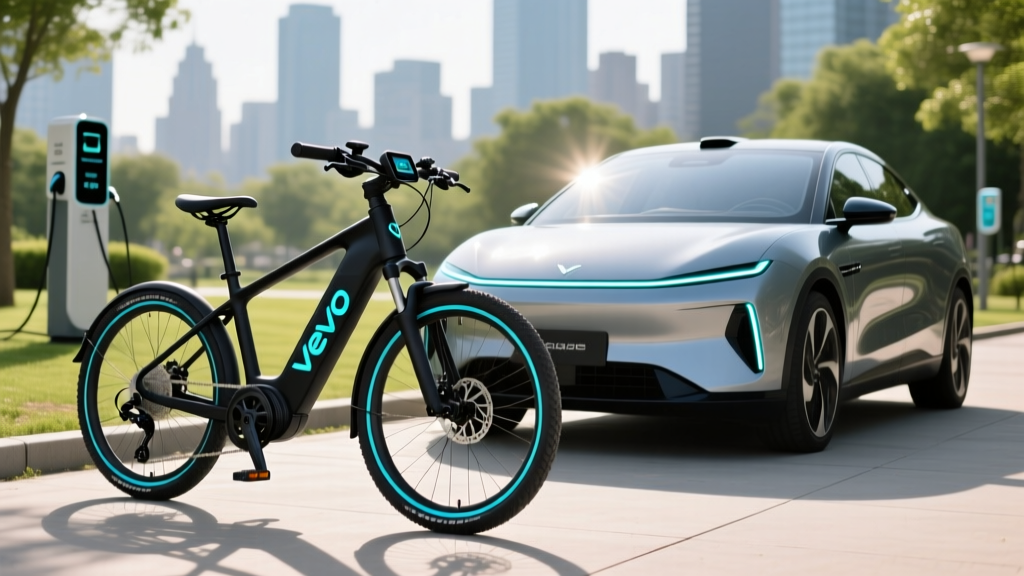
Veo is a micromobility company that operates shared electric bike and scooter fleets in cities and college campuses across the United States. Their e-bikes — typically the Veo Cosmo or similar pedal-assist models — feature hub motors in the 250W–500W range, top speeds limited to 20 mph (Class 2 e-bike), and ranges of 25–40 miles on a full charge depending on rider weight, terrain, and assist level. Veo also sells some models directly to consumers and through fleet operators.
From an ownership-cost perspective, Veo e-bikes sit in the broader micromobility category: small lithium-ion battery packs (typically 0.36–0.72 kWh), standard 120V wall charging (no special electrical work), and zero registration, insurance mandates, or driver's license requirements in most jurisdictions.
For EV shoppers considering whether to add an e-bike to the household instead of (or alongside) a full electric vehicle, the comparison comes down to trip patterns, cargo needs, and budget.
Cost Comparison: Veo E-Bike vs. Compact EV vs. Gas Car
Below is a five-year total-cost-of-ownership comparison for three common options, assuming 5,000 miles/year for the e-bike (short commutes) and 12,000 miles/year for cars:
| Category | Veo E-Bike (Owned) | 2026 Hyundai Kona Electric | 2026 Honda Civic (Gas) |
|---|---|---|---|
| Purchase Price | $1,600–$2,200 | $32,975 (SE trim) | $25,000 (LX trim) |
| Federal Tax Credit (§30D) | None (not a motor vehicle) | Up to $7,500 (eligibility varies by income/sourcing) | None |
| Net Purchase After Credit | $1,600–$2,200 | ~$25,475–$32,975 | $25,000 |
| Annual Fuel/Energy Cost | $15–$30 (electricity) | $480–$720 (at $0.14/kWh avg) | $1,560 (at $3.25/gal, 30 MPG combined) |
| 5-Year Fuel/Energy Total | $75–$150 | $2,400–$3,600 | $7,800 |
| Annual Insurance | $0–$120 (optional) | $1,400–$2,000 | $1,200–$1,700 |
| 5-Year Insurance Total | $0–$600 | $7,000–$10,000 | $6,000–$8,500 |
| Maintenance (5-yr) | $200–$500 (tires, brake pads, chain) | $800–$1,200 (tire rotation, cabin filter, wipers) | $2,500–$4,000 (oil, filters, brakes, belts) |
| Registration/Taxes (5-yr) | $0 | $500–$1,500 (varies by state) | $500–$1,500 |
| Estimated 5-Year Total Cost | $1,875–$3,450 | $35,675–$48,275 | $41,800–$47,500 |
Sources: EPA fueleconomy.gov for Kona Electric efficiency (129 MPGe combined, 261 miles range); IRS §30D credit rules; AAA Your Driving Costs 2025 for gas-car maintenance averages.
Range, Charging, and Practicality — By the Numbers
Here's where the comparison requires honest context. A Veo e-bike and a battery-electric vehicle solve different problems:
| Spec | Veo Cosmo E-Bike (Typical) | 2026 Hyundai Kona Electric | 2026 Chevy Equinox EV |
|---|---|---|---|
| Battery Capacity | 0.50 kWh (lithium-ion) | 65.4 kWh usable (NMC) | 85 kWh usable (NMC) |
| Range (EPA/Advertised) | 25–40 miles (pedal assist) | 261 miles (EPA) | 319 miles (EPA) |
| Real-World Range (Cold/Highway) | 18–30 miles (cold reduces ~20%) | ~200–220 miles highway; ~180 miles in freezing temps | ~250–270 miles highway; ~210 miles in freezing temps |
| Top Speed | 20 mph (Class 2 limit) | 115 mph (electronically limited) | 120 mph |
| Charging Time (Full) | 3–5 hours (120V wall outlet) | ~7 hours (Level 2, 240V/48A); 10–80% DC in ~18 min at 150 kW peak | ~9.5 hours (Level 2); 10–80% DC in ~20 min at 190 kW peak |
| Charging Infrastructure Needed | None — standard outlet | Level 2 home charger recommended ($500–$2,000 installed) | Level 2 home charger recommended ($500–$2,000 installed) |
| Cargo Capacity | Panniers/basket: ~1–2 cu ft | 25.5 cu ft (rear seats up) | 26.4 cu ft (rear seats up) |
| Passengers | 1 (rider only) | 5 | 5 |
| Weather Protection | None (rider exposed) | Full climate control, heated seats available | Full climate control, heated/cooled seats available |
When Does an E-Bike Replace a Second Car?
The most realistic scenario for Veo e-bikes or similar models isn't replacing your primary vehicle — it's eliminating the need for a second car, or serving as a last-mile solution paired with transit.
Consider an e-bike instead of a second car if:
- Your second-most-used vehicle travels fewer than 15 miles per day, round-trip
- You live in a metro area with bike lanes or separated paths for most of that route
- Your climate allows 7+ months of comfortable riding per year (or you're willing to invest in cold-weather cycling gear)
- You don't regularly carry passengers or more than 20 lbs of cargo on those trips
- Eliminating a second car payment ($400–$600/month), insurance ($100–$150/month), and fuel ($120–$200/month) would free up $6,000–$11,000 annually
Stick with (or buy) an EV if:
- You need highway-speed travel (e-bikes at 20 mph are unsafe on roads posted 45+ mph)
- Your commute exceeds 20 miles one-way, or involves significant elevation gain that drains e-bike batteries quickly
- You live in a region with harsh winters where cycling is impractical 4–6 months of the year
- You regularly transport children, groceries for a family, or cargo exceeding 30 lbs
- You need a vehicle available on-demand at any hour without physical exertion
Common Misconceptions — Fact-Checked
| Myth | Fact |
|---|---|
| "E-bikes are basically electric vehicles — just smaller." | E-bikes are classified as consumer products (CPSC-regulated), not motor vehicles (NHTSA-regulated). They require no license, registration, or insurance in most states. They cannot use highways, and their safety profile is fundamentally different. |
| "A $2,000 e-bike saves as much as a $30,000 EV." | Per-mile energy savings are real (~$0.003/mile for e-bike vs. ~$0.04/mile for EV vs. ~$0.13/mile for gas), but the absolute dollar savings depend on miles displaced. An e-bike saving $1,500/year by replacing car trips still leaves the household needing a primary vehicle for longer trips. |
| "E-bike batteries last forever." | Typical e-bike lithium-ion packs degrade to ~70–80% capacity after 500–800 full charge cycles (roughly 3–5 years of daily use). Replacement batteries cost $200–$500. EV traction batteries, by contrast, carry 8-year/100,000-mile federal warranty mandates and typically retain 85–92% capacity at 100,000 miles. |
| "Veo shared e-bikes are free or nearly free." | Veo shared rides typically cost $1 to unlock plus $0.15–$0.39 per minute. A 20-minute daily commute costs $4–$8.80 per ride, or $200–$440 per month — approaching a car payment. Ownership (buying a comparable e-bike) pays for itself in 4–8 months at that usage rate. |
| "You don't need to charge an e-bike — just pedal." | Pedal-assist e-bikes still require battery charging for motor assistance. Riding without assist on a 50–60 lb e-bike is significantly harder than a conventional bicycle. Plan on charging every 1–3 days with daily use. |
Real-World Ownership Considerations
Home charging access: This is where e-bikes have a decisive advantage. You can charge a Veo-style e-bike from any standard 120V household outlet — no electrician, no panel upgrade, no landlord permission needed. For apartment dwellers or renters who cannot install a Level 2 EV charger, an e-bike is dramatically more accessible. However, if you live in a building without ground-floor storage, carrying a 50-lb e-bike up stairs nightly to charge becomes a friction point.
Climate impact: E-bike lithium-ion batteries lose roughly 15–25% of their range in freezing temperatures (32°F and below), similar percentage-wise to EVs. But because an e-bike's absolute range is only 25–40 miles, a 20% loss means you might drop to 20–32 miles — potentially not enough for your round-trip commute. Additionally, riding in rain, snow, or extreme heat is uncomfortable and, in some conditions, unsafe. EVs are climate-controlled and operational in any weather.
Theft and security: E-bike theft is rampant in US cities. Budget $100–$300 for a high-quality U-lock or chain lock, and consider GPS tracking. Homeowner's or renter's insurance may cover theft, but verify — some policies exclude e-bikes above certain wattages. EVs have factory immobilizers, GPS tracking, and are far harder to steal.
Safety: E-bike riders face injury risk significantly higher than car occupants per mile traveled. A helmet ($30–$150) is essential, and many experienced e-bike commuters add mirrors, high-visibility gear, and front/rear lights. According to NHTSA data, bicyclist fatalities have risen in recent years, with e-bikes contributing to higher-speed bicycle crashes.
The Decision Framework: E-Bike, EV, or Both?
If your situation matches Scenario A → E-bike makes sense as a car replacement
- Daily trips under 12 miles round-trip
- Flat or moderate terrain
- Mild climate (riding 8+ months/year)
- Access to secure bike storage at home and work
- No regular passenger or heavy cargo needs
- Budget under $2,500
If your situation matches Scenario B → EV is the right primary vehicle
- Daily driving exceeds 30 miles or includes highway travel
- You need to carry passengers or significant cargo
- Year-round all-weather capability is required
- You have (or can install) Level 2 home charging
- Budget $25,000–$45,000 (after tax credit)
If your situation matches Scenario C → Both (the optimal two-vehicle household)
- One driver commutes locally (e-bike covers this)
- Household still needs a car for longer trips, errands, weekend travel
- A single EV + e-bike combo often costs less to own than two gas cars
- Example: 2026 Kona Electric (~$25,500 after credit) + quality e-bike ($1,800) = $27,300 total, vs. two gas cars at $50,000+
Federal Incentives: What Applies to What?
A critical distinction: the IRS §30D Clean Vehicle Credit (up to $7,500) applies only to new battery-electric and plug-in hybrid vehicles that meet MSRP caps ($55,000 for cars, $80,000 for SUVs/trucks), buyer income limits ($150,000 single / $300,000 joint), and battery critical-mineral sourcing requirements. E-bikes, including Veo models, do not qualify — they are not classified as motor vehicles under federal tax code.
Some states and municipalities offer separate e-bike purchase rebates (typically $200–$1,000), and employer commuter benefits may cover e-bike purchases in certain programs. Check your local transportation authority or AFDC incentive database for current programs in your area.
Frequently Asked Questions
Can I use a Veo e-bike instead of buying a car?
For a small subset of urban commuters with short, flat routes in mild climates, yes — an e-bike can replace a second car or even a primary vehicle. For most US households, an e-bike supplements a car rather than replacing one. The average American drives 37 miles per day (FHWA data), which exceeds typical e-bike range and comfort.
How much does it cost to charge a Veo e-bike vs. an EV?
A typical e-bike battery (0.5 kWh) costs about $0.07 to fully charge at the US average residential rate of $0.14/kWh. An EV with a 65 kWh battery costs about $9.10 for a full charge. Per mile, the e-bike runs at roughly $0.003/mile, the EV at $0.035/mile, and a 30-MPG gas car at $0.108/mile.
Do Veo e-bikes qualify for any tax credits?
No. The federal §30D credit applies only to four-wheeled plug-in vehicles meeting specific battery-sourcing and MSRP requirements. E-bikes are consumer products, not motor vehicles. Some state and local rebate programs do cover e-bikes — check your jurisdiction.
How long does a Veo e-bike battery last before replacement?
Expect 500–800 full charge cycles before significant degradation (capacity dropping below 80%). With daily use, that's roughly 2–3 years before you notice reduced range. A replacement battery typically costs $200–$500 depending on the model. Store the battery indoors and avoid leaving it at 0% or 100% for extended periods to maximize lifespan.
Is a shared Veo e-bike or owning my own e-bike more cost-effective?
If you ride more than 3–4 times per week, ownership pays off within 4–6 months. Shared e-bikes at $4–$8 per ride add up to $1,600–$3,200 annually for daily commuters. A personally owned e-bike at $1,800 plus $25/year in electricity breaks even quickly and is available whenever you need it.
What's the safest way to combine e-bike commuting with an EV?
Use the e-bike for fair-weather local trips (under 10 miles) and the EV for everything else. This maximizes the e-bike's cost advantage while keeping the EV available for range, weather, and cargo needs. Install a Level 2 home charger for the EV so both vehicles charge conveniently at home — the e-bike from a standard outlet, the EV from a 240V circuit.