Is the Toyota Mirai Electric? The Short Answer
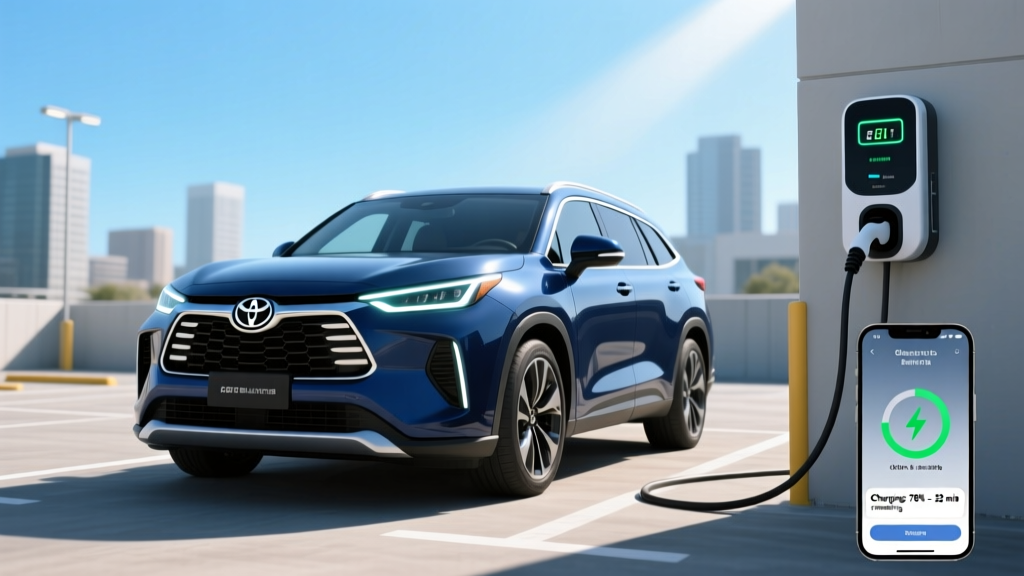
No, the Toyota Mirai is not a battery electric vehicle (BEV). It is a hydrogen fuel cell electric vehicle (FCEV). The Mirai generates its own electricity onboard by converting compressed hydrogen gas (H₂) through a fuel cell stack, which then powers an electric motor that drives the wheels. You never plug it in. Instead, you fill its carbon-fiber tanks at a hydrogen station in roughly 3–5 minutes — similar to pumping gasoline.
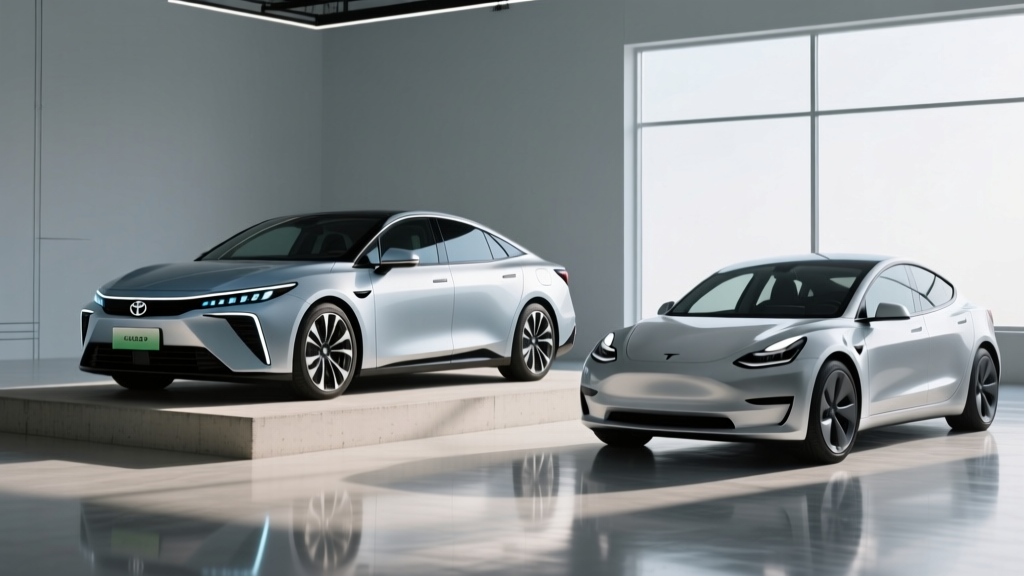
While the Mirai is propelled by an electric motor (182 hp, 300 lb-ft of torque) and produces zero tailpipe emissions beyond water vapor, it is fundamentally different from a plug-in battery EV like the Tesla Model 3 or Hyundai Ioniq 6. The distinction matters enormously for ownership costs, refueling access, and where you can realistically live with one.
If you've been searching "is toyota mirai electric" and landed here, you're not alone. The Mirai occupies a confusing middle ground: it's electrified, it's zero-emission at the tailpipe, and Toyota markets it alongside its hybrids and BEVs. But from a buyer's perspective, an FCEV has an entirely different infrastructure dependency, cost structure, and geographic limitation than a battery EV. Let's break down exactly what the Mirai is, what it costs to own, and whether it makes sense for you in 2026.
How the Toyota Mirai Actually Works: Hydrogen Fuel Cell Tech
The Mirai's powertrain has three core components that replace the battery pack you'd find in a conventional EV:
- Fuel cell stack: Compressed hydrogen from the tanks passes through a polymer electrolyte membrane, where it reacts with oxygen drawn from ambient air. This electrochemical reaction generates electricity (and water vapor as the only byproduct).
- High-pressure hydrogen tanks: Three carbon-fiber-reinforced tanks store hydrogen at 10,000 psi (700 bar). Total capacity is approximately 5.6 kg of H₂.
- Small lithium-ion buffer battery (~1.6 kWh): Stores recaptured energy from regenerative braking and provides brief power assist during acceleration. This is not a drive battery — it's analogous to the small pack in a hybrid.
The electric motor produces 182 horsepower and sends power to the rear wheels. The 0–60 mph time is approximately 9.0 seconds — adequate for commuting but noticeably slower than most battery EVs in its price range (a Tesla Model 3 RWD does it in ~5.8 seconds).
One advantage: the fuel cell stack maintains consistent power output regardless of state of "charge," unlike a BEV whose performance can taper at low state of charge. The Mirai also doesn't suffer cold-weather range loss the way battery EVs do — hydrogen storage isn't temperature-sensitive the way lithium-ion chemistry is.
Mirai Range, Fuel Economy, and Refueling: The Real Numbers
| Spec | Value |
|---|---|
| EPA Range | 402 miles (XLE trim) / 357 miles (Limited trim) |
| Real-World Range (mixed driving) | ~320–380 miles |
| Hydrogen Tank Capacity | 5.6 kg (700 bar / 10,000 psi) |
| EPA Fuel Economy | 76 MPGe (XLE) / 67 MPGe (Limited) |
| Refueling Time | 3–5 minutes (full tank) |
| Motor Output | 182 hp / 300 lb-ft torque |
| 0–60 mph | ~9.0 seconds |
| Drivetrain | Rear-wheel drive |
| Base MSRP (2025 XLE) | $50,190 |
| Base MSRP (2025 Limited) | $66,090 |
The EPA-rated 402 miles on the XLE trim sounds exceptional — and on paper, it beats nearly every battery EV on the market. In real-world driving, owners typically report 320–380 miles per fill, depending on driving style, terrain, and whether you're using climate control heavily. That's still impressive range, and the 3–5 minute refueling time eliminates the 20–40 minute stops that DC fast charging requires on road trips.
However, there's a critical caveat: hydrogen station availability. As of early 2026, the U.S. has fewer than 60 retail hydrogen stations nationwide, and the vast majority are in California. If you don't live in the greater Los Angeles, San Francisco Bay Area, or Sacramento metro regions, owning a Mirai is effectively impossible. Some stations have also experienced supply interruptions, with temporary closures leaving drivers scrambling. This is the single biggest ownership risk and the reason FCEVs remain a niche product.
Cost Breakdown: Mirai vs Battery EV vs Gas Sedan
Understanding the true cost of Mirai ownership requires looking at purchase price, fuel, maintenance, insurance, and incentives side by side. Here's how it compares to a similarly priced battery EV (Hyundai Ioniq 6 SEL) and a gas-powered midsize sedan (Toyota Camry) over 5 years and 75,000 miles:
| Cost Category | Toyota Mirai XLE | Hyundai Ioniq 6 SEL (BEV) | Toyota Camry LE (Gas) |
|---|---|---|---|
| Base MSRP | $50,190 | $42,600 | $29,495 |
| Federal Tax Credit (§30D) | $0 (FCEVs eligible but check sourcing) | Up to $7,500 (if eligible) | $0 |
| Effective Purchase Price | ~$50,190 | ~$35,100 | $29,495 |
| Fuel / Energy Cost (75k mi) | ~$8,400 (H₂ at ~$16–36/kg) | ~$2,850 ($0.14/kWh home avg) | ~$8,250 ($3.30/gal, 30 MPG) |
| Maintenance (5 yr) | ~$1,500 | ~$1,200 | ~$3,500 |
| Insurance (5 yr avg) | ~$9,500 | ~$8,000 | ~$6,500 |
| Estimated Depreciation | ~$25,000 (high) | ~$18,000 | ~$12,000 |
| Total 5-Year Cost | ~$94,590 | ~$65,150 | ~$60,245 |
Several realities jump out from these numbers:
- Hydrogen fuel cost is volatile and often high. Retail hydrogen in California has ranged from $16/kg to over $36/kg in recent years. At an average of ~$25/kg and the Mirai consuming roughly 0.9 kg per 100 miles, you're paying approximately $0.22–0.28 per mile — comparable to or worse than gasoline. By contrast, home-charging a BEV at $0.14/kWh averages about $0.04–0.06 per mile.
- The Mirai does not qualify for the §30D federal tax credit in the same straightforward way as many BEVs. FCEVs are technically eligible under IRS §30D rules, but the same battery component and critical mineral sourcing requirements apply, and the MSRP cap ($55,000 for sedans) limits eligibility to the XLE trim. Always verify current-year eligibility with a tax professional.
- Depreciation is steep. The Mirai has historically suffered some of the worst resale values in the Toyota lineup, partly because of the limited hydrogen infrastructure and niche buyer pool. Toyota has offered aggressive lease incentives (sometimes including $15,000 in complimentary hydrogen fuel) to compensate, but outright buyers absorb significant value loss.
- Maintenance is low — the fuel cell stack has no oil changes, no spark plugs, and fewer moving parts than an ICE. The cabin air filter (which scrubs particulates from intake air) is one unusual service item. Toyota includes complimentary maintenance for 2 years / 25,000 miles.
Common Misconceptions About the Mirai
| Myth | Fact |
|---|---|
| "The Mirai is a battery EV that you plug in." | It has no charge port. You fill it with hydrogen at a station, like a gas car. |
| "It produces zero emissions." | Zero tailpipe emissions (only water vapor). But ~95% of U.S. hydrogen is produced from natural gas ("gray hydrogen"), which has upstream CO₂ emissions. "Green hydrogen" from electrolysis using renewables is growing but remains a small fraction. |
| "Hydrogen is dangerous and explosive." | The Mirai's carbon-fiber tanks are tested to withstand extreme impacts, fire, and pressure. Hydrogen disperses rapidly in open air (it's 14x lighter than air). The NHTSA has not flagged the Mirai for safety concerns, and it earned an IIHS Top Safety Pick rating in prior model years. |
| "You can fill up anywhere." | There are fewer than 60 retail hydrogen stations in the entire U.S., overwhelmingly in California. Planning road trips outside station-dense corridors is impractical. |
| "It qualifies for the full $7,500 federal EV credit." | FCEVs are eligible under §30D, but the same MSRP caps ($55K for sedans), income limits ($150K single / $300K joint), and sourcing requirements apply. The Limited trim ($66K+) exceeds the MSRP cap. Verify annually with IRS guidelines. |
| "The fuel cell will need expensive replacement." | Toyota warranties the fuel cell stack and hybrid battery for 8 years / 100,000 miles (10 years / 150,000 miles in CARB states). Fuel cell stacks are designed to last the life of the vehicle. No widespread replacement-cost data exists because failures have been rare. |
Real-World Ownership: Who Should (and Shouldn't) Consider the Mirai
The Mirai is a remarkably refined car to drive. It's quiet, rides smoothly on its rear-wheel-drive platform, and the interior on the Limited trim is genuinely premium. But ownership satisfaction depends almost entirely on your proximity to reliable hydrogen infrastructure.
The Mirai makes sense if:
- You live in Southern California or the Bay Area with multiple hydrogen stations within 5–10 miles of your daily routes.
- You need 350+ miles of range and can't accommodate 20–30 minute charging stops (e.g., high-mileage sales or rideshare driving).
- You lack access to home Level 2 charging (apartment/condo living) and public DC fast chargers in your area are unreliable or expensive.
- You're leasing rather than buying outright — Toyota's lease deals have historically included up to $15,000 in hydrogen fuel credit, dramatically reducing operating cost.
- You want zero tailpipe emissions without range anxiety or charging logistics.
The Mirai does NOT make sense if:
- You live outside California. The hydrogen station network simply doesn't support daily ownership in 49 other states.
- You want the lowest cost per mile. Home-charged BEVs cost roughly $0.04–0.06/mile vs the Mirai's $0.22–0.28/mile on hydrogen.
- You care about resale value. Mirai depreciation is severe compared to both BEVs and Toyota's own hybrids.
- You take frequent road trips beyond California's hydrogen corridor (I-5, I-10, US-101).
- You want access to HOV lane stickers — in California, Mirai FCEV owners may qualify, but the program's availability changes and has had waitlists.
Mirai vs Battery EV: Which Is Right for You?
Use this framework to decide:
Choose the Toyota Mirai if:
- You live within 5 miles of a reliable hydrogen station in California.
- You drive 40+ miles daily and can't install a home charger.
- You want 5-minute refueling and 350+ mile range with zero tailpipe emissions.
- You plan to lease and take advantage of Toyota's fuel credit incentive.
Choose a battery EV (e.g., Tesla Model 3, Hyundai Ioniq 6, Chevy Equinox EV) if:
- You can install a Level 2 home charger (240V / 30–50 amp circuit). Most EV owners do >80% of charging at home.
- You want the lowest per-mile energy cost (~$0.04–0.06/mi with home charging).
- You live outside California or travel frequently across state lines.
- You want access to the Tesla Supercharger or Electrify America DC fast-charging network for road trips.
- You want stronger resale value and broader model/trim selection.
Choose a Toyota hybrid (e.g., Camry Hybrid, Prius) if:
- You can't charge at home and have no hydrogen station nearby.
- You want proven reliability, low cost, and 500+ mile range with ubiquitous gas stations.
- You want the lowest purchase price with no infrastructure dependency.
Frequently Asked Questions
Does the Toyota Mirai need to be plugged in to charge?
No. The Mirai has no charge port and no plug. It generates electricity onboard from compressed hydrogen via its fuel cell stack. You refuel it at a hydrogen station in 3–5 minutes, just like pumping gas.
How much does hydrogen fuel cost compared to electricity or gasoline?
As of early 2026, retail hydrogen in California averages roughly $20–36 per kilogram. The Mirai uses about 0.9 kg per 100 miles, putting fuel cost at approximately $0.22–0.28 per mile. That's comparable to gasoline in a 25–30 MPG sedan and roughly 4–5x the per-mile cost of home-charging a BEV at $0.14/kWh. Hydrogen prices have been volatile due to supply chain and production constraints.
Can I buy a Toyota Mirai outside of California?
Toyota only sells and supports the Mirai in California, where hydrogen infrastructure exists. Dealers in other states will not stock, sell, or typically service the vehicle. If you move out of California with a Mirai, you may have no refueling options and very limited service support.
What happens if I run out of hydrogen on the road?
The Mirai cannot be towed to a hydrogen station and "jump-started" with electricity. Toyota provides roadside assistance that can deliver a small amount of hydrogen in some California metro areas, but coverage is limited. Running a tank completely dry is strongly discouraged — plan refueling stops using the station-finder app.
Is the Mirai's fuel cell covered by warranty?
Yes. Toyota covers the fuel cell stack and related components for 8 years / 100,000 miles nationwide, and 10 years / 150,000 miles in states that follow California Air Resources Board (CARB) emissions standards. The hybrid battery buffer is covered under the same terms. Fuel cell stack replacement, if ever needed out of warranty, is estimated at $5,000–$8,000 based on limited service data, though real-world failures have been uncommon.
Is hydrogen more efficient than a battery EV?
No. The well-to-wheel efficiency of a hydrogen fuel cell vehicle is approximately 25–35%, meaning only about a quarter to a third of the original energy (e.g., from natural gas or electrolysis) reaches the wheels. A battery EV's well-to-wheel efficiency is roughly 70–80%. This fundamental physics gap is why hydrogen fuel costs so much more per mile — significant energy is lost during hydrogen production, compression, transport, and conversion back to electricity in the fuel cell.
Does the Toyota Mirai qualify for the $7,500 federal tax credit?
FCEVs are technically eligible under IRS §30D, but the same rules that apply to BEVs also apply here: the buyer must meet income caps ($150K single / $300K joint), the vehicle MSRP must be under $55,000 for sedans (which excludes the Mirai Limited at $66,090), and the fuel cell system must meet critical mineral and component sourcing requirements. Point-of-sale transfer is available if eligible. Always verify current-year rules with a tax professional, as sourcing requirements tighten annually.
Bottom Line: An Electric Motor, But Not an EV
The Toyota Mirai is electric in the sense that an electric motor drives its wheels. It is not electric in the sense that any EV buyer means — you cannot plug it in, you cannot charge it at home, and you cannot use the rapidly growing network of Level 2 and DC fast chargers spanning the country. It is a hydrogen vehicle that happens to use electricity as an intermediary between fuel and motion.
For a narrow slice of California drivers — those near reliable hydrogen stations, who lease rather than buy, and who value fast refueling over low per-mile cost — the Mirai is a comfortable, refined, zero-tailpipe-emission car with genuinely impressive 400-mile EPA range. For everyone else, a battery EV or a Toyota hybrid delivers lower cost, broader infrastructure access, and far less geographic restriction. The hydrogen economy may yet scale, but as of 2026, the Mirai remains a compelling experiment constrained by an infrastructure reality that hasn't caught up.