The Short Answer on the Grand Highlander EV
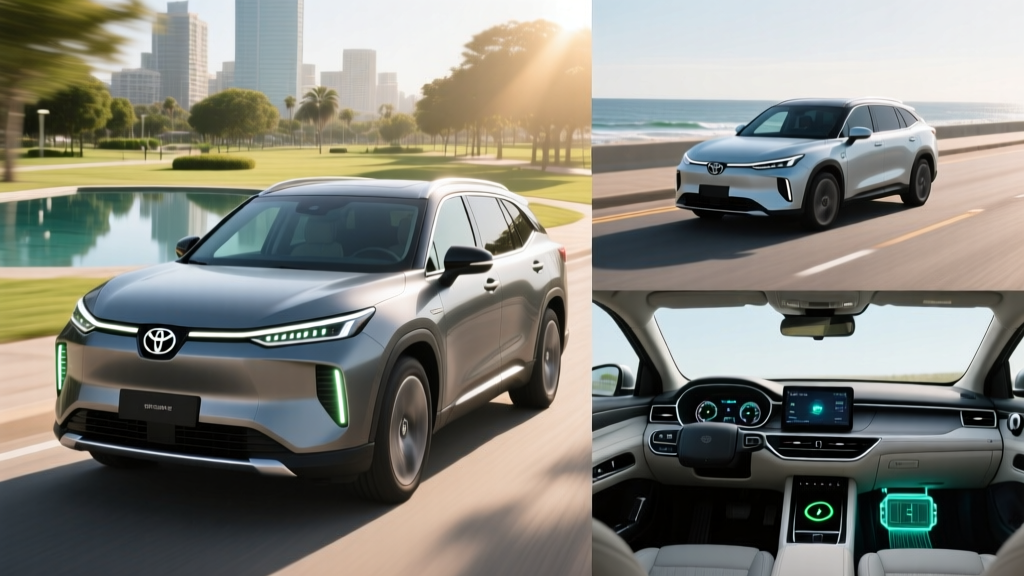
As of 2026, Toyota does not sell a fully electric (battery-electric) Grand Highlander. The lineup consists of two electrified powertrains: the standard Grand Highlander Hybrid (HEV, no plug) and the performance-oriented Hybrid MAX. Both are self-charging hybrids — no plug, no EV tax credit, no home charger needed. If you specifically need a battery-electric three-row SUV, you will need to look at the Kia EV9, Tesla Model Y (7-seat), or Rivian R1S. But if you want Toyota's three-row space with dramatically better fuel economy than a gas-only SUV, the Grand Highlander Hybrid is one of the most practical options available. Here is exactly what it delivers and what it costs to own.
What Powertrains Does the Grand Highlander Actually Offer?
The 2026 Toyota Grand Highlander carries over two hybrid configurations from its 2024 launch. Neither is a plug-in hybrid or battery-electric vehicle, so the search term "Grand Highlander EV" typically reflects buyer confusion rather than an available product.
- Grand Highlander Hybrid: 2.5L inline-4 paired with Toyota's fourth-generation hybrid system. Front-wheel or all-wheel drive. Net system output of 245 hp. EPA-estimated 37 mpg combined (FWD) or 34 mpg combined (AWD).
- Hybrid MAX: Turbocharged 2.4L inline-4 hybrid producing 362 hp and 400 lb-ft of torque. AWD only with a direct-shift 6-speed automatic (no e-CVT). EPA-estimated 27 mpg combined.
Both use Toyota's nickel-metal hydride (NiMH) and lithium-ion traction batteries depending on trim, housed under the rear seats to preserve cargo space. Neither requires plugging in — the battery charges via regenerative braking and the gasoline engine. This is a critical distinction: you will never access EV-only driving beyond brief low-speed creep, and you will never qualify for the federal §30D new clean vehicle tax credit, which applies only to plug-in vehicles.
| Spec | Hybrid (FWD) | Hybrid (AWD) | Hybrid MAX (AWD) |
|---|---|---|---|
| Powertrain | 2.5L I4 + e-motors | 2.5L I4 + e-motors | 2.4L Turbo I4 + e-motor |
| Net Horsepower | 245 hp | 245 hp | 362 hp |
| EPA Combined MPG | 37 mpg | 34 mpg | 27 mpg |
| EPA City / Highway | 37 / 34 mpg | 34 / 32 mpg | 26 / 27 mpg |
| Transmission | e-CVT | e-CVT | 6-speed auto |
| 0–60 mph (est.) | ~7.8 sec | ~7.5 sec | ~5.6 sec |
| Towing Capacity | 3,500 lbs | 3,500 lbs | 5,000 lbs |
| Federal EV Tax Credit | Not eligible | Not eligible | Not eligible |
For official EPA figures, the fueleconomy.gov comparison tool remains the definitive source for side-by-side MPG data.
Grand Highlander Hybrid vs. Gas-Only Three-Row SUVs
The Grand Highlander Hybrid's main competition isn't electric SUVs — it's other gas and hybrid three-row family haulers. Here is how the efficiency gap translates into real dollars over five years of ownership.
| Vehicle | Combined MPG | Fuel Type | Annual Fuel Cost | 5-Year Fuel Cost |
|---|---|---|---|---|
| Grand Highlander Hybrid (AWD) | 34 mpg | Regular | $1,544 | $7,720 |
| Grand Highlander Hybrid MAX (AWD) | 27 mpg | Premium | $2,333 | $11,667 |
| Chevrolet Traverse (gas, AWD) | 21 mpg | Regular | $2,500 | $12,500 |
| Ford Explorer (gas, AWD, 2.3L) | 23 mpg | Regular | $2,283 | $11,413 |
| Kia EV9 (AWD, BEV) | 85 MPGe | Electricity | ~$840 | ~$4,200 |
The standard Hybrid saves roughly $3,700–$4,800 in fuel over five years versus a comparable gas-only three-row SUV. The Hybrid MAX, despite its premium-badge performance, still beats the Traverse and roughly matches the Explorer on fuel cost while delivering 60+ more horsepower and significantly quicker acceleration.
If you cross-shop the fully electric Kia EV9, the BEV saves approximately $3,500 more over five years on energy alone — but the EV9 starts around $54,900 versus the Grand Highlander Hybrid at $40,720, so the fuel savings take years to close the price gap unless you qualify for the $7,500 federal EV tax credit.
Real-World Ownership Costs: The Full Picture
Fuel efficiency is just one line item. Here is a realistic 5-year total cost of ownership breakdown for the Grand Highlander Hybrid AWD (XLE trim, ~$46,000 MSRP) versus a gas-only competitor and a BEV alternative.
| Cost Category | Grand Highlander Hybrid AWD (XLE) | Chevy Traverse AWD (LT) | Kia EV9 AWD (Light) |
|---|---|---|---|
| MSRP | $46,000 | $44,000 | $59,900 |
| Federal Tax Credit | $0 | $0 | Up to $7,500* |
| Effective Purchase Price | $46,000 | $44,000 | $52,400 |
| Fuel/Energy (5 yrs) | $7,720 | $12,500 | $4,200 |
| Maintenance (5 yrs) | $3,200 | $4,500 | $2,000 |
| Insurance (5 yrs, avg.) | $9,500 | $9,000 | $10,500 |
| Estimated Depreciation | $18,400 | $20,000 | $22,000 |
| 5-Year Total | $84,820 | $90,000 | $91,100 |
*The §30D federal tax credit is subject to MSRP caps (SUVs ≤ $80,000), buyer income limits ($150K single / $300K joint), and battery critical-mineral and component sourcing rules. Always verify current-year eligibility on irs.gov before purchasing.
The Hybrid wins on total cost primarily because it avoids the BEV's higher purchase price and steeper depreciation while still delivering meaningful fuel savings. Maintenance costs are lower than the gas Traverse because hybrids reduce brake wear (regenerative braking) and eliminate some engine load, but they are not as low as a BEV, which has no oil changes, spark plugs, or transmission fluid.
Common Misconceptions About the Grand Highlander "EV"
Because the term "EV" gets applied loosely to any electrified vehicle, several misconceptions persist in forums and comment sections.
| Myth | Fact |
|---|---|
| "The Grand Highlander EV is coming soon." | As of 2026, Toyota has not announced a battery-electric Grand Highlander. Toyota's BEV three-row plans center on the bZ Large SUV concept, expected ~2026–2027 but not confirmed as a Grand Highlander nameplate. |
| "Hybrids qualify for the $7,500 federal tax credit." | Only plug-in electric vehicles (BEVs and PHEVs with ≥7 kWh battery) qualify under IRS §30D rules. Conventional hybrids like the Grand Highlander Hybrid are not eligible. |
| "You need a home charger for the Grand Highlander Hybrid." | It's a self-charging HEV. There is no plug and no charging port. You fuel it with gasoline like any other car. |
| "The hybrid battery will need expensive replacement." | Toyota covers the hybrid battery for 10 years / 150,000 miles. NiMH and Li-ion hybrid batteries in Toyota systems historically last well beyond warranty with gradual capacity loss, not sudden failure. |
| "Hybrid MAX is more fuel-efficient because it's newer." | The Hybrid MAX prioritizes performance (362 hp, 5.6-sec 0–60). At 27 mpg combined, it is significantly less efficient than the standard Hybrid at 34–37 mpg. |
Who Should Buy the Grand Highlander Hybrid — and Who Shouldn't
Your Decision Framework
Choose the Grand Highlander Hybrid (standard) if:
- You want three rows and maximum fuel efficiency without plugging in
- You lack access to reliable home or workplace charging
- Your annual mileage is high (15,000+ miles/year), making the MPG advantage financially significant
- You want Toyota's hybrid reliability track record and strong resale value
- You don't need to tow more than 3,500 lbs
Choose the Grand Highlander Hybrid MAX if:
- You want three rows with genuine performance (5.6-sec 0–60) and don't mind the fuel penalty
- You need 5,000-lb towing capacity for a boat or camper
- You value the 6-speed automatic over the e-CVT's drone under hard acceleration
Look elsewhere (BEV or PHEV) if:
- You have home Level 2 charging and want to eliminate gasoline entirely → consider the Kia EV9 (EPA range up to 304 mi, 210 kW DC fast charging)
- You want daily electric-only commuting with gas backup for road trips → no PHEV Grand Highlander exists; the closest equivalent is the Toyota Sienna PHEV (if available in your market) or the Chrysler Pacifica PHEV (32 mi electric-only, 30 mpg hybrid)
- You want to access the $7,500 federal tax credit → the Grand Highlander Hybrid does not qualify; you need a plug-in vehicle
Real-World Efficiency: What the EPA Sticker Doesn't Tell You
The EPA combined rating of 37 mpg for the FWD Hybrid is achievable in mixed suburban driving, but real-world conditions shift the number meaningfully:
- Highway-only at 75 mph: Expect 30–32 mpg. Hybrids lose their city advantage because regenerative braking opportunities diminish at sustained speed. The gas engine carries nearly all the load.
- City stop-and-go: You may see 38–42 mpg. This is where the hybrid system excels — frequent braking recharges the battery, and the electric motor handles low-speed propulsion.
- Cold weather (below 32°F): Expect a 10–15% drop, landing around 31–33 mpg combined. The engine runs more often to generate cabin heat and maintain battery temperature.
- Mountain driving / loaded with passengers and cargo: Real-world observations cluster around 28–31 mpg with a full load on steep grades. The Hybrid MAX will drop to the low 20s under the same conditions.
For the Hybrid MAX, real-world highway cruising yields roughly 25–26 mpg — close to its EPA rating but far from the standard Hybrid's efficiency. If fuel cost is your primary concern, the standard Hybrid is the clear winner. If towing and acceleration matter more, the MAX's 5,000-lb capacity and 362 hp justify the trade-off.
Warranty, Battery Longevity, and What to Expect at 100,000+ Miles
Toyota's hybrid warranty coverage is one of the strongest in the segment:
- Hybrid battery: 10 years / 150,000 miles (whichever comes first)
- Hybrid system components (inverter, e-motors, control modules): 8 years / 100,000 miles
- Basic vehicle warranty: 3 years / 36,000 miles
- Powertrain warranty: 5 years / 60,000 miles
Toyota's hybrid systems have accumulated billions of real-world miles across the Prius, Camry Hybrid, RAV4 Hybrid, and Highlander Hybrid lineups. The traction battery in a conventional HEV is relatively small (roughly 1.5–2.0 kWh in the Grand Highlander Hybrid) and is never deeply discharged, which dramatically extends cycle life compared to a BEV or PHEV battery. Most Toyota hybrid batteries last 150,000+ miles without replacement. If replacement is eventually needed, Toyota's remanufactured hybrid battery program typically costs $2,000–$3,500 installed — a fraction of a BEV battery swap.
Maintenance intervals are straightforward: oil changes every 10,000 miles, brake pads lasting 60,000–80,000 miles thanks to regenerative braking, and no transmission fluid changes on the e-CVT models. The Hybrid MAX's 6-speed automatic follows conventional service intervals.
Frequently Asked Questions
Will Toyota release a fully electric Grand Highlander?
Not as of 2026. Toyota has confirmed a bZ Large SUV for the North American market targeting the 2026–2027 timeframe, but it has not been confirmed as a Grand Highlander EV. Toyota's current strategy for three-row buyers remains hybrid-first. If a BEV Grand Highlander arrives, expect it no earlier than the 2028 model year.
Does the Grand Highlander Hybrid qualify for any tax credits?
No. The federal §30D new clean vehicle tax credit applies only to plug-in vehicles (BEVs and PHEVs). Some states offer small incentives for hybrids, but these vary widely by jurisdiction. Check your state's energy office or the Alternative Fuels Data Center for local programs.
How does the Grand Highlander Hybrid compare to the regular Highlander Hybrid?
The Grand Highlander adds approximately 6.5 inches of overall length, translating to a genuinely usable third row (adults can fit) and 33.5 inches of third-row legroom versus 27.7 inches in the standard Highlander Hybrid. Cargo space behind the third row jumps from 16.1 to 20.6 cubic feet. The trade-off: the Grand Highlander Hybrid gets 34–37 mpg combined versus 35–36 mpg for the regular Highlander Hybrid AWD — nearly identical efficiency in a substantially larger vehicle.
Is the Hybrid MAX worth the fuel economy penalty?
It depends on your priorities. The Hybrid MAX delivers 117 more horsepower, 5,000-lb towing (versus 3,500), and a 6-speed automatic that eliminates the e-CVT's rubber-band feel under hard acceleration. You sacrifice roughly 7 mpg combined, costing about $800/year more in fuel at 15,000 miles/year. If you tow regularly or want a performance-oriented three-row SUV, the premium is justified. If efficiency is paramount, stick with the standard Hybrid.
Can I tow with the Grand Highlander Hybrid?
Yes. The standard Hybrid is rated for 3,500 lbs — sufficient for a small boat, lightweight travel trailer, or a pair of ATVs. The Hybrid MAX bumps this to 5,000 lbs, competitive with body-on-frame midsize SUVs. For context, the gas-only Grand Highlander (2.4L turbo, non-hybrid) also tows 5,000 lbs but returns only 24 mpg combined.
What is the best Grand Highlander Hybrid trim for value?
The XLE AWD at approximately $46,000 hits the sweet spot: SofTex seats, heated front and second-row seats, a 12.3-inch touchscreen, wireless Apple CarPlay/Android Auto, and Toyota Safety Sense 3.0 (adaptive cruise, lane-keeping, automatic emergency braking). The Limited ($50,000+) adds premium features but pushes the price into Hybrid MAX territory. For budget-conscious buyers, the LE AWD starts at $42,120 with the same powertrain and safety suite.
The Grand Highlander Hybrid is not an EV, and no amount of keyword confusion changes that. What it is: a three-row, 34–37 mpg, no-plug-required family SUV with Toyota's hybrid reliability, a 10-year battery warranty, and real-world ownership costs that undercut nearly every gas-only competitor. If you need a plug, look at the Kia EV9 or wait for Toyota's bZ Large SUV. If you need three rows, low fuel costs, and zero charging hassle today, the Grand Highlander Hybrid is the pragmatic choice.