The Short Answer: There Is No All-Electric Grand Highlander Yet
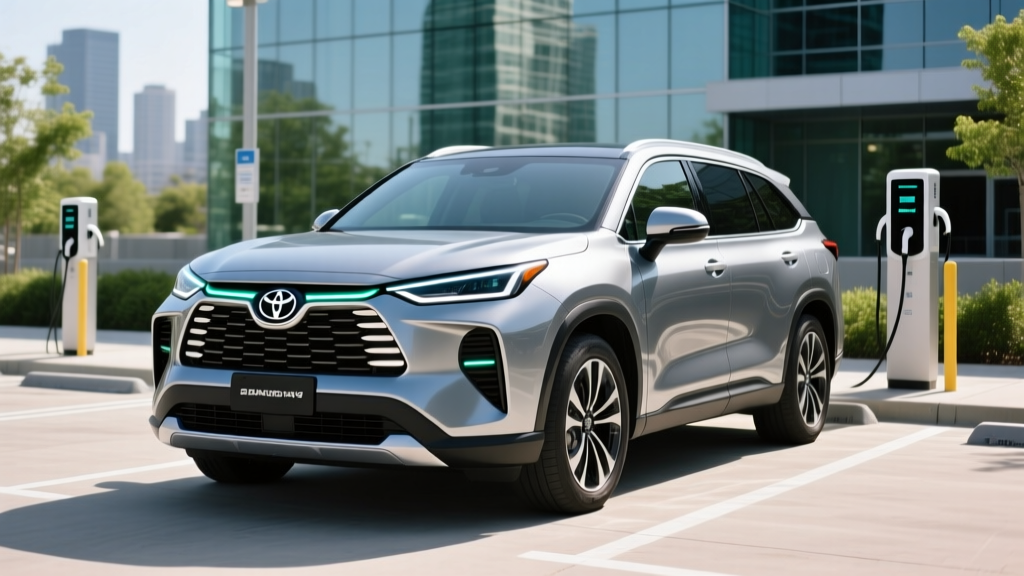
As of 2026, Toyota does not sell a fully electric (BEV) Grand Highlander. The Grand Highlander is available exclusively as a conventional hybrid (HEV) and a Hybrid MAX model. If you are searching for a "Toyota Grand Highlander EV" expecting a battery-electric, plug-in three-row SUV, that vehicle has not been announced for the U.S. market. The closest electrified Toyota three-row SUV you can actually buy today is the Grand Highlander Hybrid, which delivers an EPA-estimated 36 MPG combined (LE trim) without needing to plug in.
Toyota has committed to expanding its BEV lineup globally under its "BEV Factory" initiative, and an electric three-row SUV may arrive later this decade. But for 2026 buyers, the Grand Highlander Hybrid remains the electrified option. Below, we break down what you can actually buy, how the hybrid stacks up against gas and EV alternatives, and whether waiting for a future BEV makes financial sense.
2026 Toyota Grand Highlander Hybrid: What You Can Actually Buy
The 2026 Grand Highlander Hybrid carries over the powertrain and packaging introduced for the 2024 model year with minor trim and feature updates. It uses Toyota's fourth-generation hybrid system pairing a 2.5-liter four-cylinder engine with two electric motors (three on the AWD Hybrid MAX) for seamless electric-assist driving at low speeds and regenerative braking throughout. This is a self-charging HEV—not a plug-in hybrid (PHEV) and not a battery-electric vehicle (BEV). You never plug it in; the small traction battery recharges through engine power and regen braking.
| Spec | Hybrid (LE/XLE/Limited) | Hybrid MAX (Limited/Platinum) |
|---|---|---|
| Powertrain | 2.5L I4 + 2 electric motors | 2.4L turbo I4 + electric motor |
| Horsepower (net combined) | 245 hp | 362 hp |
| Drivetrain | FWD or AWD (electronic rear motor) | AWD standard |
| EPA Fuel Economy (city/hwy/combined) | 37/34/36 MPG (FWD LE) | 27/28/27 MPG |
| Fuel Tank Capacity | 17.1 gallons | 17.1 gallons |
| Est. Total Range | ~615 miles | ~462 miles |
| 0–60 mph | ~7.6 sec | ~6.3 sec |
| Seating | 7 or 8 passengers | 7 passengers |
| Cargo Volume (behind 3rd/2nd/1st row) | 20.6 / 57.9 / 97.5 cu ft | 20.6 / 57.9 / 97.5 cu ft |
| Towing Capacity | 3,500 lbs | 5,000 lbs |
| Starting MSRP (2026 est.) | ~$42,300 (LE FWD) | ~$53,400 (Limited) |
| Federal EV Tax Credit (§30D) | Not eligible (HEV) | Not eligible (HEV) |
| Hybrid Battery Warranty | 10 years / 150,000 miles | 10 years / 150,000 miles |
Sources: fueleconomy.gov, Toyota Grand Highlander official page.
Grand Highlander Hybrid vs. Gas vs. EV: The Real-World Cost Comparison
Since a BEV Grand Highlander doesn't exist, the practical cross-shopping decision for a three-row family hauler comes down to three paths: the Grand Highlander Hybrid, a conventional gas rival like the Ford Explorer or Hyundai Palisade, or stepping into a fully electric three-row SUV such as the Kia EV9 or Rivian R1S. Here's how the numbers shake out over five years of ownership.
| Cost Factor | Grand Highlander Hybrid (36 MPG) | Gas SUV Avg (22 MPG) | Kia EV9 LR AWD (279 mi range) |
|---|---|---|---|
| Estimated Purchase Price | $47,000 | $44,000 | $59,000 |
| Fed. EV Tax Credit (§30D) | $0 | $0 | Up to $7,500* |
| Fuel / Electricity (75k mi) | $6,250 | $10,227 | $3,375† |
| Maintenance (5 yr) | $3,200 | $4,500 | $1,800 |
| Insurance (5 yr est.) | $9,500 | $8,800 | $10,800 |
| Est. 5-Year Total Cost | $65,950 | $67,527 | $67,375 |
Assumptions: $3.50/gal gas, $0.15/kWh home charging, 75,000 miles over 5 years. Does not include state incentives, depreciation variance, or home charger installation. *§30D credit subject to MSRP caps ($80,000 for SUVs), buyer income limits ($300k MFJ / $150k single), and battery-sourcing requirements per IRS §30D guidelines. †EV9 electricity cost assumes 80% home / 20% public DC charging mix.
The Grand Highlander Hybrid essentially ties a BEV three-row SUV on five-year cost while avoiding charging logistics entirely. The gas SUV costs more in fuel but has a lower purchase price. The BEV option wins on fuel savings but demands home charging infrastructure and a higher upfront investment—partially offset by the federal credit if you qualify.
EV vs. Hybrid: Which Powertrain Fits Your Driving Pattern?
The right choice depends less on ideology and more on your daily reality. A hybrid like the Grand Highlander excels at flexibility—you can take a 600-mile road trip without planning charging stops, tow a trailer without range collapse, and never worry about cold-weather battery losses. A BEV wins on per-mile energy cost, zero tailpipe emissions, and reduced maintenance, but it requires reliable charging access and route planning for long trips.
| Your Situation | Best Fit | Why |
|---|---|---|
| Home charging (Level 2) available, mostly <60 mi/day | BEV (Kia EV9, Rivian R1S) | Cheapest per-mile cost, wake up "full" daily, no gas station visits |
| No home charging, apartment/condo living | HEV (Grand Highlander Hybrid) | No plug-in needed; public DC charging is expensive and inconvenient for daily use |
| Frequent long road trips (>300 mi) | HEV (Grand Highlander Hybrid) | 615-mile total range, 5-min refuel, no charging-desert risk |
| Cold-climate state (MN, ND, ME) | HEV or PHEV | BEVs lose 20–30% range at 20°F; hybrid unaffected |
| Towing >3,500 lbs regularly | Hybrid MAX or gas SUV | Towing can cut BEV range by 40–50%; gas/hybrid unaffected |
| Short commute + occasional long trips, garage parking | PHEV (if available in your size) | Electric daily driving, gas backup for road trips; Toyota doesn't offer a 3-row PHEV currently |
Real-World Ownership Considerations Buyers Overlook
Home Charging Is the Make-or-Break Factor for BEVs
If you are considering waiting for a future Toyota BEV or buying a Kia EV9 now, home charging access is non-negotiable for a good ownership experience. A Level 2 home charger (240V, 40–48 amps) adds roughly 25–30 miles of range per hour of charging and costs between $800 and $2,500 installed depending on whether your electrical panel needs a 200-amp upgrade. Without home charging, you'll rely on public DC fast chargers at $0.30–$0.50/kWh—effectively tripling your per-mile cost and adding 20–40 minutes of waiting per session.
Cold Weather Punishes EVs, Not Hybrids
In sub-freezing temperatures, BEVs typically lose 20–30% of their EPA-rated range due to battery chemistry limitations and cabin heating demands. A Grand Highlander Hybrid's fuel economy drops only marginally in winter (perhaps 1–2 MPG) because the gasoline engine provides waste heat for the cabin. If you live where January averages below 30°F, a hybrid is the more predictable choice for year-round range consistency.
Insurance Costs Differ
BEVs typically carry 15–25% higher insurance premiums than comparable gas or hybrid vehicles due to higher repair costs for battery packs and specialized body structures. Factor this into your five-year budget—the $1,300/year gap shown in our cost table above adds up.
Common Misconceptions About the Grand Highlander and Electrification
| Myth | Fact |
|---|---|
| "The Grand Highlander EV is available now." | No BEV Grand Highlander exists. Only HEV and Hybrid MAX powertrains are offered for 2026. |
| "The Grand Highlander Hybrid qualifies for the $7,500 federal EV tax credit." | Incorrect. IRS §30D credits apply only to plug-in electric vehicles (BEVs and PHEVs) meeting battery-sourcing, MSRP, and income requirements. Self-charging hybrids are ineligible. |
| "Hybrids have expensive battery replacements." | Toyota covers the hybrid battery for 10 years/150,000 miles. Real-world data shows Toyota hybrid batteries lasting 180,000–250,000+ miles with gradual capacity loss. Out-of-pocket replacement runs $2,500–$4,000 if needed—rare within typical ownership periods. |
| "I should wait for Toyota's electric SUV." | Toyota has announced a next-generation BEV platform via its BEV Factory concept, but no three-row electric SUV has a confirmed U.S. launch date. Waiting 2–4+ years means paying current gas prices in the meantime. |
| "Hybrids don't save that much fuel." | At 36 MPG combined vs. a typical gas three-row SUV at 22 MPG, the Grand Highlander Hybrid saves roughly $3,977 over 75,000 miles (at $3.50/gal)—and more if gas prices rise. |
What a First-Time Electrified Vehicle Buyer Should Know
If the Grand Highlander Hybrid is your first step away from a conventional gas vehicle, here are the practical realities:
- No plug, no behavior change. You fuel it like a normal car. The hybrid system manages electric assist automatically—you don't "drive it differently."
- Regenerative braking feels different at first. Lifting off the accelerator slows the car more than a gas vehicle as the electric motor recaptures energy. You'll adjust within a day.
- Maintenance is actually simpler. No alternator, no starter motor, and brake pads last longer thanks to regen braking. Oil changes remain but at standard intervals.
- The hybrid system is proven. Toyota has sold over 25 million hybrid vehicles globally since 1997. The system's reliability is among the best-documented in the auto industry.
- Resale value is strong. Toyota hybrids historically hold value well, with the Grand Highlander Hybrid projected to retain 55–60% of its value after three years based on segment trends.
Decision Framework: Should You Buy Now or Wait?
If-Then Buying Guide
- IF you need a three-row SUV now and want lower fuel costs without changing your driving habits → Buy the 2026 Grand Highlander Hybrid. It delivers 36 MPG, 615-mile range, no plug-in requirement, and strong reliability.
- IF you have home charging, drive under 80 miles/day, and rarely tow → Consider the Kia EV9 or Rivian R1S now. Lower per-mile cost, zero tailpipe emissions, and available §30D credit (verify eligibility).
- IF you want a Toyota BEV specifically → You'll need to wait. No timeline is confirmed. Monitor Toyota's U.S. press releases and be prepared for a 2028–2030+ window for a potential electric three-row SUV.
- IF you need max towing (5,000+ lbs) and want performance → Grand Highlander Hybrid MAX delivers 362 hp and 5,000-lb towing, though fuel economy drops to 27 MPG combined.
- IF you live in a cold state and take long winter road trips → Hybrid is the safer bet. BEV range loss in cold weather is substantial and charging infrastructure remains sparse in rural northern regions.
Frequently Asked Questions
Will Toyota make a fully electric Grand Highlander?
Toyota has not announced a BEV Grand Highlander for the U.S. market as of 2026. The company's global BEV roadmap includes multiple three-row SUV concepts, but no production timeline or U.S. pricing has been confirmed. Toyota has historically been cautious with BEV rollouts in North America, prioritizing hybrids and PHEVs in the near term.
Does the Grand Highlander Hybrid need to be plugged in?
No. The Grand Highlander Hybrid is a conventional HEV (hybrid electric vehicle), not a plug-in. Its small traction battery charges through the gasoline engine and regenerative braking. You fuel it at a gas station like any other vehicle.
How much does the Grand Highlander Hybrid save vs. a gas SUV?
At 36 MPG combined vs. 22 MPG for a typical gas three-row SUV, and assuming $3.50/gallon over 15,000 miles per year, the hybrid saves approximately $795 per year or roughly $3,977 over five years in fuel costs alone. Savings increase if gas prices rise.
What is the hybrid battery warranty on the Grand Highlander?
Toyota covers the hybrid battery for 10 years or 150,000 miles, whichever comes first. This applies to all 50 states. The broader powertrain warranty is 5 years/60,000 miles, and the basic vehicle warranty is 3 years/36,000 miles.
Is the Grand Highlander Hybrid eligible for any tax credits?
The federal §30D Clean Vehicle Credit does not apply to conventional hybrids—only to BEVs and PHEVs that meet MSRP, income, and battery-sourcing requirements. Some states offer incentives for hybrids, but these vary widely. Check your state's energy or DMV website for current programs. Consult a tax professional for eligibility details per IRS guidelines.
How does the Grand Highlander Hybrid compare to the Kia EV9 on road trips?
On long road trips, the Grand Highlander Hybrid has a decisive advantage: 615 miles of total range and 5-minute refueling at any gas station. The Kia EV9 (EPA 279-mile range for LR AWD) requires DC fast-charging stops every 200–250 miles in real-world highway driving, adding 20–35 minutes per stop. For families taking frequent 400+ mile trips, the hybrid's logistics are significantly simpler.
What's the real-world MPG of the Grand Highlander Hybrid?
The EPA rates the FWD LE at 37 city / 34 highway / 36 combined. In real-world mixed driving, owners typically report 33–36 MPG. Highway-only driving at 75+ mph may drop to 30–32 MPG. Cold weather reduces economy by roughly 1–3 MPG. The Hybrid MAX, tuned for performance, delivers 27 MPG combined in both EPA and real-world use.