Quick Answer: What Buyers Actually Mean by "Toyota Electric Cycle"
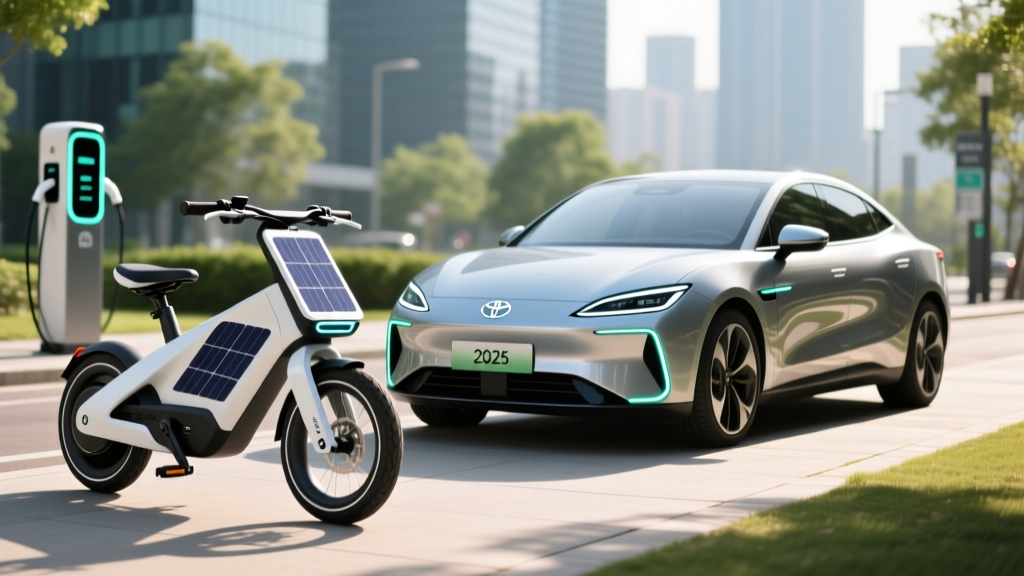
There is no Toyota-branded "electric cycle" (e-bike or scooter) sold in the U.S. — Toyota's electrified lineup in 2026 consists of the bZ4X BEV, the bZ4X-based SUV variant, and a growing roster of hybrids/PHEVs (RAV4 Prime, Prius Prime, Highlander Hybrid). When U.S. shoppers search "Toyota electric cycle," they're typically asking one of three things:
- Does Toyota sell an electric scooter or e-bike? No — not in the U.S. market.
- What is the driving/charging cycle (routine) of owning a Toyota EV like the bZ4X?
- How does Toyota's EV efficiency cycle rating (EPA MPGe, Wh/mi) compare to gas or hybrid alternatives?
This guide answers all three with real numbers: EPA range, kWh capacity, charging speeds, 2026 §30D tax-credit eligibility, and a concrete decision framework to decide whether a Toyota BEV, a Toyota PHEV, or a non-Toyota EV fits your driving cycle.
The 2026 Toyota Electrified Lineup: BEV, PHEV, and Hybrid at a Glance
Toyota's U.S. strategy in 2026 still leans heavily on hybrids, with the bZ4X as its sole mass-market battery-electric vehicle. Here's how the key models stack up on the metrics that matter to buyers — range, efficiency, price, and federal credit eligibility under current IRS §30D rules.
| Model | Powertrain | EPA Range (EV mode) | Battery / Chemistry | MPGe / MPG Combined | Base MSRP | §30D Credit Eligible? |
|---|---|---|---|---|---|---|
| bZ4X (FWD) | BEV | 252 mi | 71.4 kWh / NMC | 114 MPGe | ~$43,070 | Yes — up to $7,500 (subject to sourcing & income caps) |
| bZ4X (AWD) | BEV | 228 mi | 71.4 kWh / NMC | 102 MPGe | ~$46,070 | Yes — up to $7,500 |
| RAV4 Prime | PHEV | 42 mi EV + ~500 mi total | 18.1 kWh / NMC | 94 MPGe / 38 MPG | ~$44,500 | Yes — up to $7,500 (SUV cap $80k) |
| Prius Prime | PHEV | 44 mi EV | 13.6 kWh / NMC | 127 MPGe / 52 MPG | ~$33,445 | Yes — up to $3,750 (partial sourcing) |
| RAV4 Hybrid | HEV | N/A (gas) | 1.6 kWh / NiMH | 40 MPG | ~$32,600 | No |
Sources: fueleconomy.gov, Toyota Motor Corporation 2026 spec sheets. §30D eligibility depends on battery critical-mineral and component sourcing, buyer AGI, and MSRP caps — confirm at the IRS site or with a tax professional before purchase.
Real-World Driving Cycle: bZ4X Range, Efficiency, and Charging Reality
The bZ4X's EPA-rated 252 miles (FWD) is a useful baseline, but your actual driving cycle will deviate based on climate, speed, and terrain. Here's what testing and owner data show:
bZ4X FWD — EPA vs Real-World Range
- EPA sticker: 252 miles
- 70-mph highway loop (65°F): ~215–230 miles
- City/suburban mixed (moderate regen): ~240–260 miles
- Cold weather (25°F, cabin heat on): ~165–190 miles (30–35% loss typical for NMC packs without aggressive heat-pump preconditioning)
- Mountain/towing: ~150–180 miles
Charging Speed: The Curve That Actually Matters
The bZ4X peaks at 150 kW DC (FWD) / 150 kW (AWD) on a CCS1 connector. Peak rate is not sustained rate — here's the real charging cycle:
- 10–80% SoC: ~30 minutes at a 150+ kW CCS station
- 80–100%: an additional ~40+ minutes (taper is steep — avoid unless necessary)
- Level 2 home (7.2 kW / 32A): ~9.5 hours from empty; overnight-friendly
- Level 1 (120V / 12A): ~1.4 kW, adds ~4–5 miles per hour — emergency-only
kW vs kWh refresher: kW is charge power (flow rate); kWh is battery energy (tank size). The bZ4X's 71.4 kWh battery charged at a sustained 7.2 kW fills in ~10 hours — basic physics.
Cost Breakdown: Toyota BEV vs PHEV vs Gas Over 5 Years
Upfront MSRP tells only part of the ownership story. Below is a 5-year/75,000-mile total cost of ownership (TCO) estimate for three realistic options, assuming 15,000 miles/year, $3.50/gal gas, $0.16/kWh home electricity, and current federal credit rules.
| Cost Category | bZ4X FWD (BEV) | RAV4 Prime (PHEV) | RAV4 Hybrid (HEV) |
|---|---|---|---|
| Base MSRP | $43,070 | $44,500 | $32,600 |
| Federal §30D credit | −$7,500* | −$7,500* | $0 |
| Net purchase | $35,570 | $37,000 | $32,600 |
| Home charger install (L2) | $800–$1,800 | $800–$1,800 | $0 |
| Fuel / electricity (5 yr) | $1,800 | $2,900 | $6,560 |
| Maintenance (5 yr) | $1,200 | $2,100 | $2,400 |
| Insurance (5 yr avg) | $8,500 | $7,800 | $7,200 |
| 5-Year TCO (approx) | $47,870–$48,870 | $50,600–$51,600 | $48,760 |
*§30D credit is subject to AGI limits ($150k single / $300k joint), MSRP caps ($55k cars / $80k SUVs), and battery-sourcing requirements that shift annually. Confirm eligibility at point of sale.
Key takeaway: The bZ4X BEV wins on fuel and maintenance but carries higher insurance premiums (typical for EVs). The RAV4 Prime PHEV is the sweet spot for drivers without reliable home charging or who take frequent long trips. The RAV4 Hybrid is cheapest upfront but loses the credit and costs more to fuel.
EV vs Hybrid vs Gas: Which Driving Cycle Fits You?
The right choice depends less on the vehicle and more on your personal driving and charging cycle. Use this framework:
If-Then Decision Framework
- If you have Level 2 home charging AND drive under 200 miles/day AND live in a mild climate → choose the bZ4X BEV. Lowest running cost, quietest, simplest maintenance.
- If you lack home charging OR regularly drive 300+ miles in a day OR live in a cold region with sparse DC infrastructure → choose the RAV4 Prime PHEV. 42-mile EV commute covers most daily needs; gas engine eliminates range anxiety.
- If you want low upfront cost, don't want to plug in, and drive mostly suburban miles → choose the RAV4 Hybrid. 40 MPG combined, no behavior change, no credit paperwork.
- If you need three rows → wait. Toyota has no 3-row BEV in the U.S. for 2026; the Grand Highlander is hybrid-only. Consider the Kia EV9 or Tesla Model X instead.
- If you're searching for a "Toyota electric cycle" as an e-bike/scooter → look outside Toyota. Brands like Rad Power, Lectric, and Gazelle dominate U.S. e-mobility; Toyota does not sell these here.
Common Misconceptions — Myth vs Fact
| Myth | Fact |
|---|---|
| "Toyota doesn't make electric cars." | Toyota sells the bZ4X BEV in all 50 states; it's their first dedicated EV on the e-TNGA platform. |
| "EV batteries need replacement every 5 years." | Toyota warranties the bZ4X battery for 8 years / 100,000 miles (10/150k in CARB states) against falling below 70% capacity. Real-world NMC degradation averages 10–15% over 150k miles. |
| "Charging an EV costs as much as gas." | At $0.16/kWh national average, the bZ4X costs ~$0.045/mile on home power vs ~$0.14/mile for a 25-MPG gas car. Public DC fast charging is pricier ($0.40–$0.55/kWh) but still usually beats gas per mile. |
| "The bZ4X can self-drive." | Toyota Safety Sense 3.0 is a SAE Level 2 driver-assist suite (lane centering + adaptive cruise). The driver must remain engaged — it is not autonomous. |
| "You can't drive an EV in winter." | You can, but expect 25–35% range loss in sub-freezing temps. Preconditioning the cabin and battery while plugged in recovers much of that loss. |
First-Time Toyota EV Buyer Checklist
If you've never owned an electrified vehicle, these are the non-obvious ownership realities to plan for:
- Confirm home charging feasibility before ordering. A licensed electrician should verify your panel has 40A of spare capacity for a 32A Level 2 circuit. Panel upgrades can add $1,500–$4,000.
- Map your public charging options. The bZ4X uses CCS1 — compatible with Electrify America, EVgo, and most non-Tesla networks. With an adapter, NACS Tesla Superchargers are now accessible, but verify adapter availability for your model year.
- Verify §30D eligibility before signing. Battery sourcing rules tighten annually. Use the IRS VIN-lookup tool at the dealer to confirm your specific vehicle qualifies.
- Budget for insurance. EV premiums run 15–25% higher than equivalent gas models — get quotes from GEICO, Progressive, and specialty EV insurers before committing.
- Understand the charge curve. Don't plan road trips around "150 kW" peak rates — plan around the 10–80% time (~30 min) and add a buffer for cold weather or high SoC starts.
- Set charging limits. For daily driving, cap SoC at 80% to extend NMC battery life; charge to 100% only before long trips.
Frequently Asked Questions
Does Toyota sell an electric bike, scooter, or "electric cycle" in the U.S.?
No. Toyota's U.S. product line does not include e-bikes, e-scooters, or electric motorcycles. The search term "Toyota electric cycle" most often refers either to the bZ4X's driving/charging cycle or is a mislabeled query. For electric two-wheelers, look to dedicated brands like Rad Power, Super73, or Lectric.
Is the Toyota bZ4X eligible for the full $7,500 federal tax credit in 2026?
Often yes, but eligibility depends on three moving targets: (1) your adjusted gross income (must be under $150k single / $225k HOH / $300k joint), (2) the vehicle's MSRP (must be under $55k for sedans or $80k for SUVs — bZ4X qualifies as an SUV), and (3) battery critical-mineral and component sourcing thresholds that increase each year. Use the IRS VIN-lookup tool or consult a tax professional to confirm before purchase. Point-of-sale transfer is available at participating dealers.
How does the bZ4X compare to the Hyundai Ioniq 5 or Tesla Model Y?
The bZ4X trails both on charging speed (Ioniq 5 peaks at 240+ kW vs bZ4X's 150 kW) and range (Model Y Long Range AWD hits 310+ EPA miles vs bZ4X's 252). Where Toyota competes is dealer service network, brand trust, and available AWD. If fast DC charging is your top priority, the Ioniq 5 or Kia EV6 wins. If range is paramount, the Model Y. If dealership familiarity matters, the bZ4X holds its ground.
What is the real cost to charge a Toyota bZ4X at home?
A full 71.4 kWh charge at $0.16/kWh costs about $11.42, yielding roughly 252 EPA miles — about $0.045 per mile. Compare that to $3.50/gal gas in a 25-MPG RAV4 Hybrid at $0.14 per mile. Over 15,000 miles/year, home EV charging saves roughly $1,400 annually.
Should I wait for a future Toyota EV with bigger range?
Toyota has announced next-gen batteries targeting 2027–2028 with 500+ mile range and 10-minute 10–80% charging, but these are preliminary and not yet on sale. If you need a vehicle now, buy on today's specs — don't wait for announced tech that may slip timelines or arrive at a premium price.
Data sources: fueleconomy.gov, IRS §30D guidance, Toyota Motor North America 2026 product specifications. Prices and credit rules reflect 2026 model year and are subject to change.