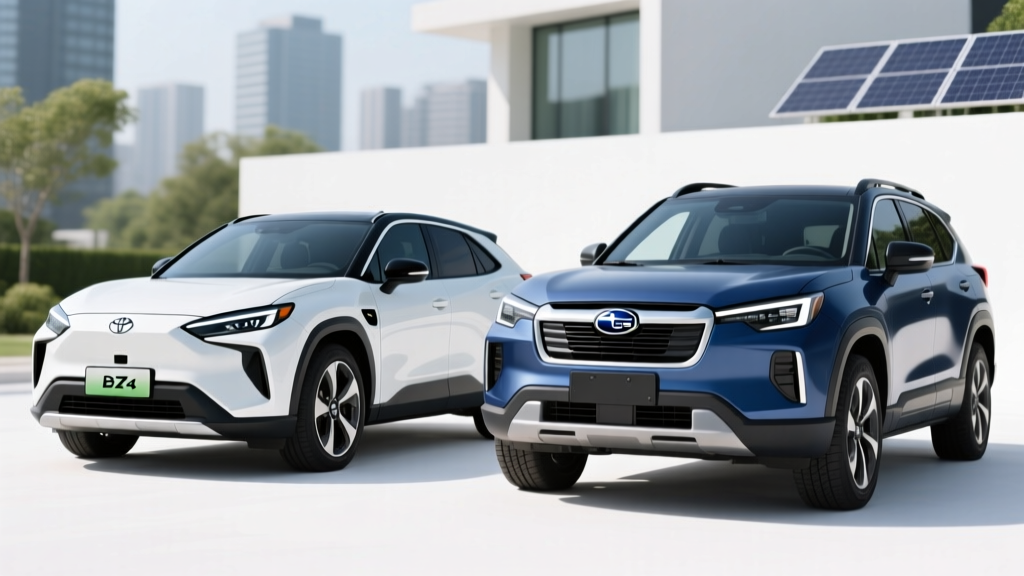
If you've been searching for "ev bz" models, you're likely weighing the Toyota bZ4X against its twin, the Subaru Solterra—two electric SUVs built on the shared e-TNGA platform. Here's the quick answer: the 2026 Toyota bZ4X offers up to 252 miles of EPA range, DC fast-charging up to 150 kW, and starts around $38,465, making it a practical midsize electric SUV for daily commuting and moderate road trips. The Subaru Solterra mirrors those specs but adds standard AWD and 8.3 inches of ground clearance for light off-pavement use. Neither qualifies for the full $7,500 federal tax credit under current §30D battery-sourcing rules, which is a critical factor in your purchase math.
Understanding the EV bZ Platform: What Toyota and Subaru Built Together
The "bZ" in Toyota's naming stands for "Beyond Zero," the brand's umbrella for battery-electric vehicles. The bZ4X was Toyota's first mass-market global EV, launched for the 2023 model year on the e-TNGA (electric Toyota New Global Architecture) platform. Subaru co-developed this platform and sells its version as the Solterra. For 2026, both vehicles share a 71.4 kWh usable lithium-ion battery pack (NMC chemistry), identical wheelbases, and the same basic powertrain options—but with key differences in tuning, standard equipment, and pricing.
Both vehicles are assembled at Toyota's Motomachi plant in Japan. That matters for the federal tax credit: because the battery cells and critical minerals don't currently meet the IRS §30D sourcing requirements, neither the bZ4X nor the Solterra qualifies for the $7,500 new clean vehicle credit as of 2026. Always verify current eligibility on the IRS website before purchasing, as sourcing rules update annually.
Range, Efficiency, and Real-World Expectations
The EPA range figures tell part of the story, but real-world driving conditions significantly shift the numbers. Here's what fueleconomy.gov lists alongside what you should actually plan for:
| Metric | bZ4X FWD | bZ4X AWD | Solterra (AWD) |
|---|---|---|---|
| EPA Range | 252 mi | 228 mi | 227 mi |
| Combined MPGe | 119 MPGe | 107 MPGe | 104 MPGe |
| kWh/100 mi | 28 | 31 | 32 |
| Battery (usable) | 71.4 kWh NMC | 71.4 kWh NMC | 71.4 kWh NMC |
| Horsepower | 201 hp | 214 hp | 215 hp |
| 0–60 mph | ~7.1 sec | ~6.5 sec | ~6.5 sec |
Charging Speed: The bZ Platform's Known Limitation
DC fast charging is where the bZ4X and Solterra face their most honest criticism. Both vehicles peak at approximately 150 kW on a DC fast charger, but the charge curve tapers aggressively. A 10–80% charge takes roughly 30 minutes under ideal conditions (battery preconditioned, ambient temperature 65–80°F). That's noticeably slower than competitors like the Hyundai Ioniq 5 (18 minutes at 240 kW peak) or the Tesla Model Y (roughly 20 minutes at 250 kW peak).
| Charging Level | Power (kW) | Speed | Use Case |
|---|---|---|---|
| Level 1 (120V) | ~1.4 kW | ~4 mi/hr | Emergency/trickle only |
| Level 2 (240V, 32A) | ~7.7 kW | ~23 mi/hr | Home/overnight (9–10 hr full charge) |
| Level 2 (240V, 48A) | ~11.5 kW | ~34 mi/hr | Faster home (6–7 hr full charge) |
| DC Fast Charge | Peak 150 kW | 10–80% in ~30 min | Road trips (CCS1 connector) |
Both vehicles use the CCS1 connector standard for DC fast charging. Note: Toyota and Subaru have not announced NACS (Tesla Supercharger) compatibility for current bZ-platform vehicles, though adapters may become available. For road-trip planning, rely on Electrify America, EVgo, and ChargePoint DC networks.
The critical ownership insight: home Level 2 charging is nearly essential for the bZ4X/Solterra. Relying solely on public DC fast charging means 30-minute stops and exposure to charger downtime. Budget $800–$2,200 for a quality Level 2 home charger and professional installation (assuming your electrical panel has capacity; a 200-amp panel upgrade adds $1,500–$3,500).
Pricing, Tax Credits, and Total Cost of Ownership
Here's where the purchase decision gets concrete. The 2026 Toyota bZ4X starts at approximately $38,465 (XLE FWD, including destination). The fully loaded Limited AWD climbs to about $47,000. The Subaru Solterra starts around $39,995 (Premium trim, AWD standard) and tops out near $48,000 (Touring).
| Cost Category | bZ4X XLE FWD | Solterra Premium AWD | Gas SUV Baseline (RAV4 AWD) |
|---|---|---|---|
| Base MSRP | $38,465 | $39,995 | $33,500 |
| Federal Tax Credit (§30D) | $0 (sourcing) | $0 (sourcing) | N/A |
| Annual Fuel/Energy (15k mi) | ~$540 | ~$570 | ~$1,800 |
| Annual Maintenance | ~$200 | ~$200 | ~$650 |
| 5-Year Fuel + Maintenance | ~$3,700 | ~$3,850 | ~$12,250 |
| Estimated 5-Year Insurance | ~$9,500 | ~$9,800 | ~$7,500 |
The 5-year math: Even without the federal tax credit, the bZ4X saves roughly $8,500 in fuel and maintenance over five years compared to a gas RAV4. However, the higher purchase price and insurance premiums (EVs typically cost 15–25% more to insure) eat into those savings. The net 5-year total cost of ownership advantage for the bZ4X over the RAV4 is approximately $2,000–$4,000, depending on your local electricity rates, insurance quotes, and state incentives. Check your state's EV rebate programs separately—states like California, Colorado, and Massachusetts offer additional credits that can shift the math significantly.
Both Toyota and Subaru provide an 8-year/100,000-mile battery warranty covering defects and capacity loss below 70% state of health. That's industry-standard and should provide long-term peace of mind.
Common EV bZ Misconceptions—Corrected with Data
| Myth | Fact |
|---|---|
| "The bZ4X gets 252 miles no matter what." | 252 miles is the EPA combined estimate for FWD. Highway driving at 75 mph yields ~210 miles. Cold weather (below freezing) can drop range to 160–190 miles. AWD models rate at 228 miles EPA. |
| "It qualifies for the $7,500 federal tax credit." | As of 2026, neither the bZ4X nor Solterra meets the IRS §30D battery component and critical mineral sourcing requirements. Verify annually—rules can change. |
| "I can fast-charge it in 15 minutes." | The 150 kW peak rate and aggressive taper above 80% mean 10–80% takes ~30 minutes under ideal conditions. Cold batteries without preconditioning will charge even slower. |
| "The Solterra and bZ4X are identical." | They share the platform and battery, but Subaru tunes the suspension for off-pavement comfort, includes standard AWD, adds X-MODE for low-traction surfaces, and provides 8.3 inches of ground clearance vs. the bZ4X's ~7.5 inches. |
| "I don't need home charging." | Public DC charging at $0.35–$0.50/kWh costs nearly as much per mile as gas. Home Level 2 at $0.12–$0.18/kWh is where the fuel savings materialize. Without home charging, the TCO advantage largely disappears. |
EV bZ vs. Gas and Hybrid: Which Powertrain Fits Your Life?
| Factor | bZ4X / Solterra (BEV) | RAV4 Hybrid (HEV) | RAV4 Prime (PHEV) |
|---|---|---|---|
| EPA Range / EV Range | 228–252 mi | ~580 mi (gas) | 42 mi EV + ~550 mi gas |
| MPGe / MPG Combined | 104–119 MPGe | 40 MPG | 94 MPGe / 38 MPG |
| Annual Fuel Cost (15k mi) | $540–$570 | ~$1,350 | ~$700–$1,100 |
| Home Charging Needed? | Essential | No | Highly recommended |
| Road-Trip Convenience | 30-min charge stops | 5-min gas stops | 5-min gas stops |
| Federal Tax Credit | $0 | $0 | Up to $7,500* |
| Starting MSRP | $38,465 | $33,500 | $44,500 |
*RAV4 Prime §30D eligibility varies by model year and sourcing—confirm at irs.gov.
The RAV4 Hybrid is the pragmatic choice if you lack home charging, frequently drive over 300 miles in a day, or live in an area with sparse public charging infrastructure. The RAV4 Prime (PHEV) gives you 42 miles of electric-only commuting with no range anxiety—but at a $44,500+ starting price, it's the most expensive option upfront. The bZ4X/Solterra wins on running costs and refinement if you can charge at home and your daily driving stays under 200 miles.
Decision Framework: Should You Buy the EV bZ?
Choose the Toyota bZ4X if:
- You have access to Level 2 home charging (garage or driveway with 240V outlet)
- Your daily commute is under 150 miles round-trip
- You want the lowest per-mile energy cost and minimal maintenance
- You prefer FWD efficiency and the longest possible range (252 mi EPA)
- You value Toyota's dealer network for service
Choose the Subaru Solterra if:
- You need AWD for snow, rain, or light off-pavement driving
- Ground clearance matters (8.3 inches vs. bZ4X's ~7.5 inches)
- You want Subaru's X-MODE traction system for low-grip surfaces
- You live in a region with harsh winters and value Subaru's AWD reputation
Choose a Hybrid (RAV4 Hybrid/Prime) instead if:
- You cannot install a home charger (apartment, street parking)
- You regularly drive 300+ miles in a single day
- You live in a charging desert (rural areas with sparse DC infrastructure)
- Upfront purchase price is your primary constraint
- You frequently tow (the bZ platform is rated for only 2,200 lbs; a RAV4 gas/hybrid handles similar but with more refueling flexibility)
First-Time EV Buyer Essentials for the bZ Platform
If this is your first EV purchase, here's what the brochures don't emphasize:
1. Install Level 2 charging before delivery day. A 240V/32-amp circuit with a quality EVSE ( ChargePoint Home Flex, Emporia Vue, or similar—$500–$750 for hardware) gives you roughly 23 miles of range per hour of charging. A full overnight charge (8 hours) replenishes ~180 miles. Have a licensed electrician assess your panel; most homes with 200-amp service can accommodate a Level 2 circuit without an upgrade.
2. Understand the charge curve. The bZ4X peaks at 150 kW only between roughly 10–40% state of charge. From 40–80%, the rate tapers to 50–80 kW. Above 80%, it drops below 25 kW to protect the battery. This is why the 10–80% time (~30 minutes) is the meaningful metric—not the peak kW number.
3. Precondition before fast charging. Both vehicles have battery preconditioning for DC fast charging. Navigate to a charger using the built-in navigation, and the car will warm the battery to optimal temperature. Skip this step in cold weather and your charge time may double.
4. Budget for tires. EVs are heavier and deliver instant torque, wearing tires 20–30% faster than gas equivalents. Budget $800–$1,200 for a set of replacement tires every 30,000–40,000 miles.
5. Check NHTSA safety ratings and IIHS crash test results for the specific model year. The bZ4X has earned strong scores in key crash-test categories, but always verify current-year data.
Frequently Asked Questions
Can the Toyota bZ4X or Subaru Solterra use Tesla Superchargers?
Not natively. Both vehicles use the CCS1 connector, while Tesla Superchargers use the NACS connector. As of 2026, Toyota and Subaru have not announced factory NACS ports for the bZ platform. Third-party CCS-to-NACS adapters exist but verify compatibility and safety certifications before relying on one. For road trips, plan around Electrify America, EVgo, and ChargePoint DC networks.
How long will the bZ4X battery last?
Toyota and Subaru warranty the battery for 8 years or 100,000 miles against defects and capacity loss below 70% state of health. Real-world data from early 2023 models suggests NMC packs in this platform degrade roughly 1–2% per year under normal use. At that rate, you'd retain approximately 85–90% capacity after 5 years and 75,000 miles. Out-of-warranty battery replacement, if ever needed, is estimated at $12,000–$18,000 based on current parts pricing.
Is the bZ4X good in cold weather?
It's adequate but not class-leading. The heat pump (standard on most trims) helps cabin efficiency, but expect 25–35% range loss in sustained sub-freezing temperatures. The AWD models (bZ4X AWD, all Solterras) provide confident traction. Preconditioning the cabin while plugged in preserves range. If you live in Minnesota, Montana, or similar climates, a garage is strongly recommended.
What does it cost to charge the bZ4X at home?
The 71.4 kWh battery, charged from near-empty to full at the US average residential rate of $0.16/kWh, costs approximately $11.40. That delivers roughly 220–250 real-world miles. Compare that to $45–$55 for the equivalent distance in a 28-MPG gas SUV at $3.50/gallon. Over 15,000 annual miles, home charging saves roughly $1,000–$1,300 per year versus gas.
Should I lease instead of buy?
Leasing can be smart for the bZ4X/Solterra because it sidesteps the tax-credit issue—some manufacturers pass through a $7,500 lease credit (structured as a commercial clean vehicle credit under §45W) even when the purchase credit isn't available. Ask the dealer specifically about lease incentives. Leasing also protects you from EV depreciation, which has been steeper than gas-car depreciation in recent years.