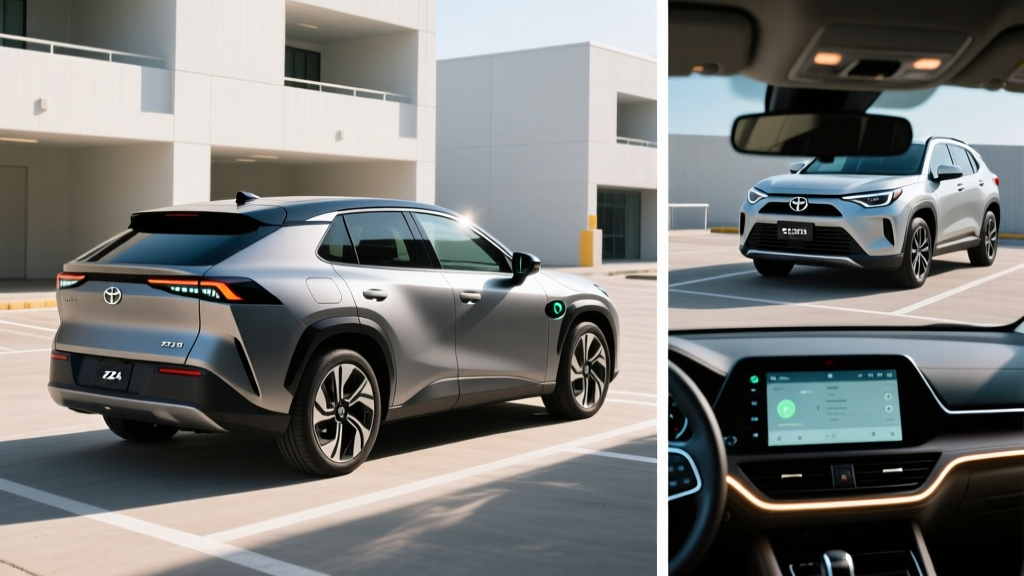
Toyota's electric vehicle lineup remains narrow in 2025, anchored primarily by the bZ4X crossover SUV. If you're searching for a "Toyota electric cycle" expecting a broad EV catalog, the reality is more focused: Toyota has prioritized hybrids and plug-in hybrids, with the bZ4X as its main battery-electric offering. For the 2025 model year, the bZ4X delivers an EPA-estimated 252 miles of range (FWD), DC fast charging up to 150 kW, and a starting MSRP of approximately $37,070 (before incentives). It does not currently qualify for the full $7,500 federal §30D tax credit due to battery-sourcing requirements, though point-of-sale lease credits may apply. If your daily driving is under 60 miles and you have reliable home Level 2 charging, the bZ4X is a competent commuter. If you regularly exceed 300 miles between charges or live in a cold climate without garage parking, a Toyota hybrid or PHEV like the RAV4 Prime may serve you better.
Quick Answer: Toyota's Electric Option in 2025
The 2025 Toyota bZ4X is Toyota's primary all-electric vehicle. It offers 222–252 miles of EPA range depending on drivetrain, 0–60 mph in ~6.7 seconds (FWD), and starts around $37,070. It's best suited for suburban commuters with home charging. Toyota's hybrid lineup (RAV4 Hybrid, Camry Hybrid, Prius) remains more versatile for drivers without consistent charging access or those covering longer distances.
2025 Toyota bZ4X: Specs, Range & Charging at a Glance
| Specification | FWD | AWD |
|---|---|---|
| EPA Range | 252 miles | 222 miles |
| Battery (usable) | 64.8 kWh (NMC) | 64.8 kWh (NMC) |
| MPGe (combined) | 119 MPGe | 104 MPGe |
| Peak DC Fast Charge | 150 kW (CCS) | 150 kW (CCS) |
| 10–80% DC Charge Time | ~30 minutes | ~30 minutes |
| Level 2 (240V) Rate | 6.6 kW (~25 mi/hr) | 6.6 kW (~25 mi/hr) |
| Horsepower | 201 hp | 214 hp |
| 0–60 mph | 6.7 sec | 5.8 sec |
| Base MSRP | ~$37,070 | ~$40,080 |
| Battery Warranty | 8 yrs / 100,000 mi | 8 yrs / 100,000 mi |
⚡ Real-World Range Reality Check
The EPA's 252-mile estimate assumes mixed driving at moderate temperatures. On sustained highway trips at 70+ mph, expect ~210–225 miles before needing to charge. In sub-freezing winter conditions (below 32°F), range can drop to ~175–195 miles due to battery chemistry limitations and cabin heating demand. Plan road trips around 180-mile segments in winter for a safety buffer. Source: fueleconomy.gov.
bZ4X vs RAV4 Hybrid: The Cost & Practicality Showdown
Toyota's strength lies in its hybrid lineup, and the 2025 RAV4 Hybrid is the natural comparison point for shoppers considering the bZ4X. Here's how they stack up on the metrics that matter to your wallet and daily routine:
| Factor | 2025 bZ4X (FWD) | 2025 RAV4 Hybrid (AWD) |
|---|---|---|
| Base MSRP | ~$37,070 | ~$33,575 |
| EPA Efficiency | 119 MPGe / 28 kWh/100mi | 39 MPG combined |
| Range / Tank | 252 mi (electric) | ~580 mi (14.5-gal tank) |
| Fuel/Energy Cost per Mile | ~$0.04–0.06 (home L2) | ~$0.09–0.11 (gas at $3.50/gal) |
| "Refuel" Time | ~8 hrs (L2 home) / 30 min (DC 10–80%) | ~5 min (gas station) |
| Annual Maintenance | ~$300–400 (no oil, fewer fluids) | ~$600–800 (oil, filters, belts) |
| Federal Tax Credit (§30D) | Not eligible (purchase); lease may qualify for $7,500 pass-through | N/A (hybrid, not a BEV/PHEV) |
| Cargo Volume | 27.7 cu ft (rear up) | 37.6 cu ft (rear up) |
The takeaway: The bZ4X costs roughly $3,500 more upfront and offers about half the total range of a RAV4 Hybrid. However, if you charge at home on off-peak electricity rates (~$0.12/kWh), you'll spend roughly $500–650 per year on energy versus $1,200–1,400 on gasoline for the RAV4 Hybrid (assuming 12,000 miles/year). That's a $600–800 annual fuel savings, meaning the bZ4X's price premium pays for itself in approximately 4–6 years through energy costs alone — before factoring in lower maintenance.
Real Costs of Owning the bZ4X: A 5-Year Breakdown
| Cost Category (5 Years) | bZ4X FWD | RAV4 Hybrid AWD |
|---|---|---|
| Purchase Price (base) | $37,070 | $33,575 |
| Federal Tax Credit | $0 (purchase)* / up to $7,500 (lease) | N/A |
| Energy/Fuel (60,000 mi) | ~$2,700 (home charging) | ~$6,500 (gas) |
| Maintenance (5 yrs) | ~$1,750 | ~$3,500 |
| Insurance (est. avg) | ~$9,000 | ~$7,500 |
| Home Charger Install | $800–2,000 (one-time) | $0 |
| Total 5-Year Cost (purchase) | ~$49,320–$51,520 | ~$51,075 |
| Total 5-Year Cost (lease w/ credit) | ~$42,820–$44,020 | ~$51,075 |
*As of 2025, the bZ4X does not meet the §30D critical-mineral and battery-component sourcing thresholds for the purchase credit. However, leasing through a dealership can allow the lessor to claim the $7,500 commercial clean vehicle credit (§45W) and pass savings to the lessee as a capitalized-cost reduction. Verify current rules at IRS.gov.
The bZ4X becomes the clear financial winner only if you lease and receive the $7,500 credit pass-through, saving roughly $7,000–8,000 over five years versus the RAV4 Hybrid. Purchasing outright results in roughly comparable total costs, with the bZ4X's fuel savings offsetting its higher purchase price and insurance premiums.
Charging the bZ4X: What You Actually Need at Home
The bZ4X uses the CCS1 (Combined Charging System) connector for both Level 2 AC and DC fast charging. Here's what that means practically:
Level 1 (120V household outlet): Adds roughly 3–4 miles of range per hour. A full charge from empty takes 20+ hours. This works only if your daily driving is under 30 miles and you can leave the car plugged in overnight.
Level 2 (240V, 32A–48A home charger): At the bZ4X's 6.6 kW onboard charger limit, you'll add about 25 miles of range per hour. A full charge from 10% to 100% takes roughly 9–10 hours. This is the practical minimum for comfortable EV ownership.
DC Fast Charging (public): The bZ4X peaks at 150 kW on CCS-equipped stations (Electrify America, EVgo, ChargePoint). You'll go from 10% to 80% in approximately 30 minutes. Note that the charge curve tapers significantly above 80%, so the final 20% can take an additional 20+ minutes. For road trips, plan stops at 80% to minimize time spent charging.
Home installation cost: Expect to pay $800–2,000 for a quality Level 2 charger (e.g., ChargePoint Home Flex, Emporia Vue) plus electrician labor for a 240V/50A circuit. If your home's electrical panel needs an upgrade from 100A to 200A service, add $1,500–3,000. Always get a quote from a licensed electrician before purchasing.
Common bZ4X Misconceptions — Separated From Fact
| Myth | Fact |
|---|---|
| "The bZ4X gets the full $7,500 tax credit if I buy it." | As of 2025, it does not qualify for the §30D purchase credit due to battery-sourcing rules. Leasing may unlock a $7,500 pass-through via §45W. Check IRS.gov for current eligibility. |
| "252 miles of range is enough for any road trip." | Highway driving at 70+ mph reduces range to ~210–225 miles. In winter, expect ~175–195 miles. You'll need to stop every 2.5–3 hours on long trips. |
| "EVs don't need any maintenance." | The bZ4X still requires tire rotations, cabin air filter replacement, brake fluid checks, and wiper fluid. Regenerative braking reduces brake pad wear significantly, but tires wear faster due to the vehicle's weight (~4,300 lbs). |
| "I can charge on any Tesla Supercharger." | The bZ4X uses CCS1, not NACS. While Tesla has opened some Superchargers to non-Tesla EVs via a built-in adapter or the Tesla app, coverage is limited and you need the Magic Dock-equipped stations. Plan with PlugShare or the EA/EVgo apps for reliable public charging. |
| "The battery will need expensive replacement in 5 years." | Toyota warranties the bZ4X battery for 8 years/100,000 miles against capacity loss below 70%. NMC chemistry typically degrades ~1–2% per year under normal use. Most EV batteries outlast the vehicle itself. |
Decision Framework: Should You Buy the bZ4X, a Toyota Hybrid, or Look Elsewhere?
Choose the Toyota bZ4X if:
- You have access to Level 2 home charging (garage or driveway with a 240V circuit).
- Your daily commute is under 80 miles round-trip, with occasional longer trips you can plan around DC fast chargers.
- You plan to lease and can benefit from the $7,500 credit pass-through.
- You value quiet, smooth electric drivetrain performance and lower per-mile energy costs.
- You live in a mild-to-moderate climate where winter range loss is manageable.
Choose a Toyota Hybrid (RAV4 Hybrid, Camry Hybrid, Prius) if:
- You lack reliable home charging access (apartment, street parking, no garage).
- You regularly drive 300+ miles between stops or travel in rural areas with sparse charging infrastructure.
- You live in a region with harsh winters where 30%+ range loss would create anxiety.
- You want maximum cargo space (the RAV4 Hybrid offers 37.6 cu ft vs 27.7 cu ft in the bZ4X).
- You prefer a lower upfront purchase price with no charging installation costs.
Look at Other EVs (Hyundai Ioniq 5, Tesla Model Y, Chevrolet Equinox EV) if:
- You want 300+ miles of real-world range without frequent charging stops.
- You need faster DC charging (the Ioniq 5 peaks at 240 kW; 10–80% in ~18 minutes).
- You want eligibility for the full $7,500 federal purchase credit (check current IRS sourcing lists).
- You prefer NACS native compatibility for broader Tesla Supercharger access.
Frequently Asked Questions
Does Toyota make any other fully electric vehicles besides the bZ4X?
As of the 2025 model year, the bZ4X is Toyota's only mass-market battery-electric vehicle sold in the United States. Toyota has announced a broader EV roadmap including additional bZ-series models, but none are currently available for purchase. Toyota's electrified strategy leans heavily on hybrids (18+ hybrid models) and the upcoming solid-state battery technology expected later this decade.
Is the bZ4X eligible for any state or local incentives?
Possibly. Several states offer additional rebates or HOV lane access for EV purchases — California's CVRP, Colorado's state credit, and various utility company rebates are examples. However, these vary by jurisdiction, income, and vehicle eligibility. Check your state's energy office or AFDC's incentive database for current programs in your area.
How does the bZ4X's charging speed compare to competitors?
The bZ4X's peak of 150 kW is moderate by 2025 standards. The Hyundai Ioniq 5 and Kia EV6 (both on the E-GMP platform) peak at ~240 kW and can charge 10–80% in about 18 minutes. The Tesla Model Y peaks at ~250 kW on V3 Superchargers. The bZ4X's 30-minute 10–80% charge is adequate but noticeably slower on road trips, adding roughly 5–10 minutes per stop compared to the fastest-charging competitors.
What happens if I charge the bZ4X exclusively on Level 1 (120V)?
Level 1 charging adds roughly 3–4 miles per hour. Over a 12-hour overnight plug-in, you'd gain about 36–48 miles of range — sufficient only if your daily driving is under 35 miles. Level 1 also runs the battery thermal management system less efficiently. For long-term battery health and practical daily use, a Level 2 home charger is strongly recommended.
Can I tow with the bZ4X?
The 2025 bZ4X has a maximum towing capacity of approximately 2,000 lbs (AWD) when properly equipped. This is suitable for a small utility trailer or lightweight camper but significantly less than the RAV4 Hybrid's 3,500-lb rating or the Ford F-150 Lightning's 7,700+ lb capacity. Towing also reduces EV range by 30–50%, so plan accordingly.
What's the real insurance cost difference for the bZ4X vs a RAV4 Hybrid?
EV insurance premiums typically run 15–25% higher than comparable gas or hybrid vehicles due to higher repair costs (specialized parts, battery replacement risk, and fewer qualified body shops). Expect to pay roughly $1,800–2,200/year for the bZ4X versus $1,400–1,700/year for the RAV4 Hybrid, though rates vary significantly by driver profile, location, and insurer. Always get quotes before purchasing.
Sources: EPA fueleconomy.gov, IRS §30D Clean Vehicle Credits, Toyota bZ4X Official Specs, IIHS Safety Ratings. All pricing and incentive data reflect 2025 model year information available at time of writing; verify current figures with your dealer and tax professional.