The Short Answer on Timo Electric Jet Boats and EVs
If you've landed here searching for Timo electric jet boats, here's the direct truth: Timo is a niche marine brand producing small electric-powered personal watercraft and jet boats, and they fall entirely outside the scope of road-legal electric vehicles. AutoEdgeView covers EVs, PHEVs, and smart cars — not marine craft, e-bikes, or recreational watercraft.
However, if you're researching electric propulsion broadly and weighing whether to put your money into an electric boat or an electric car, this guide breaks down the real numbers. A 2026 EV like the Hyundai Ioniq 5 (EPA 318 miles, ~$42,000 base) offers daily utility an electric jet boat simply cannot. Below, we compare the costs, infrastructure, and ownership realities so you can decide where your electrification dollars go first.
Why Timo Electric Jet Boats Show Up in EV Searches
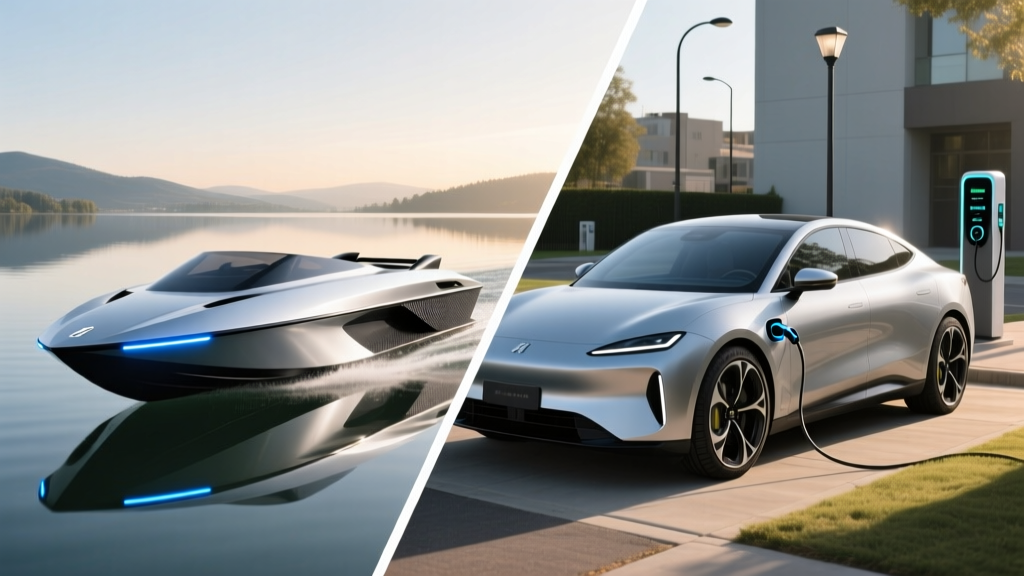
Electric jet boats from brands like Timo share core technology with electric cars: lithium-ion battery packs (typically NMC chemistry), electric motors, and regenerative systems. The overlap in terminology — kWh, kW, range, charging — causes search engines to surface marine products alongside car content.
But the practical differences are massive. A Timo-style electric jet boat typically carries a 10–30 kWh battery pack, delivers 30–60 minutes of runtime at cruising speed, and requires shore-power or marina-based charging. Compare that to a road-going EV with a 58–100 kWh battery, 250–400 miles of EPA range, and access to a growing national DC fast-charging network. The use cases don't overlap — one is recreation, the other is transportation.
Electric Jet Boat vs Electric Car: The Numbers
Let's put concrete 2026 figures side by side. For the EV column, we're using the EPA's EV data for a mainstream model (Hyundai Ioniq 5 SEL). For the electric jet boat column, we're using representative specs from the small electric jet boat category (similar to Timo-class craft).
| Spec / Metric | Electric Jet Boat (Timo-class) | 2026 Hyundai Ioniq 5 SEL (EV) | Gas Car Baseline (Toyota Camry LE) |
|---|---|---|---|
| Base Price | $25,000–$45,000 | $42,600 MSRP | $28,700 MSRP |
| Battery / Tank | ~20 kWh NMC | 84 kWh usable (NMC) | 13.2 gal fuel tank |
| Range / Runtime | 40–70 miles or 1–2 hrs | 318 mi EPA (~260 mi real-world hwy) | ~450 mi (34 MPG combined) |
| Charging / Refueling | 6–10 hrs (Level 1/2 shore) | 10–80% in ~18 min (peak 240 kW DC) | 5 min at gas station |
| Energy/Fuel Cost per Mile | ~$0.08–$0.12/mi (electricity) | ~$0.04–$0.06/mi (home charging) | ~$0.10–$0.13/mi (gas at $3.40/gal) |
| Federal Tax Credit (§30D) | Not eligible (not a road vehicle) | Up to $7,500 (subject to IRS sourcing rules) | None |
| Annual Maintenance | $200–$500 (impeller, hull, winterize) | ~$300–$500 (tires, cabin filter, wipers) | ~$600–$900 (oil, filters, brakes) |
| Insurance (avg annual) | $800–$1,500 (marine policy) | $1,400–$2,200 (EV premium) | $1,100–$1,700 |
| Utility | Recreation only | Daily driver, commuting, road trips | Daily driver |
Real Ownership Costs: Where Your Dollar Goes Further
The most common question from buyers eyeing both an electric boat and an EV is: which gives me more value? The answer depends on whether you need transportation or recreation — but the math is clear.
| 5-Year Cost Category | Electric Jet Boat ($35K avg) | EV – Ioniq 5 ($42,600) | Gas Sedan ($28,700) |
|---|---|---|---|
| Purchase (after credits) | $35,000 (no credit) | ~$35,100 (est. $7,500 credit applied at POS) | $28,700 |
| Energy/Fuel (5 yrs) | $1,500 (est. 300 hrs use) | $3,500 (home charging, 12K mi/yr) | $7,000 (34 MPG, $3.40/gal) |
| Maintenance (5 yrs) | $2,000 | $2,000 | $4,000 |
| Insurance (5 yrs) | $5,500 | $9,000 | $7,000 |
| Depreciation (est.) | -$14,000 (~40%) | -$17,000 (~40%) | -$12,000 (~42%) |
| Total 5-Yr Cost | ~$30,000 | ~$32,600 | ~$30,700 |
| Cost per useful mile/hour | ~$20/hr of recreation | ~$0.54/mile driven | ~$0.51/mile driven |
The EV and gas sedan deliver comparable total costs over five years, but the EV provides daily transportation for 60,000 miles. The electric jet boat costs roughly the same but provides only recreational hours. If your goal is to reduce daily expenses and emissions, the EV wins decisively.
Charging Infrastructure: Shore Power vs the Road Network
One of the biggest ownership realities for any electric vehicle — car or boat — is charging access. Here's where EVs have an enormous advantage in 2026.
Electric Jet Boat Charging
Most small electric jet boats charge via standard 120V or 240V shore-power connections at marinas or from a garage outlet. A 20 kWh battery on a 120V (1.4 kW) outlet takes roughly 14 hours for a full charge. On a 240V Level 2 setup (7.2 kW), that drops to about 3 hours. The constraint is location: you need physical access to a marina slip with power, a boat lift with an outlet, or a garage where you store the boat on a trailer.
EV Charging in 2026
The U.S. EV charging network has expanded significantly. Tesla's Supercharger network (now open to NACS-equipped vehicles from Ford, GM, Rivian, and others) and Electrify America's CCS stations cover most interstate corridors. At home, a Level 2 charger (9.6–11.5 kW) fully replenishes most EVs overnight.
| Charging Level | Power (kW) | EV Miles Added/Hr | Jet Boat Equivalent |
|---|---|---|---|
| Level 1 (120V) | 1.4 kW | 3–5 mi/hr | ~1.5 hrs runtime per 10-hr charge |
| Level 2 (240V) | 7.2–11.5 kW | 20–40 mi/hr | Full charge in ~3 hrs (20 kWh pack) |
| DC Fast Charge | 50–350 kW | 150–800 mi/hr (peak) | Not available for most boats |
Critical distinction: kW (kilowatts) measures the rate of energy flow — how fast you're charging. kWh (kilowatt-hours) measures total energy stored — your battery's capacity. A 240 kW DC fast charger (rate) filling an 84 kWh battery (capacity) from 10–80% in roughly 18 minutes is the EV equivalent of a quick gas stop. Electric jet boats have no DC fast-charging standard today.
Common Misconceptions About Electric Propulsion
| Myth | Fact |
|---|---|
| "Electric boats and EVs use the same batteries." | Both use lithium-ion cells, but marine packs require waterproofing (IP67+), different thermal management, and marine-certified BMS systems. You cannot swap them. |
| "Electric jet boats qualify for the federal EV tax credit." | The IRS §30D credit applies only to qualified on-road motor vehicles with 4 wheels. Boats, off-road vehicles, and marine craft are excluded. |
| "An electric jet boat saves as much money as an EV." | EVs replace daily gas spending (often $150–$300/month). Electric boats replace fuel for occasional recreation — the dollar savings are far smaller. |
| "EVs can't handle cold weather, so an electric boat won't either." | Cold reduces EV range by 15–30% (verified in AAA and IIHS-adjacent testing). Marine batteries face similar losses, plus water temperature affects motor efficiency. Both need thermal preconditioning. |
| "I can charge an electric boat at any marina." | Many marinas only offer 30A or 50A shore power (3.6–12 kW). You need to confirm voltage, amperage, and connector compatibility before docking. |
Decision Framework: EV, Electric Boat, or Both?
Choose an EV first if:
- You need daily transportation and want to eliminate gas spending
- You have access to home charging (garage, driveway, or workplace Level 2)
- You drive 10,000+ miles per year — the fuel savings compound fast
- You want to leverage the up-to-$7,500 federal tax credit (check IRS eligibility for income caps, MSRP limits, and battery-sourcing requirements)
Choose an electric jet boat if:
- You already own a reliable daily driver and want quiet, emission-free recreation
- You have lakefront property, a marina slip with shore power, or trailer storage with 240V access
- You prioritize low noise and zero exhaust on the water (ideal for fishing, shallow rivers, and no-wake zones)
- You understand it's a leisure purchase, not a cost-saving transportation decision
Consider both if:
- Your household budget supports a $70K+ combined outlay across EV + electric boat
- You have a 200A electrical panel (or room for an upgrade — budget $1,500–$3,000 for panel work) to support both a home EV charger and boat charging
- You live in a state with additional EV incentives that can offset the car purchase, freeing budget for the boat
What First-Time EV Buyers Must Know (That Boat Buyers Don't Worry About)
If you're pivoting from researching Timo electric jet boats to seriously considering an EV, here are the ownership realities that matter most in 2026:
Home Charging Is Non-Negotiable for Most Owners
Over 80% of EV charging happens at home. A Level 2 home charger (240V, 40–48A) costs $500–$800 for the unit plus $800–$2,500 for professional electrical installation (depending on panel capacity and run distance from your breaker box). If your home has a 100A panel, you may need a $1,500–$3,000 upgrade to 200A. Without home charging, public-only EV ownership is viable but less convenient and more expensive per kWh.
Real-World Range vs EPA Stickers
The EPA range on the window sticker is a laboratory estimate. In real-world highway driving at 70–80 mph, expect 80–85% of the EPA figure. In freezing temperatures (below 32°F), that drops to 65–75% due to battery chemistry limitations and cabin heating demand. An EV rated at 318 miles EPA may deliver 210–250 miles on a cold-weather road trip. Plan accordingly.
Tax Credit Eligibility Is Complicated
The federal §30D credit offers up to $7,500, but eligibility depends on your income (AGI caps: $150K single, $300K joint), the vehicle's MSRP (under $55K for sedans, $80K for SUVs/trucks), and battery mineral sourcing requirements that shift annually. The credit can now be transferred to the dealer at point of sale, reducing your purchase price directly. Always verify current-year rules on IRS.gov and consult a tax professional before assuming eligibility.
Insurance Costs More for EVs
EV insurance premiums run 15–25% higher than comparable gas vehicles due to higher repair costs (specialized body shops, battery replacement risk). Budget an extra $200–$500/year. Some insurers offer EV-specific discounts — shop multiple quotes.
Frequently Asked Questions
Do Timo electric jet boats qualify for any federal tax incentives?
No. The IRS §30D clean vehicle credit applies exclusively to qualified on-road motor vehicles with four wheels. Marine craft, including electric jet boats, are not eligible. Some states offer separate clean-energy rebates for marine electrification — check your state's energy office for current programs.
What's the real cost to charge an EV vs fueling a gas car in 2026?
At the U.S. average residential electricity rate of ~$0.17/kWh, charging an EV with a 3.0 mi/kWh efficiency costs roughly $0.057/mile. At $3.40/gallon gas and 30 MPG combined, a gas car costs ~$0.113/mile. That's roughly a 50% per-mile savings with home EV charging. Public DC fast charging is more expensive — typically $0.35–$0.55/kWh, narrowing the gap.
Can I charge an electric jet boat and an EV from the same home electrical panel?
Possibly, but it depends on your panel capacity. A Level 2 EV charger draws 40–48A at 240V. An electric boat charger may draw 20–30A. Combined, that's 60–78A of continuous 240V load, which requires at minimum a 200A panel with adequate spare breaker slots. A licensed electrician should perform a load calculation before you commit to both.
How long do EV batteries last compared to electric boat batteries?
Road EVs typically carry 8-year/100,000-mile battery warranties with a 70% capacity retention guarantee. Real-world data shows most NMC packs lose 10–15% capacity over 8 years. Marine battery packs endure fewer total cycles (recreational use) but face harsher environments (moisture, vibration, salt air). Expect similar calendar degradation — roughly 2–3% per year — regardless of whether the pack is in a car or a boat.
Is an electric jet boat a good "first step" before buying an EV?
Not really. The ownership experience is fundamentally different: no DC fast charging, no road use, no daily utility, and no federal tax incentives. If you want to experience electric propulsion before committing to an EV, consider a plug-in hybrid (PHEV) like the Toyota RAV4 Prime (42 miles electric-only, then hybrid) — it gives you a taste of electric driving with the safety net of a gas engine, starting around $43,000.