The 2026 Tesla Lineup at a Glance
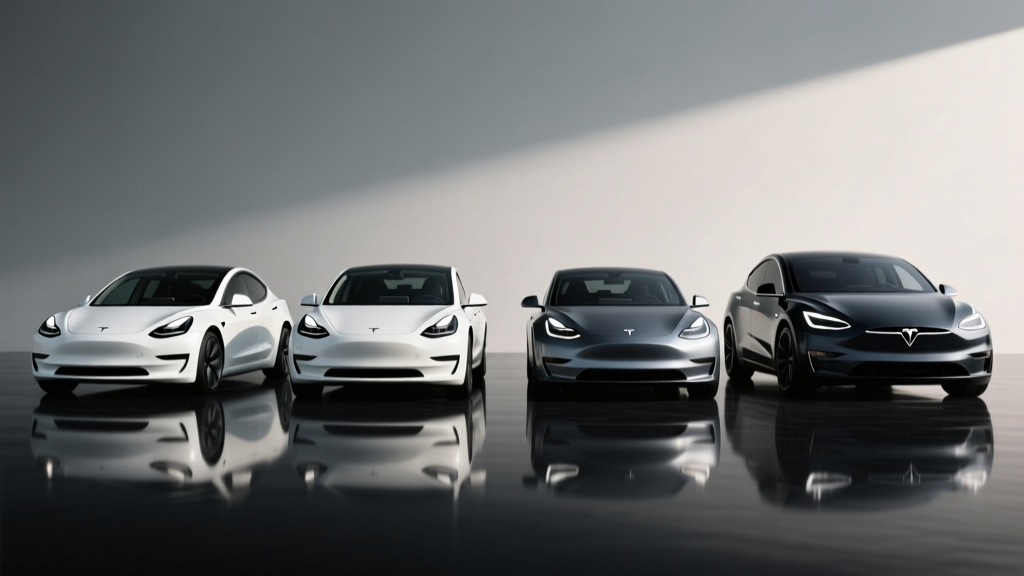
Choosing between Tesla's four consumer vehicles isn't just about budget — it's about how you'll use the car daily. A Tesla size comparison across the Model 3 sedan, Model Y crossover, Model S luxury sedan, and Model X SUV reveals meaningful differences in range, charging speed, cargo utility, and ownership cost that spec sheets alone don't capture. Below, we break down every dimension that matters to real buyers in 2026.
Side-by-Side Spec Table: Every Tesla, Measured
| Spec | Model 3 Long Range AWD | Model Y Long Range AWD | Model S Long Range | Model X Long Range |
|---|---|---|---|---|
| EPA Range | 363 mi | 320 mi | 402 mi | 335 mi |
| Real-World Highway (~75 mph) | ~300–310 mi | ~270–285 mi | ~340–355 mi | ~280–295 mi |
| Battery (usable, chemistry) | ~79 kWh, NMC | ~78 kWh, NMC | ~100 kWh, NMC | ~100 kWh, NMC |
| Efficiency (MPGe combined) | 134 MPGe | 122 MPGe | 124 MPGe | 109 MPGe |
| Peak DC Fast Charge | 250 kW | 250 kW | 250 kW | 250 kW |
| 10–80% DCFC Time | ~25 min | ~27 min | ~30 min | ~32 min |
| Level 2 Charge Rate | 11.5 kW (44 mi/hr) | 11.5 kW (41 mi/hr) | 11.5 kW (41 mi/hr) | 11.5 kW (35 mi/hr) |
| 0–60 mph | 4.2 sec | 4.8 sec | 3.1 sec | 3.8 sec |
| Horsepower | 346 hp | 384 hp | 670 hp | 670 hp |
| Cargo (rear + frunk) | 23 cu ft + 3.1 cu ft | 34 cu ft + 4.1 cu ft (76 cu ft folded) | 28 cu ft + 3.1 cu ft | 88 cu ft + 6.6 cu ft (seats folded) |
| Seating | 5 | 5 (optional 7) | 5 | 5, 6, or 7 |
| Base MSRP (2026) | $47,740 | $48,990 | $79,990 | $84,990 |
| Federal Tax Credit (§30D) | Eligible (up to $7,500) | Eligible (up to $7,500) | Not eligible (MSRP cap) | Not eligible (MSRP cap) |
| Warranty (battery/drivetrain) | 8 yr / 120,000 mi | 8 yr / 120,000 mi | 8 yr / 150,000 mi | 8 yr / 150,000 mi |
Sources: fueleconomy.gov, Tesla specifications. Pricing reflects base MSRP before destination; tax credit eligibility per IRS §30D rules — subject to income caps, battery sourcing requirements, and point-of-sale transfer availability.
Category Winners: Where Each Tesla Excels
🏆 Range & Efficiency Winner: Model S Long Range
At 402 miles EPA and 124 MPGe combined, the Model S delivers the longest legs in the lineup. Its larger 100 kWh battery and sedan aerodynamics (lower drag coefficient than the crossovers) give it a meaningful edge on road trips. Real-world highway range of ~340 miles means fewer charging stops on long hauls.
🏆 Value Winner: Model 3 Long Range
At $47,740 MSRP — and potentially $40,240 after the $7,500 federal tax credit — the Model 3 Long Range delivers 363 miles of EPA range at 134 MPGe. No other Tesla comes close on cost-per-mile-of-range. It's also the most energy-efficient, meaning lower electricity costs over ownership.
🏆 Cargo & Utility Winner: Model X
With up to 88 cu ft of cargo space (seats folded) and available 6- or 7-seat configurations, the Model X is the only Tesla for larger families or gear-heavy lifestyles. The falcon-wing rear doors also ease car-seat installation in tight parking spots — a practical advantage no spec sheet captures.
🏆 Charging Speed (Relative) Winner: Model 3
While all four Teslas peak at 250 kW on V3 Superchargers, the Model 3's smaller battery and lighter weight give it the fastest 10–80% time at ~25 minutes. It also recovers miles fastest per minute of charging due to superior efficiency (4.0 mi/kWh vs. the Model X's 3.1 mi/kWh).
🏆 Performance Winner: Model S
670 hp and a 3.1-second 0–60 time make the Model S Long Range one of the quickest production sedans available. The Model X matches the horsepower but trails on acceleration due to its greater mass.
🏆 Everyday Practicality Winner: Model Y
Hatchback versatility, optional third-row seating, and a ride height that eases entry/exit make the Model Y the most adaptable daily driver. It sacrifices some range and efficiency vs. the Model 3 but gains substantial cargo and passenger flexibility.
Price & Tax Credit Comparison: The $7,500 Divide
| Model | Base MSRP | §30D Credit Eligibility | Effective Price (after max credit) |
|---|---|---|---|
| Model 3 Long Range AWD | $47,740 | ✅ Eligible (sedan, under $55K MSRP cap) | ~$40,240 |
| Model Y Long Range AWD | $48,990 | ✅ Eligible (SUV, under $80K MSRP cap) | ~$41,490 |
| Model S Long Range | $79,990 | ❌ Not eligible (sedan MSRP exceeds $55K cap) | $79,990 |
| Model X Long Range | $84,990 | ❌ Not eligible (SUV MSRP exceeds $80K cap) | $84,990 |
The §30D federal tax credit has strict MSRP caps: $55,000 for sedans and $80,000 for SUVs/vans/pickups. The Model S and Model X both exceed their respective caps, meaning buyers pay full price regardless of income or battery sourcing. The Model 3 and Model Y both qualify — but buyers must also meet income thresholds ($150K single / $300K joint MAGI) and the vehicle must satisfy critical-mineral and battery-component sourcing requirements. The credit can be transferred at point of sale as a down-payment reduction under current IRS rules. Always verify eligibility with a tax professional before purchasing.
Real-World Range & Charging Network Considerations
Tesla's Supercharger network remains the most reliable DC fast-charging ecosystem in the U.S., with over 6,000 stations and 30,000+ stalls as of early 2026. All four models benefit equally from native Supercharger access — a meaningful advantage over CCS-equipped competitors still navigating patchy third-party networks.
However, charging-curve behavior differs by model. The Model 3 and Model Y sustain near-peak charge rates (above 200 kW) from roughly 10–50% SoC before tapering. The Model S and Model X, with their larger ~100 kWh packs, sustain peak rates slightly longer (10–55% SoC) but take proportionally more time from 80–100% due to greater total energy needed. For road-trippers who charge to 80% and go, the practical stop time difference between models is only 5–7 minutes.
5-Year Ownership Cost Breakdown
| Cost Factor | Model 3 LR | Model Y LR | Model S LR | Model X LR |
|---|---|---|---|---|
| Purchase (after credit) | ~$40,240 | ~$41,490 | $79,990 | $84,990 |
| Estimated Insurance (5 yr avg) | ~$9,500 | ~$10,200 | ~$14,000 | ~$14,800 |
| Electricity (60K mi, $0.14/kWh home) | ~$3,100 | ~$3,400 | ~$3,400 | ~$3,850 |
| Maintenance (tires, cabin filter, fluid) | ~$1,800 | ~$2,000 | ~$2,200 | ~$2,500 |
| Estimated Depreciation (5 yr) | ~$18,000 | ~$19,500 | ~$35,000 | ~$38,000 |
| 5-Year Total Cost | ~$72,640 | ~$76,590 | ~$134,590 | ~$144,140 |
Estimates based on 12,000 mi/year, national average electricity rates, and current depreciation trends. Insurance premiums vary significantly by state, driving record, and coverage level. Source: author analysis using industry depreciation data and fueleconomy.gov efficiency figures.
The Model 3's efficiency advantage translates to roughly $300–$750 less in electricity costs over 60,000 miles vs. the Model X. Insurance premiums for the Model S and X are significantly higher due to repair costs and vehicle value. Depreciation is the largest ownership cost for all EVs, and the Model S/X lose substantially more in absolute dollars.
Decision Framework: Which Tesla Fits Your Life?
Choose the Model 3 if:
- You want the lowest effective purchase price after the $7,500 tax credit
- Your daily commute is under 60 miles and road trips are occasional
- You prioritize efficiency and lowest per-mile electricity cost
- You don't need hatchback cargo space or third-row seating
- You want the fastest DC charging (minutes-per-mile recovered) in the lineup
Choose the Model Y if:
- You need hatchback versatility for strollers, bikes, or bulky gear
- You want optional third-row seating for occasional passengers
- You prefer a higher ride height for easier entry and better visibility
- You still want tax credit eligibility (SUV MSRP cap is $80K)
- You're willing to trade ~43 miles of EPA range for utility
Choose the Model S if:
- Maximum range (402 mi EPA) is your top priority for frequent long-distance driving
- You want luxury-sedan refinement, adaptive air suspension, and premium materials
- Performance (3.1 sec 0–60) matters and you don't need SUV cargo space
- You accept paying full MSRP with no federal tax credit
- You value the longest battery/drivetrain warranty (8 yr / 150,000 mi)
Choose the Model X if:
- You need 6- or 7-seat capacity for a larger family
- You want maximum cargo volume (88 cu ft) with all seats folded
- Falcon-wing doors appeal for tight-space car-seat access
- You want air suspension and luxury features in an SUV form factor
- Budget is flexible — this is the most expensive Tesla to buy and own
Pros and Cons at a Glance
Model 3 Long Range
Pros: Lowest price after credit; highest efficiency (134 MPGe); quickest charging relative to battery size; strong real-world range (~300+ mi highway).
Cons: Sedan trunk limits cargo; low ground clearance; no third-row option; tighter rear seat than Model Y.
Model Y Long Range
Pros: Hatchback versatility; optional 7 seats; strong cargo space (76 cu ft folded); eligible for tax credit; popular resale demand.
Cons: 43 fewer EPA miles than Model 3; slightly slower 0–60; higher insurance; less aerodynamic = more highway range loss.
Model S Long Range
Pros: Longest range in lineup (402 mi EPA); blistering 3.1-sec 0–60; premium interior and air suspension; 150K-mile drivetrain warranty.
Cons: No federal tax credit (MSRP cap); high depreciation; large footprint for city parking; diminishing interior advantage over refreshed Model 3.
Model X Long Range
Pros: Up to 7 seats; massive cargo space; falcon-wing doors; air suspension; 670 hp standard.
Cons: Most expensive to buy and own; lowest efficiency (109 MPGe); complex falcon-wing door mechanism; no tax credit; highest insurance.
Frequently Asked Questions
Is the Tesla Model Y really that much bigger than the Model 3?
In exterior length, the Model Y is only about 2.5 inches longer than the Model 3. The real difference is height (6.3 inches taller) and cargo volume: the Model Y offers 34 cu ft behind the rear seats (76 cu ft folded) vs. the Model 3's 23 cu ft trunk. The hatchback opening makes the Model Y far more practical for bulky items despite the modest dimensional difference.
Can I get the federal tax credit on any 2026 Tesla?
Only the Model 3 and Model Y qualify under current IRS §30D rules. The Model S exceeds the $55,000 sedan MSRP cap, and the Model X exceeds the $80,000 SUV cap. Even for eligible models, buyers must meet income limits ($150K single / $300K joint) and the vehicle must satisfy battery-sourcing requirements. The credit can be applied at point of sale as a price reduction.
Which Tesla charges the fastest on road trips?
All four models peak at 250 kW on Tesla V3 Superchargers, but the Model 3 Long Range completes a 10–80% charge in approximately 25 minutes — 2–7 minutes faster than the larger-battery Model S and X. More importantly, the Model 3's superior efficiency (134 MPGe) means it recovers more miles of range per minute of charging than any other Tesla.
Do the Model S and X justify their premium over the Model 3 and Y?
For most buyers, no. The Model 3 Long Range delivers 90% of the Model S's real-world range at half the effective price. The Model S and X justify their cost only if you need specific attributes: 400+ mile range, 670 hp performance, air suspension, or (for the X) 7-seat capacity. For daily commuting and occasional road trips, the value proposition strongly favors the smaller models.
How does Tesla's Supercharger network affect this size comparison?
All Teslas charge on the same Supercharger network at the same peak rate (250 kW). The advantage is equal access. However, larger vehicles (Model X especially) can be slightly harder to maneuver in tight Supercharger stalls designed for sedans. The upcoming V4 Supercharger stalls with pull-through designs will ease this for Model X owners towing or with roof boxes.