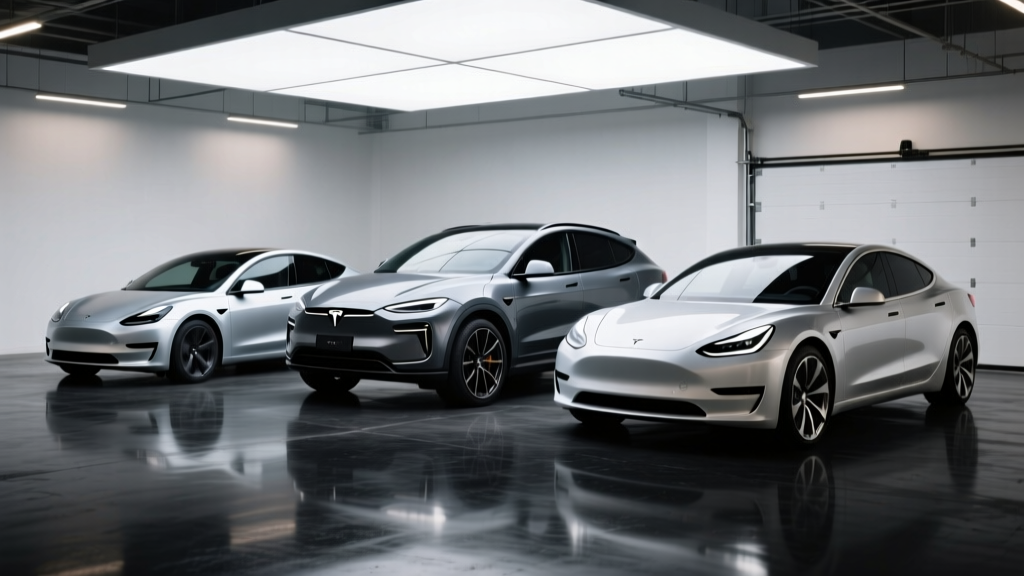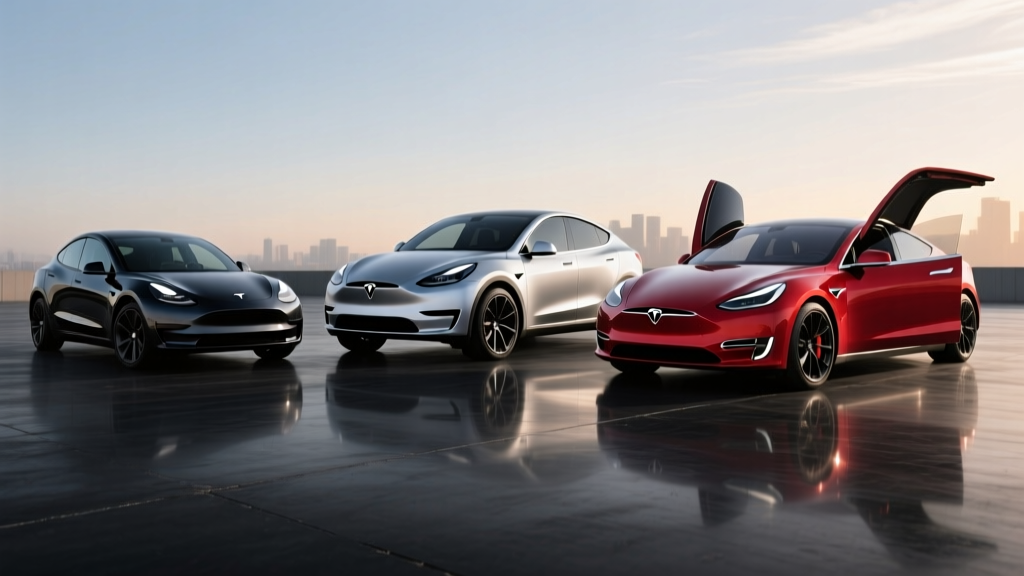
Tesla's 2026 lineup spans three core passenger vehicles, each targeting a different buyer. The Model 3 sedan undercuts on price and maximizes efficiency. The Model Y crossover adds cargo space and an optional third row. The Model S flagship delivers range and performance that still benchmarks the segment. But specs on paper only tell part of the story — real-world range, charging-curve behavior, tax-credit eligibility, and insurance costs can flip the value equation entirely.
This head-to-head breakdown uses current EPA data, manufacturer specs, and real-world driving observations to help you decide which Tesla actually earns your money.
Side-by-Side: Every Key Spec at a Glance
Before diving into category verdicts, here are the numbers that matter. All figures reflect 2026 model-year Long Range AWD trims unless noted. Prices are base MSRP before destination or incentives.
| Spec | Model 3 Long Range AWD | Model Y Long Range AWD | Model S Long Range |
|---|---|---|---|
| EPA Range | 363 mi | 320 mi | 402 mi |
| Battery (usable) | ~79 kWh (NMC) | ~79 kWh (NMC) | ~100 kWh (NMC) |
| Efficiency | 132 MPGe / 25 kWh/100mi | 120 MPGe / 28 kWh/100mi | 124 MPGe / 27 kWh/100mi |
| Peak DC Fast Charge | 250 kW | 250 kW | 250 kW |
| 10–80% DCFC Time | ~25 min | ~27 min | ~30 min |
| Level 2 Charge Rate | 11.5 kW (44 mi/hr) | 11.5 kW (41 mi/hr) | 11.5 kW (41 mi/hr) |
| 0–60 mph | 4.2 sec | 4.8 sec | 3.1 sec |
| Horsepower | ~346 hp | ~384 hp | ~670 hp |
| Cargo Volume | 23 cu ft (trunk+frunk) | 76 cu ft (max, seats folded) | 28 cu ft (trunk+frunk) |
| Base MSRP | $47,740 | $52,490 | $84,990 |
| Federal §30D Credit Eligible? | Yes (if sourcing/income met) | Yes (if sourcing/income met) | No (exceeds $55K sedan cap) |
| Warranty (Battery) | 8 yr / 120,000 mi | 8 yr / 120,000 mi | 8 yr / 150,000 mi |
Range and Efficiency: Where the Model 3 Pulls Ahead
The Model 3 Long Range achieves 363 miles EPA — the highest efficiency-to-range ratio in Tesla's lineup. Its lower curb weight (~4,034 lbs vs. the Model Y's ~4,298 lbs) and sleeker drag coefficient (0.219 vs. 0.23) mean fewer electrons spent pushing air and mass down the road. On the EPA's fueleconomy.gov data, the Model 3 consumes 25 kWh per 100 miles versus the Model Y's 28 kWh.
The Model S Long Range posts 402 miles EPA, but that comes from a much larger ~100 kWh battery pack rather than superior efficiency. Its 27 kWh/100mi consumption sits between the 3 and Y. If range-per-kWh matters to you — meaning lower electricity costs per mile — the Model 3 wins decisively.
Best efficiency, lowest cost per mile, and 363 miles EPA from the smallest battery. The Model S goes farther on a charge but uses 27% more battery to do it.
Charging Speed and Network Access
All three vehicles peak at 250 kW on V3 Superchargers, but sustained charging behavior differs. The Model 3 and Y share the same ~79 kWh pack architecture, so their charge curves are nearly identical: they hold near-peak power from roughly 10% to 50% SoC, then taper progressively. The 10–80% sprint takes about 25 minutes in the Model 3 and 27 in the Model Y.
The Model S's larger 100 kWh pack means it sustains high charge rates longer in absolute terms — you're adding more total kWh in the same window — but the 10–80% time stretches to roughly 30 minutes because there's simply more capacity to fill.
Charging network advantage: Tesla's Supercharger network remains the most reliable DC fast-charging ecosystem in the US, with over 20,000 stalls nationally. All three models benefit equally here. However, with NACS now the industry standard, Tesla vehicles no longer have exclusive access — Ford, Rivian, and GM EVs can also use Superchargers via native NACS ports or adapters. The moat has narrowed.
Fastest 10–80% time (~25 min) and the lowest energy cost per mile added. On a road trip, you'll spend less time and money charging than in either the Y or S.
Performance and Driving Dynamics
The Model S Long Range hits 0–60 in 3.1 seconds with 670 horsepower from its dual-motor setup. That's supercar territory in a five-seat luxury sedan. The Plaid variant (not compared here) drops to 1.99 seconds with 1,020 hp, but at $94,990 it's a niche purchase.
The Model 3 LR's 4.2-second 0–60 is quick by any practical measure, and its lower center of gravity plus lighter weight make it the most engaging Tesla to drive on a canyon road. The Model Y, taller and heavier, feels competent but less nimble — it's a family hauler, not a sports sedan.
All three use Tesla's adaptive air suspension (Model S) or conventional coil springs (3 and Y). The Model S rides noticeably better over rough pavement. The Model 3's updated Highland suspension (introduced in the 2024 refresh) improved compliance over the pre-2024 version, but it's still firm compared to competitors like the Hyundai Ioniq 6.
3.1 seconds to 60, 670 hp, and air suspension. If driving thrill matters, nothing else in the lineup competes.
Interior Space, Cargo, and Practicality
The Model Y exists for buyers who need space. With 76 cubic feet of cargo volume (rear seats folded) and an optional third row (best suited for small children), it's the default choice for families. Rear headroom and legroom substantially exceed the Model 3's, and the hatchback design makes loading bulky items trivial.
The Model 3's 23 cubic feet of combined trunk and frunk space is adequate for two adults on a week-long trip but tight for a family. The Model S offers 28 cubic feet across its trunk and frunk — decent for a sedan but nowhere near the Y's utility.
All three share Tesla's minimalist interior with a 15.4-inch center touchscreen (16.2 in the Model S), no physical instrument cluster, and ventilated front seats on Long Range trims. Build quality has improved markedly since 2023, with tighter panel gaps and better materials across the board.
76 cu ft cargo, optional third row, hatchback versatility. For families and gear-haulers, there's no contest.
Technology and Driver Assistance
Every Tesla ships with Basic Autopilot (lane centering + adaptive cruise), which is an SAE Level 2 driver-assistance system. You must keep your hands on the wheel and eyes on the road. Full Self-Driving (Supervised) adds automated lane changes, traffic-light recognition, and city-street navigation for $8,000 (one-time) or $99/month. Despite the name, FSD remains Level 2 — Tesla's own documentation and NHTSA oversight confirm the driver is responsible at all times.
The Model S gets a slightly larger 16.2-inch display and a rear passenger touchscreen. Software features are otherwise identical across the lineup. Tesla's OTA update cadence is the best in the industry — new features arrive regularly without dealer visits.
Software is identical. The Model S's larger screen and rear display are nice, but not worth the $37K premium for most buyers.
Pricing, Tax Credits, and True Cost to Buy
This is where the calculus shifts dramatically. The IRS §30D federal tax credit offers up to $7,500 for qualifying new EVs, but strict rules apply:
- Sedan MSRP cap: $55,000 (Model 3 qualifies; Model S does not)
- SUV/truck MSRP cap: $80,000 (Model Y qualifies)
- Buyer income cap: AGI ≤ $150K single / $300K joint
- Battery sourcing: Critical minerals and battery components must meet phased-in domestic/free-trade-area thresholds (verify current-year compliance on IRS.gov)
- Point-of-sale transfer: You can apply the credit as a down-payment reduction at purchase rather than waiting to claim it on your tax return
| Vehicle | Base MSRP | Est. §30D Credit | Effective Price (if eligible) |
|---|---|---|---|
| Model 3 Long Range AWD | $47,740 | Up to $7,500 | ~$40,240 |
| Model Y Long Range AWD | $52,490 | Up to $7,500 | ~$44,990 |
| Model S Long Range | $84,990 | $0 (over MSRP cap) | $84,990 |
Credit eligibility depends on battery-component and critical-mineral sourcing requirements, buyer AGI, and MSRP caps. Always verify current rules at IRS.gov and consult a tax professional.
The Model 3 at ~$40,240 after the credit is one of the best value propositions in the premium EV segment. The Model Y at ~$44,990 is still compelling for the space. The Model S, ineligible for the credit due to its sedan MSRP exceeding $55,000, asks you to pay full freight — a $44,750 gap over the credited Model 3.
Under $41K after credit, 363 miles of range, and the lowest running costs. Dollar for dollar, the strongest deal in the lineup.
Ownership Costs: Insurance, Energy, and Maintenance
EVs eliminate oil changes, spark plugs, and transmission fluid. But ownership costs diverge in other categories:
| Cost Category (5-year est.) | Model 3 LR | Model Y LR | Model S LR |
|---|---|---|---|
| Electricity (15K mi/yr, $0.16/kWh avg) | $3,000 | $3,360 | $3,240 |
| Insurance (national avg.) | $9,500 | $10,200 | $14,500 |
| Maintenance (tires, cabin filter, wipers) | $2,200 | $2,500 | $3,000 |
| Estimated 5-yr Total Running Cost | ~$14,700 | ~$16,060 | ~$20,740 |
Insurance estimates based on national averages for drivers with clean records; actual premiums vary significantly by state, age, and driving history. Electricity costs assume 70% home Level 2 charging at $0.16/kWh and 30% DC fast charging at $0.40/kWh.
Tesla insurance premiums run higher than the industry average. The Model S costs roughly 50% more to insure than the Model 3, driven by its higher replacement cost and repair complexity. Tire wear is also a factor — Teslas are heavy and torque-rich, so expect to replace tires every 25,000–35,000 miles depending on driving style.
Battery degradation across all three models is minimal in real-world use. Tesla's NMC packs typically retain 90%+ capacity after 100,000 miles based on fleet data. The 8-year/120,000-mile battery warranty (150K on Model S) covers drops below 70% capacity.
Lowest electricity spend, cheapest insurance, and minimal maintenance. Five-year running costs are roughly $6,000 less than the Model S.
Decision Framework: Which Tesla Should You Buy?
Choose the Model 3 Long Range if:
- You want the best value — under $41K after the federal credit
- Range efficiency and low cost-per-mile are top priorities
- You don't need hatchback cargo space or a third row
- You commute solo or with one passenger most days
Choose the Model Y Long Range if:
- You have children, dogs, or regularly haul gear
- You want crossover ride height and the hatchback form factor
- You're willing to pay ~$4,750 more (after credit) for the utility
- An optional third row matters for occasional use
Choose the Model S Long Range if:
- You want 400+ miles of range and 3.1-second 0–60 performance
- You value air suspension, a larger cabin, and flagship luxury
- The $84,990 price (no federal credit) fits your budget
- You prioritize driving thrills and prestige over value
Frequently Asked Questions
Is the Model 3 or Model Y better for road trips?
The Model 3 goes farther per charge and charges slightly faster, meaning fewer and shorter stops. But the Model Y's cargo space and hatchback make it far more practical for loading luggage, coolers, and gear. If your road trips involve two people and light bags, the 3 wins. If you're packing for a family, the Y is the clear pick.
Can I get the federal tax credit on any Tesla?
Only the Model 3 and Model Y currently qualify for the §30D credit (up to $7,500), and only if you meet income caps ($300K joint / $150K single) and the vehicle's battery sourcing meets current-year critical-mineral and component thresholds. The Model S exceeds the $55,000 sedan MSRP cap and is ineligible. Always verify on IRS.gov before purchasing.
How much does it cost to charge a Tesla at home?
At the US average residential rate of ~$0.16/kWh, fully charging a Model 3 or Y (~79 kWh) costs about $12.64. The Model S (~100 kWh) costs about $16.00. That's roughly $0.035–$0.04 per mile for the Model 3 — about one-third the fuel cost of a 30-MPG gas car at $3.50/gallon.
Does the Model Y's third row actually work?
It works for children or very small adults on short trips. Legroom and headroom are tight, and cargo space shrinks dramatically with the third row deployed. Think of it as occasional-use seating, not a minivan replacement.
Which Tesla holds its value best?
The Model Y has historically retained value better than the Model 3, driven by stronger demand in the crossover segment. The Model S depreciates more steeply in percentage terms due to its higher starting price and luxury-sedan market dynamics. All Teslas face depreciation pressure as newer, cheaper EVs enter the market.
Is Tesla's build quality still an issue?
Post-2024 refresh models (Model 3 Highland and updated Model Y) show significantly improved panel gaps, paint consistency, and interior fitment. The Model S has been solid since its 2021 Plaid-era refresh. You should still inspect any vehicle at delivery, but the gap between Tesla and legacy automakers has largely closed.