Quick Verdict: Two Trims, Very Different Value Propositions
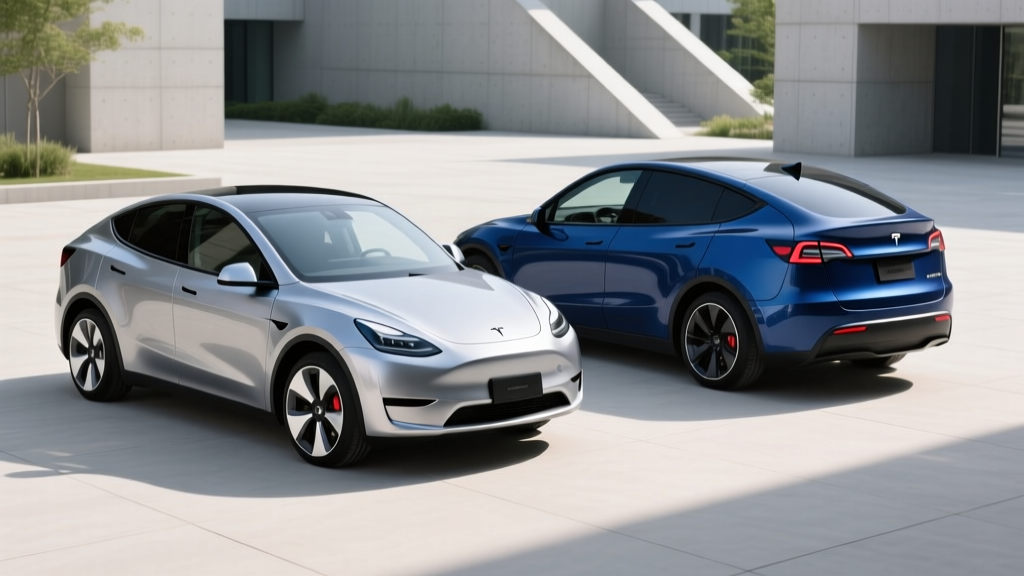
The 2026 Tesla Model Y lineup forces buyers into a choice that isn't just about range — it's about how you weigh upfront cost against daily efficiency. The base Model Y (RWD) undercuts its Long Range AWD sibling by roughly $5,000 before incentives, but the Long Range's extra battery capacity, dual motors, and faster DC charging create a meaningfully different ownership experience. Neither trim is universally "better." The right pick depends on your commute length, climate, charging access, and whether you prioritize highway passing power or lowest monthly payment.
Buy the base Model Y (RWD) if: You charge at home nightly, drive under 40 miles daily, live in a mild climate, and want the lowest entry price into Tesla's Supercharger network.
Buy the Model Y Long Range AWD if: You road-trip more than twice a year, face winters below freezing, need all-wheel-drive traction, or regularly carry passengers who appreciate the quicker acceleration and quieter highway ride.
Side-by-Side Spec Table: 2026 Model Y RWD vs Long Range AWD
| Specification | Model Y RWD (Base) | Model Y Long Range AWD |
|---|---|---|
| EPA Range | ~300 miles | ~327 miles |
| Battery Capacity (usable) | ~60 kWh (LFP) | ~75 kWh (NMC) |
| Battery Chemistry | LFP (lithium iron phosphate) | NMC (nickel manganese cobalt) |
| Peak DC Fast Charge Rate | ~170 kW | ~250 kW |
| 10–80% DC Fast Charge Time | ~25 minutes | ~27 minutes |
| Level 2 Charge Rate | 11.5 kW | 11.5 kW |
| 0–60 mph | ~6.6 seconds | ~4.8 seconds |
| Horsepower | ~295 hp | ~384 hp |
| Drivetrain | Rear-wheel drive (single motor) | All-wheel drive (dual motor) |
| Efficiency (MPGe combined) | ~130 MPGe | ~122 MPGe |
| Cargo Volume (rear seats up) | 30.2 cu ft | 30.2 cu ft |
| Towing Capacity | 3,500 lbs | 3,500 lbs |
| Base MSRP | ~$44,990 | ~$49,990 |
| Battery & Drive Unit Warranty | 8 years / 100,000 miles | 8 years / 120,000 miles |
Sources: Tesla specifications, EPA fueleconomy.gov. Figures reflect 2026 model-year estimates. Real-world range will vary with temperature, speed, and terrain.
Range and Efficiency: Real-World Expectations vs. EPA Stickers
Model Y RWD: EPA 300 miles — expect ~250–270 miles in mixed highway driving; ~210–230 miles in sub-30°F winter conditions.
Model Y Long Range AWD: EPA 327 miles — expect ~275–295 miles in mixed highway driving; ~230–255 miles in sub-30°F winter conditions.
The 27-mile EPA gap between trims narrows in real-world use. The RWD's LFP battery is less energy-dense but more tolerant of repeated 100% charging — Tesla recommends daily charging to 100% for LFP packs, which means you can actually access all 60 kWh regularly. The Long Range's NMC chemistry degrades faster if held at 100% daily, so most owners set an 80% daily limit, effectively giving you ~60 kWh of usable daily capacity anyway. The Long Range advantage shows up on road trips when you charge to 100% before departure and on cold mornings when the larger thermal mass of the bigger pack retains heat more effectively.
Efficiency favors the RWD. At 130 MPGe combined versus 122 MPGe, the single-motor variant consumes roughly 6–8% less energy per mile. Over 15,000 annual miles and a national average electricity rate of $0.16/kWh, that translates to about $40–$60 per year in electricity savings — meaningful but not decisive.
Charging Speed and Network Considerations
DC fast charging is where the trims diverge most noticeably. The Long Range's 250 kW peak rate versus the RWD's 170 kW peak means shorter pit stops on road trips — but the difference is smaller than the peak numbers suggest because of charge-curve taper.
| Charging Level | Model Y RWD | Model Y Long Range AWD |
|---|---|---|
| Level 1 (120V / 12A) | ~1.4 kW / ~5 mi/hr | ~1.4 kW / ~4 mi/hr |
| Level 2 (240V / 48A) | 11.5 kW / ~40 mi/hr | 11.5 kW / ~37 mi/hr |
| DC Fast Charge (peak) | 170 kW / ~170 mi added in 15 min | 250 kW / ~200 mi added in 15 min |
| 10–80% DCFC Time | ~25 minutes | ~27 minutes |
Paradoxically, the RWD's smaller battery means its 10–80% time is slightly shorter despite the lower peak kW. The Long Range sustains higher power deeper into the charge session (past 50% SoC), which is why a 250 kW V3 Supercharger delivers more total miles in a 20-minute stop for the Long Range. On Tesla's newer V4 Supercharger cabinets, both trims benefit from improved thermal preconditioning, but the Long Range's NMC pack can accept higher C-rates without accelerated degradation.
Both trims use the NACS (North American Charging Standard) connector natively, granting access to Tesla's Supercharger network — widely regarded as the most reliable DC fast-charging network in the U.S., with uptime exceeding 95% at most corridors. Non-Tesla networks like Electrify America and EVgo are accessible via adapter, though adapter-reduced speeds may apply at some CCS-only stations.
Category Winners: Where Each Trim Excels
🏆 Range Winner: Model Y Long Range AWD
327 EPA miles versus 300. The 27-mile buffer matters on remote highway stretches and in extreme cold where both trims lose 15–25% range.
🏆 Efficiency Winner: Model Y RWD
130 MPGe combined beats 122 MPGe. Lower electricity cost per mile and fewer kWh needed for a full charge at home.
🏆 Charging Speed Winner: Model Y Long Range AWD
250 kW peak adds more miles per minute on V3 Superchargers, despite a marginally longer 10–80% time due to the larger pack.
🏆 Performance Winner: Model Y Long Range AWD
4.8 seconds 0–60 with dual-motor AWD traction versus 6.6 seconds RWD. Highway merging and mountain passes feel substantially more confident.
🏆 Value Winner: Model Y RWD
$5,000 lower MSRP, plus potentially better tax-credit positioning depending on battery sourcing. Lower insurance premiums in most states.
🏆 Cold-Weather Winner: Model Y Long Range AWD
Larger NMC pack retains heat better, dual-motor AWD handles snow, and the heat pump is standard on both trims but benefits the larger thermal reserve.
🏆 Tech & ADAS: Tie
Both trims ship with Tesla's latest hardware (HW4/AI4) and identical Autopilot functionality. FSD (Supervised) is a $8,000 add-on or $99/month for either trim — and remains SAE Level 2, requiring full driver engagement at all times.
Pricing, Tax Credits, and Total Acquisition Cost
| Cost Factor | Model Y RWD | Model Y Long Range AWD |
|---|---|---|
| Base MSRP (2026) | ~$44,990 | ~$49,990 |
| Federal §30D Tax Credit (potential) | Up to $7,500* | Up to $7,500* |
| Effective Price After Max Credit | ~$37,490 | ~$42,490 |
| Estimated State Incentives | Varies by state† | Varies by state† |
| Destination Fee | ~$1,390 | ~$1,390 |
*§30D Federal Tax Credit caveats: Under current IRS rules, the $7,500 credit splits into two halves — $3,750 for battery components manufactured in North America and $3,750 for critical minerals sourced from the U.S. or FTA partners. The Model Y RWD's LFP battery (historically sourced from CATL in China) has faced sourcing challenges that can reduce or eliminate the critical-minerals half. The Long Range's NMC pack has a different supply chain that may qualify for the full $7,500 depending on the specific production batch. Both trims fall under the $80,000 MSRP cap for SUVs. Buyer income caps apply: $300,000 joint / $225,000 head of household / $150,000 individual MAGI. Point-of-sale transfer is available, reducing the purchase price at the dealer. Always verify current eligibility with a tax professional before purchasing.
†State incentives vary widely. California's CVRP, Colorado's innovative motor vehicle credit, and New York's Drive Clean Rebate all have separate income and price caps. Check your state energy office for current programs.
Ownership Cost Over 5 Years / 75,000 Miles
| Cost Category | Model Y RWD | Model Y Long Range AWD |
|---|---|---|
| Effective Purchase Price (after $7,500 credit) | ~$38,880 | ~$43,880 |
| Electricity (75,000 mi @ $0.16/kWh avg) | ~$2,880 | ~$3,070 |
| Insurance (5-year avg, national) | ~$9,500 | ~$10,200 |
| Maintenance (tires, cabin filter, wiper fluid) | ~$1,800 | ~$1,800 |
| Estimated Depreciation (5yr) | ~$17,500 | ~$19,700 |
| Estimated 5-Year Total Cost | ~$70,560 | ~$78,650 |
The RWD's total cost advantage is roughly $8,000 over five years, driven primarily by the lower purchase price and slightly better depreciation curve (LFP batteries are attracting buyer interest in the used market for their longevity). Insurance is 5–8% higher on the Long Range AWD in most states due to the higher replacement cost and more powerful drivetrain. Maintenance is virtually identical — neither trim requires brake pad replacement in normal use thanks to aggressive regenerative braking, and Tesla's cabin air filter and wiper fluid are the only scheduled consumables.
Tire wear deserves attention: the Long Range AWD's heavier curb weight (~4,400 lbs vs ~4,200 lbs for RWD) and stickier all-season tires typically need replacement at 25,000–35,000 miles, while the RWD's lighter load extends tire life to 30,000–40,000 miles. Budget $800–$1,200 per set.
Battery Longevity and Warranty Differences
This is where chemistry matters. The RWD's LFP (lithium iron phosphate) battery offers superior cycle life — industry data shows LFP packs retaining 90%+ capacity after 3,000 full charge cycles, compared to ~1,500–2,000 cycles for NMC before hitting the same threshold. For a daily driver charging to 100% each night, LFP is the clear longevity winner.
| Factor | LFP (Model Y RWD) | NMC (Model Y Long Range) |
|---|---|---|
| Energy Density | Lower (heavier pack for same kWh) | Higher (lighter, more range) |
| Cycle Life | ~3,000+ cycles to 90% SoH | ~1,500–2,000 cycles to 90% SoH |
| Daily Charging to 100% | Recommended by Tesla | Not recommended; 80% daily limit advised |
| Cold-Weather Performance | More range loss below freezing | Better cold-weather energy retention |
| Warranty (capacity retention) | 8 yr / 100k mi (min 70%) | 8 yr / 120k mi (min 70%) |
| Estimated Replacement Cost (out of warranty) | $10,000–$14,000 | $13,000–$18,000 |
The Long Range's warranty covers 20,000 more miles (120,000 vs 100,000), reflecting Tesla's confidence in the NMC pack's management system. Both warranties guarantee a minimum 70% capacity retention — if your battery falls below that threshold within the warranty period, Tesla replaces or refurbishes it at no cost. Tesla's battery warranty documentation outlines the specific terms.
Decision Framework: Which Model Y Fits Your Life?
Choose the Model Y RWD if:
- Your daily round-trip commute is under 60 miles and you charge at home every night
- You live in a temperate climate (rarely below 32°F for extended periods)
- You want the lowest possible purchase price and monthly payment
- You plan to keep the vehicle 8+ years (LFP longevity advantage)
- You rarely take road trips exceeding 250 miles between stops
Choose the Model Y Long Range AWD if:
- You regularly drive in snow, ice, or heavy rain (AWD traction advantage)
- Your winters routinely drop below freezing (NMC cold-weather retention)
- You take 3+ road trips per year where 327-mile range reduces charging stops
- You value the 4.8-second 0–60 for highway merging confidence
- You need the 120,000-mile battery warranty for high-mileage driving (20k+/year)
Frequently Asked Questions
Can I get the full $7,500 federal tax credit on either Model Y trim?
It depends on the specific battery sourcing in your vehicle's production batch, your MAGI income, and whether you take delivery before any sourcing-rule changes. The Long Range NMC variant has historically qualified for the full credit more consistently than the RWD LFP variant, which has faced critical-mineral sourcing limitations. Verify with your tax professional and check the VIN-specific eligibility at the IRS point-of-sale portal before finalizing your order.
Is the LFP battery in the base Model Y worse than NMC?
Not worse — different. LFP sacrifices energy density (fewer miles per pound) but gains cycle life, thermal stability, and the ability to charge to 100% daily without accelerated degradation. If you charge at home nightly and don't need maximum range, LFP may actually outlast NMC over a 10-year ownership period.
Does Autopilot or FSD come standard on both trims?
Basic Autopilot (lane centering + adaptive cruise) is standard on both. Enhanced Autopilot ($6,000) and FSD Supervised ($8,000 or $99/month) are optional on both. FSD Supervised is SAE Level 2 — you must keep your hands on the wheel and eyes on the road at all times. It is not autonomous driving.
Which trim holds resale value better?
Historically, Long Range AWD trims have held slightly higher absolute resale values due to buyer preference for AWD and higher range. However, the RWD's lower acquisition cost means its percentage depreciation is competitive. The growing awareness of LFP longevity may improve RWD resale values in coming years.
Can I tow with either Model Y?
Both trims are rated for 3,500 lbs when equipped with the factory tow hitch ($1,000 option). Towing cuts range by 30–50% depending on trailer weight and aerodynamics. If you tow frequently, the Long Range's extra battery buffer is strongly recommended.