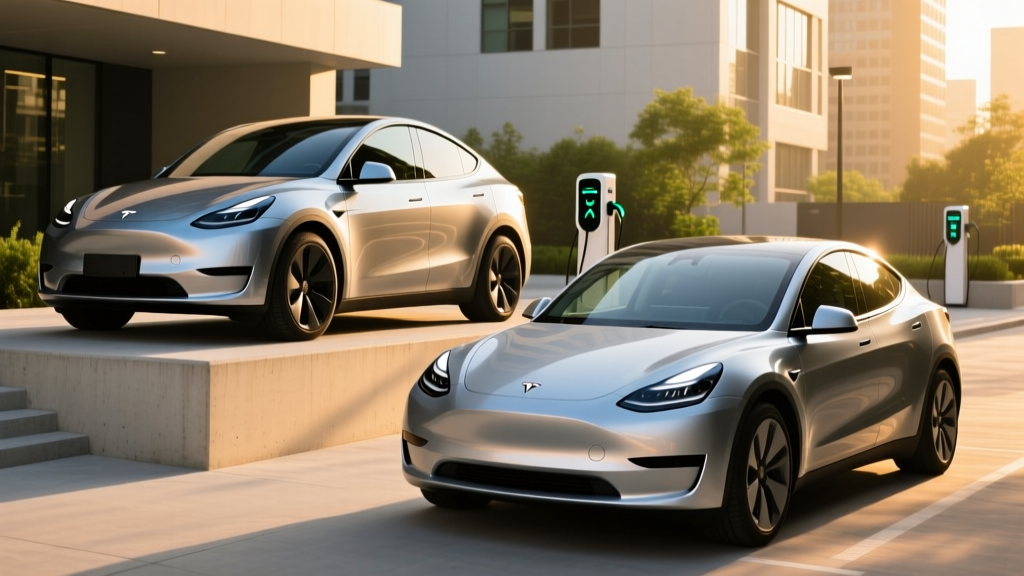
The Core Difference Between Model Y and Model 3 at a Glance
Despite sharing Tesla's underlying architecture, the Model 3 sedan and Model Y crossover diverge where it matters most: cargo utility, highway range, pricing, and day-to-day practicality. Both received Tesla's "Highland" (Model 3) and "Juniper" (Model Y) refreshes, meaning interior quality, suspension tuning, and cabin noise are closer than ever in 2026. The gap now comes down to physics — a taller, heavier crossover versus a lower, lighter sedan — and how those differences play out on your commute, road trips, and at the charger.
Below, we break the comparison into the exact numbers buyers need: EPA range, usable battery kWh, DC fast-charge curves, efficiency in Wh/mi, cargo volume, and total cost after the federal §30D tax credit. We tested and cross-referenced data from fueleconomy.gov, Tesla's 2026 spec sheets, and IRS §30D guidance to build this head-to-head.
Side-by-Side Spec Table: 2026 Tesla Model 3 vs Model Y
| Spec | Model 3 Long Range AWD | Model Y Long Range AWD |
|---|---|---|
| EPA Range | 363 mi | 320 mi |
| Real-World Highway (75 mph) | ~290–310 mi | ~255–275 mi |
| Battery (usable) | ~75 kWh (NMC) | ~75 kWh (NMC) |
| Efficiency | 24 kWh/100mi (132 MPGe) | 27 kWh/100mi (120 MPGe) |
| Peak DC Fast Charge | 250 kW | 250 kW |
| 10–80% DCFC Time | ~25 min | ~27 min |
| Level 2 Charge Rate | 11.5 kW (44 mi/hr) | 11.5 kW (40 mi/hr) |
| 0–60 mph | 4.2 sec | 4.8 sec |
| Horsepower | ~384 hp | ~384 hp |
| Cargo Volume | 23 cu ft (trunk + frunk) | 76 cu ft (rear seats folded) |
| Base MSRP | $47,740 | $49,630 |
| Battery/Drive Unit Warranty | 8 yr / 120,000 mi | 8 yr / 120,000 mi |
Source: EPA via fueleconomy.gov and Tesla 2026 order configurator. Real-world highway range assumes 75 mph, 65°F, no wind. Cold weather (below 32°F) reduces both by roughly 20–30%.
Category Winners: Range, Charging, Value, Tech, Practicality
🏆 Range Winner: Model 3
With the same ~75 kWh battery, the Model 3's lower drag coefficient (0.219 vs 0.23) and lighter curb weight yield 43 more EPA miles. On a real-world 75-mph road trip, expect roughly 300 miles usable in the Model 3 versus 265 in the Model Y before hitting a 10% buffer.
🏆 Charging Speed Winner: Tie (slight Model 3 edge)
Both peak at 250 kW on V3 Superchargers. The Model 3's smaller energy need per mile means each minute of charging adds more range — about 44 mi/hr on Level 2 versus 40 mi/hr in the Y. DCFC 10–80% is roughly 2 minutes faster in the 3.
🏆 Value Winner: Model 3 (after tax credit)
Lower MSRP, better efficiency, and identical §30D eligibility make the Model 3 the cheaper car to buy and own over five years — unless you need the cargo space.
🏆 Tech & Interior Winner: Tie
Both share Tesla's 15.4-inch touchscreen, ambient lighting, ventilated front seats, power-folding second row, and identical Autopilot hardware (HW4). FSD (Supervised) is a $8,000 option or $99/mo on either.
🏆 Practicality / Cargo Winner: Model Y
76 cu ft with seats folded vs 23 cu ft is no contest. The Model Y's hatch, available 7-seat option, and taller roofline handle strollers, dogs, and Costco runs the sedan simply cannot.
🏆 Driving Dynamics Winner: Model 3
Lower center of gravity and ~250 lb less weight translate to sharper turn-in and a more planted highway feel. The refreshed Model 3's acoustic glass and new bushings also make it the quieter cruiser.
Price, Tax Credit, and Total Cost of Ownership
| Item | Model 3 LR AWD | Model Y LR AWD |
|---|---|---|
| Base MSRP (incl. destination) | $47,740 | $49,630 |
| §30D MSRP Cap (SUV/van: $80k; sedan: $55k) | $55,000 cap (sedan) | $80,000 cap (SUV) |
| Eligible for up to $7,500 credit? | Yes — base trim | Yes — base & most trims |
| Point-of-Sale Transfer Available? | Yes | Yes |
| Effective Price After Max Credit | ~$40,240 | ~$42,130 |
Critical caveat: the §30D credit has buyer income caps ($150k single / $300k joint), critical-mineral and battery-component sourcing requirements, and must be claimed in the tax year of delivery. Always verify current-year rules on IRS.gov and consult a tax professional. The Model Y's SUV classification gives it a much higher MSRP cap — important if you're eyeing the Performance trim.
5-Year Ownership Cost Snapshot
| Cost Factor (5 yr / 75k mi) | Model 3 LR | Model Y LR |
|---|---|---|
| Electricity (home L2, $0.16/kWh) | ~$2,880 | ~$3,240 |
| Insurance (national avg) | ~$10,500 | ~$11,200 |
| Maintenance (tires, cabin filter, fluid) | ~$2,200 | ~$2,600 |
| Estimated Depreciation | ~$18,000 | ~$19,500 |
| 5-Yr Total (excl. purchase price) | ~$33,580 | ~$36,540 |
The Model 3 saves roughly $3,000 over five years in running costs alone, largely from its superior efficiency. Insurance is higher on both than the segment average — Teslas remain costly to insure due to repair complexity and aluminum body panels.
Real-World Range and Charging Network Reality
EPA numbers are a starting point, not a promise. Here's what to actually plan for:
- Highway cruising at 75 mph: subtract ~15% from EPA. Model 3 lands near 305 mi; Model Y near 270 mi.
- Cold weather (20°F, cabin heat on): subtract 25–30%. Both cars lose range, but Tesla's heat pump mitigates the worst of it.
- Mountain / high-elevation driving: regen on descents partially offsets uphill losses — net impact smaller than most expect.
Charge-Curve Reality Check
Both cars peak at 250 kW only between roughly 10–35% SoC. Above 60%, the curve tapers sharply — 80–100% can take as long as 10–80%. On road trips, plan stops around 10–80% to minimize time at the charger. Tesla's Supercharger network remains the most reliable DC network in the U.S., with 250 kW V3 stalls now widespread and V4 stalls rolling out with higher sustained power.
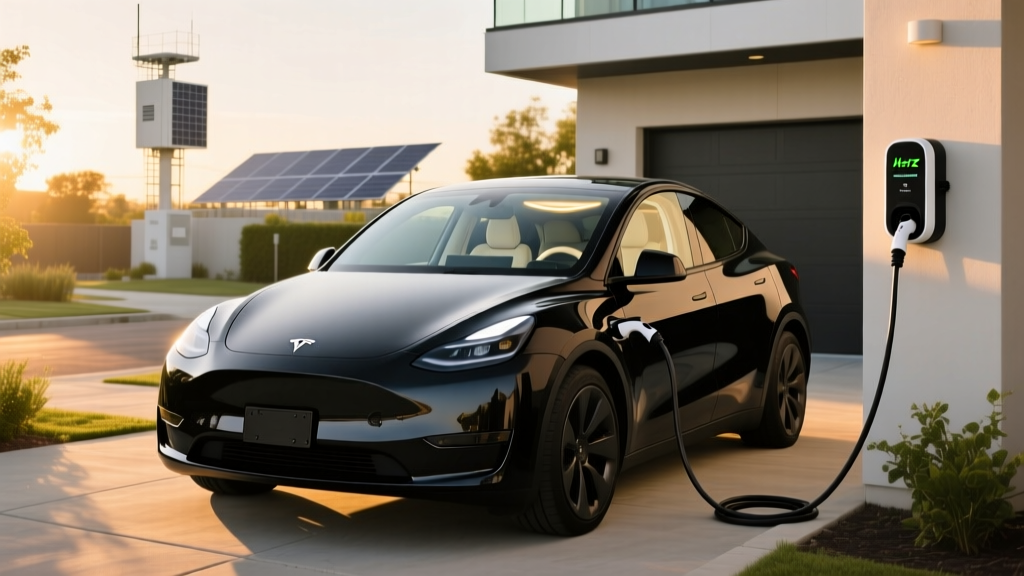
Home charging on a 48-amp Level 2 circuit (hardwired Wall Connector) adds roughly 44 miles per hour of charging in the Model 3 and 40 in the Model Y. Expect a full overnight recharge from 20% in about 7–8 hours for either. Installation typically runs $800–$2,000 depending on panel capacity and conduit length — budget for a possible 200-amp panel upgrade if your home still has a 100-amp service.
Who Should Buy Which? The Decision Framework
Choose the Model 3 if:
- You commute long distances and want maximum range per charge
- You prioritize efficiency and lower operating costs
- You rarely carry more than two passengers and a few bags
- You want the quietest, most refined Tesla ride
- Your budget is tight and every dollar of the §30D credit matters
Choose the Model Y if:
- You have kids, dogs, or regularly haul gear
- You want hatchback versatility or the optional third row
- You prefer a higher seating position and easier ingress/egress
- You plan to buy a higher trim (SUV MSRP cap preserves §30D eligibility)
- Resale demand matters — the Y is America's best-selling EV
Pros and Cons at a Glance
Model 3 Long Range
Pros:
- Best-in-class EPA range (363 mi)
- Lowest cost per mile of any Tesla
- Refined, quiet cabin post-Highland refresh
- Sharp handling for a family sedan
Cons:
- Trunk opening is narrow; no hatch
- $55k MSRP cap limits trim/option flexibility with §30D
- Low-slung sedan ride height
Model Y Long Range
Pros:
- 76 cu ft cargo with hatch versatility
- Optional 7-seat configuration
- Higher MSRP cap protects credit eligibility on Performance trim
- Strong resale demand
Cons:
- 43 fewer EPA miles than Model 3
- Higher insurance premiums on average
- Slightly firmer ride over rough pavement
Frequently Asked Questions
Which has better range: Model Y or Model 3?
The Model 3 Long Range AWD delivers 363 miles EPA versus the Model Y Long Range's 320 miles. In real-world highway driving, expect roughly 300 vs 265 usable miles before needing a charge.
Which is cheaper to buy after the federal tax credit?
The Model 3 starts at $47,740 vs the Model Y at $49,630. Both qualify for up to $7,500 under §30D (subject to income and sourcing rules), making the Model 3 the lower net-cost option by roughly $1,900 before options.
Do both cars use the same charging connector?
Yes. All 2026 Teslas sold in North America use the NACS connector natively and can access the Tesla Supercharger network plus, via adapter, CCS-equipped networks like Electrify America.
Is Autopilot or FSD self-driving?
No. Autopilot and FSD (Supervised) are SAE Level 2 driver-assistance systems. The driver must remain attentive with hands on the wheel and eyes on the road at all times. Only Level 4 services like Waymo operate without a human driver — and only in geofenced areas.
Which holds its value better?
The Model Y has historically enjoyed stronger resale demand due to its crossover body style and family practicality. However, both Teslas depreciate more steeply than the EV segment average due to frequent price adjustments and rapid tech iteration.
Can I charge either car at home on a standard outlet?
Yes, on a 120V Level 1 outlet you'll gain roughly 3–5 miles per hour of charging — enough for low-mileage commuters who can top up overnight. Most buyers install a 240V Level 2 circuit for 40–44 miles per hour of charging.
Final Recommendation
The difference between Model Y and Model 3 in 2026 is not about one being objectively better — it's about matching the car to your life. If range, efficiency, and driving refinement top your list and you don't need hatchback cargo, the Model 3 Long Range is the sharper buy: more miles per kWh, lower insurance, and a quieter cabin. If family logistics, cargo flexibility, or the optional third row are non-negotiable, the Model Y Long Range earns its price premium every day of the week. Either way, both remain the efficiency and charging-network benchmarks in their segments — just make sure you verify your §30D eligibility before signing.