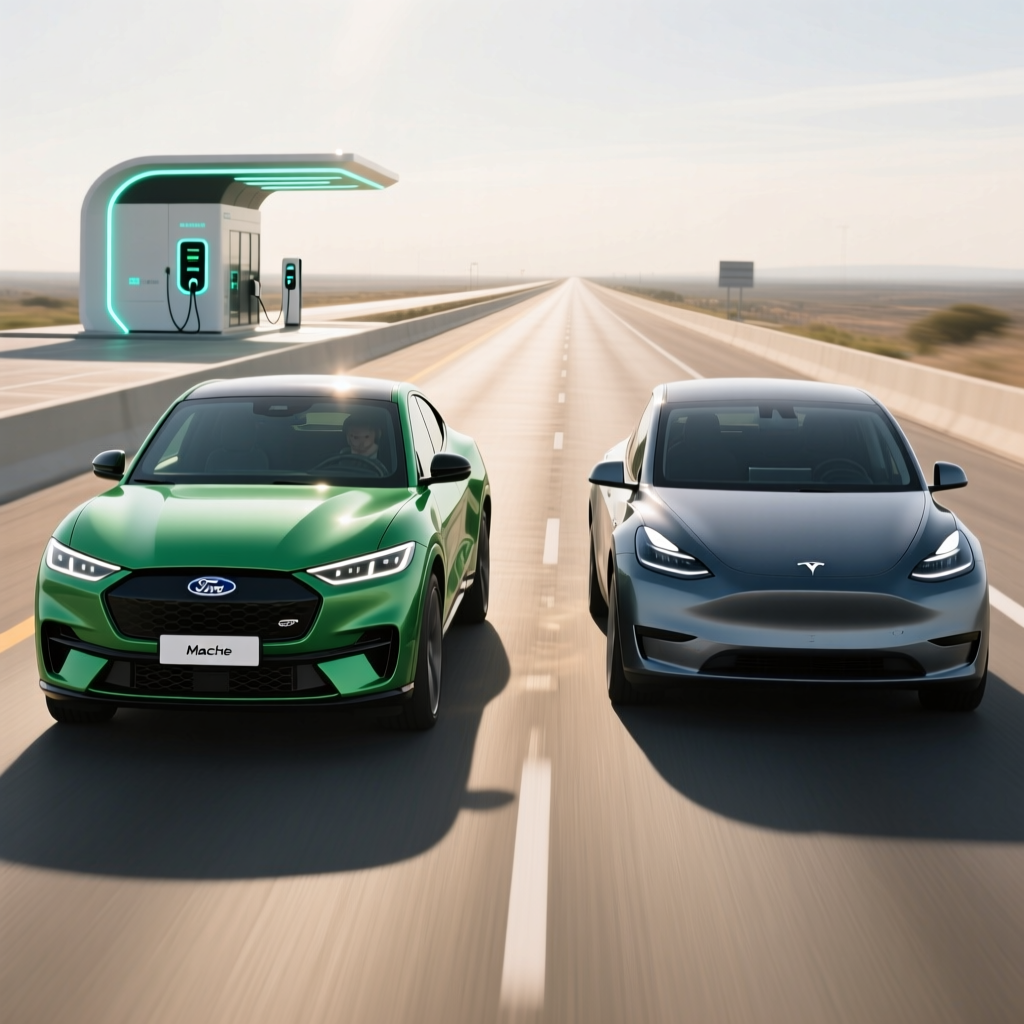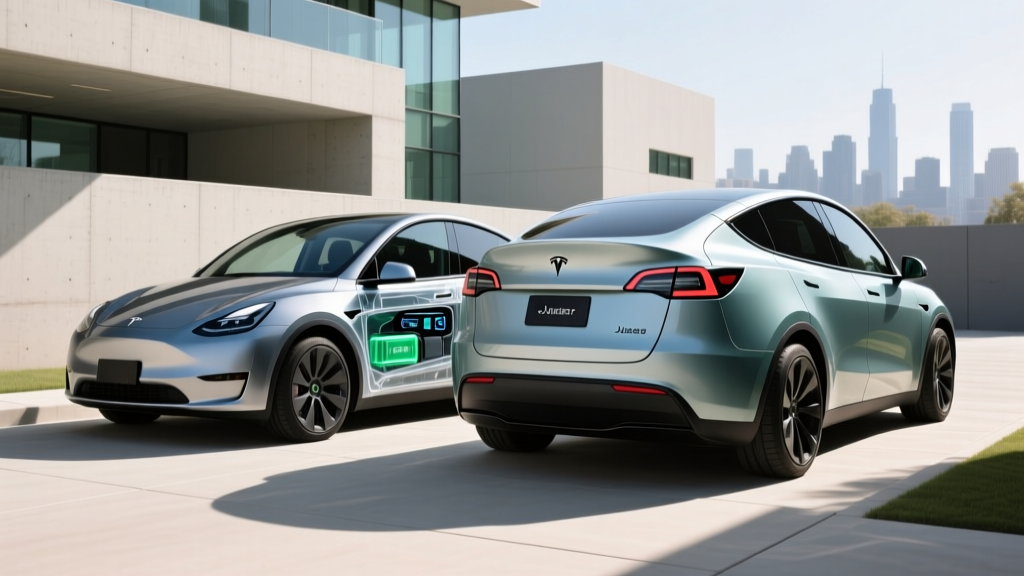
Quick Verdict: Pre-Juniper Model Y vs Refreshed Juniper
The Tesla Model Y remains the best-selling EV globally, but the 2025–2026 "Juniper" refresh introduced meaningful changes to the platform. Buyers now face a split market: remaining pre-refresh inventory (often discounted) versus the updated Juniper variant with revised styling, suspension tuning, cabin noise reduction, and minor powertrain tweaks. This comparison breaks down exactly what changed — and which version makes more financial sense for your situation in 2026.
Side-by-Side Spec Comparison
Numbers below reflect the Long Range AWD variants — the volume configuration for US buyers. Rear-Wheel-Drive and Performance trims differ; we note those where relevant.
| Spec | Model Y (Pre-Refresh) LR AWD | Model Y (Juniper Refresh) LR AWD |
|---|---|---|
| EPA Range | 310 mi | 320 mi (est.) |
| Battery (usable) | ~75 kWh, NMC | ~78 kWh, NMC |
| Efficiency | 122 MPGe / 28 kWh/100mi | ~125 MPGe / 27 kWh/100mi |
| Peak DC Fast Charge | 250 kW | 250 kW |
| 10–80% DCFC Time | ~27 min | ~25 min |
| Level 2 Charge Rate | 11.5 kW (44 mi/hr) | 11.5 kW (44 mi/hr) |
| 0–60 mph | 4.8 sec | 4.8 sec |
| Horsepower | 384 hp | 384 hp |
| Cargo Volume | 76 cu ft (rear seats folded) | 76 cu ft |
| Base MSRP (Long Range AWD) | ~$48,990 | ~$49,990 |
| Battery Warranty | 8 yr / 120,000 mi | 8 yr / 120,000 mi |
| Connector | NACS (native) | NACS (native) |
Sources: EPA / fueleconomy.gov, Tesla.com specs. Juniper refresh figures are estimates based on early market data and may shift with final EPA certification for 2026 models.
Range and Efficiency: Marginal Gains in the Refresh
The pre-refresh Long Range AWD carries an EPA-confirmed 310 miles. The Juniper refresh is expected to push this to approximately 320 miles, driven by a slightly larger usable battery (~78 kWh vs ~75 kWh), revised aero tweaks, and minor drivetrain efficiency improvements.
Pre-Refresh (EPA 310 mi): Expect 260–280 mi in mixed highway driving at 70–75 mph. In cold weather (below 32°F), plan for 200–230 mi without preconditioning. With cabin preconditioning active, recovery to ~250 mi is typical.
Juniper Refresh (est. EPA 320 mi): Real-world highway range likely 270–290 mi in moderate temperatures, dropping to 210–240 mi in deep cold. The heat pump carries over, which helps cabin efficiency but does not eliminate cold-weather battery chemistry losses.
Neither variant will be mistaken for a Lucid Air in efficiency, but the Model Y's ~27–28 kWh/100mi is competitive with the Hyundai Ioniq 5 and Ford Mustang Mach-E in this segment. The Juniper's marginal improvement matters most on road trips where 10 extra miles can mean skipping a charger or arriving with a more comfortable buffer.
Charging Speed and Network Access
Both variants peak at 250 kW on DC fast chargers, and both use the native NACS connector — the biggest practical advantage Tesla retains. No adapter is needed at any of the 6,000+ Supercharger stalls across North America, and the Supercharger network continues to post the highest uptime rates among public charging providers.
The Juniper refresh reportedly shaves 1–2 minutes off the 10–80% charge through battery management software optimization, landing around 25 minutes versus 27 minutes for the pre-refresh. However, sustained charge rate matters more than peak. Both variants follow Tesla's typical charge curve:
- 10–30% SoC: sustained ~240–250 kW
- 30–50% SoC: tapers to ~180–200 kW
- 50–80% SoC: drops to ~90–120 kW
- Above 80%: steep taper to ~40–50 kW (avoid unless necessary)
At a Level 2 home charger (48A / 11.5 kW), both variants add approximately 44 miles of range per hour of charging. A full overnight charge from 20% to 80% takes roughly 5–6 hours — more than adequate for daily driving if you have home charging access.
Pricing, Tax Credits, and True Cost to Buy
Pre-refresh Model Y inventory may still be available at Tesla or through certified pre-owned channels, often at a discount versus the Juniper MSRP. Here is how pricing stacks up for the Long Range AWD configuration:
| Cost Factor | Pre-Refresh LR AWD | Juniper Refresh LR AWD |
|---|---|---|
| Base MSRP | ~$48,990 | ~$49,990 |
| Destination Fee | $1,390 | $1,390 |
| Federal §30D Credit Eligibility | Partial — varies by battery sourcing | Partial — varies by battery sourcing |
| Est. Credit Amount (if eligible) | $3,750–$7,500 | $3,750–$7,500 |
| Effective Price After Max Credit | ~$42,880 | ~$43,880 |
The IRS §30D clean vehicle credit has strict eligibility rules that change based on battery component sourcing and critical mineral origin. As of 2026:
- MSRP cap: SUVs must be under $80,000 (both variants qualify)
- Buyer income cap: $150K single / $225K head of household / $300K joint filers
- Battery sourcing: Vehicles with battery components from a "foreign entity of concern" (FEOC) may lose partial or full credit eligibility. Tesla has shifted some sourcing, but eligibility varies by production batch.
- Point-of-sale transfer: You can transfer the credit to the dealer at purchase for an upfront price reduction, rather than claiming it at tax time.
Category-by-Category Verdicts
🏆 Range Winner: Juniper Refresh
The estimated 320-mile EPA figure edges out the pre-refresh's 310 miles. On road trips, that 10-mile gain translates to slightly less charging anxiety and more flexibility in sparse-charger regions.
🏆 Charging Winner: Tie (Slight Juniper Edge)
Both peak at 250 kW NACS. The Juniper's 10–80% time of ~25 minutes vs ~27 minutes is a small but meaningful improvement. Both benefit equally from Supercharger access and preconditioning.
🏆 Value Winner: Pre-Refresh (If Discounted)
If you can find remaining pre-refresh inventory at a discount — or a low-mileage CPO unit — the 10-mile range difference doesn't justify paying $1,000+ more. The core driving experience is nearly identical.
🏆 Comfort / NVH Winner: Juniper Refresh
The Juniper refresh brought improved sound insulation, retuned suspension damping, and updated interior materials. Cabin noise at highway speed is measurably lower, and ride quality over rough pavement is more composed.
🏆 Tech / ADAS Winner: Tie
Both run Tesla's current Autopilot hardware (HW4) and support FSD (Supervised) as a paid add-on. Both are SAE Level 2 driver-assist systems — the driver must remain fully engaged at all times. No hands-off, eyes-off driving is permitted or possible.
🏆 Performance Winner: Tie
Identical 384 hp, identical 4.8-second 0–60. The Juniper's slightly heavier curb weight is offset by the marginally larger battery. No real-world difference in acceleration feel.
Ownership Cost: Efficiency, Insurance, and Maintenance
Both variants share the same fundamental ownership profile, but small differences compound over five years:
| 5-Year Ownership Factor | Pre-Refresh | Juniper Refresh |
|---|---|---|
| Est. Electricity Cost (15K mi/yr, $0.14/kWh avg) | ~$2,940 | ~$2,835 |
| Est. Insurance (national avg, clean record) | ~$2,400/yr | ~$2,400/yr |
| Maintenance (tires, cabin filter, wipers, brake fluid) | ~$600/yr | ~$600/yr |
| Depreciation (est. 5-yr) | ~40–45% | ~38–43% |
| Est. 5-Year Total Cost (excl. purchase price) | ~$22,700 | ~$22,175 |
The Juniper's slightly better efficiency saves roughly $100 over five years in electricity — negligible. Insurance premiums are identical since insurers treat both as the same Model Y platform. Maintenance costs are equally low: no oil changes, minimal brake wear thanks to regenerative braking, and cabin air filter replacement every 2–3 years.
The more significant ownership variable is depreciation. The Juniper refresh, being newer architecture, may hold value marginally better — but Tesla's history of mid-cycle price cuts and unpredictable resale values means this is speculative. Check current resale data on sources like Kelley Blue Book before banking on depreciation differences.
Decision Framework: Which Model Y Should You Buy?
Choose the Pre-Refresh Model Y If:
- You find remaining new or CPO inventory at a meaningful discount ($2,000+ below Juniper MSRP)
- Your daily commute is under 60 miles round-trip and the 10-mile range difference is irrelevant
- You prioritize value over the latest interior refinements and sound insulation
- You plan to keep the vehicle 7+ years, making near-term depreciation less of a concern
Choose the Juniper Refresh Model Y If:
- You regularly drive 250+ miles on road trips and every mile of range buffer matters
- Cabin quietness and ride comfort are high priorities (noticeable NVH improvement)
- You're buying new and want the latest production iteration with the longest runway of OTA support
- You care about resale value and want the most current version of the platform
Final Recommendation
Neither variant is a bad choice — the Model Y's core strengths (Supercharger access, cargo versatility, efficiency, and over-the-air updates) carry across both. The Juniper refresh is a refinement, not a reinvention. If the price gap between a discounted pre-refresh and a full-MSRP Juniper exceeds $2,000–$3,000, the pre-refresh is the pragmatic buy. If you're paying similar money either way, the Juniper's improved comfort and slightly longer range make it the better daily driver.
Before committing, verify the VIN's §30D tax credit eligibility, test-drive both if possible, and confirm your home electrical panel can support a 48A Level 2 charger (a 60A dedicated circuit is standard — budget $500–$2,000 for installation depending on panel proximity and local permitting).
Frequently Asked Questions
Is the Juniper Model Y a completely new vehicle?
No. It is a mid-cycle refresh of the existing Model Y platform — same basic chassis, same body-in-white dimensions, same powertrain architecture. Changes include revised exterior lighting, updated interior materials, improved sound deadening, retuned suspension, a slightly larger battery pack, and software optimizations. Think of it like a significant facelift, not a next-generation model.
Does the Juniper refresh qualify for the $7,500 federal tax credit?
It depends on the specific vehicle's battery sourcing and your income. Under current IRS §30D rules, the Model Y qualifies on MSRP (under the $80K SUV cap), but the credit amount ($3,750 or $7,500) depends on whether battery components and critical minerals meet domestic-sourcing thresholds. These requirements tighten annually. Check the VIN on fueleconomy.gov before purchasing.
Can I retrofit pre-refresh features onto a Juniper, or vice versa?
Not meaningfully. The battery pack, suspension tuning, and sound insulation are not swappable. Software features (Autopilot, FSD Supervised, UI updates) are identical across both since Tesla pushes the same OTA builds to all HW4 vehicles.
Which version charges faster at non-Tesla chargers?
Both charge at the same rate on any DC fast charger. The NACS connector is native, so at CCS-only stations you would need an adapter (not typically needed given Supercharger coverage). At NACS-equipped third-party chargers (increasingly common as Electrify America, EVgo, and others add NACS cables), both peak at 250 kW identically.
Is FSD (Supervised) worth the extra cost on either variant?
FSD (Supervised) remains an SAE Level 2 system requiring constant driver attention. It adds features like traffic-light recognition, city-street autosteer, and automatic lane changes, but it does not make the car autonomous. At its current price (~$8,000 one-time or $99/month), most buyers are better off using the included Autopilot (lane centering + adaptive cruise) and reassessing FSD later if Tesla's capabilities improve meaningfully. Neither the pre-refresh nor Juniper has a hardware advantage for FSD — both use HW4.