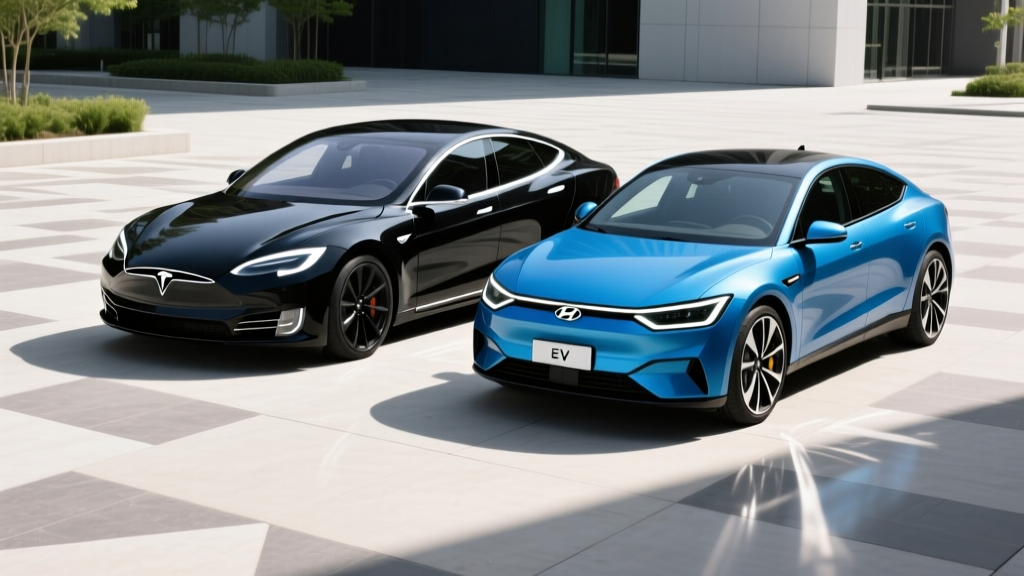
The midsize electric crossover segment has two benchmarks that consistently dominate buyer shortlists: the Tesla Model Y and the Hyundai Ioniq 5. Both seat five, offer over 300 miles of EPA range, and charge fast enough for cross-country road trips. But they achieve those benchmarks through fundamentally different engineering philosophies, charging ecosystems, and ownership experiences.
This comparison uses 2026 model-year specifications to cut through the marketing. We'll examine EPA data, real-world range behavior, DC fast-charging curves, federal tax credit eligibility under current IRS §30D rules, and five-year ownership economics. No hype — just the numbers and what they mean for your driveway.
2026 Model Y vs Ioniq 5: Side-by-Side Specifications
Before dissecting each category, here is the full spec sheet for the most comparable trims: the Tesla Model Y Long Range AWD and the Hyundai Ioniq 5 Limited AWD. All figures reflect the latest manufacturer data cross-referenced with fueleconomy.gov.
| Specification | Tesla Model Y Long Range AWD | Hyundai Ioniq 5 Limited AWD |
|---|---|---|
| EPA Range | 320 miles | 305 miles |
| Usable Battery | 78.1 kWh (NMC) | 80.0 kWh (NMC) |
| Combined MPGe | 111 MPGe | 101 MPGe |
| Efficiency (kWh/100 mi) | 28 kWh/100 mi | 31 kWh/100 mi |
| Peak DC Fast Charge | 250 kW | 238 kW |
| 10–80% DCFC Time | ~27 min | ~18 min |
| Level 2 Charge Rate | 11.5 kW | 10.9 kW |
| Charging Port | NACS (native) | CCS1 (NACS adapter available) |
| 0–60 mph | 4.8 sec | 5.1 sec |
| Horsepower | 384 hp | 320 hp |
| Cargo Volume (rear seats up) | 30.2 cu ft (+ 4.1 cu ft frunk) | 27.2 cu ft (+ 2.1 cu ft frunk) |
| Battery/Powertrain Warranty | 8 yr / 120,000 mi | 10 yr / 100,000 mi |
| Base MSRP (this trim) | $48,990 | $53,600 |
Range & Efficiency: Real-World Numbers Beyond the Sticker
The Model Y's 320-mile EPA rating edges out the Ioniq 5's 305 miles, but the more telling metric is efficiency. The Model Y achieves 111 MPGe combined (28 kWh/100 mi) versus the Ioniq 5's 101 MPGe (31 kWh/100 mi). That 3 kWh/100 mi gap means the Tesla uses roughly 10% less energy to travel the same distance — a meaningful advantage when paying per-kWh at public chargers.
Tesla Model Y LR AWD: EPA 320 mi. Expect ~270–285 mi sustained highway driving at 70 mph; ~230–250 mi in sub-freezing temperatures.
Hyundai Ioniq 5 Limited AWD: EPA 305 mi. Expect ~255–270 mi sustained highway; ~215–235 mi in cold weather.
Both vehicles use NMC chemistry, which experiences greater cold-weather range loss than LFP. The Model Y's heat pump is standard; the Ioniq 5 includes a heat pump on the Limited trim.
On a 300-mile road trip at highway speeds in moderate weather, the Model Y arrives with roughly 40–50 miles of buffer. The Ioniq 5 arrives with 25–35 miles — still workable, but you'll be planning charging stops slightly more aggressively. Neither vehicle suffers from range anxiety in daily commuting, where regenerative braking and lower speeds recover efficiency.
Charging Speed & Network Access: Where the Gap Widens
This is where the comparison gets nuanced. The Ioniq 5's 800V architecture enables a faster 10–80% charge (~18 minutes vs ~27 minutes on the Tesla), thanks to a flatter charge curve that sustains peak power longer. The Model Y's 400V architecture peaks at 250 kW but tapers more steeply above 60% state of charge.
| Charging Level | Tesla Model Y | Hyundai Ioniq 5 |
|---|---|---|
| Level 1 (120V / 12A) | ~1.4 kW — 4 mi/hr | ~1.4 kW — 4 mi/hr |
| Level 2 (240V / 48A) | 11.5 kW — 33 mi/hr | 10.9 kW — 30 mi/hr |
| DC Fast Charge (peak) | 250 kW — up to 175 mi in 15 min | 238 kW — up to 185 mi in 15 min |
| 10–80% DCFC Time | ~27 min | ~18 min |
| Charge Curve Behavior | Peaks early, tapers after 60% SoC | Sustains high power to ~70% SoC |
However, charging speed means nothing without reliable infrastructure. The Model Y connects natively to the Tesla Supercharger network — over 20,000 stalls in North America, consistently rated highest for uptime and plug-and-charge simplicity. The Ioniq 5 uses the CCS1 connector natively, relying on networks like Electrify America, EVgo, and ChargePoint. While Hyundai now includes a NACS adapter for Supercharger access on 2026 models, real-world adapter use adds a step and occasionally a handshake delay at the stall.
Verdict: If your road trips take you through Tesla Supercharger-dense corridors, the Model Y's native access is a tangible daily advantage. If you primarily charge at home and use Electrify America or other CCS networks on trips, the Ioniq 5's faster charge curve saves more time per stop.
Price, Tax Credits & Total Cost of Ownership
The base MSRP gap is significant — $48,990 for the Model Y Long Range versus $53,600 for the Ioniq 5 Limited. But sticker price is only the starting point. Federal tax credit eligibility under IRS §30D can shift the math dramatically, and the rules hinge on battery component sourcing, critical minerals, MSRP caps, and buyer income limits.
- MSRP Cap: SUVs must be under $80,000 — both vehicles qualify.
- Buyer Income Cap: AGI ≤ $150,000 (single) / $300,000 (joint) — verify with your tax professional.
- Battery Sourcing: Credit splits into two halves ($3,750 each) — critical minerals and battery component manufacturing. Sourcing requirements tighten annually.
- Point-of-Sale Transfer: Eligible buyers can apply the credit as a dealer discount at purchase.
| Cost Category | Tesla Model Y LR AWD | Hyundai Ioniq 5 Limited AWD |
|---|---|---|
| Net Purchase Price (after est. credit) | ~$41,490 | ~$46,100 – $53,600 |
| Electricity (home + public mix) | ~$3,800 | ~$4,200 |
| Insurance (avg. annual) | ~$2,400/yr | ~$2,100/yr |
| Maintenance (5 yr total) | ~$1,500 | ~$1,800 |
| Estimated Depreciation (5 yr) | ~$18,000 | ~$20,000 |
| 5-Year Total Cost | ~$69,790 | ~$76,600 – $84,100 |
The Model Y's lower energy consumption, stronger residual value, and confirmed tax credit eligibility give it a measurable cost advantage over five years. The Ioniq 5 partially offsets this with lower insurance premiums and Hyundai's longer powertrain warranty.
Performance, Tech & Daily Driving Experience
Both vehicles deliver brisk acceleration that makes highway merging effortless. The Model Y's 384 hp and 4.8-second 0–60 time give it a slight edge over the Ioniq 5's 320 hp and 5.1-second run, though neither feels slow in any real-world scenario.
Where they diverge sharply is the tech interface and driver-assistance approach:
Tesla Model Y: Minimalist cabin dominated by a 15.4-inch center touchscreen. Nearly all vehicle controls are screen-based, including climate, mirrors, and glovebox. Tesla's Autopilot (standard) and available FSD (Supervised) provide SAE Level 2 driver assistance — hands on wheel, eyes on road required at all times. The system excels at highway lane-keeping and navigation-guided lane changes but is not autonomous driving.
Hyundai Ioniq 5: Dual 12.3-inch displays (instrument cluster + infotainment) with physical buttons for climate and volume. Hyundai's Highway Driving Assist 2 (HDA2) provides Level 2 lane centering and adaptive cruise with machine-learning-based driving style adaptation. It's less ambitious than FSD but more intuitive for drivers transitioning from conventional vehicles.
Both Tesla Autopilot/FSD (Supervised) and Hyundai HDA2 are SAE Level 2 systems. The driver must remain fully engaged, monitor the road, and be prepared to take over instantly. Neither system is "self-driving." Level 4 autonomous driving (no driver required) is currently limited to geofenced robotaxi services like Waymo in select cities.
Category-by-Category Verdicts
320 mi EPA, 111 MPGe combined, and 10% better energy efficiency per mile. Real-world highway advantage holds at ~15–20 extra miles per charge.
10–80% in ~18 min vs ~27 min. The 800V architecture sustains peak power longer, meaning less time at DC fast chargers on road trips.
Native NACS Supercharger access with plug-and-charge reliability. No adapter needed. Consistently highest network uptime ratings.
$4,600+ lower MSRP, confirmed $7,500 credit eligibility, lower electricity costs, and stronger resale value.
Flat floor, physical buttons, V2L capability (power devices from the car), and a more traditional cabin layout that's easier for first-time EV buyers.
10-year/100,000-mile battery and powertrain warranty vs Tesla's 8-year/120,000-mile coverage.
30.2 cu ft rear + 4.1 cu ft frunk. More total storage, available 7-seat option (small third row), and optional tow package (3,500 lb).
More capable highway automation with FSD (Supervised), though both remain Level 2. Tesla's vision-based system has broader feature coverage.
Pros and Cons at a Glance
- Best-in-class efficiency (111 MPGe)
- Native Supercharger access
- Lower purchase price + confirmed tax credit
- Strong resale value
- Largest cargo area in segment
- Over-the-air updates add features post-purchase
- No physical buttons — everything through touchscreen
- No Apple CarPlay or Android Auto
- Higher insurance premiums on average
- FSD requires additional purchase or subscription
- Firm ride quality on rough pavement
- Faster 10–80% DC charging (~18 min)
- Vehicle-to-Load (V2L) powers external devices
- Physical climate/volume controls
- Apple CarPlay and Android Auto standard
- Longer powertrain warranty (10 yr)
- More comfortable ride quality
- Higher MSRP; tax credit eligibility uncertain
- Lower efficiency (101 MPGe)
- CCS adapter needed for Superchargers
- Less cargo space than Model Y
- Slower Level 2 home charging rate
The Decision Framework: Which Should You Choose?
Choose the Tesla Model Y if:
- You road-trip frequently and want the most reliable DC fast-charging network with no adapters.
- Maximizing range and minimizing per-mile energy cost are top priorities.
- You want confirmed federal tax credit eligibility to reduce your net purchase price.
- You prefer a minimalist, screen-first interface and value OTA feature updates.
- Cargo capacity matters — groceries, strollers, or camping gear fill that 30+ cu ft area quickly.
Choose the Hyundai Ioniq 5 if:
- You mostly charge at home and want the fastest possible DC charging when you do stop on road trips.
- You want physical buttons, Apple CarPlay/Android Auto, and a more conventional cabin layout.
- V2L capability appeals to you — power a laptop, campsite, or tailgate directly from the car's battery.
- A longer 10-year powertrain warranty provides peace of mind for long-term ownership.
- You prefer a softer ride and a driving position that feels more like a raised hatchback than a crossover.
Frequently Asked Questions
Is the Tesla Model Y cheaper to own than the Ioniq 5?
Over five years, yes — by roughly $6,800 to $14,300 depending on tax credit eligibility for the Ioniq 5. The Model Y's lower purchase price, confirmed $7,500 credit, better efficiency, and stronger resale value all contribute. However, the Ioniq 5's lower insurance costs and longer warranty narrow the gap for some buyers.
Can the Hyundai Ioniq 5 charge at Tesla Superchargers?
Yes, using Hyundai's provided NACS adapter on 2026 models. You'll need the adapter for every Supercharger session, and you initiate charging through the Tesla app. It works, but it's an extra step compared to the Model Y's native plug-and-charge experience.
Which has better real-world winter range?
The Model Y holds an advantage in cold weather due to its superior efficiency and standard heat pump. Expect roughly 230–250 miles in sub-freezing conditions versus 215–235 miles for the Ioniq 5. Preconditioning the battery (both vehicles support this) recovers some of the loss by warming the pack before you drive.
Do both vehicles qualify for the $7,500 federal tax credit?
The Model Y Long Range currently qualifies for the full $7,500 under §30D. The Ioniq 5's eligibility depends on battery component and critical-mineral sourcing, which Hyundai updates periodically. Always verify current eligibility on fueleconomy.gov and consult a tax professional before relying on the credit in your purchase decision.
Which is better for apartment dwellers who can't charge at home?
The Ioniq 5's faster DC charging speed (~18 min 10–80%) makes public-charger-dependent living more practical. You'll spend less time at Electrify America or EVgo stalls. That said, the Model Y's access to the dense Supercharger network may mean more available chargers near your apartment, depending on your location.
Is Tesla's FSD worth the extra cost?
For most buyers, no. FSD (Supervised) remains an SAE Level 2 system requiring full driver attention, and it costs thousands extra. Standard Autopilot handles highway lane-keeping competently. Unless you commute on long, monotonous highway stretches daily, the standard system covers the most useful features.
Sources: EPA fueleconomy.gov, Tesla and Hyundai official specifications, IRS Clean Vehicle Tax Credits, NHTSA safety data. Specifications reflect 2026 model year as published; verify with dealer before purchase. Tax credit eligibility subject to change — consult a qualified tax professional.