Quick Verdict: The Juniper Refresh Is Substantial, But Is It Worth the Premium?
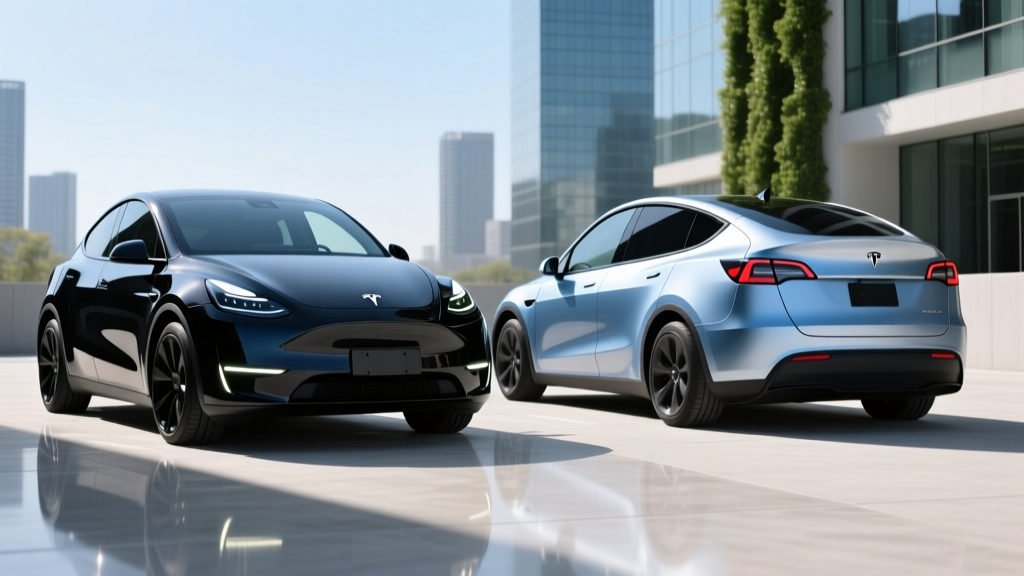
If you've been shopping for a Tesla Model Y, you've likely noticed a confusing split in the market. The 2025–2026 "Juniper" refresh brought a redesigned exterior, revamped interior, and acoustic improvements — but the pre-refresh 2024 Model Y remains on the road in strong numbers on the used and CPO market. The question isn't whether the new Model Y is better on paper (it mostly is), but whether the delta justifies the price gap once you factor in depreciation, tax credits, and real-world usability.
This head-to-head breaks down the 2026 Tesla Model Y Long Range AWD (Juniper refresh) against the 2024 Tesla Model Y Long Range AWD (pre-refresh) across every metric that matters to an EV buyer. We'll look past the marketing to examine EPA data, real-world range behavior, charging curves, and the total cost of ownership over five years.
Side-by-Side Spec Table: 2026 Juniper vs 2024 Pre-Refresh
| Specification | 2026 Model Y (Juniper) | 2024 Model Y (Pre-Refresh) |
|---|---|---|
| EPA Range | 320 miles | 310 miles |
| Battery Capacity (usable) | ~78 kWh (NMC) | ~75 kWh (NMC) |
| Efficiency (MPGe combined) | 122 MPGe | 117 MPGe |
| Efficiency (kWh/100 mi) | 27 kWh/100 mi | 28 kWh/100 mi |
| Peak DC Fast Charge Rate | 250 kW | 250 kW |
| 10–80% DC Fast Charge Time | ~23 minutes | ~25 minutes |
| Level 2 Charge Rate | 11.5 kW (48A) | 11.5 kW (48A) |
| 0–60 mph | 4.8 seconds | 5.0 seconds |
| Horsepower | 384 hp | 384 hp |
| Cargo Volume (rear seats up) | 30.2 cu ft | 30.2 cu ft |
| Cargo Volume (rear seats down) | 72.1 cu ft | 72.1 cu ft |
| Base MSRP (Long Range AWD) | $48,990 | ~$47,490 (discontinued new) |
| Battery/Drive Unit Warranty | 8 yr / 120,000 mi | 8 yr / 120,000 mi |
| Heat Pump | Standard | Standard |
| Connector | NACS (native) | NACS (native) |
Sources: fueleconomy.gov, Tesla.com Model Y specs.
2026 Juniper: EPA 320 mi. Expect ~275–290 mi on highway-only trips at 70 mph, and ~225–250 mi in sub-freezing temperatures.
2024 Pre-Refresh: EPA 310 mi. Expect ~265–280 mi highway, and ~215–240 mi in cold weather. A 2024 with 30,000+ miles may show 2–4% battery degradation, reducing effective range by 6–12 miles.
Range, Efficiency, and Charging: Where the Refresh Earns Its Keep
The 2026 Juniper Model Y gained roughly 10 miles of EPA-rated range despite adding weight from sound-deadening material and new features. Tesla achieved this through a combination of improved aerodynamics (a lower drag coefficient from the reshaped front fascia and flush door handles), a slightly larger battery pack, and more efficient thermal management. The result is a 1 MPGe improvement in combined efficiency, from 117 to 122 MPGe, which translates to about 1 kWh less consumption per 100 miles.
In practical terms, that 1 kWh/100 mi difference saves roughly $30–$50 per year in electricity costs at the national average rate of $0.16/kWh and 12,000 miles driven annually. It won't change your road-trip planning, but it does reflect genuine engineering refinement.
Charging Speed: Nearly Identical, With a Slight Edge to Juniper
Both models peak at 250 kW on a V3 Supercharger or compatible DC fast charger using the native NACS connector. The Juniper's slightly larger battery and revised thermal preconditioning algorithm shaves about 2 minutes off the 10–80% charge, landing around 23 minutes versus 25 for the 2024 model.
The critical nuance: neither vehicle sustains 250 kW for the entire session. Both taper significantly above 60% state of charge (SoC), dropping to ~100 kW by 75% and ~50 kW approaching 90%. This is normal charge-curve behavior for NMC chemistry. If you habitually charge to 100% on road trips, plan for 35–40 minutes total, not the advertised peak figure.
On Level 2 at home, both accept 11.5 kW (48 amps on a 60-amp circuit), adding roughly 35–40 miles of range per hour of charging. Neither supports 80-amp Level 2 charging, which would require a 100-amp circuit — something most homes don't have without panel upgrades.
Performance and Driving Dynamics
The powertrain hardware is essentially carried over. Both use a dual-motor AWD setup producing 384 horsepower. The 2026 Juniper trims 0.2 seconds off the 0–60 mph time (4.8 vs. 5.0 seconds), which Tesla attributes to minor motor-controller tuning rather than new hardware.
The more meaningful driving difference is in refinement, not raw speed. The Juniper refresh added acoustic laminated glass, additional sound insulation in the floor and firewall, and retuned suspension bushings. The result is a measurably quieter cabin at highway speeds and slightly improved ride compliance over expansion joints and broken pavement. If you test-drive both back-to-back, the NVH (noise, vibration, harshness) improvement is the most immediately noticeable difference.
Neither model qualifies as a performance SUV — for that, the Model Y Performance variant (3.5-second 0–60) exists in both generations. The Long Range AWD is the volume seller and the version most buyers should consider for daily use.
Interior, Technology, and Features
This is where the generational gap becomes most visible. The 2026 Juniper interior is a significant step up from the 2024's minimalist-but-spartan approach:
- Ventilated front seats: Standard on the 2026 Long Range. The 2024 offered heated seats only (ventilation was not available on any Model Y trim).
- Rear-seat touchscreen: An 8-inch display for rear passengers controls climate and entertainment — absent on the 2024.
- Ambient lighting: The 2026 features customizable interior ambient lighting strips; the 2024 had none.
- Powered folding second row: Available on the 2026; the 2024 required manual folding.
- Stalkless turn signals: The 2026 moved turn signals to steering-wheel buttons (matching the refreshed Model 3 Highland). The 2024 retained a traditional turn-signal stalk.
- Gear selector: Both use the touchscreen-based gear selector introduced earlier, with no physical PRND stalk.
Both models run the same Tesla software platform, receive over-the-air updates, and support the same Autopilot hardware suite (HW4/AI4). Neither vehicle is self-driving — Tesla's Full Self-Driving (Supervised) and Autopilot are SAE Level 2 driver-assistance systems that require continuous driver attention and hands-on engagement.
Tesla Autopilot and FSD (Supervised) are Level 2 systems. The driver must remain fully engaged, monitor the road, and be prepared to take over at any moment. These are not autonomous vehicles. Only Level 4 services like Waymo operate without a driver in the loop, and those are limited to specific geofenced areas.
Pricing, Tax Credits, and Value Comparison
This is where the math gets interesting — and where a used 2024 Model Y can make a compelling case despite the Juniper's improvements.
| Factor | 2026 Model Y LR AWD (New) | 2024 Model Y LR AWD (Used/CPO) |
|---|---|---|
| Purchase Price | $48,990 MSRP | ~$30,000–$36,000 (market dependent) |
| Federal Tax Credit (§30D New) | Up to $7,500 (if eligible) | N/A for new-vehicle credit |
| Used EV Credit (§25E) | N/A | Up to $4,000 (30% of sale price, max $4,000) |
| Effective Price After Credits | ~$41,490 (if full $7,500 applies) | ~$26,000–$32,000 |
| Destination Fee | $1,390 | Typically included in used pricing |
Credit eligibility depends on buyer income caps, MSRP caps, battery component and critical-mineral sourcing requirements, and point-of-sale transfer rules. Always verify current-year rules at IRS.gov §30D and consult a tax professional.
Key Tax Credit Nuances
The 2026 Model Y's eligibility for the full $7,500 new clean vehicle credit depends on whether Tesla's battery sourcing meets the critical-minerals and battery-component requirements under current IRS guidance. These requirements tighten annually. As of early 2026, the Model Y has qualified for the full credit when purchased from a compliant supply chain, but buyers should verify at the point of sale — Tesla's website typically displays current credit eligibility.
The used EV credit (§25E) is a different mechanism. It applies to EVs sold for $25,000 or less through a licensed dealer, with buyer income caps ($75,000 single / $150,000 joint). A 2024 Model Y selling for $33,000 would not qualify because it exceeds the $25,000 price cap. However, higher-mileage examples priced at or below $25,000 could net a $4,000 credit (30% of $25,000 = $7,500, capped at $4,000). This is a narrow window but worth monitoring on dealer lots.
Total Cost of Ownership: 5-Year Breakdown
| Category | 2026 Model Y (New) | 2024 Model Y (Used) |
|---|---|---|
| Depreciation (5 yr) | ~$18,000–$22,000 | ~$10,000–$13,000 |
| Electricity (home + public) | ~$3,600 | ~$3,700 |
| Insurance (avg annual × 5) | ~$12,500 | ~$10,500 |
| Maintenance (tires, cabin filter, fluid) | ~$2,200 | ~$2,800 |
| Total Estimated 5-Yr Cost | ~$36,300–$41,300 | ~$27,000–$30,000 |
The used 2024 Model Y wins on ownership cost primarily through lower depreciation (the steepest depreciation curve has already occurred in years 1–2) and slightly lower insurance premiums. Electricity costs are nearly identical since efficiency differs by only ~1 kWh/100 mi.
Maintenance costs are modest for both — EVs don't need oil changes, spark plugs, or transmission service. Budget for tire replacement every 30,000–40,000 miles (EV-specific tires run $200–$350 each), cabin air filter replacement annually, and occasional brake fluid checks. The 2024 may need earlier tire replacement if the previous owner ran non-EV tires.
Category Winners
Winner: 2026 Juniper. 320 mi EPA vs 310 mi, plus 1 MPGe better. Marginal but measurable.
Winner: Tie (slight edge Juniper). Both peak at 250 kW. Juniper is ~2 min faster 10–80%.
Winner: 2026 Juniper. Ventilated seats, ambient lighting, acoustic glass, rear screen.
Winner: 2024 Pre-Refresh. $13,000–$19,000 cheaper depending on condition and credits.
Winner: 2024 Pre-Refresh. Lower depreciation and insurance outweigh minor efficiency gap.
Winner: Tie. Same HW4/AI4, same Autopilot/FSD capability, same OTA update pipeline.
Charging Network Considerations
Both vehicles use the native NACS connector, giving them full access to Tesla's Supercharger network — the most reliable and extensive DC fast-charging network in North America, with over 25,000 V3/V4 stalls. This is a significant ownership advantage over CCS-equipped competitors that still rely on Electrify America or EVgo for road-trip charging.
Neither model requires an adapter for Tesla Superchargers. For non-Tesla networks using CCS1 connectors (which are becoming less common as the industry adopts NACS), both vehicles would need a NACS-to-CCS adapter — available from Tesla for ~$200.
One practical difference: the 2026 Juniper has improved navigation-based battery preconditioning. When you route to a Supercharger, the car now warms the battery more aggressively, which can improve charge speed by 10–15% in cold weather compared to the 2024's preconditioning algorithm. In real-world winter testing, this means the difference between starting a charge session at 150 kW vs. 110 kW on a cold-soaked battery.
Decision Framework: Which Model Y Should You Buy?
Choose the 2026 Juniper Model Y If:
- You want a brand-new vehicle with the full 8-year/120,000-mile battery warranty starting fresh.
- Interior refinement matters to you — ventilated seats, acoustic glass, and ambient lighting make a noticeable daily difference.
- You qualify for the full $7,500 federal tax credit on new EVs and value the point-of-sale price reduction.
- You plan to keep the vehicle 7+ years and want the latest hardware generation.
- You live in a cold climate where the improved preconditioning and heat-pump tuning will deliver tangible winter range benefits.
Choose the 2024 Pre-Refresh Model Y If:
- Value is your top priority — you can save $13,000–$19,000 on purchase price for a vehicle that's 95% as capable.
- You don't need ventilated seats or ambient lighting and are fine with the slightly louder cabin.
- You want lower depreciation exposure — the steepest value drop already happened in years 1–2.
- You can find a low-mileage CPO example through Tesla (which includes a limited warranty extension).
- You want to potentially qualify for the $4,000 used EV credit if you find one priced at $25,000 or below.
Final Recommendation
The 2026 Juniper Model Y is the better vehicle — quieter, slightly more efficient, and meaningfully more comfortable. If you're buying new and can absorb the $41,000–$49,000 effective cost, it's the right choice for long-term ownership.
But the 2024 pre-refresh Model Y is the smarter financial move for buyers who prioritize value over refinement. A well-maintained 2024 with 15,000–30,000 miles delivers virtually the same range, the same charging speed, the same Autopilot capability, and the same Supercharger access for $13,000+ less. The Juniper improvements are real, but they're comfort upgrades, not capability upgrades.
Your decision should come down to one question: Is cabin quietness, ventilated seats, and a fresh warranty worth $13,000–$19,000 to you? If yes, order the 2026. If no, find a clean 2024 and invest the savings in a home Level 2 charger and five years of electricity.
Frequently Asked Questions
Is the 2026 Model Y battery different from the 2024?
Yes, slightly. The 2026 Juniper uses an updated NMC pack with approximately 78 kWh usable capacity versus ~75 kWh in the 2024. Both use nickel-manganese-cobalt chemistry. The Juniper pack does not use LFP (lithium iron phosphate), which Tesla reserves for the base RWD Model Y in some markets. The larger pack accounts for most of the 10-mile range gain.
Can I get FSD (Supervised) on a used 2024 Model Y?
Only if the original owner purchased the FSD package and it transfers with the vehicle. Tesla's FSD transfer policy has changed multiple times. As of 2026, FSD typically does not transfer on used sales through third-party dealers, but may transfer on Tesla CPO sales or private-party transfers within a limited window. Verify before purchasing. The base Autopilot (lane centering + adaptive cruise) comes standard on all Model Y vehicles regardless of year.
Does the 2026 Model Y have a turn-signal stalk?
No. The Juniper refresh adopted the stalkless design from the refreshed Model 3, placing turn signals as buttons on the steering wheel. This is one of the most polarizing changes — some owners adapt within a week, others find it persistently frustrating, especially in roundabouts. If you test-drive, spend at least 15 minutes in varied traffic before deciding.
Which Model Y qualifies for the $7,500 tax credit?
The 2026 Model Y may qualify for the full $7,500 §30D new clean vehicle credit, subject to buyer income limits ($150,000 single / $300,000 joint), MSRP caps ($55,000 for SUVs), and battery-sourcing requirements. The credit can be transferred to the dealer at point of sale for an immediate price reduction. A used 2024 Model Y does not qualify for the new-vehicle credit but may qualify for the §25E used-EV credit ($4,000 max) if sold for $25,000 or less through a licensed dealer. Always verify current rules at IRS.gov.
How much does insurance cost for each?
Insurance varies heavily by state, age, driving record, and coverage level. National averages for a Model Y run $2,200–$2,800/year for a new 2026 and $1,900–$2,300/year for a used 2024, reflecting the lower insured value. Tesla offers its own insurance product in many states that uses real-time driving data and can be 10–20% cheaper than third-party quotes for safe drivers.